Thankful for the Return of Snowdrops

“YES!” I exclaimed! “They came back!”  Before me was the cupped blade of a single snowdrop piercing up from the soil.  I scraped some leaves back and found more shoots.  “And, another!  And, another!” I added. 

It was early November, and I was so ecstatic. I have been searching for bulbs to grow in east Texas outside of those that have a reputation for thriving here. Autumn-flowering geophytes that don’t need significant winter chilling to flower I felt held promise as our lack of vernalization is the limiting factor for many species. Galanthus elwesii var. monostictus (one-spotted greater snowdrop) was high on my list to try. 
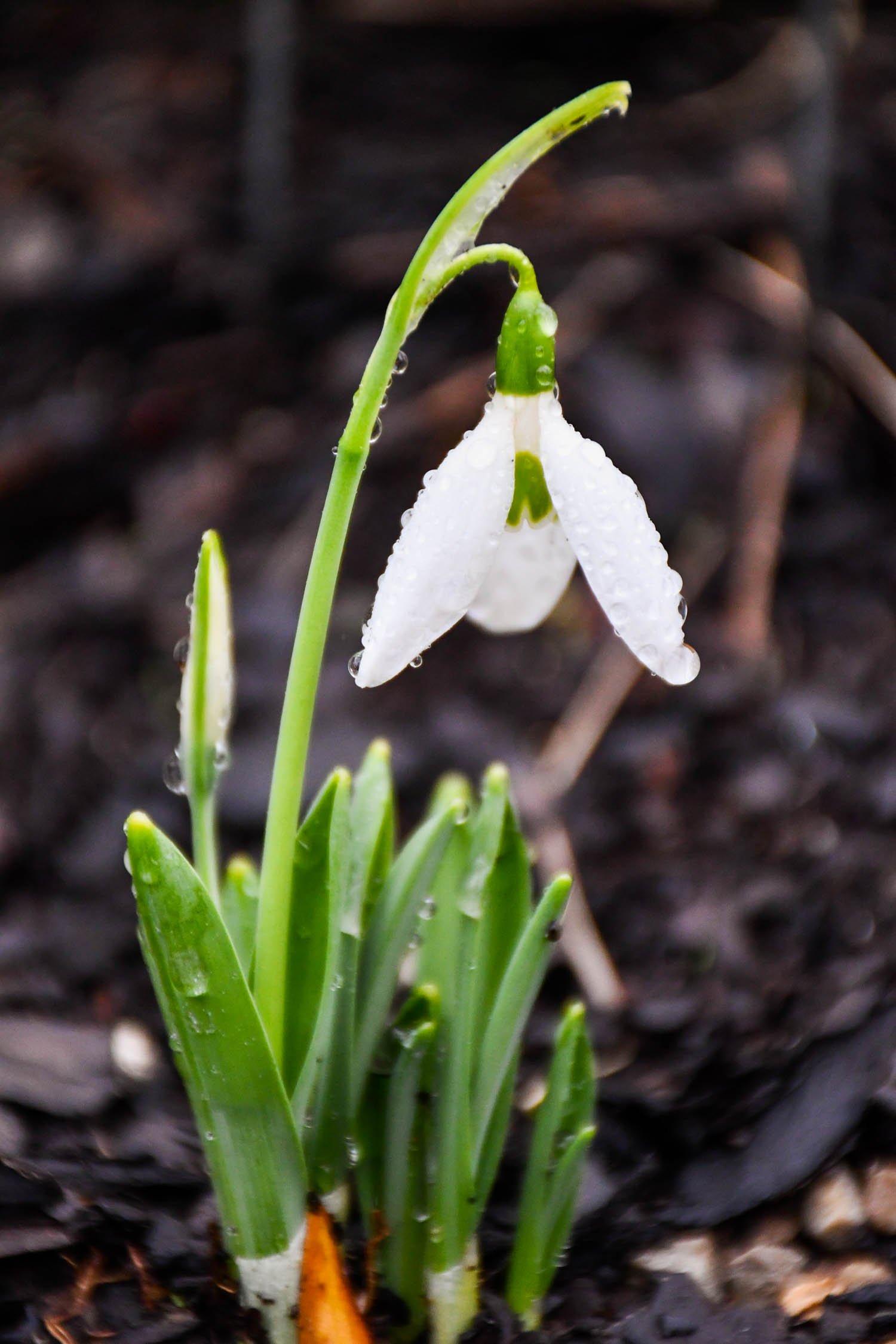
My introduction to this late autumn flower was from visiting Nancy Godwin at Montrose Gardens in Hillsborough, NC. She turned a handful of bulbs years ago into thousands of plants that now carpet the understory behind her homeI have multiple memories of visiting Montrose around Thanksgiving for one of her snowdrop walks with friends. And, now mine were blooming right on cue.

I had bought some bulbs from Nancy before and tried them in a container thinking that the soil here might be too dry, but I lost them twice.  I figured third time was the charm, and I acquired more bulbs in the green from Nancy last winter.  I decided to be brave and try them in two in-the-ground locations; both spots I amended with grit and lime to improve the soil conditions.

I planted a few in my fenced in patch where they would be protected from uprooting armadillos and able to get more water during the summer when I irrigated summer cut flowers and veggies.  Years ago, I read in Scott Ogden’s Garden Bulbs for the South that most Galanthus should not dry out during the summer and often like wetter spots. 

However, Nancy told me that where she has these autumn-flowering snowdrops in her woods turns bone dry in the summer. Therefore, site two was higher and drier underneath trees in a new bed that magically appeared after we lost some azaleas in the freeze of February 2021. I didn’t water this site all summer.

This shaded spot is where I have found snowdrops emerging first, and they are further along than those in the patch where a scraping of soil showed the bulbs are still intact but haven’t produced foliage yet. I’m sure autumn rains are a trigger for emergence, but I ponder if they also need to have cooler temperatures to appear, which they are able to get sooner from the waning shade of sweetgum and oak? 

There’s no way that I can grow the multitude of selections my colleagues do further north—well, in absence of a walk-in cooler that is—nor do I wish to become such a collector. But, I’m happy to potentially add yet another geophyte to my garden cast of characters. I may be counting my snowdrops before they have hatched—er, make that returned again next year—but I do believe that seeing them this year in flower is a good sign. I’ll give them my choicest compost with some bone meal, and I’ll hope that next year I can once again be thankful for their return.
The Winter Foliage of Parlin's Pussytoes

We had a hard freeze while we were traveling for the holidays.  The weather station at the airport registered 22F on January 2.  Collards, mustards, kales, even winter weeds like chickweed I found blistered upon our return.  Normally, these plants can survive low temperatures, but they had not acclimated because for weeks we were in the 60’s or 70’s each day.  Even Christmas eve was 80F. 

But, this week feels like winter.  There’s a persistent chill in the morning air that hasn’t been there that I feel now.  The growing season has ended, though some late season perennials were waiting forever for their closing call. And, in their absence, I see so much I didn’t see before.

Verdant basal growth becomes apparent through the remaining tattered brown stalks and duff as I walk through the garden.  Many perennial species have foliage that hugs the ground during winter that then shoots forth an inflorescence.  They are not dormant.  No, they are bidding their time, accumulating what little sunlight they can muster for when the days warm and they can rise from the ground.  

There’s the web-like foliage of Viola pedata gearing up for flowering.  I even saw a lone bloom on one the other day.  I’m surprised how large the foliage of Delphinium carolinianum already is.  It seems to have thrived with the warmth, but winter did nip the new growth a bit.  Even Callirhoe alcaeoides has emerged from dormancy and is readying its green palms for the coming spring.

One plant that I’ve become quite fond of for its winter basal foliage is Antennaria parlinii.  At first I was curious if Parlin’s pussytoes would knit together to cover the ground well since my transplants seemed patchy. But, now in its third year, the silver foliage has grown into a circular patch that is three feet wide.  The foliage is robust and has a thick feel as many polyploid plants do. It has six sets of chromosomes, likely from outcrossing with other species over the eons.  As the plant creeps out slowly via stolons that begin to emerge at this time of the year, I find it helpful to throw some fine mulch down on the edges and brush it in between the foliage to further discourage weeds ahead of the advancing front.  It seems to thrive as it grows and spreads out through the light organic matter.  

The winter foliage of Antennaria parlinii grows around a lone, tattered Carex glaucodea in the top left. It may not look much to some, but with the dearth of plants in winter, I welcome the green groundcover. If you look closely you see threads of Nothoscordum bivalve emerging and even an early Trillium!

I can’t let you get away without seeing the sweet, dainty flowers of Antennaria parlinii. These will rise in a few months with the arrival of spring.

With all this winter basal foliage, I can see spring even though it is officially two months away. The flower show of Claytonia virginica is crescendoing, and the last of my Narcissus to emerge are pushing up foliage.  I hear the American Robins sing again in the mornings, their sweet song.  It won’t be long now.