August is always a time of reflection for me. It’s the month I was born, so it always makes me think about the past- and coming-trip around the sun. I’ve found the coming academic year gives a hard break in life. Having started school for some 35 years at the end of summer has also engrained an August-centric pattern in my life.
Even as a teenager, I found that August was a time to pause and look ahead in the garden. I would start planning the fall, winter, and spring rotations and start stocking up on seed. I’ve also watched year after year that the consistent lack of rain in these last days of summer also gives a hard break in the garden. Who wants to be outside much after noon? For me in the south, I can easily work outside all day in January with layers, but with the 107 °F we’ve had this week so far, no thank you.
I’m also reflecting more recently because this blog post is also going out after my 300th newsletter. There's been a lot I've learned in six-plus years of writing and sharing along with hosting the podcasts and Botanic Bootcamp classes. One of the great joys has been learning about you readers. I love the feedback and the comments and the questions. Being part of a growing gardening community, even sometimes with a quick email from a new acquaintance, has helped me further develop my thoughts.
As I look ahead over the next year, here are a few things I’m considering.
I’m coming out of my experimental era, and I’ve begun to double down on what works for us. Sure, I’ll try a new plant here or there, but I’m tired of watching whole trays of plants die just because it’s Texas. I’ve accepted that not all plants work everywhere. I’ve killed a lot of species learning what grows here, much like Polly Hill did when she was planting her arboretum.
We will never have gardens like Zone 5, and that’s ok. We just went to Michigan a few weeks ago for PPA, and so many plants were lush and vibrant there. I’ve accepted that part of my gardening strategy is to maximize the parts of the season (like March/April and October/November) when the garden really shines, and then for rough times like now focusing on a handful of prominent plants like Silphium (cup plants) or Panicum (switchgrass) that will be resilient in our heat and drought no matter what.
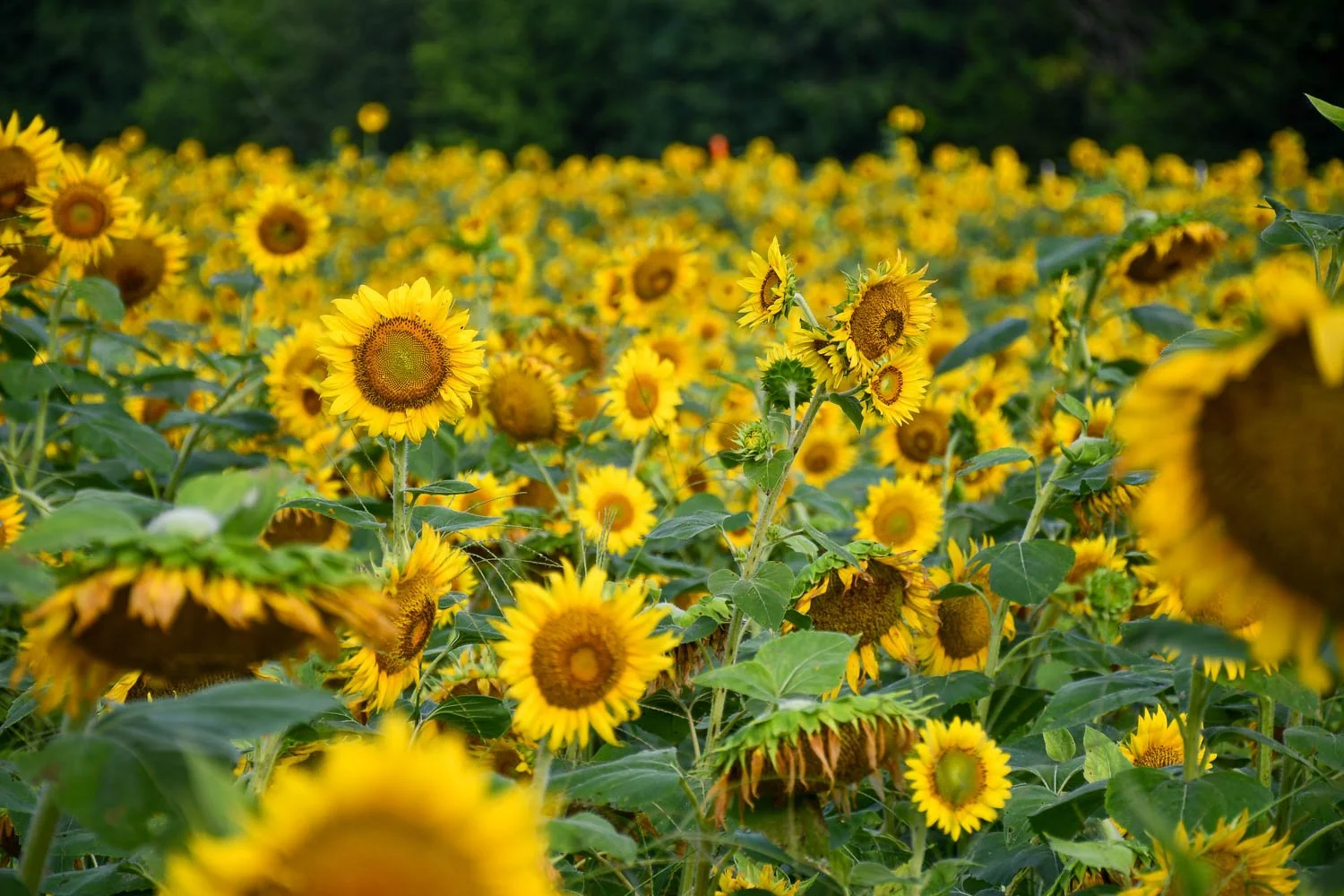
I’m so embracing competitive plants. I have tried too hard for too long to make shorter plantings work. I’m now looking at how can I strategically use species that can cover some ground and have some bulk? A few favorites include Pycnanthemum muticum (clustered mountain mint), Physostegia virginiana (obedient plant), Helianthus giganteus 'Shelia's Sunshine' (giant sunflower), Boltonia diffusa (small-head aster), Coreopsis tripteris (tall tickseed), and Symphyotrichum 'Bill's Big Blue' (aster).
Pests have become a bigger problem than I expected. Voles are becoming a serious issue. Last week as I was weeding, I lifted a Carex texensis (Texas sedge) halfway up out of the ground because it has no root system left. So, I'm now looking for a more robust ground cover species (likely Carex cherokeensis since that seems to be doing okay so far), and I'm looking at options for trapping them without poison.
This year, I also discovered root-knot nematodes in our vegetable garden on pumpkin roots. I already had the greenhouse plastic for solarizing, so I’ve got the beds cooking for fall crops. I also have started doing more cover crops like cowpeas, buckwheat, and mustards, and now nematode-resistant marigolds and ‘Elbon’ cereal rye (thank you, Greg Grant for sharing the latter) will become part of the garden rotation.
I’ve seen a lot of positive effects from amending the soil with minerals like lime (to raise the pH and provide calcium) and langbeinite (to provide potassium, magnesium, and sulfur). We’ve had real improvement this year, especially on the vegetables. My strawberries aren't dying, and we had the best potato crop ever.
I’ve realized that it’s okay to use a little water. Yes, I feel sorry for my UK friends who are so dry and experiencing water shortages, but to me it doesn't make sense to have a month or two in the summer where everything bakes and dies after you’ve cared for it for the rest of the year, especially here in the deep south. A hose on a slow drip helps newly planted trees, and I run a sprinkler once every couple weeks to just keep plants alive until fall rains return.
These are the things on my mind as we head toward autumn. Despite the frustrations, the garden and plants as a whole continue to bring great joy. Gardening is like raising a child that's constantly a toddler. It does what it wants, when it wants. But, that’s also part of the magic.