It hasn’t felt like winter here at Ephemera Farm. We have had a handful of days pushing 80°F since the new year.
But, it looks like winter. We’ve had enough frosts that there are more browns than greens in the landscape, and the deciduous trees and shrubs have mostly lost their leaves.
Designing with winter in mind is one of my first principles of gardening. Two months in the spring can manifest a world of difference in my plantings, but from late December through late February, what you see is what you get. What I see is the culmination of all the decisions I’ve made this past year and the many years prior. It is crucial to think about what the garden will look like at this time because a few months of bland is boring.
I love to take stock of the garden in winter. I find myself asking what do I like? What do I not like? And, how can I make what I have better?
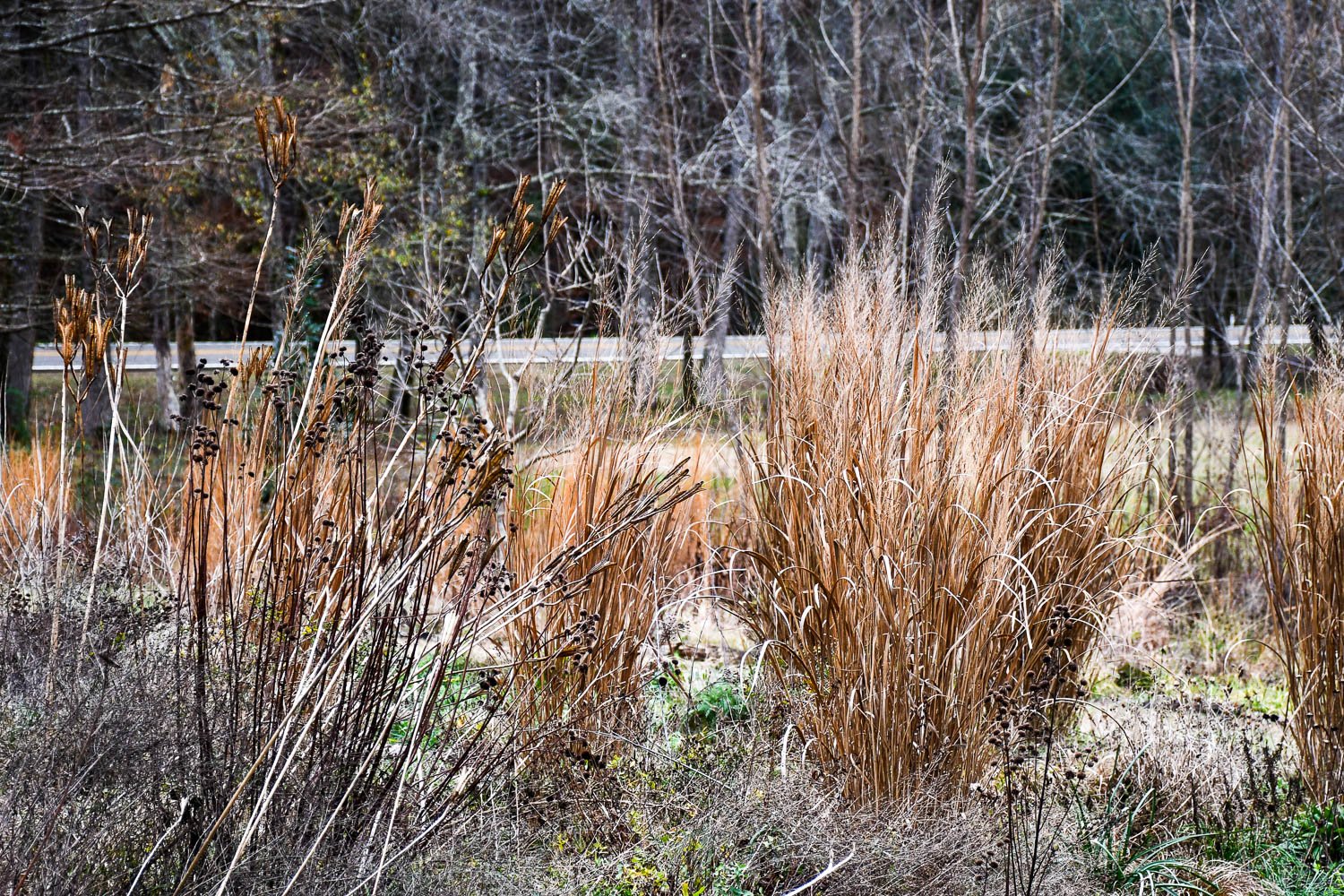
My winter garden is not like others filled with evergreens and conifers. Being dominantly composed of herbaceous perennials, it features a variety of shades of brown in the winter. I have always enjoyed the winter silhouettes of plants, but it’s nice to be in the vogue now thanks to Piet Oudolf. He has changed the discussion of the browns of winter, saying, “You accept death. You don’t take the plants out, because they still look good. And brown is also a color.”
It fascinates me that plants that sport nearly the same color of green after frost can be various colors of brown. Eragrostis spectabilis (purple lovegrass) fades to an off-white, Panicum virgatum ‘Northwind’ (switchgrass) becomes a khaki color (header image), Andropogon virginicus (broomsedge) turns a soft tangerine, and Silphium perfoliatum (cup plant) crisps to almost black.
There is opportunity to think about the faded color in designing winter gardens. If you’ve taken my class The Preference Matrix for Naturalistic Design, you know that I love playing off coherence and contrast. With the monochromatic landscape, there are plenty of shades of brown to make the garden cohesive. But, these various colors and the textures they occupy provide contrast to make things a bit more interesting.
As I survey my garden, I see tans and sands are pretty common colors in the garden. So, I’ve been focusing over the past few years in increasing the darker browns.
I’ve learned that some Silphium are good at holding their presence through the wintertime. Silphium perfoliatum stands stolid during the winter and appears as a dark tower with its leaves still clinging. I divided this plant last spring to increase its presence in the garden, so I hope in another year or two to have a few more of these shadowy sentinels in the garden. I also admire Silphium laciniatum (compass plant) for the taupe, claw-like leaves. The foliage is lower on the plant but still stands out.
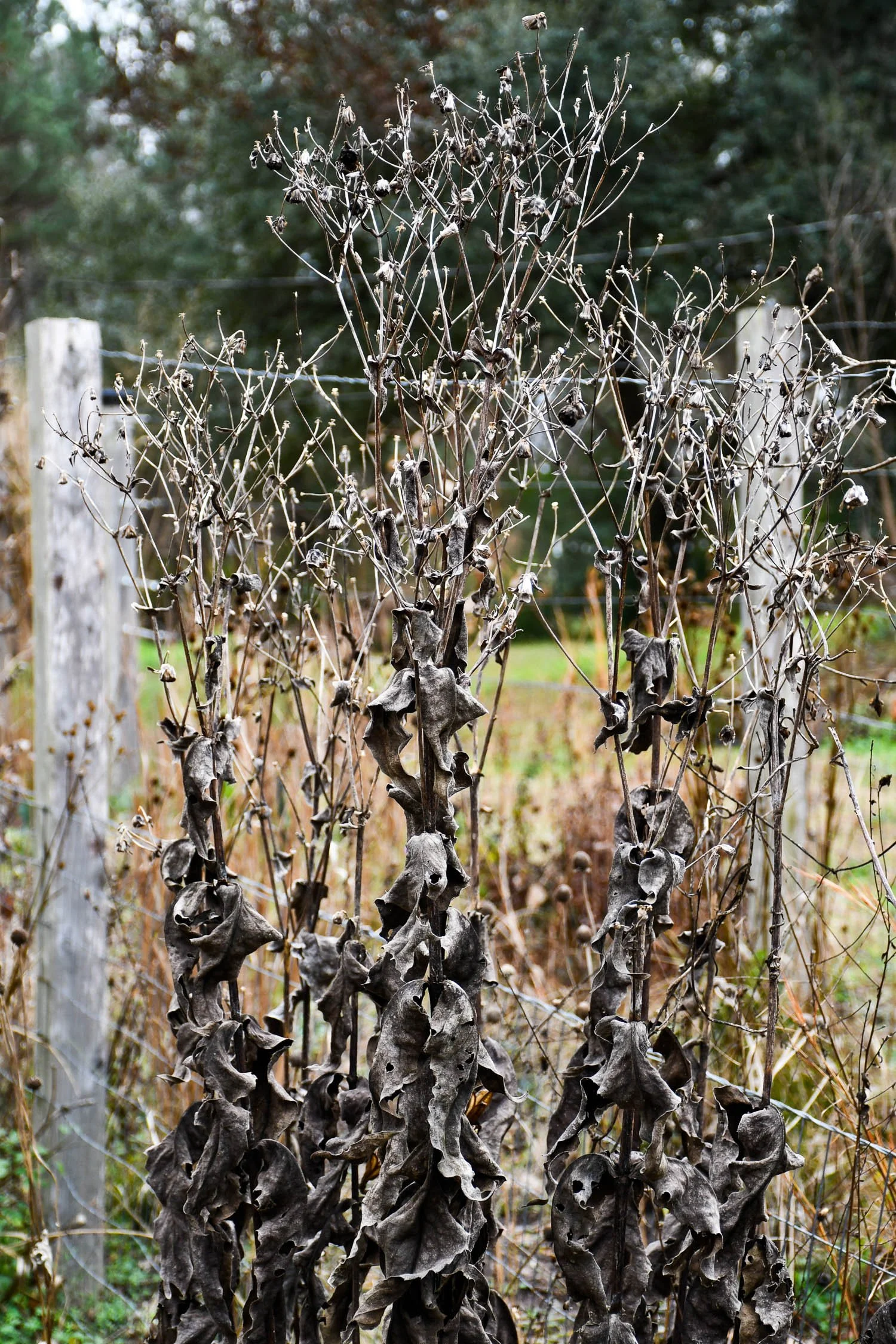
Silphium perfoliatum (cup plant)
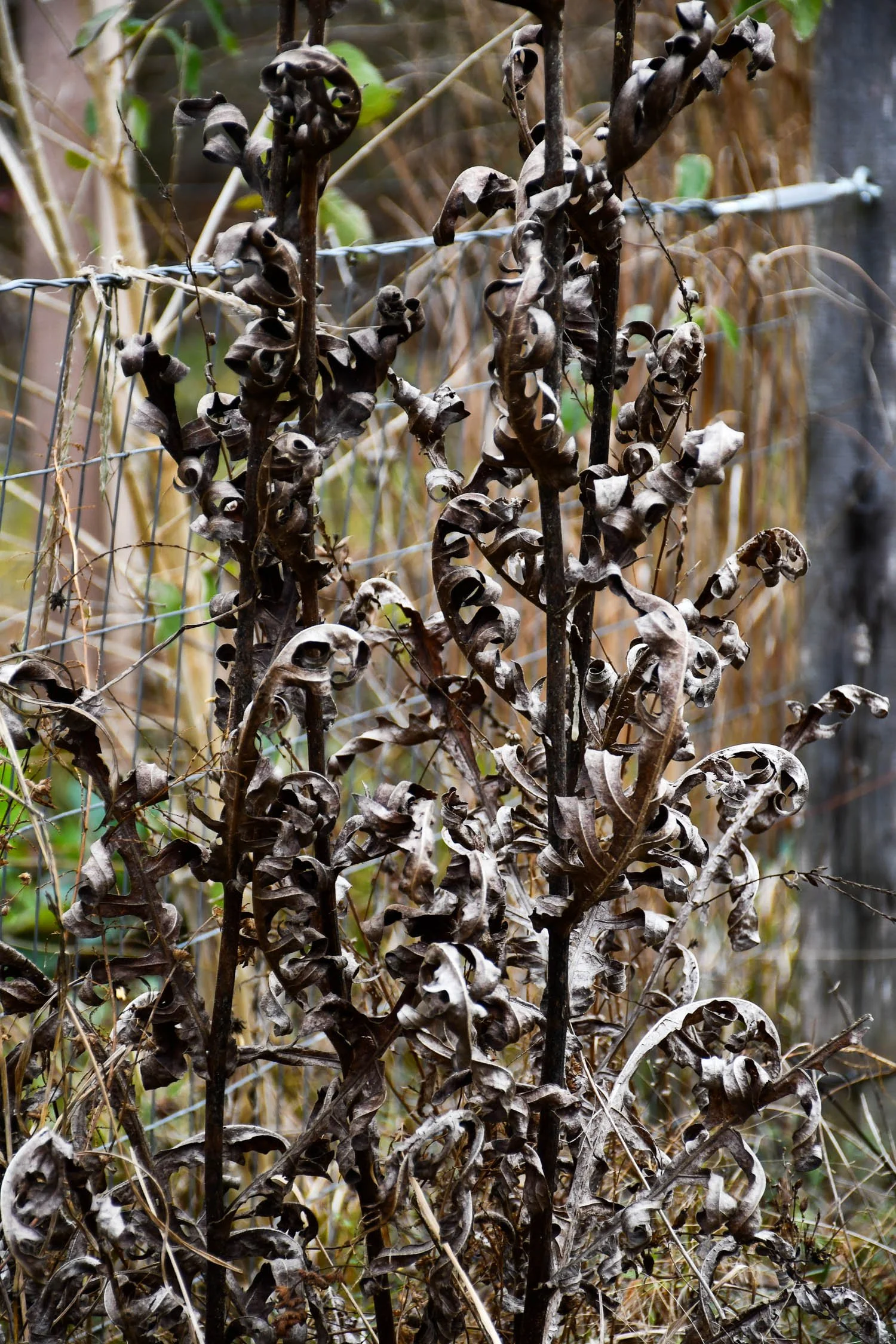
Silphium laciniatum (compass plant)
This past spring, I planted Helianthus giganteus ‘Sheila’s Sunshine’ (giant sunflower) in a spot where it could really take over, and I’ve been impressed with how well the umber stems and seedheads have held up so far this winter. I have issues with Helianthus angustifolius (swamp sunflower) flopping over in winter. Granted I did cut ‘Sheila’s Sunshine’ back early in the season to limit its growth (but it’s still over my head!), and I did stake it at one point this fall when it started to flop. But, those actions then give me a four-foot wide clump of dark stems to contrast with lighter colors in the landscape. And, the seedheads that dot the sky are another plus.
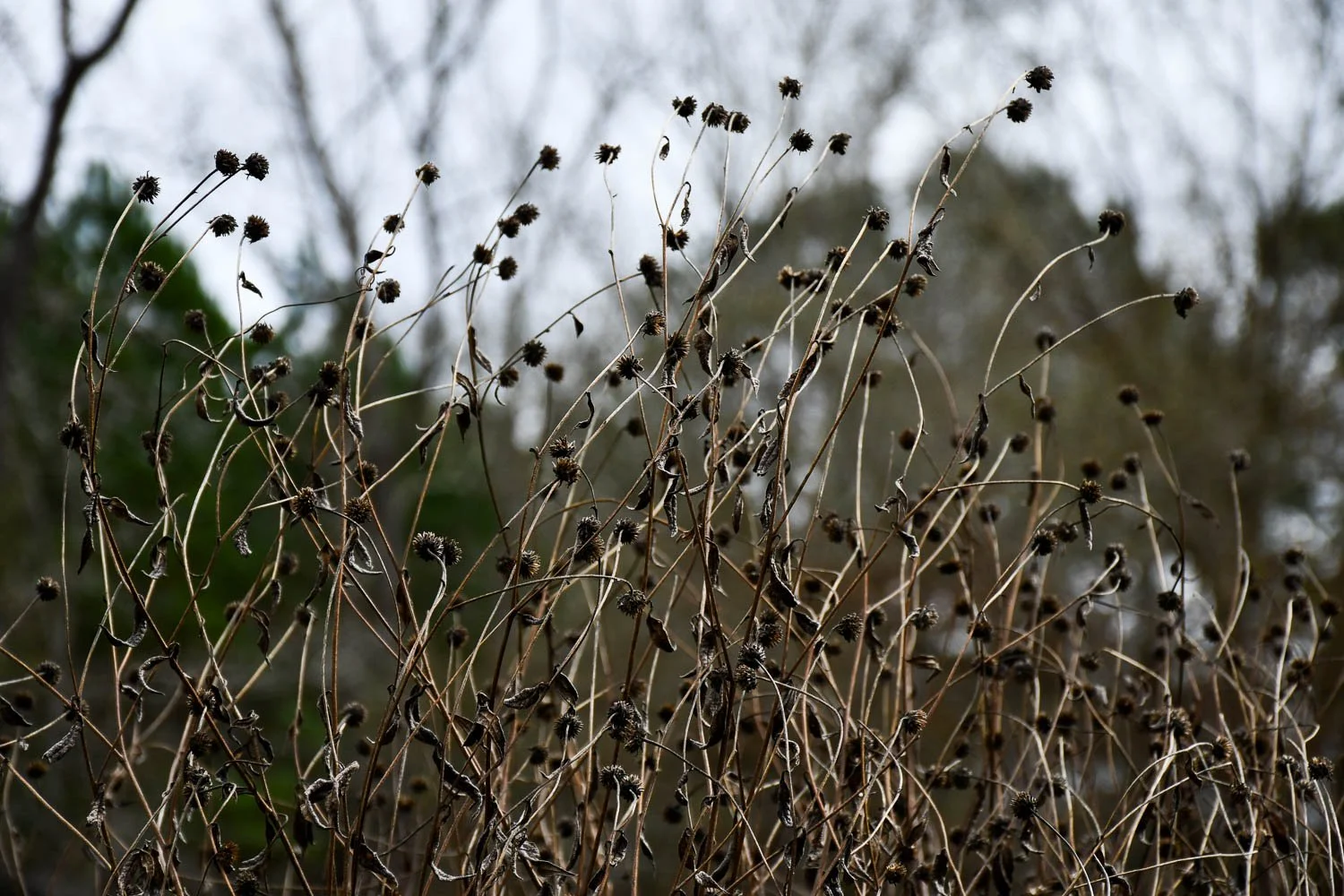
Helianthus giganteus ‘Sheila’s Sunshine’ (giant sunflower)
Coreopsis tripteris (tall coreopsis) also holds its leaves well into winter. Like ‘Sheila’s Sunshine’, cutting it back earlier in the year helped make it a more manageable height. I also love the little dark buttons that hover above.
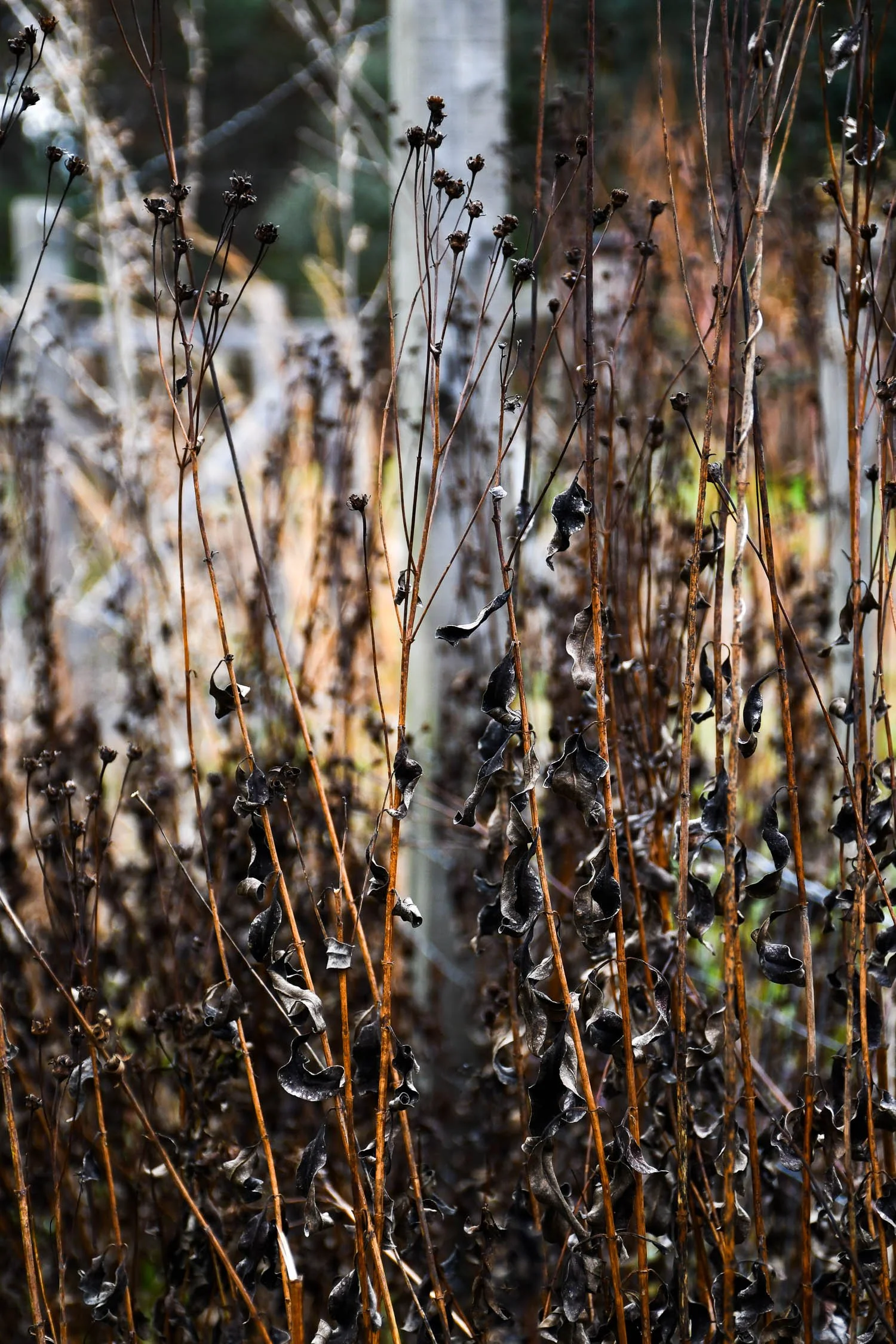
Coreopsis tripteris (tall coreopsis)
Another plant that I’ve been surprised with having a staying presence is Physostegia virginiana (obedient plant). You would figure that with such rubbery leaves and succulent stems the plant would collapse at the end of the growing season. But, my clumps still stand upright, and a 2 × 2 foot area of chocolate-colored stems contrasts well. I just have to keep an eye on their spreading rhizomes that are emerging a verdant green from the soil.
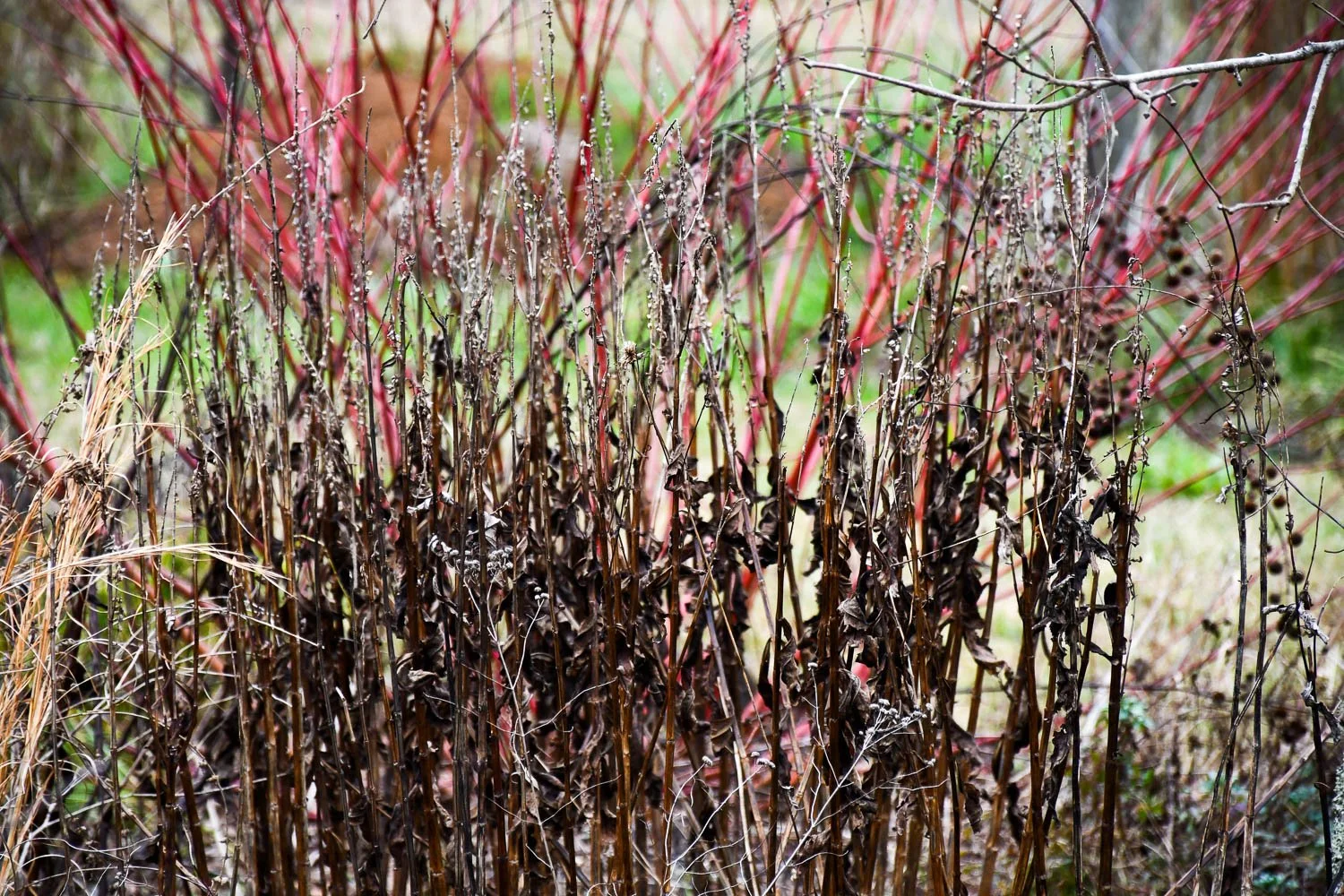
Physostegia virginiana (obedient plant)
As we approach spring, I stagger my cut back and selectively begin removing the plants of last year. This weekend, I’ll start cleaning out where bulbs are emerging. The refuse I put at the back of our property so that fauna overwintering can still emerge. Then, I’ll start taking out the plants that have collapsed from the winter. But, I love to leave these dark stalwarts that emerge late and cut them at the last possible moment in early March. That way we can enjoy their presence as long as possible.
KEEP GROWING