2018 Garden Plans

It’s the new year, and we are excited to see the ideas we have for our homestead sprout, grow, and blossom.  I have much I want to accomplish this year, and to really hone my focus, I recently sat down and wrote out my big goals for the new year.  

MAKE A BASE MAP.  Over the holidays I constructed a base map for our smallholding so that we can plot and plan where the different gardens and production areas will go.  Using the survey information, I’ve created in Illustrator a polygon that perfectly fits an underlaid Google map image of our property.  It was amazing for me inputting the shape's criteria only to find that it seamlessly fits our fence rows.  The next goal is to get the trees on the property mapped with their identities.    

FENCE AND PLANT THE ORCHARD.  The orchard has been an area that we have started transforming this fall.  It’s a full sun area with fairly level topography save for a slight rise on the southeast corner.  The area is backed to the north by a haggard fencerow, lined with mature Liquidambar, Juniperus (one of which has absorbed the old, rusted wire), and Quercus.  To this fence row we will attach two perimeter fences about five feet apart to keep out the dastardly deer.  The outer will house brambles and the inner muscadines. Within the inner fence, the long term plan is to plant fruit trees such as persimmons, apples, and peaches and fruit shrubs like blueberries.  While we wait for the woodies to mature, we will be growing edibles and cut flowers in the open areas, which is our current plan for this summer.  There’s been several small trees—random Lagerstroemia and Quercus—to remove before we can plant parts of it, and I’ve already cut down and quartered four of them.  I hope to be ready for planting with fruit trees late this spring, but next fall is more likely.  

EXPAND THE KITCHEN GARDEN.  Our kitchen garden right outside the kitchen door has been a delightful and delicious project this fall, and we will begin expanding it southward to grow more this year.  I need to cut down a spindly red maple that was planted there before we arrived.  It’s too big to move and had very poor color this fall.  I’ve been toying around with the idea of espaliering fences from figs and perhaps other fruit trees.  On the list for growing this year are tomatoes (of course), pole beans, peppers, sweet potatoes, sweet peas, southern peas, and more.  The seed orders are already in progress!  

BUILD A CHICKEN COOP.  Years ago when Karen and I were dating, I hid a book about raising poultry in her Christmas presents as a joke.  We laughed it off, but lately she’s been talking about wanting livestock like chickens.  Perhaps the prank planted a seed!  We both have talked about how they will be good for egg laying and picking pests out of the gardens.  The locals have recommended Black Sex-links.  Building the coop will likely be a summer project.  I’d love to have a mobile one with wheels that we can move throughout the property.  

A PERIMETER OF ANDROPOGON.  It took me a while to decide on what plant should surround our wrap-around porch.  I wanted something showy and attractive but nothing too high to block our view.  When we moved in, giant meatball Camellia and Loropetalum (yes, I know…) blocked the view of the house as well as vistas out our bedroom window.  These have slowly been making their way to the burn pile, save for the Camellia that I want to move to our winter garden.  I iterated through a variety of other options like Hydrangea quercifolia and Carex until finally one day the perfect fit hit me—Andropogon virginicus or broomsedge.  This grass has been a favorite of mine since childhood.  The auric strands in the winter sun look as if Rumpelstiltskin wove them himself.   Sitting on the front porch earlier this year I imagined watching the culms dancing in the wind next autumn in the low sun's vanilla rays and casting shadows on the front porch concrete. The planting will only be about four feet wide, the formal lines lending a modern yet wild look to the log cabin.  The seeds of course will come from local stands up and down the roadsides nearby.  I plan to start cutting sheaves soon before the seeds dislodge.  I imagine also plugging in some early Narcissus and self-sowing bluebonnets for early season color.

OPEN THE GLADE.  As I wrote about in a previous post, east of the house there is a mishmash scattering of woody plants that I want to move to open up the area and create a glade.  It’s a beautiful setting for an outdoor venue for parties and get togethers.  Most of the plants shouldn’t be too hard to relocate. The largest is one of hybrid Magnolia known as "the girls".  I’m not sure which cultivar it is yet, but it will be moved just a short distance to our front shrub border.   

COLLECTING AND PROPAGATING PERENNIALS FOR THE PRAIRIE.  The last big goal of the year is to accumulate and increase the number of perennials for a future prairie installation west of our house, probably in 2019.  An online order here, a stop at Big Bloomers last week in North Carolina there, and I’m well on my way in creating a grassland here in east Texas. 

That's enough to keep me busy for a while.  Good luck to all of you other there pursuing your #lifegoals.  


Creating a Kitchen Garden

We hadn't lived in the house two weeks before making a kitchen garden, and it's creation has delighted us all fall.

I love edible gardening and have since I was five years old.  For me growing edibles is part of life.  It's just something you do.    

Of all the gardens to create here at our new property, we made it first because we wanted to have food we grow available throughout the fall and winter before growth slowed too much. 

Choosing a location was a no brainer.  We placed it right out the door from the kitchen.  You can see the garden standing at the kitchen sink.  It makes zipping out to get fresh thyme for jambalaya, crisp lettuce for Doritos salad, or a few tomatoes for caprese easy.  Since we see it frequently, we can respond with a quick shot of water from the hose or trellis the leaning tomatoes or rambunctious peas.  The area is currently approximately 20 × 20 ft, but we plan to expand it further down our drive to double our growing area.

Just days after we moved into the house, I ripped out the small, struggling rose collection hugging the driveway and porch, killed the surrounding grass, tilled it with my small Mantis tiller, and aerated the soil using my broadfork.  

Adios, Rosa.

Adios, Rosa.

For the design we created a large central path for access and then divided the beds up on either side with the remaining space. 

Then it was planting time!  *Jazz Hands* We planted cabbage, kale, broccoli, cauliflower, Brussels sprouts, and Chinese cabbage in a diamond pattern in the beds, alternating two-one-two-one.  We planted the north side of each bed with everbunching onions.  And, in the large beds near the garage, cherry tomatoes, lettuce, and peas were planted.  I used 8 ft long 2 × 2's for tomato stakes.  Before the peas went in the ground, I walked around the property collecting straight sticks from some shaggy trees that haven't seen a pruner in some time and fashioned them into a trellis. 

The planted kitchen garden.  I didn't mention the Eragrostis spectabilis in the front left corner, but I found it growing nearby and moved it to the kitchen garden to have a seed source for future projects.

The planted kitchen garden.  I didn't mention the Eragrostis spectabilis in the front left corner, but I found it growing nearby and moved it to the kitchen garden to have a seed source for future projects.

Next to the driveway we also planted some zinnias for late season color as well as herbs like lemon verbena, thyme, horehound, chives, and rosemary.  Some like my chives and rosemary have grown in container culture since 2008, and they have responded quite well to getting their roots in some soil.  Underneath this planting, I sowed 'Magma' mustard seed to provide a post-frost ground cover.  'Magma' is a beautiful two-toned frilly type from Wild Garden Seed.  On the south side of the garden, I scattered some 'Champion' collards seed whose leaves made their way into some bacon grease and brown sugar.

The garden beginning to fill in

The garden beginning to fill in

Zinnias coming into color.  The purple cultviar made a great color companion with the purple cabbage.  I made a note to use them more together in the future.  

Zinnias coming into color.  The purple cultviar made a great color companion with the purple cabbage.  I made a note to use them more together in the future.  

The garden looking quite lush.  I still haven't planted that pot!  

The garden looking quite lush.  I still haven't planted that pot!  

 
I realize that cacophony is about sound, but I also think it a great word to use to describe the mish-mash of color here.  You can see in spots the 'Magma' mustard growing underneath.  

I realize that cacophony is about sound, but I also think it a great word to use to describe the mish-mash of color here.  You can see in spots the 'Magma' mustard growing underneath.  


We haven't faced too many challenges with this garden.  A Yard Enforcer motion sprinkler system has kept the deer away if they ever even got close.  It sent a lightning bolt of adrenaline through me more than once when I forgot whether it was on or off.  Gophers, a new pest I've never faced, have created mounds in the garden, and it's been frustrating to go out and have to clear the soil off young plants.  We had an explosion of cabbage worms once over night, but Dipel has since helped to keep them at bay.  And, an unusually early frost toasted the tomatoes and zapped the tops of the zinnias, but the cool season crops took the cold weather like a champ.

 
First frost, about 3 weeks early

First frost, about 3 weeks early

 
See the frozen guttated pearls on the center leaves?  I live for little moments like these in the garden.

See the frozen guttated pearls on the center leaves?  I live for little moments like these in the garden.

Even with the challenges, it's been a blast growing our own produce, and we are thankful for the new memories and the fresh produce we are harvesting.  I look forward to seeing how this garden evolves from this simple start into a source for year-round food in years to come.  

Finding a Home

Gardeners are frequently faced with a compelling question—where can I find a home for this new plant I've just purchased on a whim?!  The garden is so full that often no spot can be found. 

I face the opposite problem.  I have thousands of square feet available to me, which in a way creates the paradox of choice.  There are so many places it almost hinders me from planting anything.  Almost.  

My solution has been to put some plants into a holding trial garden to see how they fair in the ground while others are placed in permanent locations.  I'm planting the latter with purpose by citing in favorable growing conditions where they can be enjoyed and will fit my larger overall design scheme.

Edgeworthia papyifera 'Winter Gold' (paper bush) was the first one I wanted in the ground.  I brought it with me from the Pi Alpha Xi plant sale in North Carolina when I moved in July 2014 because it's one of my absolute favorite shrubs, and I was worried I might not find it in Texas.  Why do I like it, you ask?  During the growing season, the large tropicalesque, pubescent leaves collect water and refract rainbows in the tiny, liquid diamonds.  Then, in the winter fuzzy buds that look like dozens of little dog noses huddled together in the cold swell and open to reveal fragrant canary yellow blooms.   The plant also has quite the story.  The Japanese make bank notes and paper (hence the name paper bush) out of this beautiful shrub, which I liken to using the Mona Lisa as toilet paper.  I appreciate the utilitarian purposes of plants, but I cherish the blossoms so much I would never think of destroying a branch. 

Since I purchased it, the plant has grown to be 3–4 ft tall and prone to drying down.  It's ready to go in the ground, but where to put it?

Diamonds are forever on Edgeworthia chrysantha.  Or, at least till the dew dries off. 

Diamonds are forever on Edgeworthia chrysantha.  Or, at least till the dew dries off. 

 
The flowers of Edgeworthia chrysantha face downward, likely an adaptation to protect the pollen from rain.  If you lay on the ground (like I did for this vantage), the glorious chandelier of flowers glows in the winter sun.  Don't forget t…

The flowers of Edgeworthia chrysantha face downward, likely an adaptation to protect the pollen from rain.  If you lay on the ground (like I did for this vantage), the glorious chandelier of flowers glows in the winter sun.  Don't forget to brush the leaves off your bum when you stand back up, though!    


As I wrote in a previous post, I've already begun sectioning the 2.5 acres here into smaller parcels, and the front yard will be a winter garden that will feature color, fragrance, and interest during the dark season.  We have a large wrap-around porch to enjoy the outside—summers in the back and winters in the front.  Also, our master bedroom windows face this area, and what we plant will be easily enjoyed regardless of the weather. 

I hoisted the 12 gallon faux terra cotta pot in my hand out of my make shift nursery.  It was light and needed some moisture.  I walked around to the front yard and sited it in the shrub border that runs the length of the front part of the property.  There are several openings where we want shrubs to grow to block the view from the road.  I chose a gap beneath a large, weathered Juniperus virginiana (eastern red cedar) and plopped the shrub down.  I walked to the front door, the swing on the front porch, and the bedroom window to make sure it was in the line of sight from each view.  I walked back to the transplant and pulled it out just a tad from the shrub border to make room behind for an evergreen.  I imagined the flowers popping against the verdant foliage of a future Osmanthus or Camellia.  

I dug the hole, the shovel slicing through the sandy loam like a hot knife through butter.  I chuckled to myself that with my 27 years of gardening experience in sub-par soils that I've leveled up enough to reach soil heaven!

I took the plant out of the pot and looked at the roots.  I was surprised at the absence of any circulating.  They all looked healthy and growing downward.  I teased them slightly. 

I put the rootball in the hole.  Too deep.  Pull out.  More soil in.  Rootball back in the hole.  Perfect.  I made sure the pretty side was facing the house. 

We were left a nice long 100 ft hose with the house, and I hooked it up and drug the nozzle to the gaping hole.  I turned the water on a slow trickle and walked away to find more homes for my weary plant travelers that have journeyed with me from place to place.  It is dry, and I want to make sure that the plant has enough water to get it adjusted.  When I returned, the hole runneth over, and I turned the spigot off. 

I started to return the soil to the hole, it slurping as it sank to the bottom.  Once finished, I let it settle, and I turned the water on again a bit later to further remove any air pockets. 

This process, digging a hole and planting a plant, is something I've done a thousand times (nay, 10,000?!  100,000!?!?) in my life.  But, this time, this first planting at our new home, feels extra special.  I've been a container gardening vagabond, travelling from place to place, accumulating plants as I've moved about.  Some have not made the entire journey, but for those that have, it's going to be fun finding them their homes just like I've found mine. 

Settle in for the long haul, paperbush.  It's gardening time!

Settle in for the long haul, paperbush.  It's gardening time!


Homeowners... and Garden Owners

I am ecstatic!!!  Karen and I have purchased a beautiful log cabin just outside Nacogdoches!!!  And, in the process, we've gotten a school-of-hard-knocks education in house buying.  There were times we thought the whole process would fall through, but it all worked out in the end.  

 
DSC_0274-LRPS.jpg
 

But, that's not all…  the house came with 2.5 acres of land!!!  Approximately an acre of it is shaded with mature trees, and the rest is open turf, ripe for planting various woodies and forbs.  Holy.  Cow.   

It's so much fun to think about finally having a place of our own that we can tend to and transform.   I love finally using design techniques and themes that I've taught for years and did at clients' houses to our own place.  And, it's amazing to be cognizant of all the iterations my brain has as I really ponder the genius of the place. What does a landscape in east Texas look like?  How can it be functional, beautiful, and ecological?

First, I'm considering views from the house.  Where can we stick plants to enjoy them inside and out?  Also, there's a spacious wrap-around porch that surrounds most of the house, save for the garage, and I'm dreaming of beautiful vistas that can be enjoyed from these outside sitting areas.

 
DSC_0296-LRPS.jpg
 

From a brief survey of the property, I already know that I want an edible garden by the kitchen.  Karen has already made a long two-column list of all the edibles she'd like to grow here.  I'm up to the challenge.  Yes, sometimes vegetable garden areas can look a little rough, so how can I make it beautiful year-round with foodscaping?  Or, perhaps we use this space for edibles for a year or two and then transform it into another type of garden all the while creating a larger edible garden out back.

 
DSC_0280-LRPS.jpg
 

The north and east sides of the garage and the back porch, respectively, create guidelines for a large rectangular area where I'd like to kill the turf and create an entertaining space.  I envision a fire pit off to the side with seats around and perhaps some wooden tables scattered about for succulents. 

 
DSC_0251-LRPS.jpg
 

There are no gutters on the house, so I'm considering some type of short ornamental grass groundcover that could take the rain coming off the roof.   Having this feature has become even more apparent with Hurricane Harvey dumping rain on the house a few weeks ago.

To the west of the garage, there is a slight slope and a large back lawn that receives abundant sun.  I detest mowing large spaces, and these areas will give way to gardens such as a larger production vegetable garden for corn, pumpkins, etc.; a moveable hoophouse; an orchard type space for figs and muscadines; a cut flower garden; and of course, a mixed planting prairie. 

 
DSC_0284-LRPS.jpg
 
 
DSC_0249-LRPS.jpg
 

To the east of the house is a glade framed by large oak trees.  I understand this area was the old home place.  The mature trees form a nice backdrop for another outdoor entertaining area, perhaps a place where bocce ball or croquet could be played.  However, the glade is currently populated with an arboretum-like scattering of various immature woodies like Vitex, Punica, Camellia, Spiraea, and others.  I plan to move these to open the area up, and it will also help create a long vista from the front of the house.  Karen has mentioned wanting a white garden somewhere on the property, and whites at the end of the glade would help to pull the eye through this garden.  

 
DSC_0259-LRPS.jpg
 

In front of the house and to the east are more mature trees and shrubs in a line by the road.  I'm already calling this planting the shrub border where I can plant a variety of plants over the coming years.  Directly in front of the house are a few Camellias, and I see this area becoming the winter garden.  The front porch would be a great place to sit on warm winter days, and I've had an Edgeworthia cramped in a pot for long enough. 

 
DSC_0256-LRPS.jpg
 

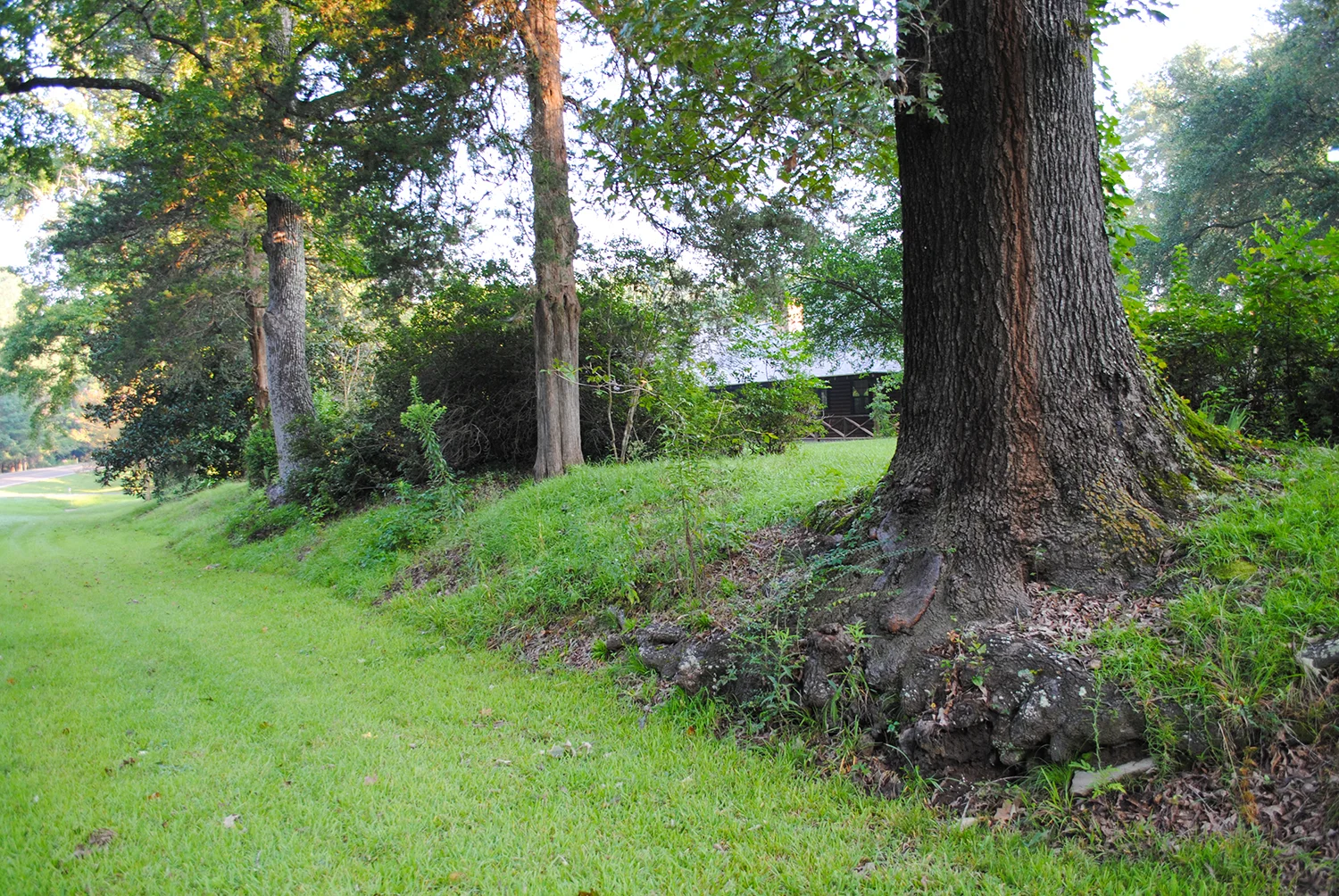
South of the line of woodies the land slopes off suddenly for about a four-foot drop.  My guess is that this bank may have been the side of an old road bed since it looks like the ditches that flank roads back home in Tennessee.  We were walking by it the other night, and I commented it would be a great place to plant daffodils and other shade-loving ephemerals.

 
DSC_0267-LRPS.jpg
 

My mind also drifts to the problems we will have, mainly in the way of deer.  The lady who previously owned the property actually fed them corn!  No more of that.  And, we've found in our backyard evidence from pigs roughing the soil up, too.

But, even with the potential problems, the possibilities here seem endless.  (Did I mention the soil looks like sandy loam!?!  The shovel cuts right through it!)  But, enough writing for today.  I've been a container gardening nomad for long enough.  It's time to go out and garden.