• Botanic Bootcamp
  • blog
  • Podcast
  • Presentations
    • Hi, I'm Jared.
    • Southerly Design
Menu

Meristem

Jared Barnes, Ph.D. | Sharing the Wonder of Plants to Help Gardeners Grow
  • Botanic Bootcamp
  • blog
  • Podcast
  • Presentations
  • Jared's Story
    • Hi, I'm Jared.
    • Southerly Design

Placing Narcissus

February 26, 2023

It probably looks odd, me standing in front of a peach tree holding out a handful of Narcissus blooms as if I’m waiting for a branch to grasp them from my hand. But, today the petals have become paint chips as I’m deciding where I can incorporate daffodils to my plantings.

Narcissus are in full bloom here, and it is so good to see their cheerful flowers dotting the landscape.  Most of them like Narcissus tazetta (tazetta daffodil), Narcissus pseudonarcissus (Lent lily), and Narcissus × odorus (campernelle) I have in holding beds where they have been bulking up over the past few years while I decide their final destination. It can be hard to determine color from a catalog photograph; therefore, I like to have the flower in hand when I’m walking around creating color combinations and deciding where they should be placed.

Some may ask why not use more modern hybrids, but in east Texas we lack the winter chill our friends further north have. Thus, I find myself turning more to species types or old heirlooms that are proven to bloom reliably in the deep south. There is opportunity in constraints, and the goal is to pair what I have plenty of with where they will look the best.

I used the same approach last year with Narcissus pseudonarcissus (top image) that are now in beds near the house where the soft buttery yellow contrasts well with emerging Phlox pilosa (downy phlox), Glandularia canadensis (rose vervain), and Muscari neglectum (starch grape hyacinth). I relocated them from a holding spot once I realized they would combine well with the plants in this bed and provide a nice pop of color. After bloom their foliage lasts for a bit as other species around them emerge, and the glaucous blades echo well the color in the nearby leaves of Rudbeckia maxima (giant coneflower) and Eryngium yuccifolium (rattlesnake master).

But, in my hand are Narcissus tazetta, and I have been pondering for a fortnight about putting them into the orchard beds that span between fruit trees. The petals are white, and the corona starts a warm yellow and then fades to cream. I confirm that the color does look good with the peach blossoms. I have tried saturated yellow Narcissus in this spot in the past, but they didn’t look right with the abundance of the soft pink in the naturally-occurring Claytonia virginica (spring beauty). So, I place the posy on the ground and become satisfied that these two pair well also.

With the clump back in hand, I walk over to Andropogon virginicus (broomsedge). I’ve been propagating them in the orchard beds. Yes, I know they seed around, but they are one of my favorite native grasses. They remind remind me of my childhood days in Tennessee. In the winter months, I love their russet orange color and how rigid they stand even in a strong north wind. I check that the tazettas pair well with them, too. The grass really accentuates the bulb’s orange stamens.

In this moment I realize that with the Narcissus I’m straddling the pastel side of the warm spectrum with tints of pinks, tangerines, and butters.  I feel content that I’ve considered all possibilities with my petal paint chips and decide that this area would make a good spot for this daffodil. Perhaps a random scattering through the orchard beds, clustered densely in groups and then fading out to singles, much like bulbs arrange themselves in nature. And, I won’t cut the grass back until the daffodils are finished flowering to further play off the color echo.

Narcissus tazetta and Prunus persica
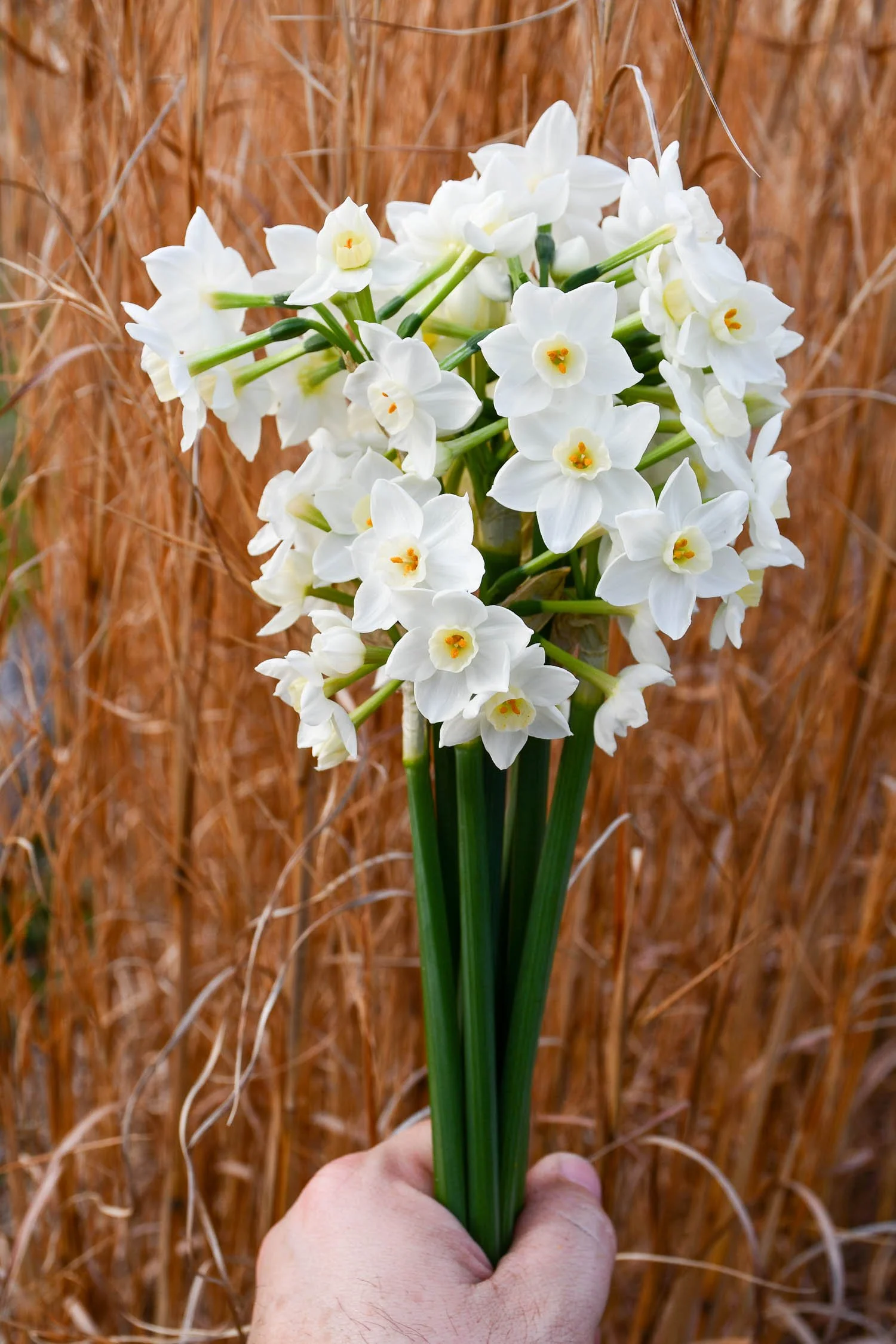
Narcissus tazetta and Andropogon virginicus
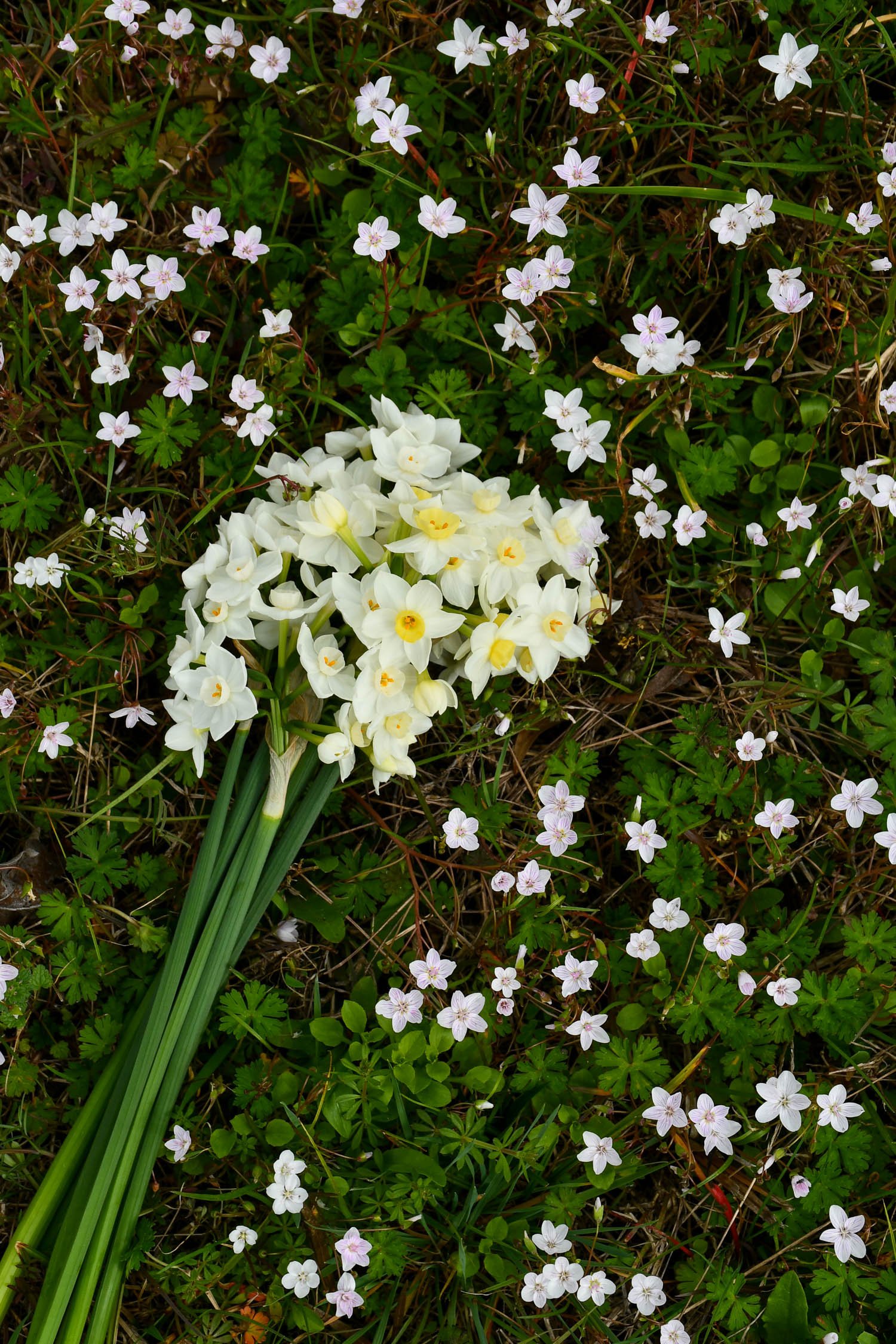
Narcissus tazetta and Claytonia virginica

Next, I consider the Narcissus × odorus that I’ve been hoarding for years in a bed in the back of the patch. I’ve found the perfect place for them. It’s a bit easier since it is now a mostly blank slate. East of our house is a glade that is now more open since we had two live oaks cut that suffered greatly from the -6°F freeze in 2021.  There is a large Magnolia ‘Susan’ in this space. It is here the campernelles will go. Both have very saturated petals, and I have the goal of adding more short statured Magnolias to this area to continue playing off the spring colors. And, yes, I do check to make sure their colors go well together, too.


Narcissus × odorus and Magnolia ‘Susan’


I’ll start moving the Narcissus after they finish blooming.  I don’t have issues relocating Narcissus in the green.  I just make sure that they get watered in well after I plant them.  Often I’ll choose a day or two right before a good rain comes for relocation.  

When placing Narcissus, I just have to remember that they don’t always look this way, and that after they bloom, I’ll have the foliage to look at or deal with over the next three months until it either fades away or is trimmed around Mother’s Day.  The delayed cut back ensures the bulbs can store enough sugars for more handfuls of blooms next year.

In plant profiles 2022-2023

Winter Wonders at the Atlanta Botanical Garden

February 18, 2023

Last week, I shared some gleaned nuggets of knowledge from the Atlanta Botanical Garden’s day long symposium. This week, I want to share some photos of the garden and plants. Dr. Andy Pulte of the University of Tennessee at Knoxville joined me on a stroll through the gardens. My last visit to the botanical garden was 9 years ago as I was wrapping up graduate school, but this visit was my first one in the winter. It was fun to see the garden at a different time of the year and see what had changed.

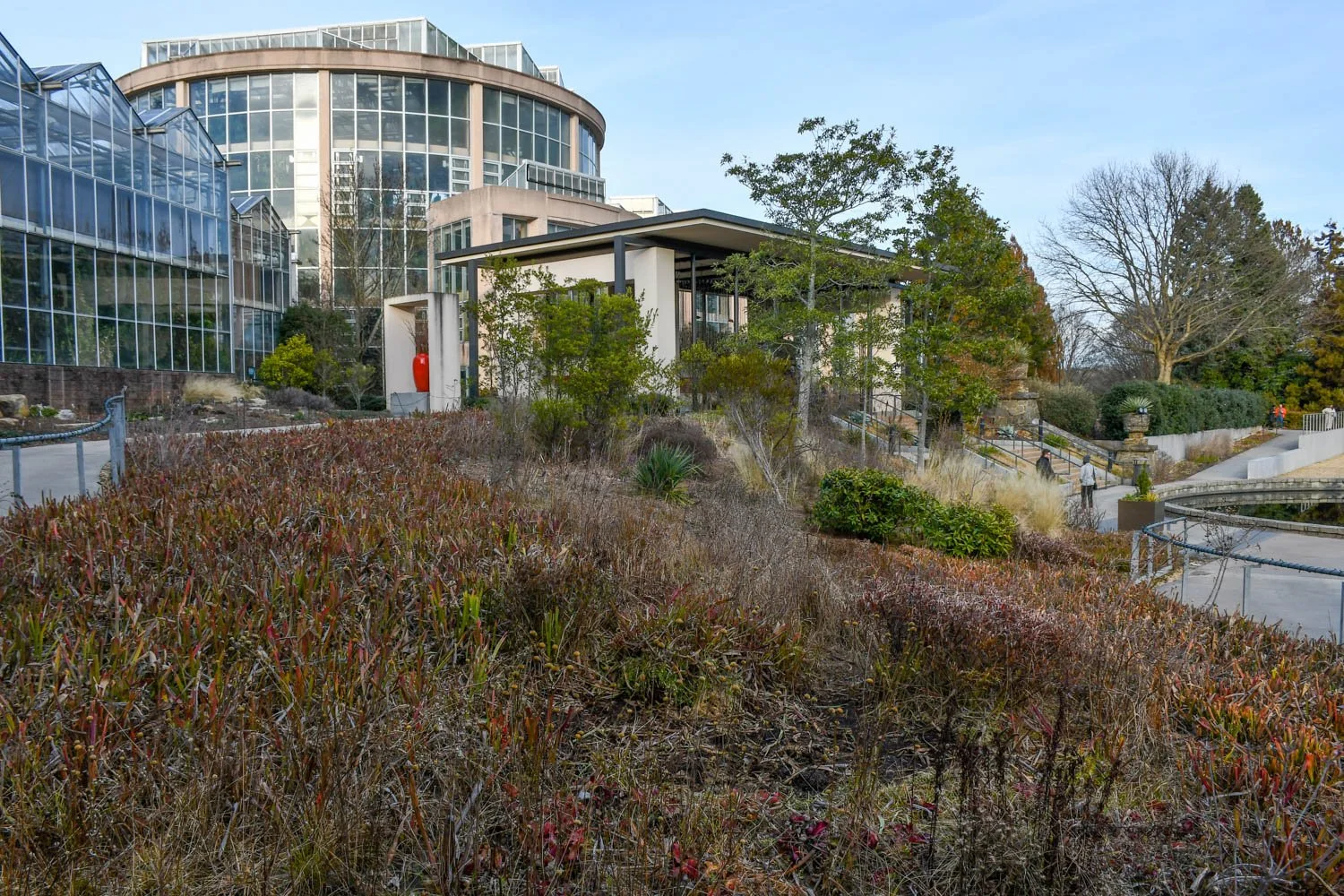
We first wondered around the Kendeda Canopy Walk. For a Saturday in January we noticed many people out and about enjoying the gardens. I also love these canopy walks for the shift in perspective they give people of being above the plants.

We admired the textural and color contrast between mondo and monkey grass that created the appearance of a river through this bed near the entrance.

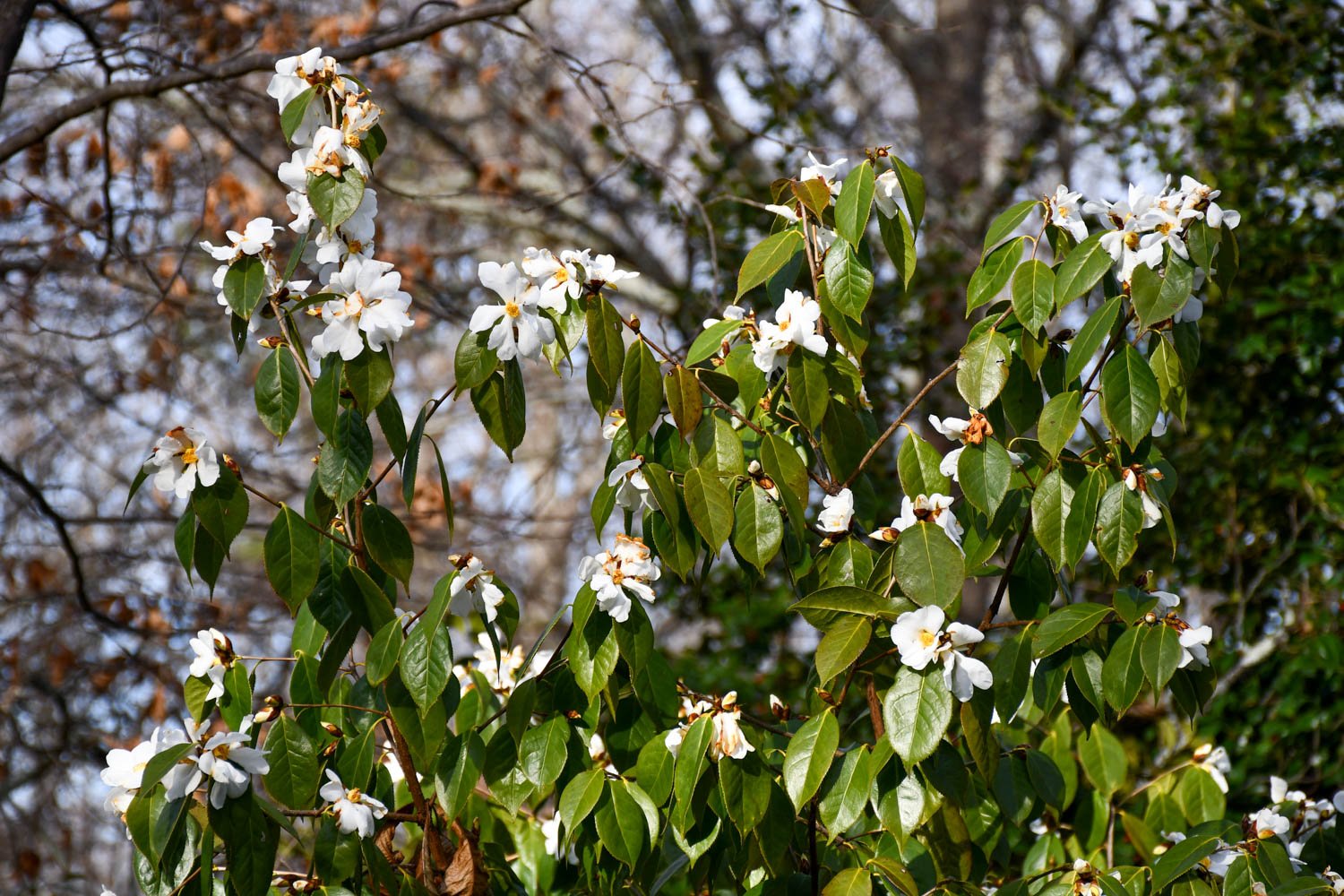
Camellia yuhsienensis (Yuhsienensis fragrant camellia) was in flower and seemed to survive the Christmas eve cold snap they had of 8°F well. The white flowers of this species are sweet and have a light fragrance.

It has been years since I have seen Sycopsis sinensis (Chinese fighazel). At first glance I thought it to be Parrotia since both feature these red staminate flowers, but what little evergreen foliage held on was the giveaway. It is a nice small statured tree for landscapes.


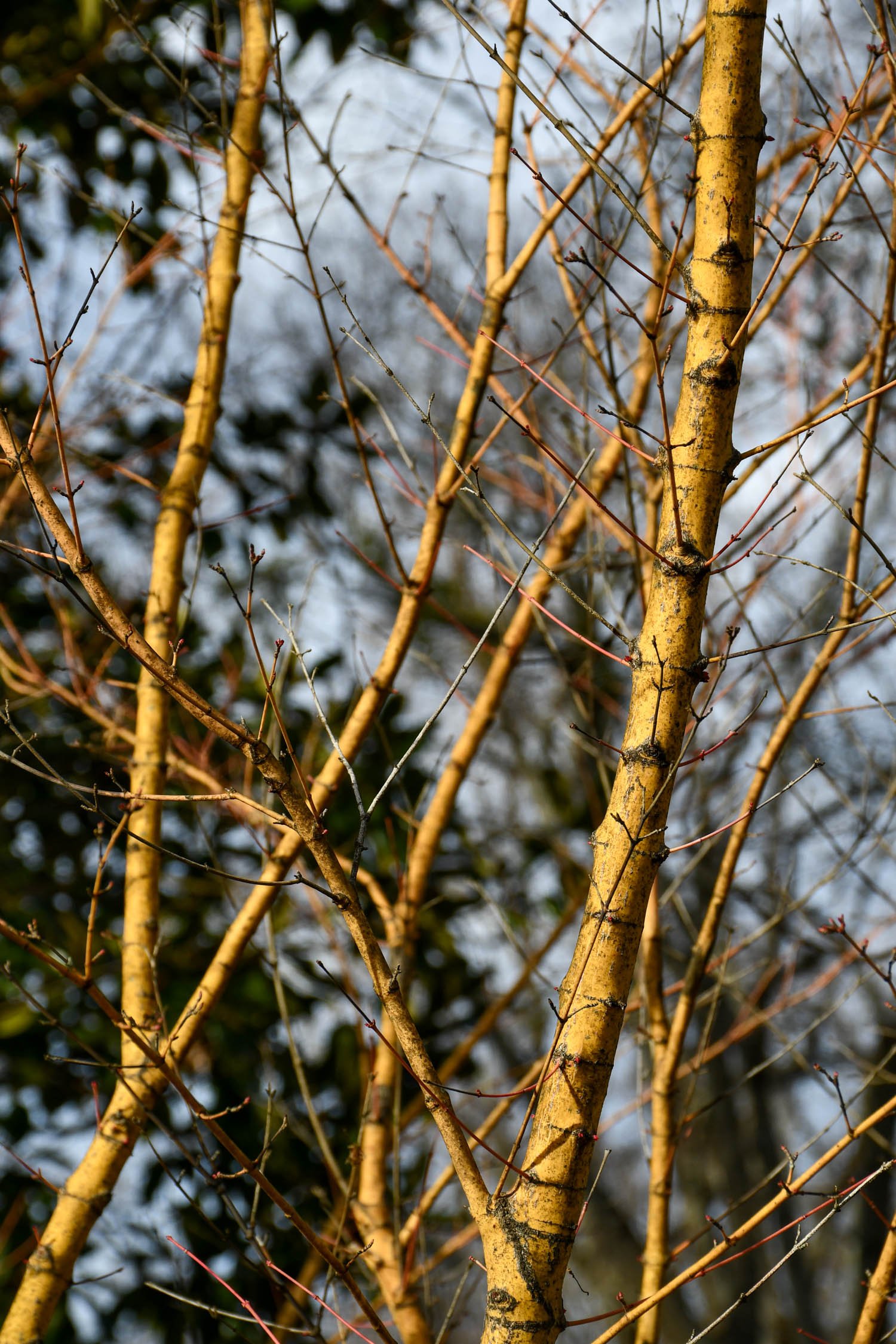
Acer palmatum ‘Bihou’ (Japanese maple) is one of my favorite Japanese maples for the wonderful yellow bark. Even once specimens mature a bit, they still retain that coloration. Selective pruning can be done to get more of the reds and oranges in the new growth.


Edgeworthia chrysantha (paper bush) were in full bloom and perfumed the entire landscape around them. It really is remarkable how far the fragrance travels in the air.

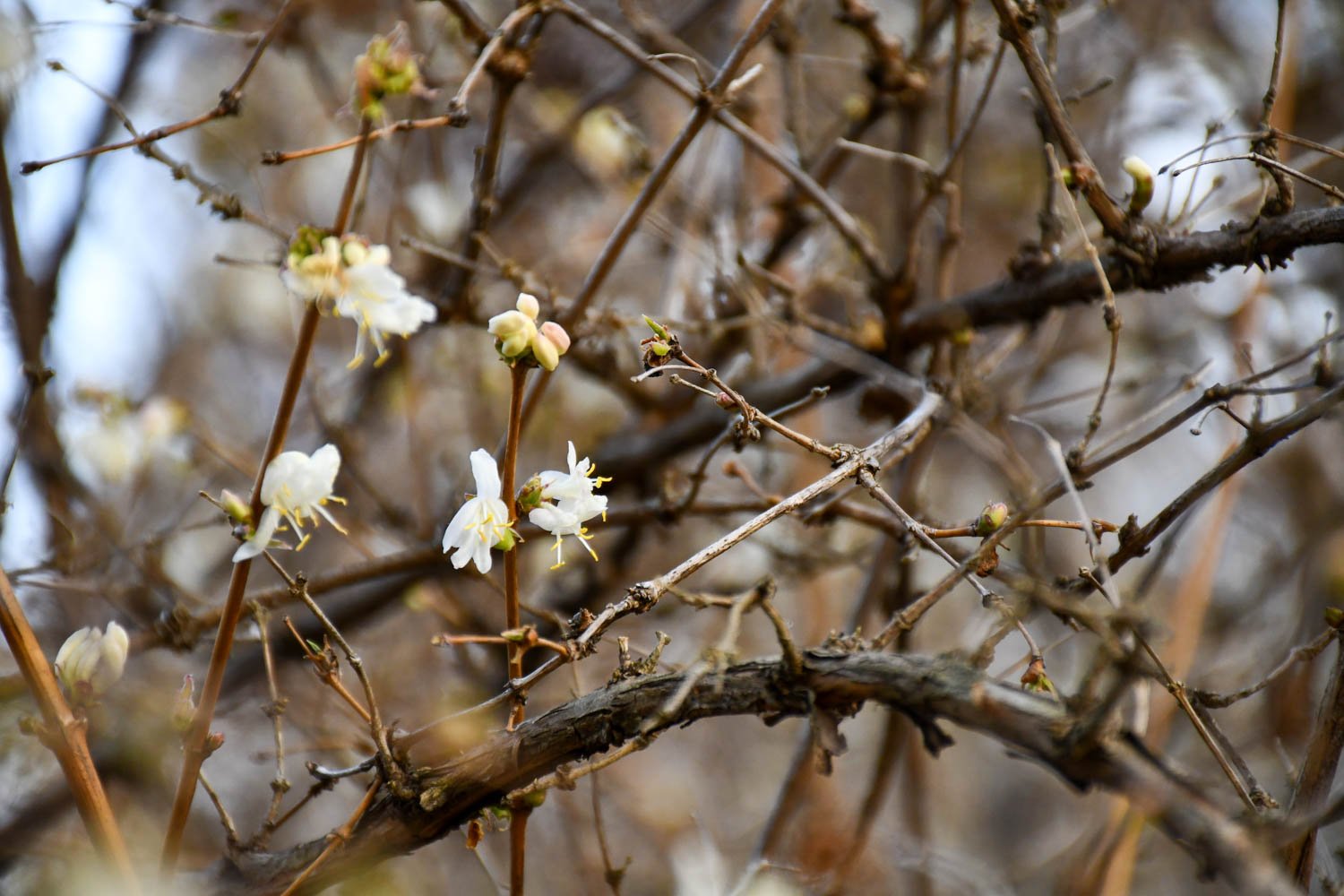
Lonicera × purpusii (hybrid winter honeysuckle) is a fragrant winter flowering shrub. It is a hybrid between Lonicera fragrantissima (winter honeysuckle) and Lonicera standishii (Standish honeysuckle).

A new plant to me was Lindera reflexa (mountain spicebush). Even if the plant didn’t do much during the growing season I would grow it solely for the verdant bark.

A close up of the Sassafras-like buds of Lindera reflexa

We wandered through the Edible Garden where a number of vegetables still looked good for midwinter. I love their faux fruit on the espaliered trees behind, too.

They also had these nifty signs in the Edible Garden for teaching people about plants. Here, the use of sorrel is encouraged.

Throughout the garden were origami sculptures as part of an exhibit. This piece was titled Scents of Gratitude and is a bouquet of a variety of origami flowers.

In the conservatories they were getting their orchid exhibit set up. I love to see the behind the scenes approach to how these displays come to be. Each orchid tray has flagging tape to prevent the orchid spikes from falling or breaking.

One of the neatest orchids we saw was Dendrobium spectabile (grand dendrobium). It has these fascinating curled and twisted petals.

The carnivorous plant bog was designed to be like a bog in nature where water can seep through the bed and not become stagnant. You’ll notice there’s a slight slope from left to right.

I loved these imbricate buds on Rhododendron colemanii (Red Hills azalea).

Another shot of the buds of Rhododendron colemanii to illustrate their diversity. They look like painted Easter eggs.

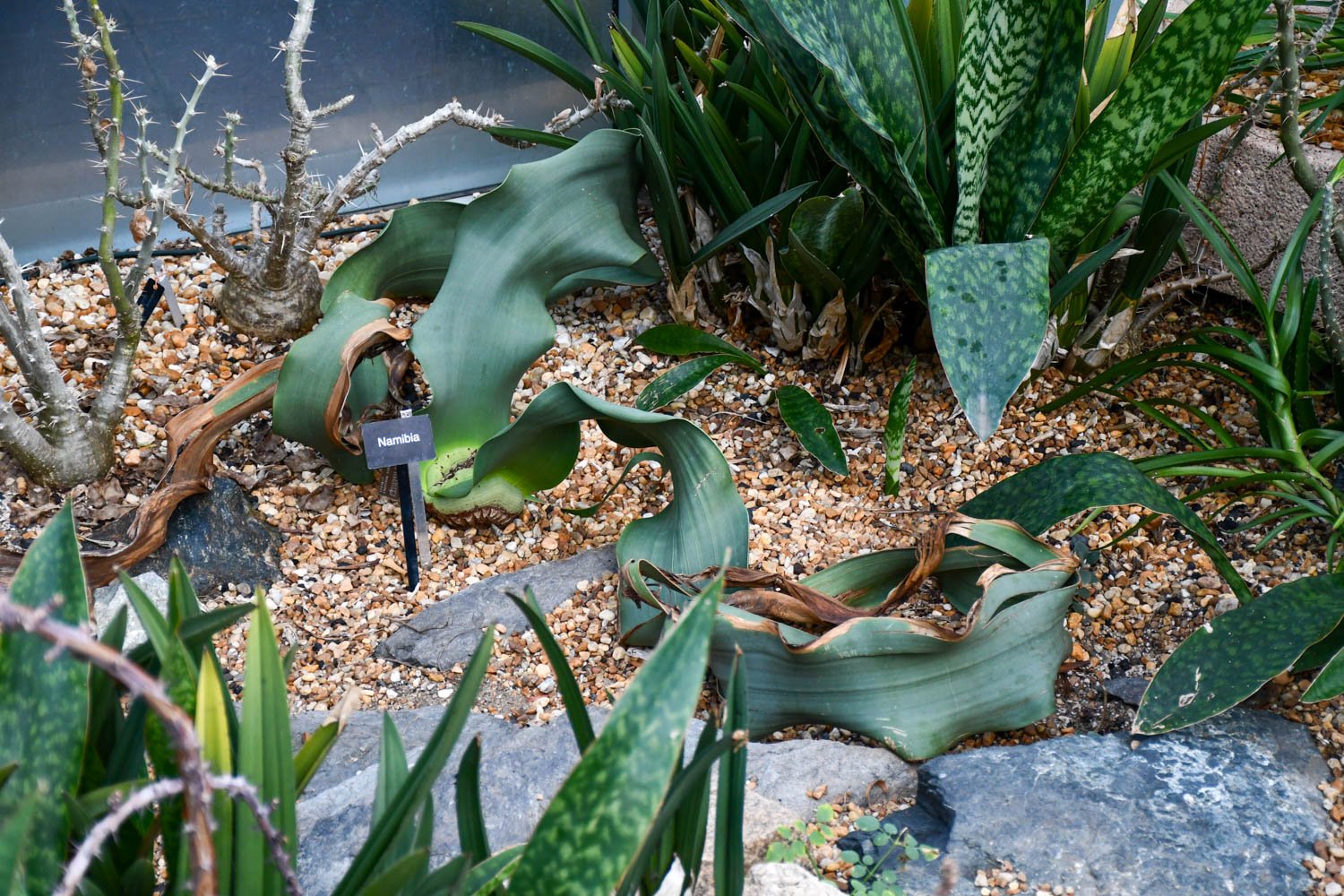
Welwitschia mirabilis (welwitschia) is one of the most fascinating plants on the planet. It’s has cones like conifers, it only has two leaves that can grow over 10 feet, and it is suspected plants can live for over 1,000 years.

The semi-double flowers of Prunus mume ‘Rosebud’ (flowering apricot) were just starting to pop into flower.

Ilex verticillata ‘Winter Gold’ (winterberry) berries were still showing off even as they begin their decline.

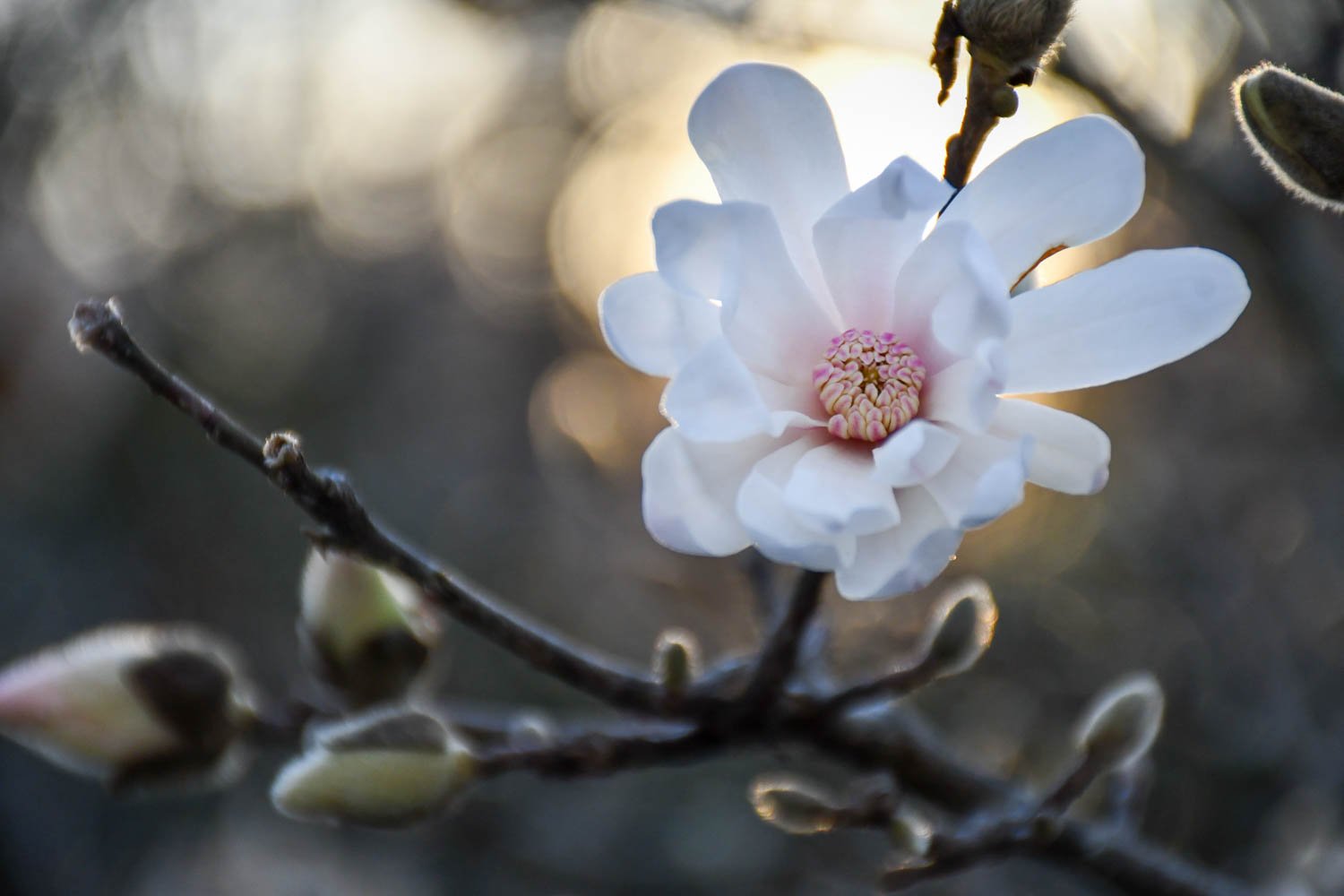
Magnolia stellata ‘Star Dust’ (also banner image) in the glow of another star. (A note on this variety. I can’t seem to find out anything about it, which makes me wonder is it new or a synonym for another cultivar? It is not ‘Pink Stardust’.)

In garden travels

Notes from the Atlanta Botanical Garden

February 11, 2023

I’m processing through my notes and photos from my recent trips to Atlanta and New York City. Here’s a few thoughts I jotted down from the Atlanta Botanic Garden’s Spring Gardening Symposium.

DR. ANDY PULTE | REWILDING

The first talk was by Dr. Andy Pulte (pictured with me above) on Rewilding and naturalistic planting. 

  • I have long been curious where the bedding plant craze originated. He shared how in Europe after the discovery of new annual plants, carpet bedding became the rage, and then it faded away as gardens became more wild.  But, carpet bedding came to the United States after the Civil War, and he joked that it never left.

  • One of Andy’s biggest take aways was for gardeners to start small when shifting their gardens to become more naturalistic.  He encouraged them to plant something for a butterfly and start to leave stems up in the winter.

  • Andy also shared this awesome app called Sunseeker that lets you know where the sun will be in the sky using your phone and augmented reality. It is really nifty for those of us interested in how sunlight and design interact at different times of the year.

ETHAN GUTHRIE | PLANTS WITH PROMISE

Ethan Guthrie, the greenhouse and nursery manager at Atlanta Botanical Garden’s Gainesville location, was next, and he shared a slew of plants that he felt offered promise in our gardens. A few that I noted as interesting:

  • Tricyrtis ‘Lemon Twist’, which he encouraged us to buy it if you find it

  • Iris × amplifolia ‘Ming Treasure’ is a flowering powerhouse of an iris!

  • Scutellaria ‘Appalachian Blues’, a new hybrid skullcap that is a hybrid between Scutellaria serrata and Scutellaria ovata

  • Agastache MEANT TO BEE ‘Queen Nectarine’, a plant that I also saw thriving in Dallas back in October

  • A new redbud for me was Cercis chuniana. It blooms on racemes where the flowers can have this lovely bicolor pink and white once the flowers fade a bit, and in the fall the tree offers red foliage, too.

  • Ethan is a magnoliaphile, and he shared the new Magnolia ‘Blackbird’, a hybrid between ‘Yellow Bird’ and ‘Genie’ that flowers later when the yellows typically bloom.

  • I also loved the Magnolia × soulangeana Verbanica Broom, which was a witch’s broom off a Magnolia × soulangeana ‘Verbanica’. Plants were probably three feet tall and loaded with flowers. This diminutive selection doesn’t have a cultivar name just yet.

JOHN WHITTLESEY | LIVING WITH BUMBLE BEES — BY DESIGN

John Whittlesey shared such fascinating information, and it was touching to see someone who cared so much about bumblebees. I learned so much that I didn’t previously know.

  • Bumblebees can generate their own heat. So, they can fly during chiller weather when flies are typically the only other pollinators out.

  • A bumblebee can visit 6000 flowers a day. When bumblebees visit a flower for the first time, it can take them about 10 tries to access nectar to learn how to get to it.

  • Male bumblebees don’t come back to the nest at night. We see them asleep on flowers the next morning.

  • He also talked about the fascinating process of sonication or buzz pollination, where bumblebees vibrate on a flower and cause the pollen to release.

  • He recommended books by Dave Goulson like A Sting in the Tail for us naturalists.

Jennifer Jewell | Invitations to and from the Garden: Cultivating Place & a Garden Culture of Care

Jennifer Jewell provided a wonderful close to the day by focusing on this idea of invitation and how gardens and plants can invite people from all walks to life to explore, grow, and thrive.

  • She talked about how all cultures have at sometime gardened in the past, and that her podcast Cultivating Place was a way for her to learn about the diversity of plant experiences out there. She talked about a few gardens and gardeners who she felt best imbued this sense of invitation.

  • Detroit Flower House was new to me. It was an incredible floral art exhibit in 2015 in Detroit where a run down house was filled with flowers by top floral artists. The house was later demolished and now features a park in its place.

  • She talked about the Los Angeles Natural History Museum, and how they had transformed a parking lot into a garden. To welcome people from all cultures, they had signage available in multiple languages. She said this garden changed the way people think about plants. For example, they taught people that instead of viewing dead plants as lifeless they could think this dead twig could be part of a hummingbird nest. She also shared the idea that there being just one type of beauty for gardens is insane. She knew an entomologist that said if I don’t have bug sounds in my ears the garden isn’t beautiful.

  • She also talked about the origin of Theodora Park in Charleston. It was a beautiful story about how David Rawle passed this unkempt, overgrown lot daily and decided he wanted to turn the spot into a garden in honor of his mother. She shared how not all the seating was bolted down in the garden because his research had shown people feel more comfortable if they can move chairs around and configure them. And, so far no chairs have been stolen. This park was a place of solace after the Mother Emanuel AME Church tragedy, which is only a block away.

Next week, I’ll be back with some of my favorite plants from the Atlanta Botanical Garden.

Welcome to Ephemera Farm

January 21, 2023

The idea came to me weeding, like many good ideas do. There’s something about ripping life out of the earth that primes the mind for thought.

It was a bright, sunny morning in April, and I had been thinking about my frustrations of trying to decide on a name for this place that we garden. I had iterated through dozens of ideas over the past five years when all of a sudden they crashed together into two words.

Ephemera Farm.

It’s almost if the ground spoke it for in that small moment all the other small moments I so wished to revere were incapsulated in a name.


We name things to be able to talk about them, even gardens. James Golden has Federal Twist, Stephanie Cohen has Shortwood Gardens, Jimmy Williams has Tennessee Dixter (a play off Christopher Lloyd’s Great Dixter), Andrew Bunting has Belvidere, and Vita Sackville-West had Sissinghurst. With a name, a story can be told.

But, giving a garden a name is scary. A name says that the place is here to stay, that there is a permanence to it. Giving a garden a name is also a difficult decision. The name has to feel right and have an energy to it.

I kept struggling because I wanted to name it after something that perfectly described our smallholding here in east Texas. The challenge was what to name it after as there are so many things that we love.

  • The bright full moon of January shining through the barren tree branches.

  • The silence of snowfall in February broken only by the chirps of birds searching for food.

  • The first flowers of March and the fragrance they perfume on the south winds.

  • The fireflies that emerge in April and dance in the gloaming.

  • The Monarchs that break out of their chrysalises and head north in May.

  • The first tomato of June warmed by the sun and when bit juice drips down the wrist.

  • The last Wood Thrush that sings its song before migrating in July.

  • The butterflies that swirl themselves above plantings in August.

  • The asters that start to pop in September with shortening days.

  • The first cold morning of October where I can see my breath.

  • The blazing foliage that manifests in the woods in November.

  • The gifts that December gives us to use in winter decor.

It seemed like every month something small would cast its vote to have its essence tied to a name. And, with all these little moments, it is hard to pick a favorite.

Until, with a handful of weeds in my hand, I realized that perhaps instead of naming this place after one little thing why not name it after all the little things that make life worth living. These small moments that we love and cherish in the garden don’t last forever and may occupy mere seconds of our day before fading away.  They are ephemera, seemingly insignificant, but when added together over a season or a life are greater than the sum of their parts. Ephemera Farm is be a place to celebrate these little moments and a place to learn and then share how we can garden better.


Sometimes when I’m out in the garden and one of these fleeting moments passes me by, I think is this the last time? Is this the last time that I’ll see the glistening hoarfrost melt against sunrise or strain to hear the song of a Whip-poor-will through the trees or watch leaves dance as they fall to the earth from a good gust or glimpse fog rolling out of the woods after a rain?

I’m in my late thirties, and statistically, my time on earth is half over if one looks at the average life span. I’m not trying to sound morbid or put myself in the grave yet, but such thoughts keep me grounded, humbled, and centered as a person. I pause to appreciate these ephemeral moments and remind myself of how special and rewarding the gardening life is. After all, life is but a vapor.

So, when you come, I can say welcome to Ephemera Farm. We are going to live in these little moments and soak them up. Even the mundane like pulling weeds.

The Colorful Twigs of Winter

January 14, 2023

In the winter I feel my perception of the garden is elevated.  Like when I can’t see because it is dark and all my other senses are heightened.  I notice things that I might otherwise overlook. The catkin swelling on an Alnus. The first sliver of color showing in a Magnolia bud. The swirl of foliage appearing from Pedicularis. These little things are celebrated in the dearth.

The garden is a bit more barren this year after the cold snap we had a few weeks ago. Gone are many of the flowering annuals that overwinter—snaps, pot marigolds, stock, and honeywort. Even pansies and violas took a hit. It’s a bit depressing in thinking about that time wasted planting them. Even some of my shrubs suffered. We are without flowers this year on Edgeworthia chrysantha (paperbush).

I learned long ago that color on growth organs like leaves can be more reliable than flowers. The same applies to the woody tissue, too. Colorful plant stems have long been an aesthetic I’ve gravitated toward in the winter time.  As a kid I marveled at the red maple regrowth along fencerows where they were cut every year to prevent them from reaching the power lines above. Their fresh shoots were rich with hue in winter and looked like they could be coloring pencils if cut and sharpened. And, I long wondered why they were so vivid until I discovered the color is solar protection and helps the plant deal with excess light when the sun is low in the sky.   

Cornus amomum ‘Cayenne’

Vaccinium ashei ‘Powder Blue’

Salix ‘Flame’

I do have a few favorites. I love the red-twig dogwoods. Oh, how I have longed to be able to grow Cornus sanguinea that I see en masse in plantings in England where one has to do a double take to make sure the planting isn’t on fire.  But, I have so far killed at least two of them here in Texas.  Mom and Dad still have a ‘Winter Beauty’ (aka ‘Winter Flame’) outside my window back home in Tennessee that grows quite well (header image). 

I have made do with Cornus amomum ‘Cayenne’.  My friend Jason Reeves of UT Gardens in Jackson, TN recommended this silky dogwood to me. He shared how this selection was found by Dr. Michael Dirr in a swamp in Virginia. In its first year here, this eastern US native is thriving.  The winter color is a little lacking compared to Cornus sanguinea, but beggars can’t be choosers. From where I sit writing, the red pops against the dark mass of what’s left of Helianthus angustifolius. Both like the wet spot.

I also discovered that the new stem growth on Vaccinium in winter can be very attractive.  After plants drop their crimson foliage, we are left with stems that turn a muted red. ‘Powder Blue’ is one of my favorites that has winter color in the stems and glaucous leaves that turn a brilliant red in autumn. 

And, of course, I have loved Salix ‘Flame’ since I set eyes on it many winters ago at the JC Raulston Arboretum in Raleigh, NC. It hasn’t quite decided if it likes it here yet, but I think I can coax the few I have into establishing well so their stems become a source of warmth in the landscape. 

Most of these plants benefit with a yearly or every other year cut back as the color is most intense on new growth (except the blueberry since cutting that back would remove the flower buds for spring and the delicious blue orbs that follow).  I use what stems I can in holiday and winter arrangements, and then cut the rest of the plant down right before buds start to break. 

And, it won’t be long now. Red maple tips are already swelling. Soon the landscape will wake, and I’ll have plenty of sights to see. But, for now the bright twigs of winter will help me see through the dark.

In garden notes, plant profiles 2022-2023, garden design
← Newer Posts
 

Use the below search bar to learn from my blog.

GROW YOUR PLANTING SKILLS WITH Dr. Jared
SAY HI.

© 2017–2025 Jared Barnes, Ph.D.  
All rights reserved.  Go grow some plants. #horticultureisawesome