With pollinator week upon us, I wanted to share some of my favorite plants in my garden that I have for the creatures that share our garden. If you’re looking for some options to create a more welcoming space, these plants are a great start.
Glandularia canadensis (rose vervain)
This native ground cover is one of the first flowers to bloom in our garden. Some years, it starts as early as February, and it usually finishes in early April. The rest of the year, the local selections tend to not bloom much. Out of bloom they weave themselves along the ground in our plantings, and I don’t see them until I do our cutback in midwinter. It’s always a delight to see where this ground cover has moved next.
I’m keen on the selection ‘Kathy’s Kandy’ from Tennessee. The brighter pink flowers appear around 10–11 months in our garden, which is quite a feat!
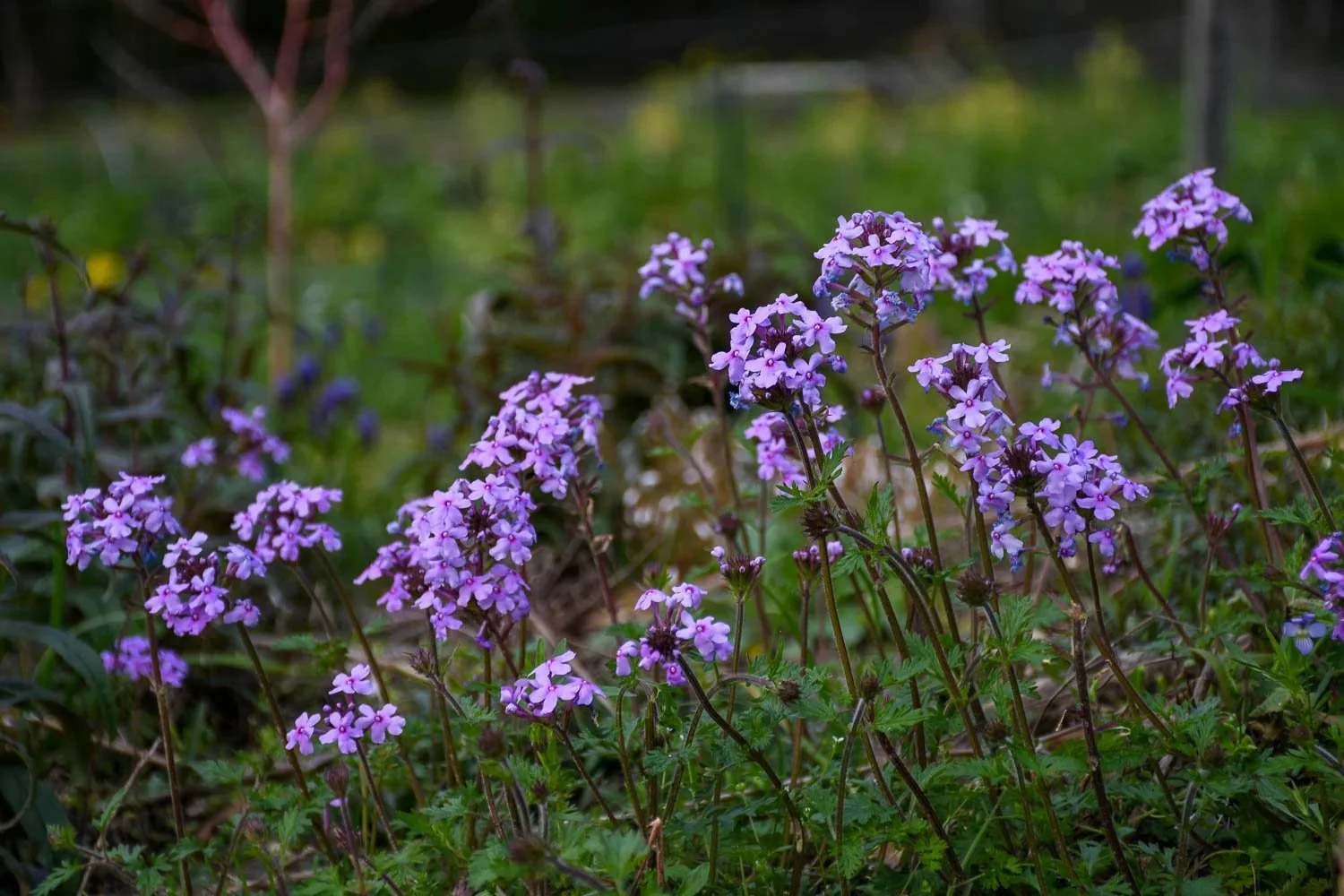
Glandularia canadensis (rose vervain)
Vaccinium virgatum (rabbiteye blueberry)
We love blueberries for eating, but they are great native shrubs to plant. I adore their dainty light pink flowers in the spring and their fiery autumn foliage later in the season. Why more gardeners don’t plant them for their beauty and bounty I don’t know.
They also support early native bees. But, there’s a trick! The bees must sonicate to access the pollen from the plants.
After learning about the southeastern miner bee’s preferences from this UGA guide, I’m going to plant Lupinus subcarnosus (sandyland bluebonnet) next to them next year. They also loved our Streptanthus maculatus (clasping jewelflower), so I’ll plant that nearby, too.
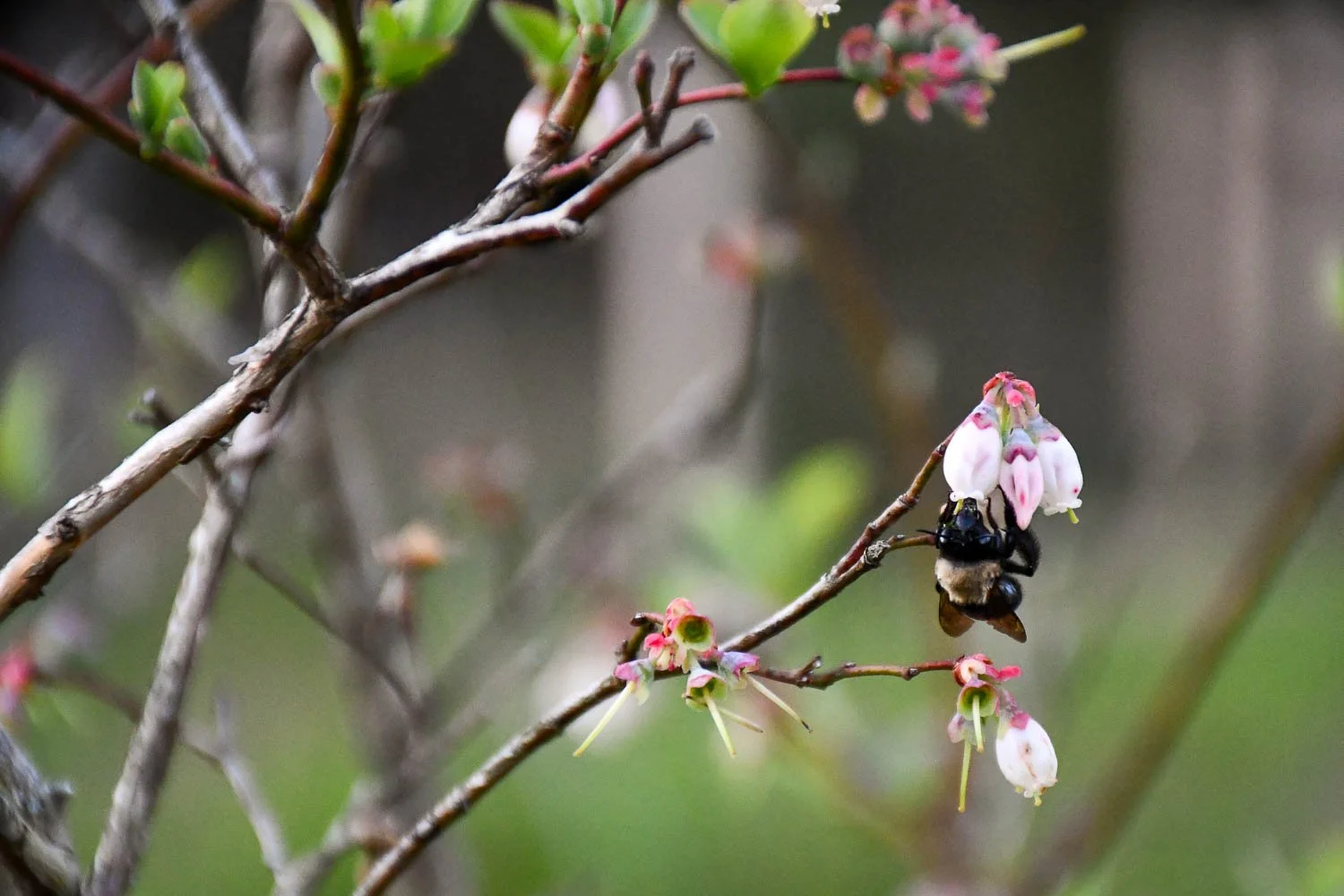
Vaccinium virgatum (rabbiteye blueberry) with Southeastern Blueberry Bee
Phlox pilosa (prairie phlox)
Phlox pilosa starts flowering for us in early March and goes through early May. It seeds around and spreads via rhizomes, so it’s always fun to see where it will appear next.
‘Bonnie’s Pink’ is a wonderfully floriferous selection that the swallowtails seem to enjoy a bit more just from observations I’ve made. As a plant it seems to be more dense and a little more upright over the wild types.
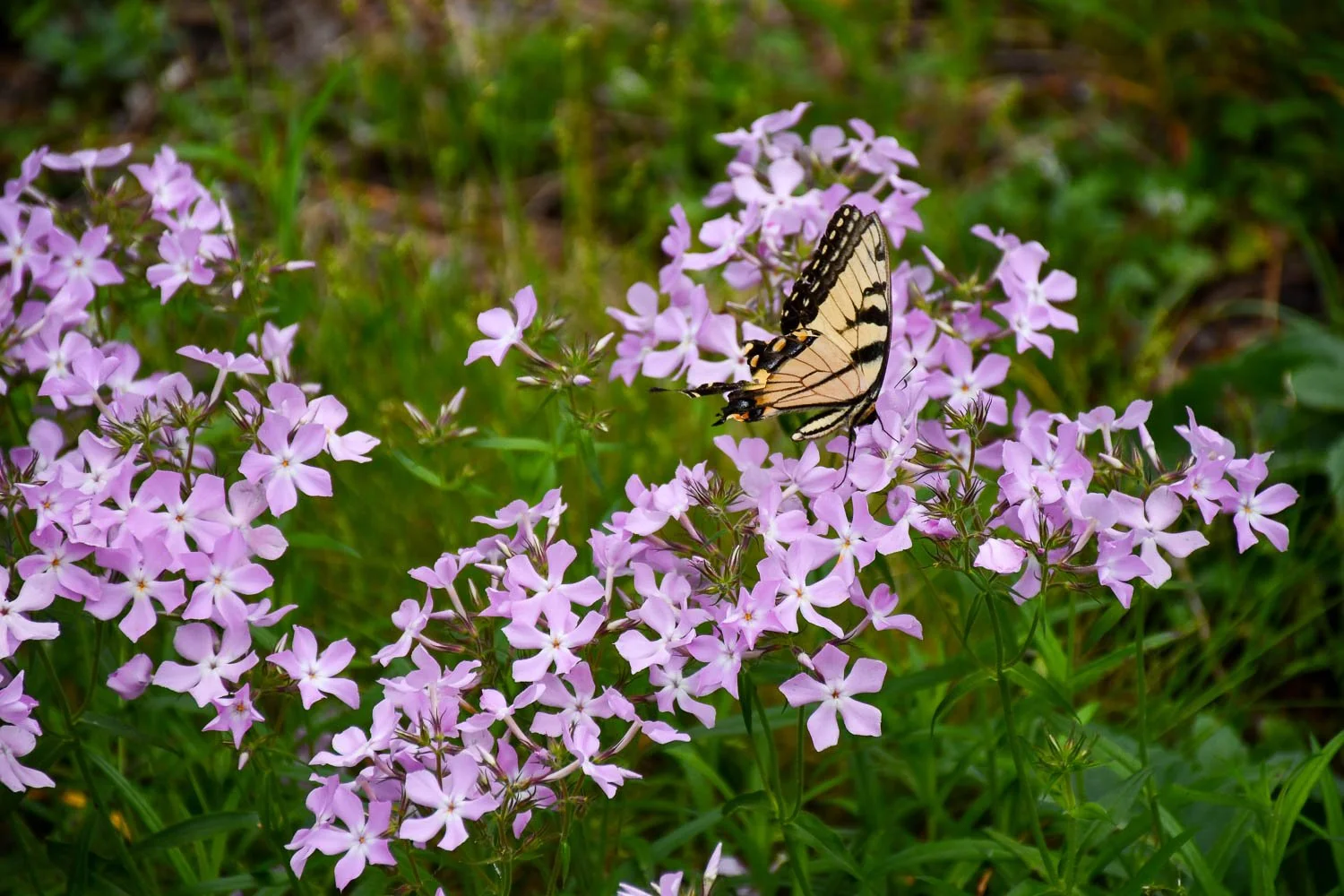
Phlox pilosa ‘Bonnie’s Pink’ (prairie phlox)
Baptisia alba (white wild indigo)
Baptisia is one of my favorite genera, hands down. I adore the fabulously fabaceous flowers that come in blue, purple, yellow, white, and more now with the hybrids.
As the season progresses, the seeds will turn black and be held above the foliage. And, then they go dormant for us in August. I cut some back, but I leave them where we want to enjoy the pods during the winter.
The foliage serves as a host plant for a number of butterflies. And, there’s this really cool pollination syndrome that occurs between Baptisia and bees. Baptisia flowers are perfect, meaning they have both male and female parts. The flowers when they first open are male, and the stamens are loaded with pollen. As the flowers age the female pistil becomes active and they have more nectar.
Flowers open from the bottom to the top on an inflorescence. Bees will start with the lower female, nectar-rich flowers and as they move up to the younger flowers they have more pollen. They get covered with fresh pollen and then they move to the lower flowers on the next inflorescence on the same plant or a different one. The pollen can then be deposited on the pistil and pollination occurs. How cool.
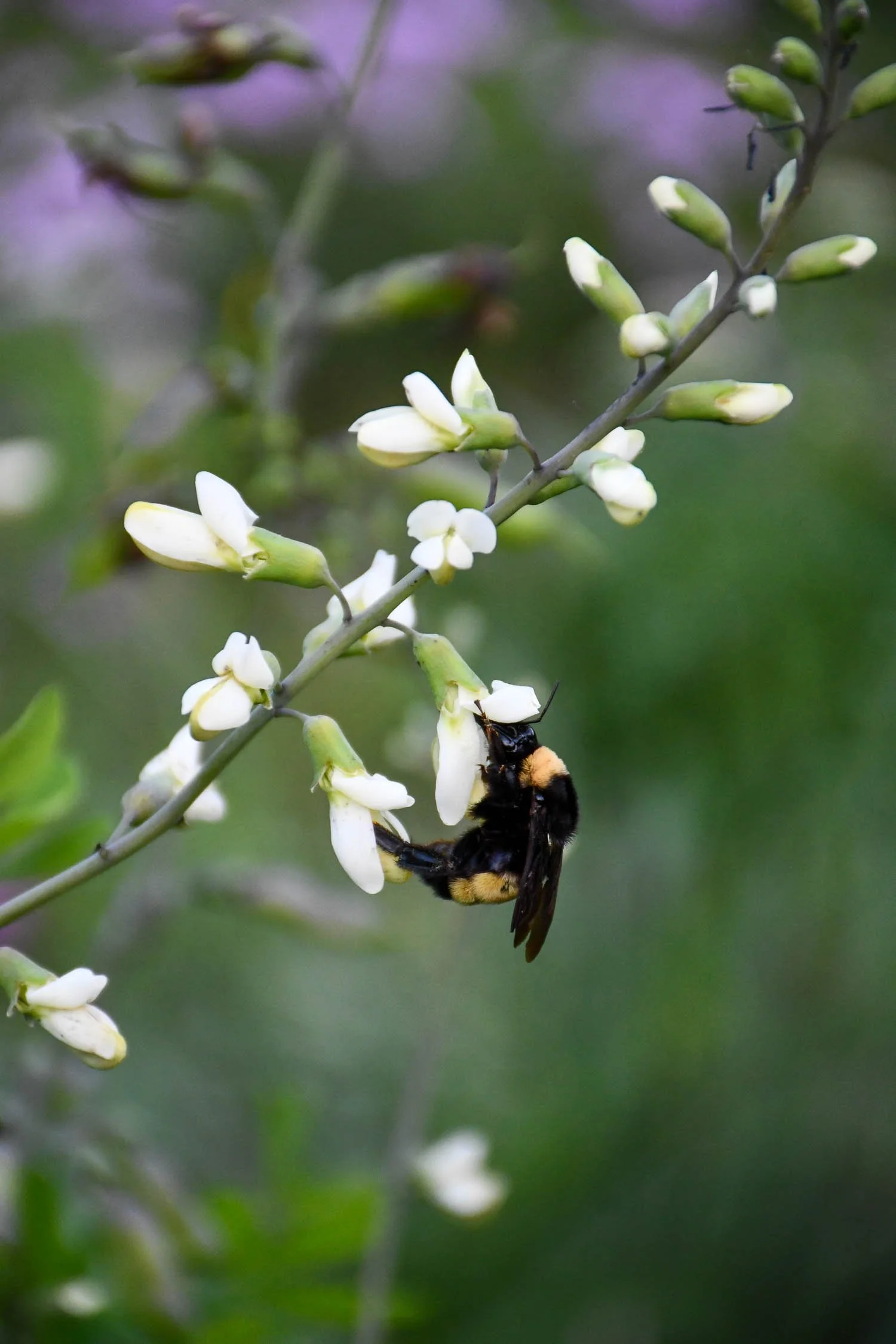
Baptisia alba (wild white indigo) with an American Bumble Bee
Asclepias viridis (green milkweed)
Our most plentiful milkweed locally is Asclepias viridis. Every year when the Monarchs come through they find these shoots emerging and lay little white eggs on the foliage.
It seeds around decently as well. And, I’ve noticed over the years after the roadside mowers come through in the summer and cut them back, these plants will actually bounce back well in July and August after we have a good rain.
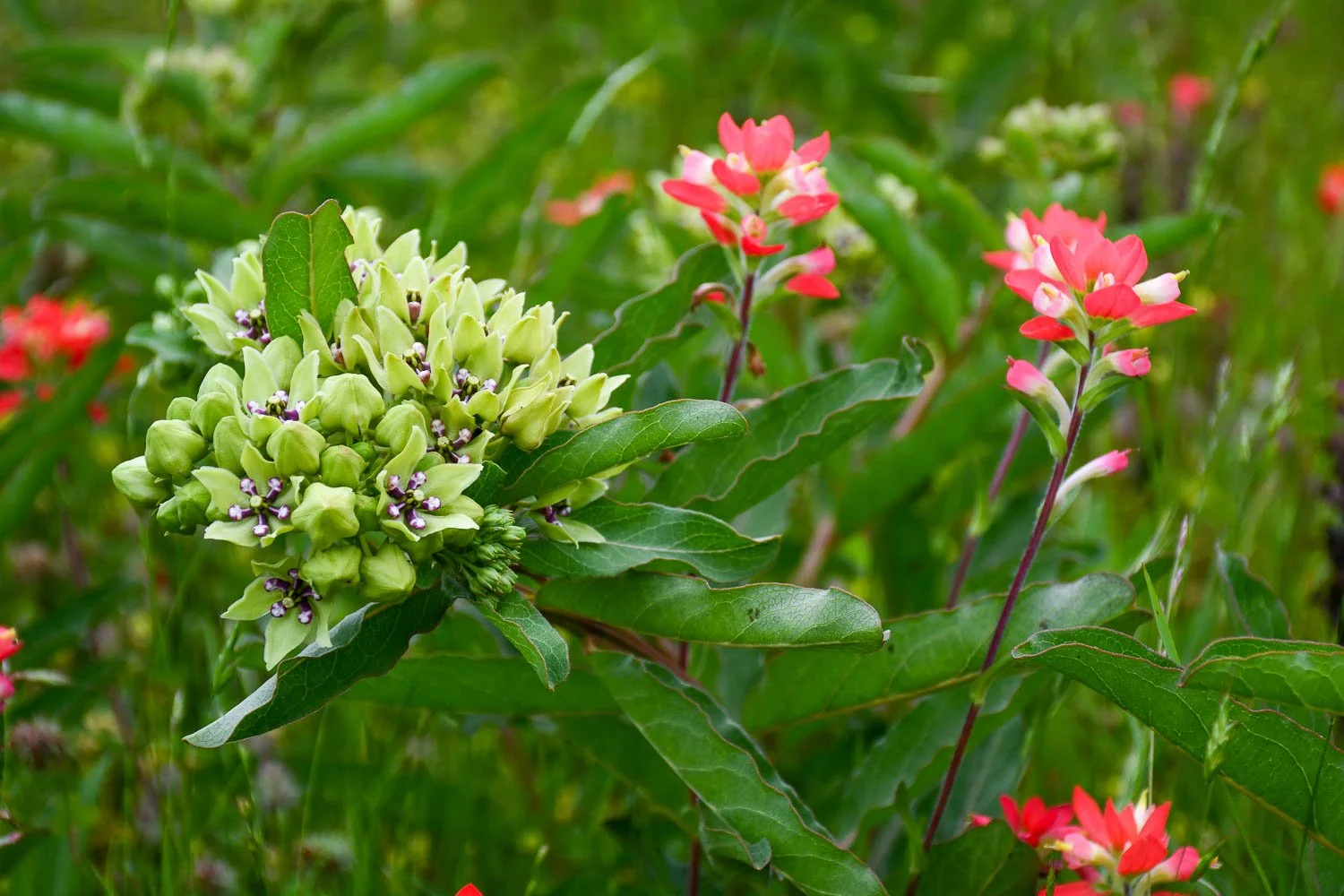
Asclepias viridis (green milkweed)
Penstemon digitalis (foxglove beardtongue)
We see a number of bees and hummingbirds flock to our Penstemon digitalis in the spring as they bloom right as the Baptisia are finishing up. There are a number of cultivar selections, but I’m happy with my locally sourced white-flowered form.
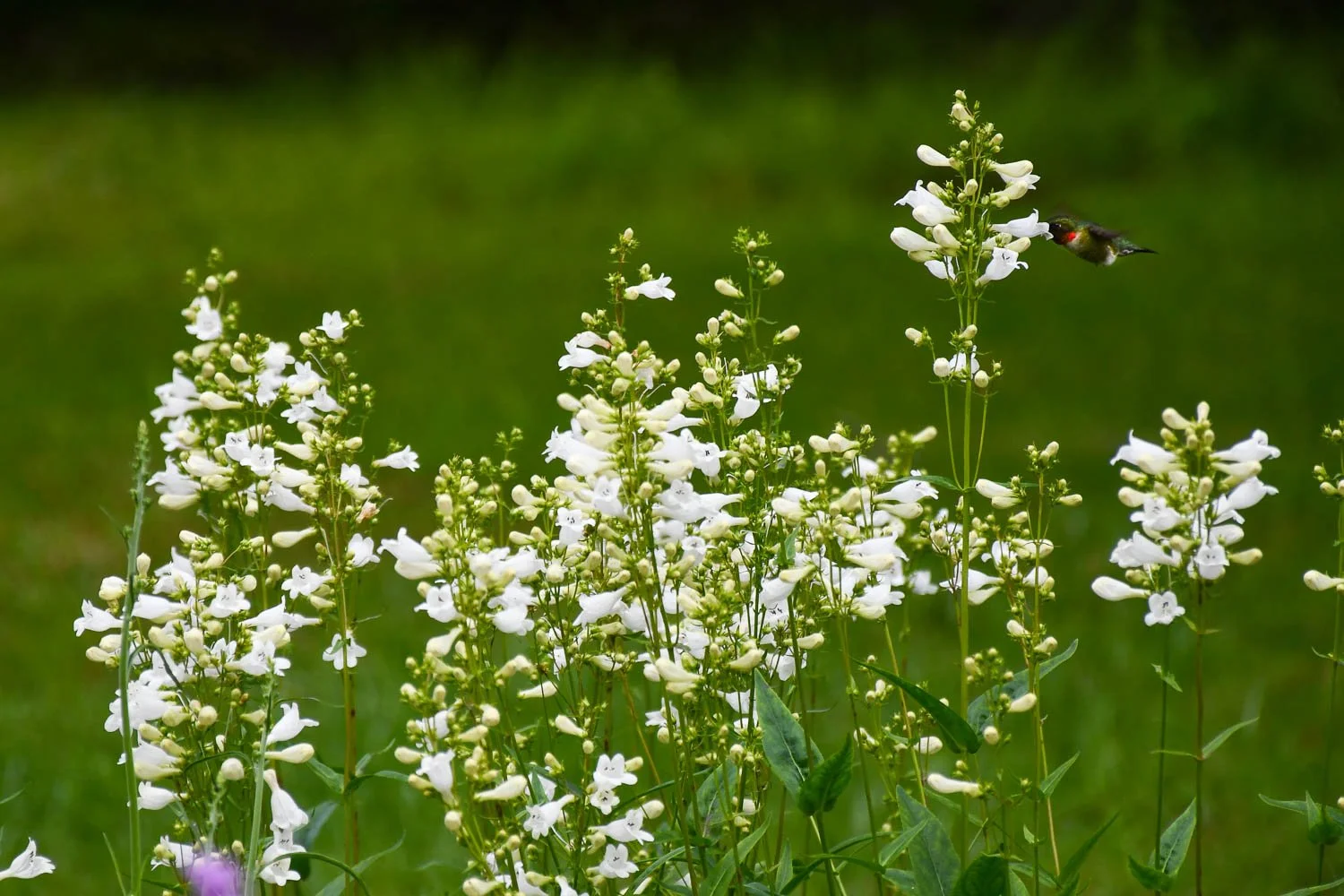
Penstemon digitalis (foxglove beardtongue) with Ruby-throated Hummingbird
Pycnanthemum sp. (mountain mint)
Mountain mints are pollinator powerhouses. The name comes from the Greek “pyknos” meaning dense and “anthos” meaning flowers. So, these clustered blooms on flat landing surfaces make it easy for insects to enjoy this plant. It’s like the plant turns an open sign on around 10 am because the bees, wasps, flies, butterflies, and more will flock to the large clumps.
Sadly, I’ve started to have an issue where my Pycnanthemum tenuifolium (narrow-leaf mountain mint) are dying out, due to a combination of voles and root rot. So, I’m turning to the more rugged Pycnanthemum muticum (clustered mountain mint). It’s thriving in our garden soils, and while it can be aggressive, it really deserves wider use. Just this week we’ve been enjoying the haze of pollinators above our clumps.
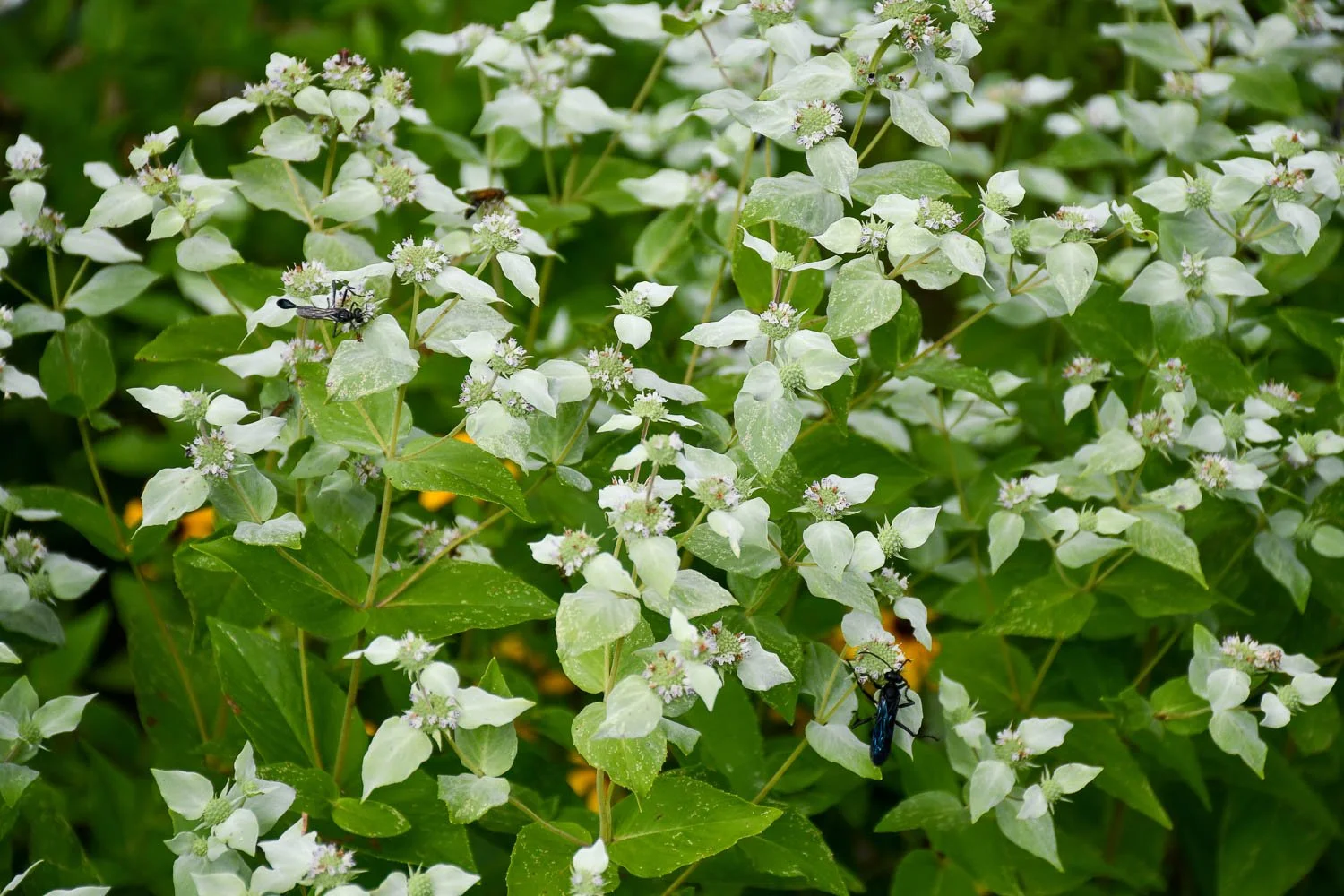
Pycnanthemum muticum (clustered mountain mint)
Celosia spicata (spiked celosia)
A research report out of UGA showed that Celosia spicata had the highest pollinator visits in their trial of plants for southern pollinators. Sure, as Heather Holm and I discussed on the podcast, they may just be visiting it for nectar, but I value it in our cut flower garden and know that it’s doing some good along the way.
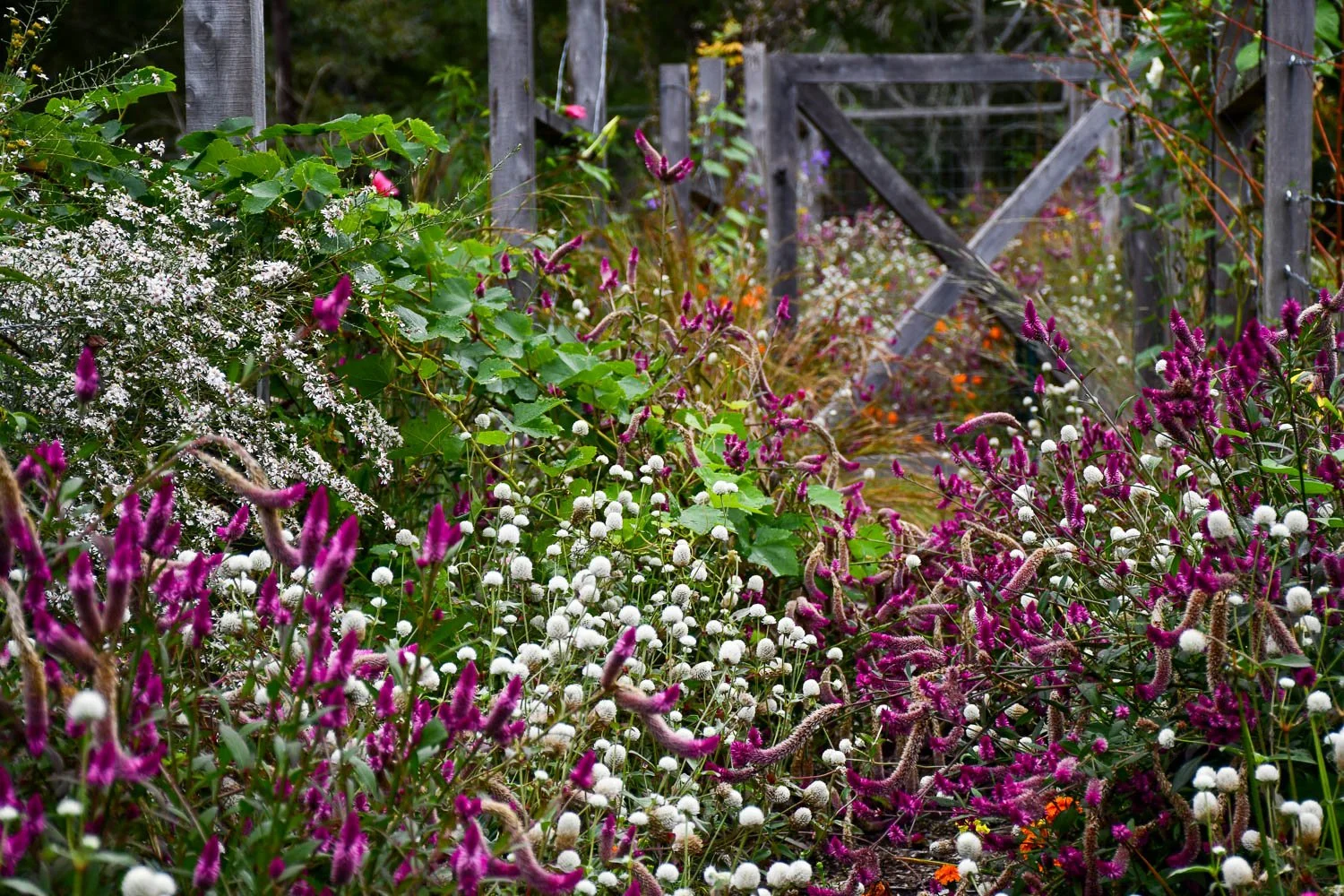
Celosia spicata ‘Ruby Parfait’ (spiked celosia)
Eryngium yuccifolium (rattlesnake master)
Penn State conducted a pollinator trial years ago, and they found that Eryngium yuccifolium (rattlesnake master) was one of the best plants for attracting pollinators. During the growing season, I love the glaucous blue foliage and stems that emerge in midsummer. Once winter comes, I enjoy the dark seedheads that hover above the grays and tans of our garden beds.
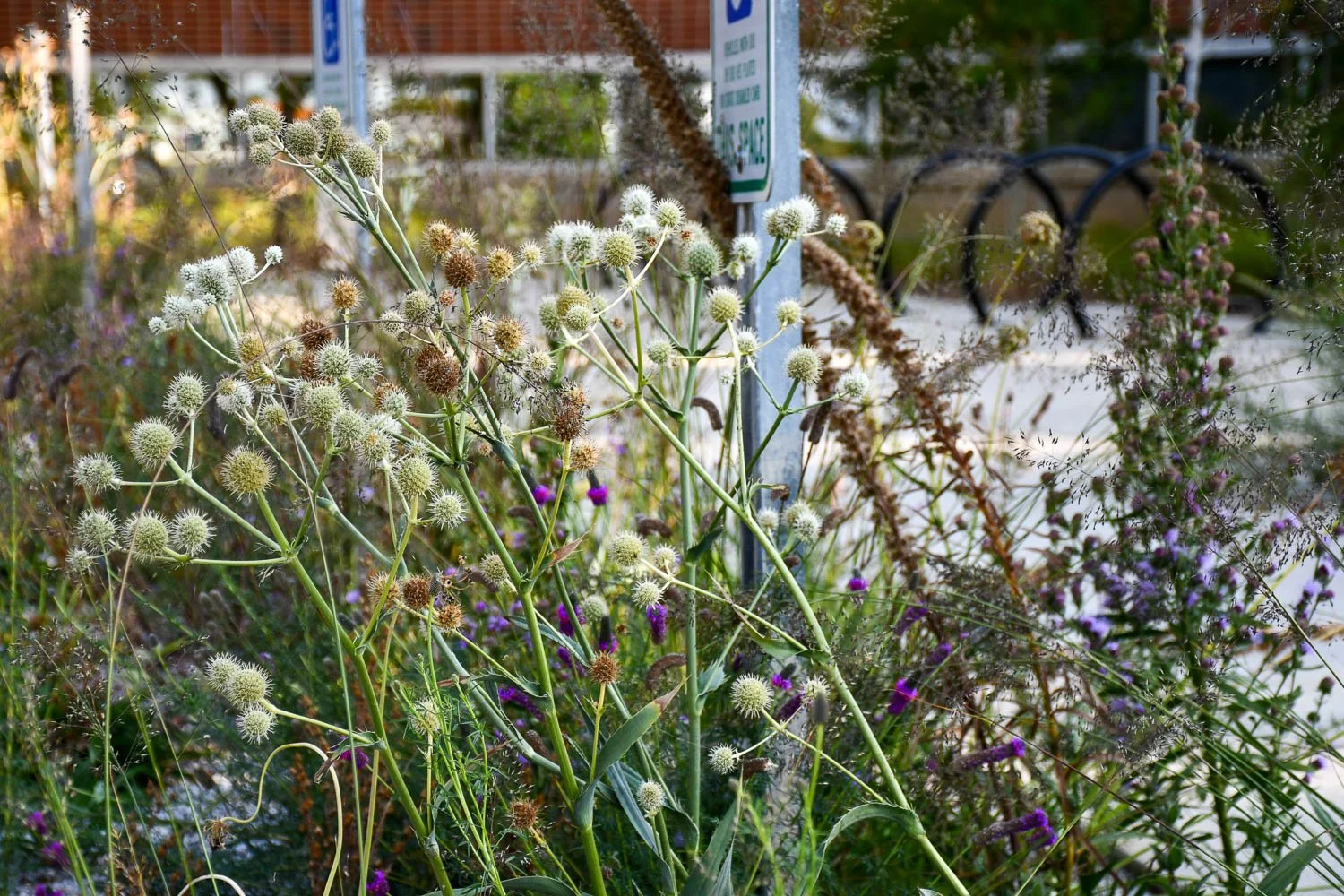
Eryngium yuccifolium (rattlesnake master)
Passiflora incarnata (passion flower)
When I see my passion flowers with hardly a leaf left on them, I know they are making some caterpillars very happy. We delight in seeing the brightly colored Gulf Fritillaries in summer and autumn. A few years ago, I stood on our porch and counted 24 of them dancing above the late-season flowers. And, as a bonus the flowers are also great about attracting bees in our garden.
These plants can be aggressive, so I would site them somewhere you’re ok with it spreading. I have the hybrid ‘Incense’ on a back fence.
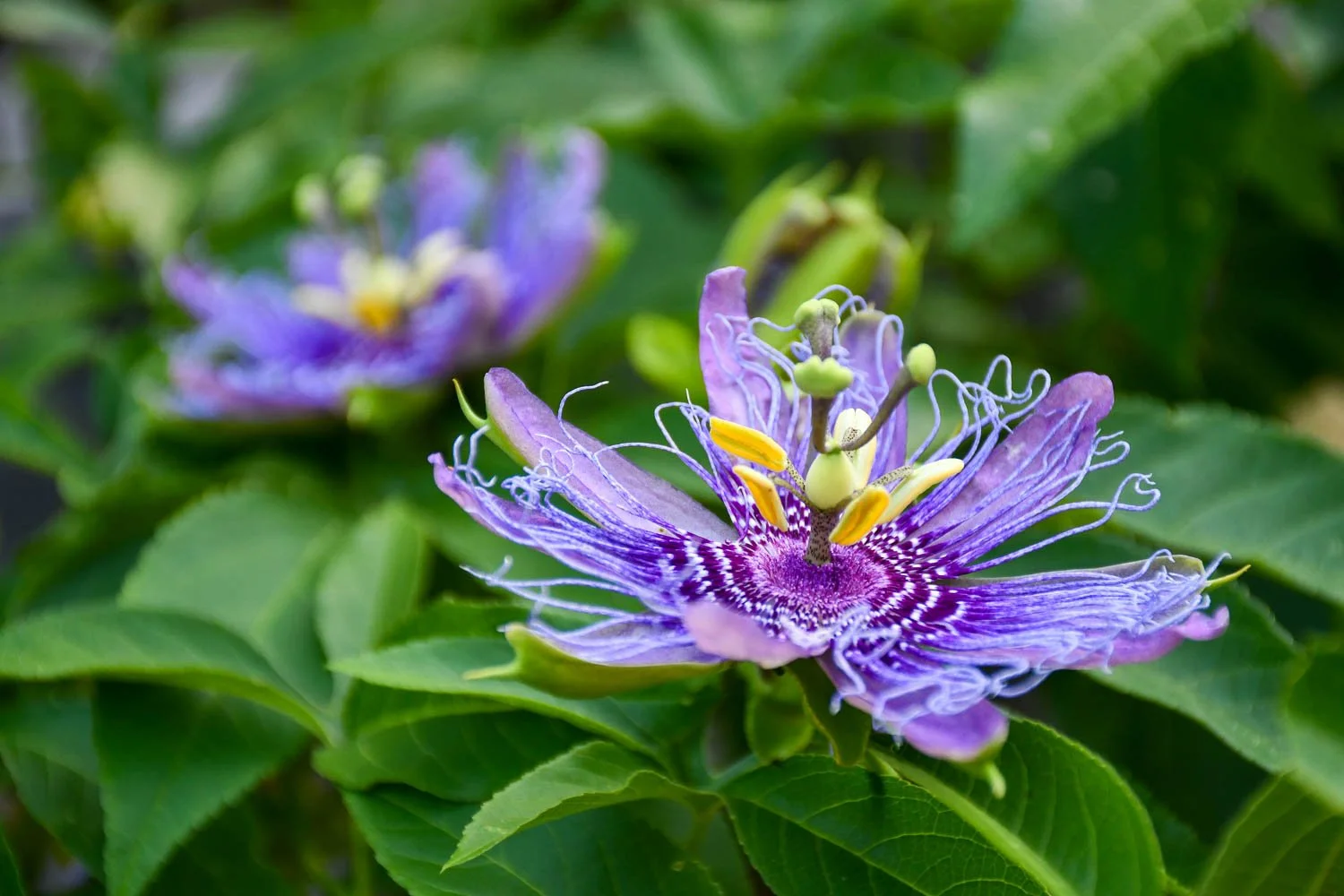
Passiflora ‘Incense’ (passion flower)
Silphium perfoliatum (cup plant)
My Silphium perfoliatum (cup plant) came from Stoneleigh in Pennsylvania, and it has been dynamite for pollinators flocking to the flowers here in east Texas. Ours bloom for at least two months through June into August. I also love its haunting black stems and leaves in the winter.
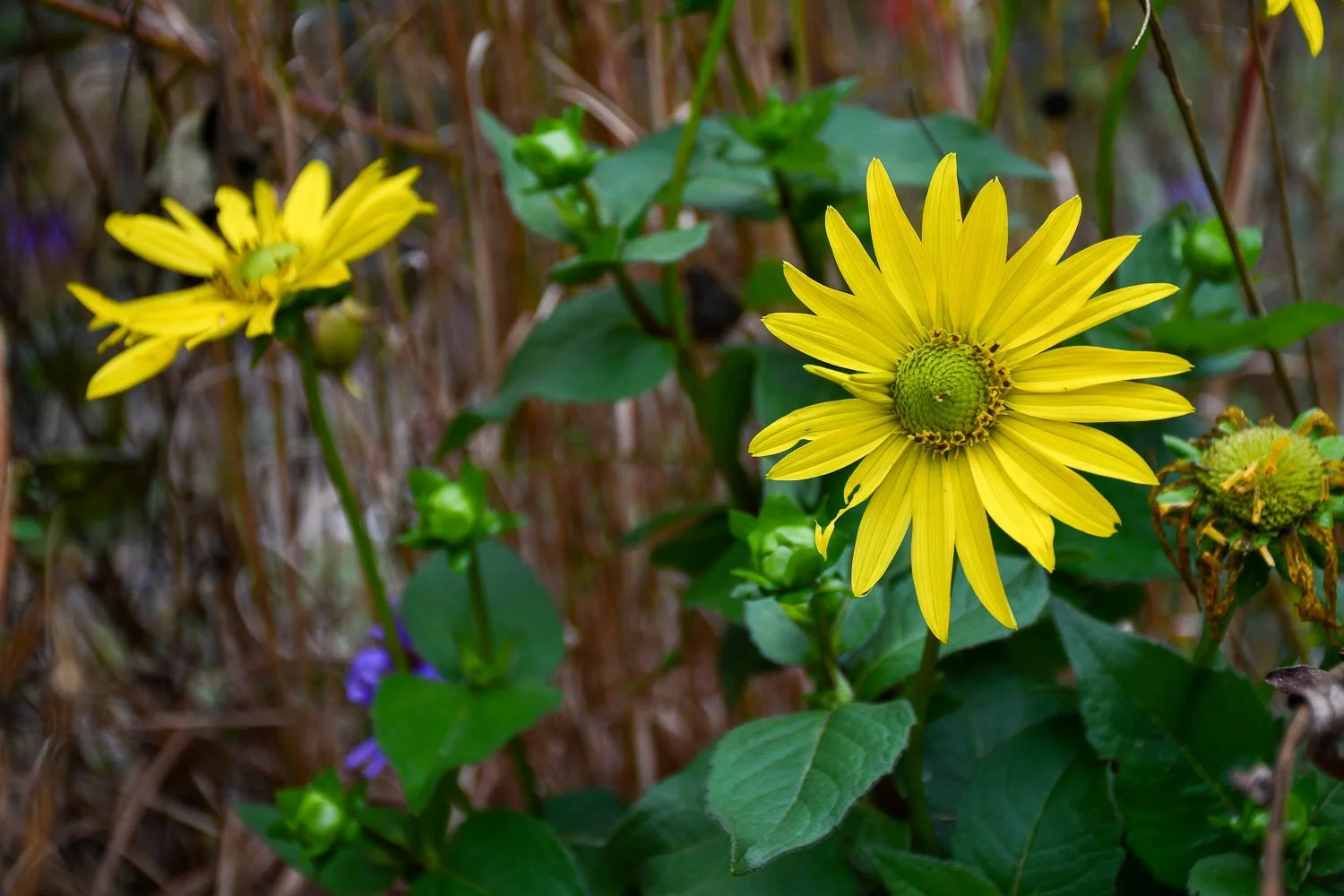
Silphium perfoliatum (cup plant)
Physostegia virginiana (obedient plant)
If you’ve grown obedient plant, then you know it’s anything but. Sure, the name comes from the phenomenon where if you move a flower it will stay in that position, but this plant can vigorously spread in a bed if left to its own devices.
However, I love having this plant in my garden because three summers ago when we had 36 days over 100 ºF with a drought, it flowered every day. In the mornings, I would watch jet-black Southern Carpenter Bees work the flowers. Just find somewhere to put it on a back fence or ditch and let it go wild.
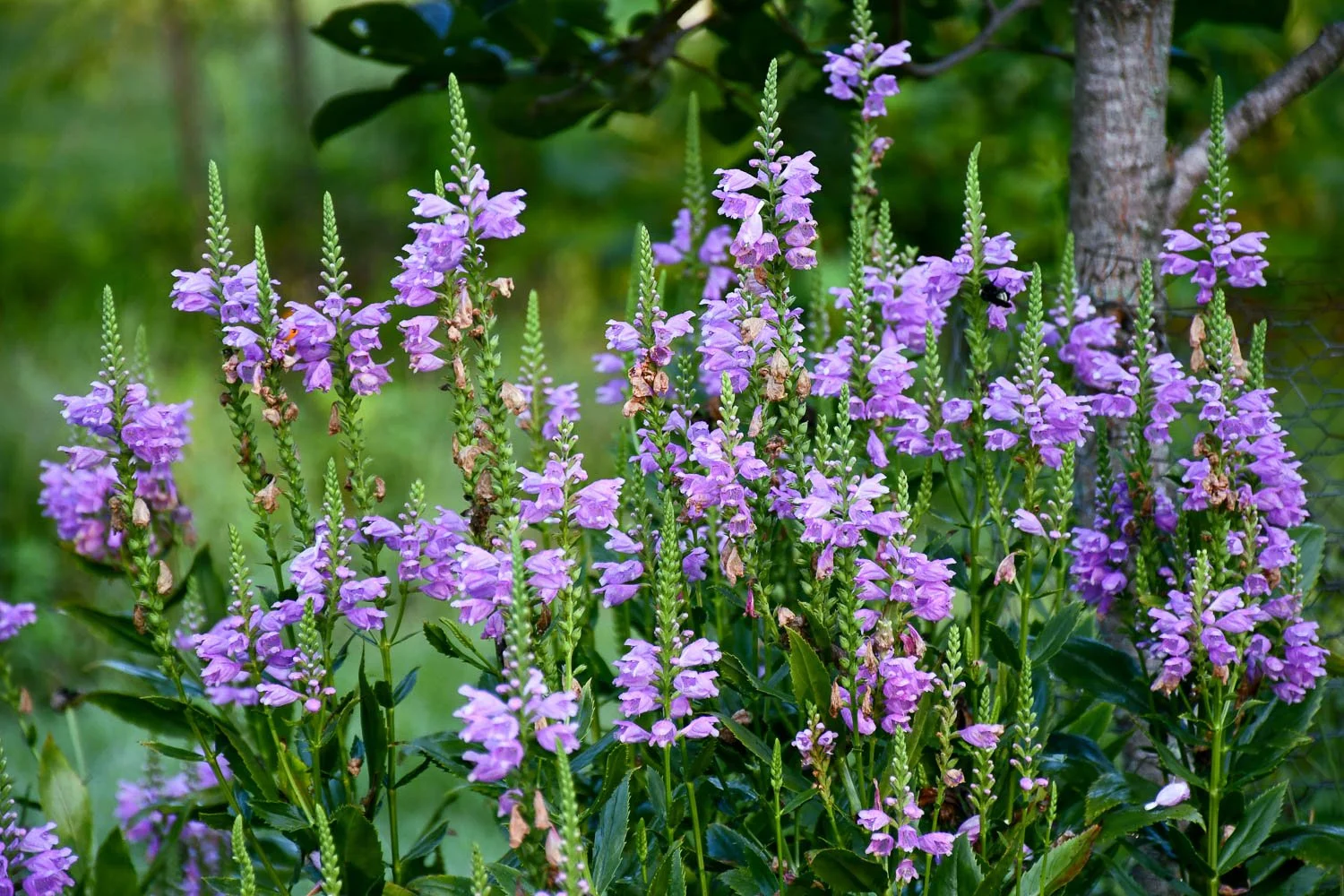
Physostegia virginiana (obedient plant)
Helianthus angustifolius (swamp sunflower)
Sunflowers are lovely to enjoy in the latter half of the year, and we grow both annual and perennial types. One that thrives maybe a little too well in our garden is Helianthus angustifolius. The inflorescences can get over my head by the end of the summer, and when they bloom on an October day, they are truly stunning to see.
It will seed around and can be very rhizomatous, so just use caution where you site it. A back corner, edge habitat, or side ditch would be perfect. Besides the flowers, bees also use the stems for rearing young.
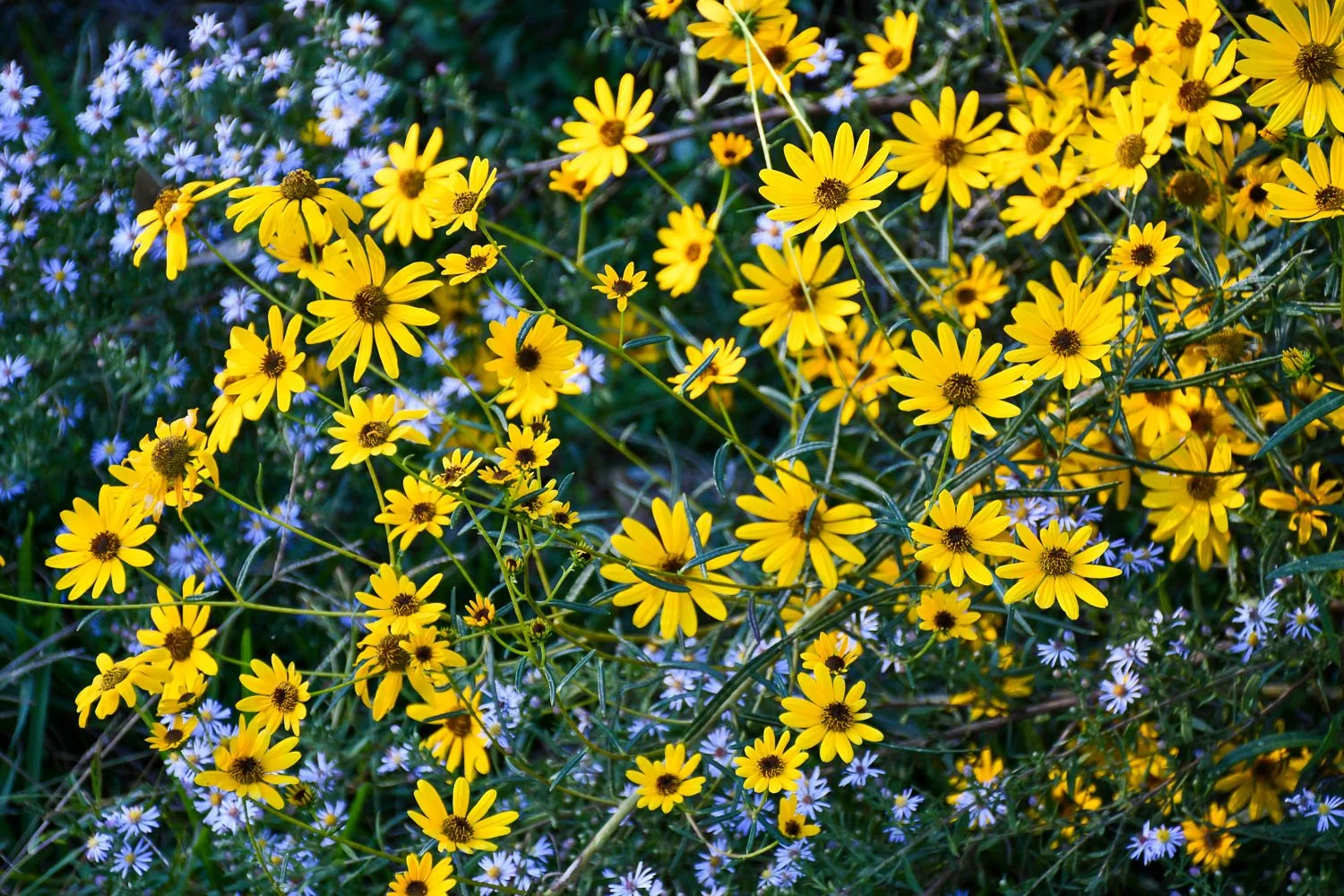
Helianthus angustifolius (swamp sunflower)
Symphyotrichum sp. (aster)
Asters as a whole are considered a keystone species that support a number of caterpillars. And, the flowers are also valuable resources for end-of-season pollinators. I often see swarms above mine as the season is wrapping up. Also, the center disk of many asters will change color as the flowers age and lose pollinator power.
One of my top asters is Symphyotrichum lanceolatum (panicled aster). This local find is one of the last species to flower in our garden, and it blooms longer than some other asters I have. The flowers are a light pinkish color, and Monarchs and other insects flock to it in bloom in November as one of the last flowers of the year. Yes, it is a bit rhizomatous, but they are easily pulled up. And, a late spring cut back keeps their height in check.
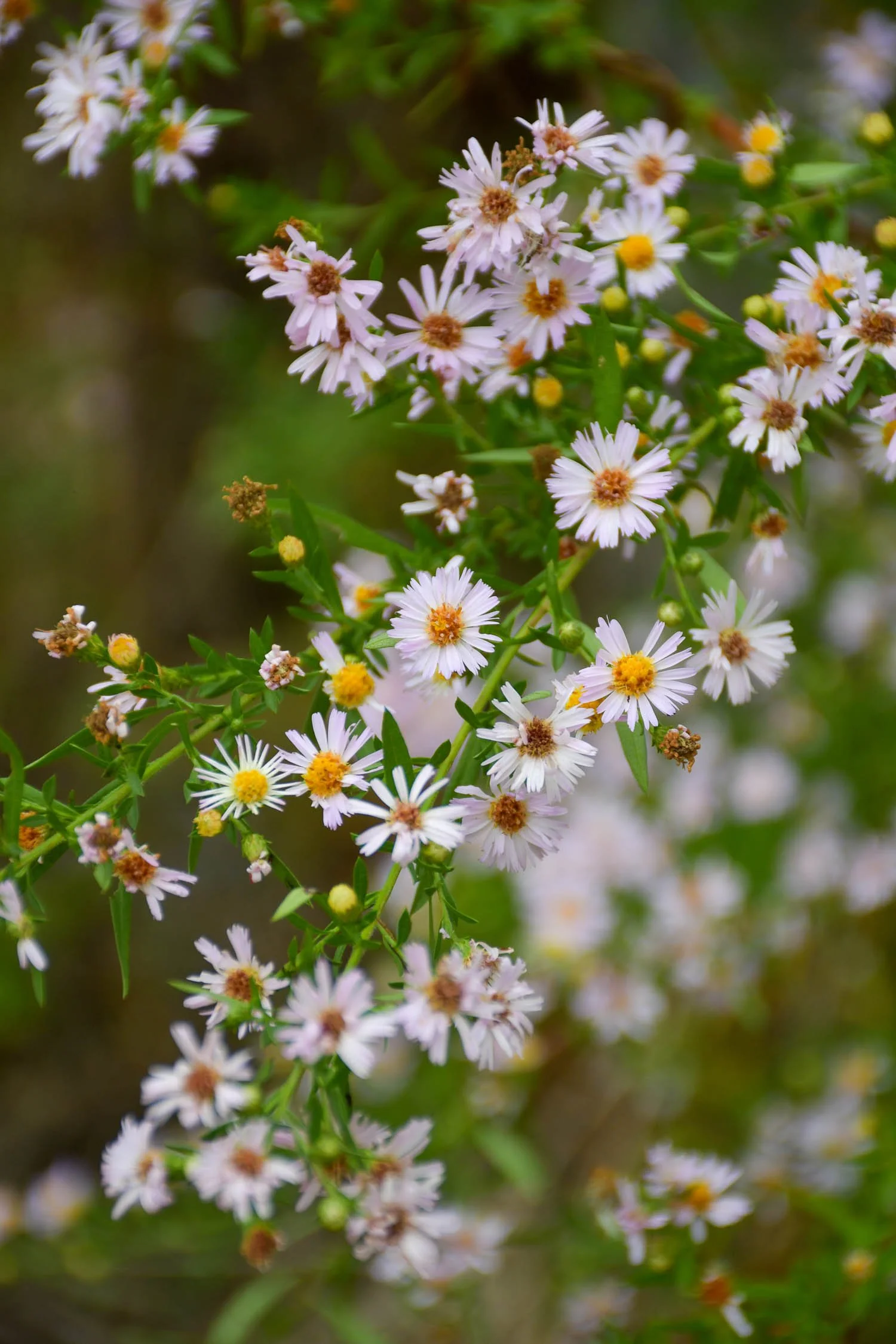
Symphyotrichum lanceolatum (panicled aster)
KEEP GROWING