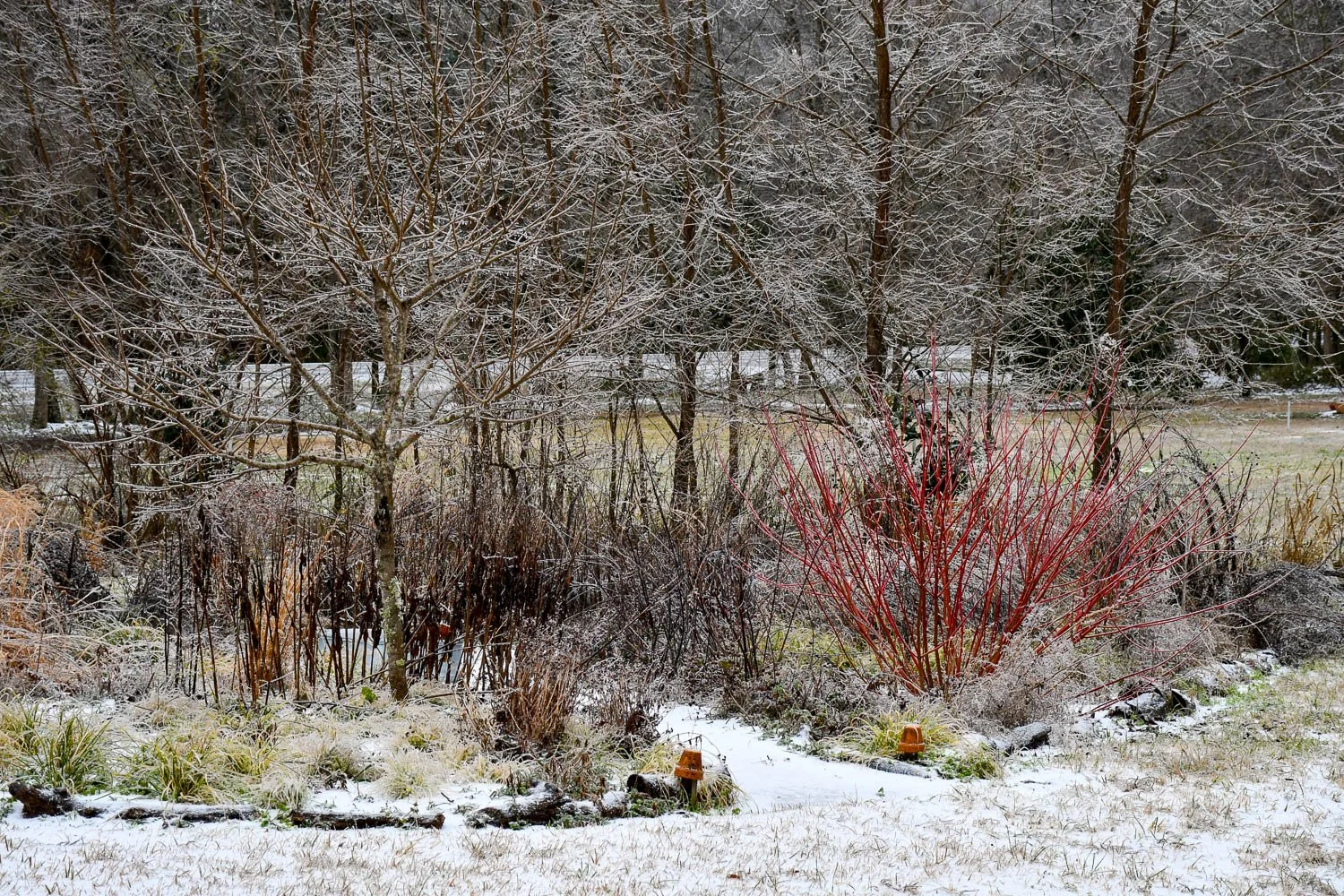
In the south, winter weather has a duality. Yes, it is beautiful and lovely to see the landscape. But, it can wreak havoc on infrastructure and interrupt life.
That was the position we found ourselves in yet again three weeks ago when Winter Storm Fern hit. Fortunately, because we have been through these situations before, we were prepared with firewood, gas, food cooked, and a generator.
Sure, I don’t like when winter weather impacts life, but I love to see how it interacts with our gardens.
We got just enough for Magnolia to sled on a back hillside and just enough to make some magic in the garden as ice and snow fell on and around our plants.
Snow and ice events can tell us much about our gardens—what plants will stand upright, collapse, or bend and bounce back afterward. I realize that most people don’t design gardens with ice storms in mind, but it’s worth noting what happens during these extreme events to learn for the future.
I grabbed my camera and went out to explore, and I wanted to share my observations with you.
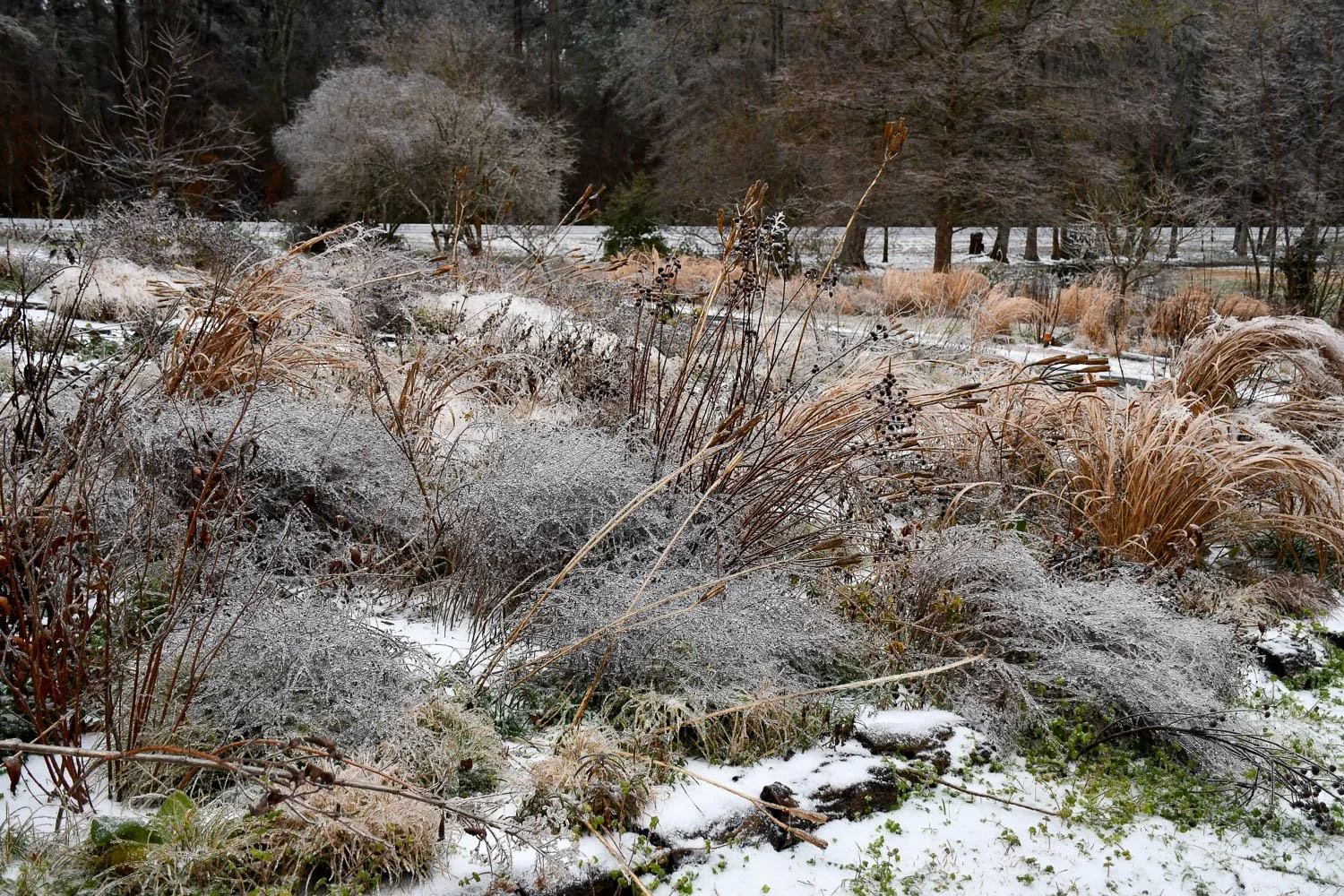
The core garden beds near the house fared well through the storm. Lilium formosanum (Formosan lily), which I use as a strong upright, mostly bent downward from the weight of the ice. You can see their stems going every whichaway.
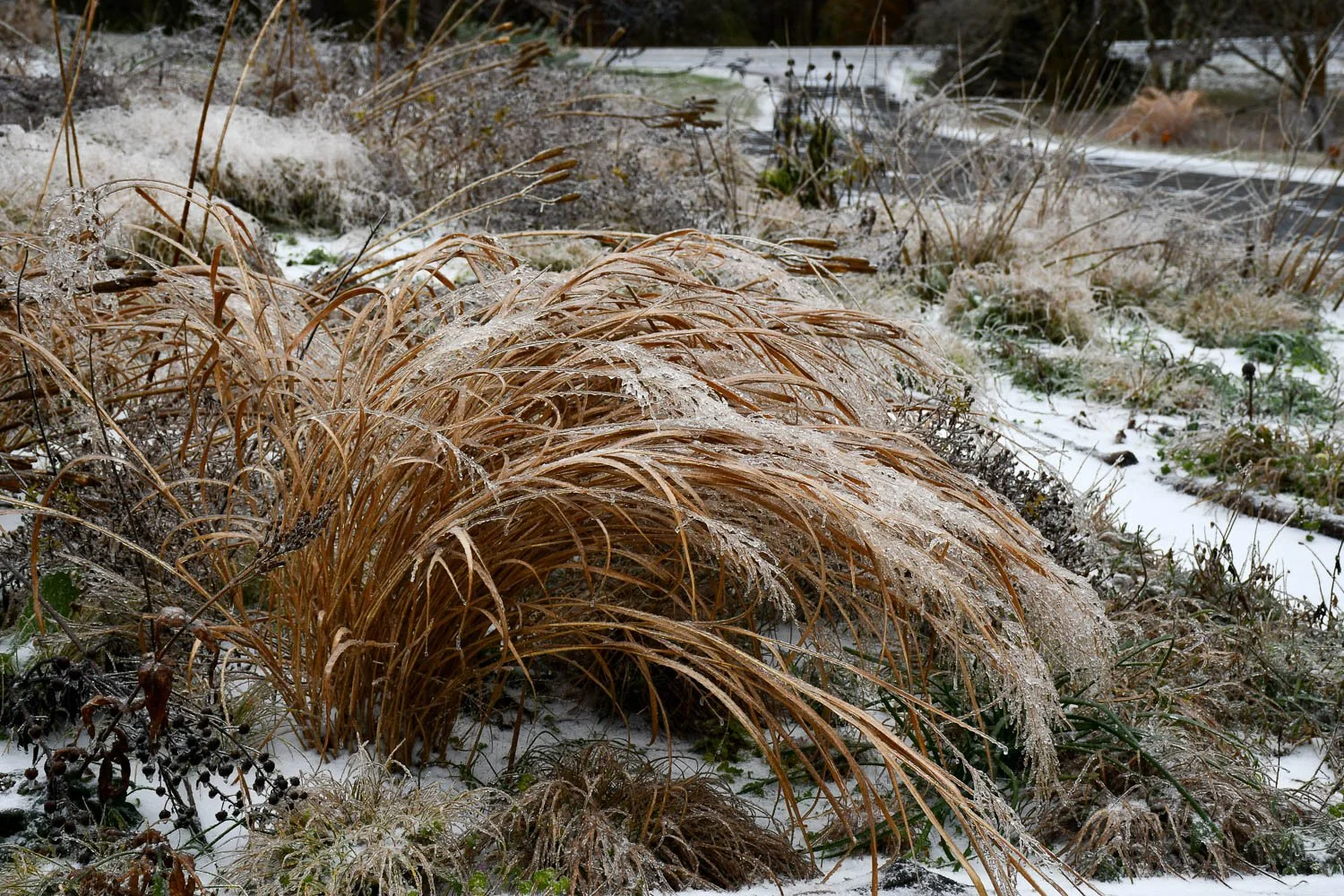
I chuckled after seeing my Panicum virgatum ‘Northwind’ (switchgrass). They looked like a comb over. Amazingly, they would right themselves after the ice melted.
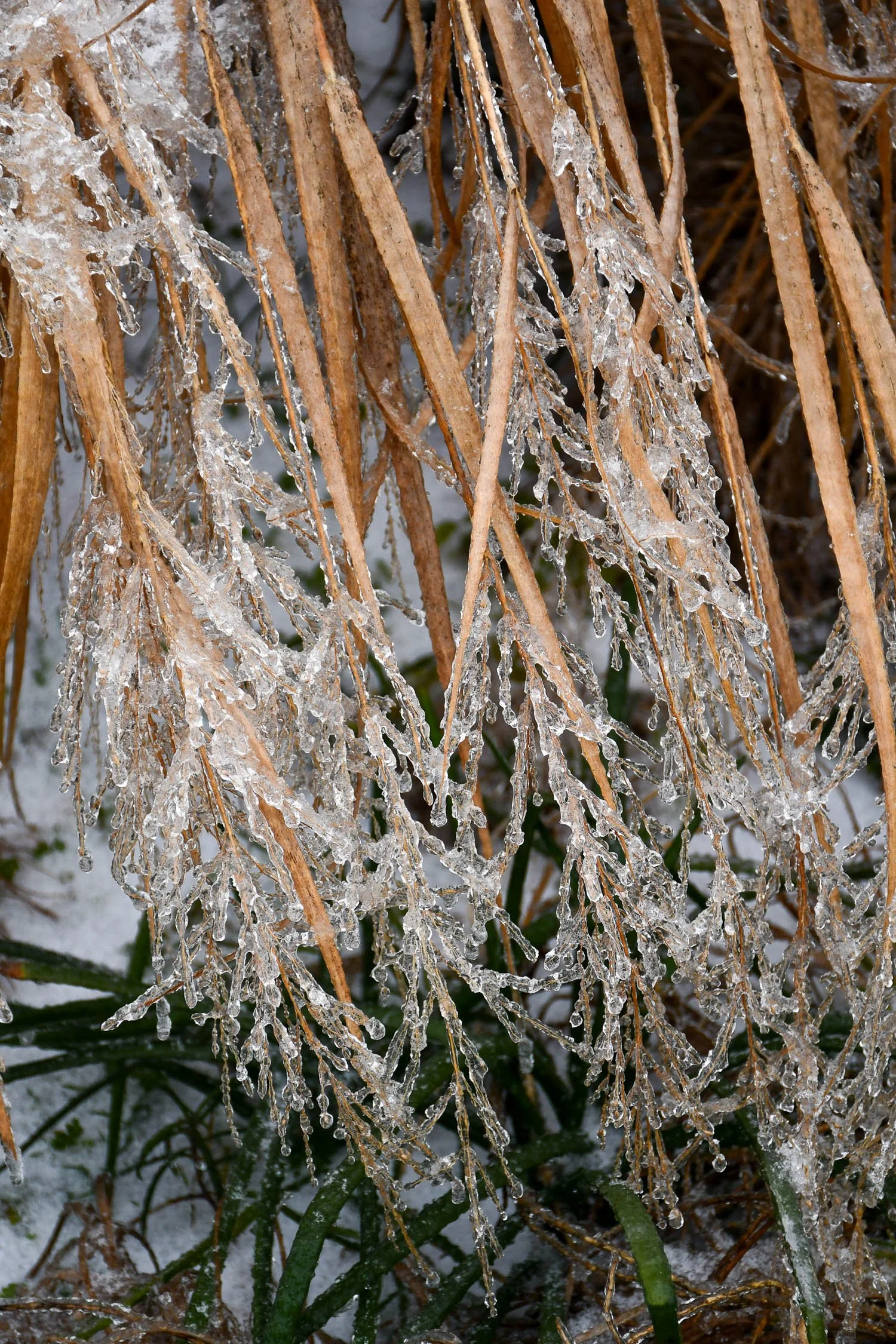
The bejeweled panicles of Panicum virgatum ‘Northwind’
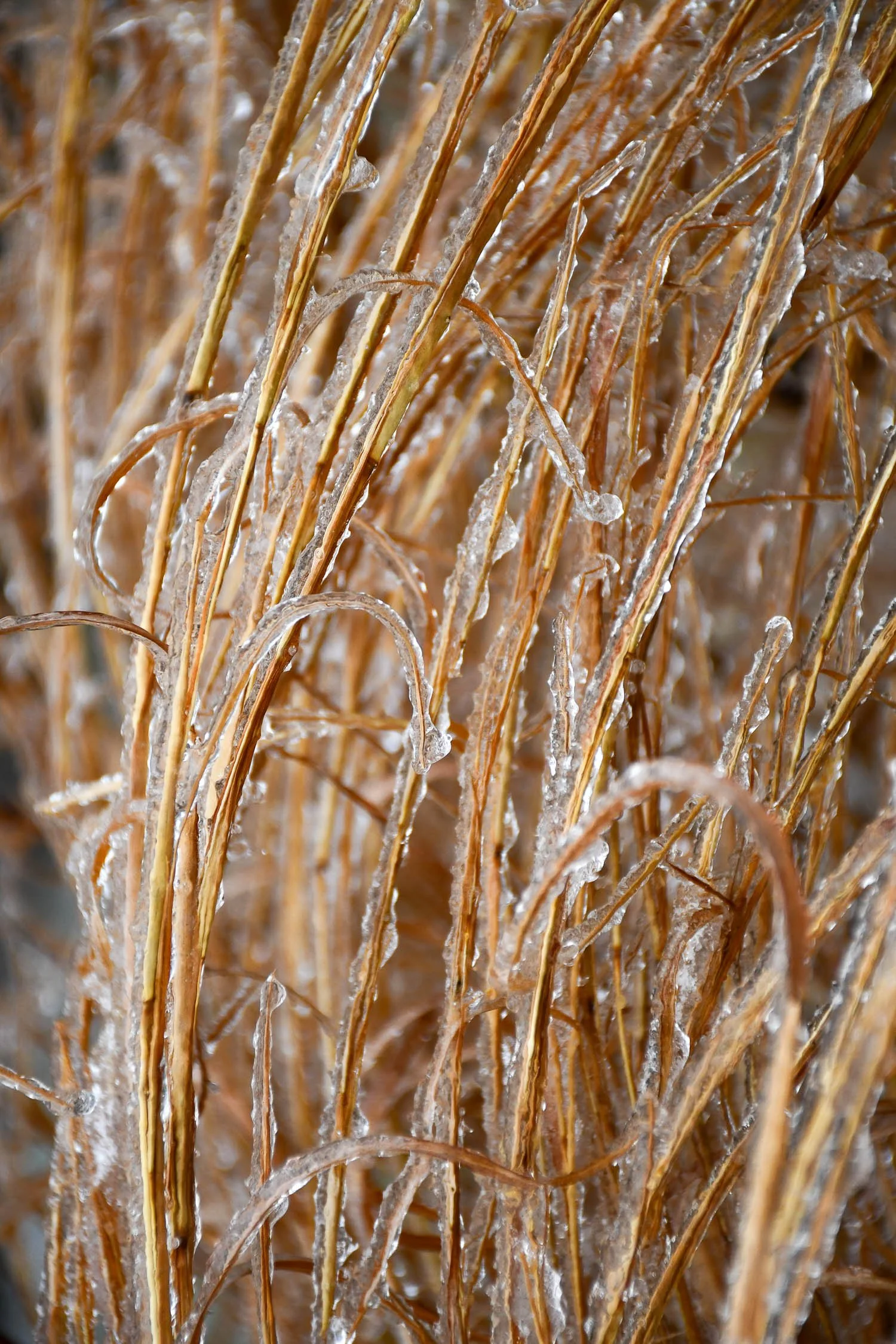
Another grass that looked pretty entombed in ice was Andropogon virginicus (broomsedge).
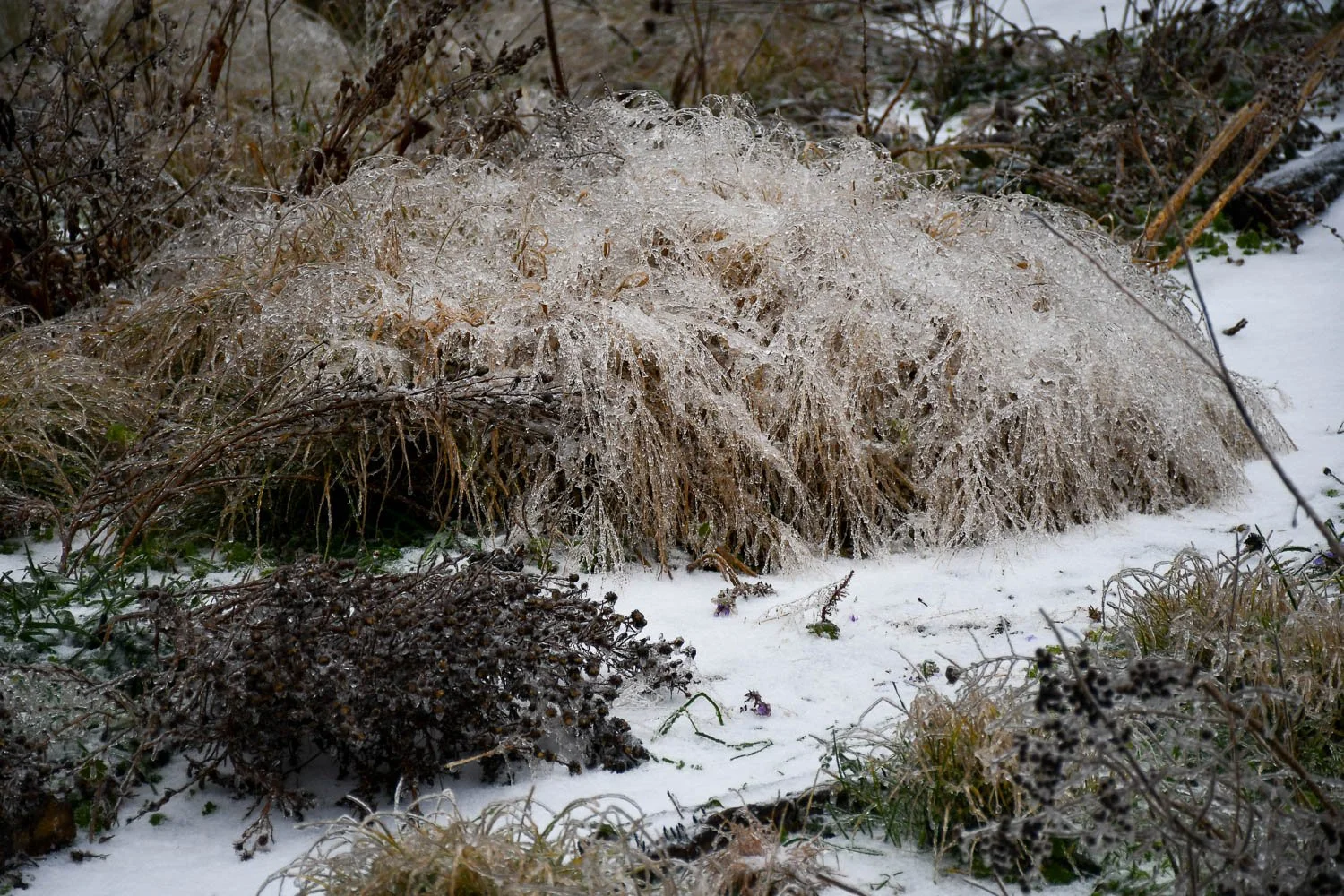
Eragrostis spectabilis (purple lovegrass) always gets a decent coating of ice with their abundant panicles.
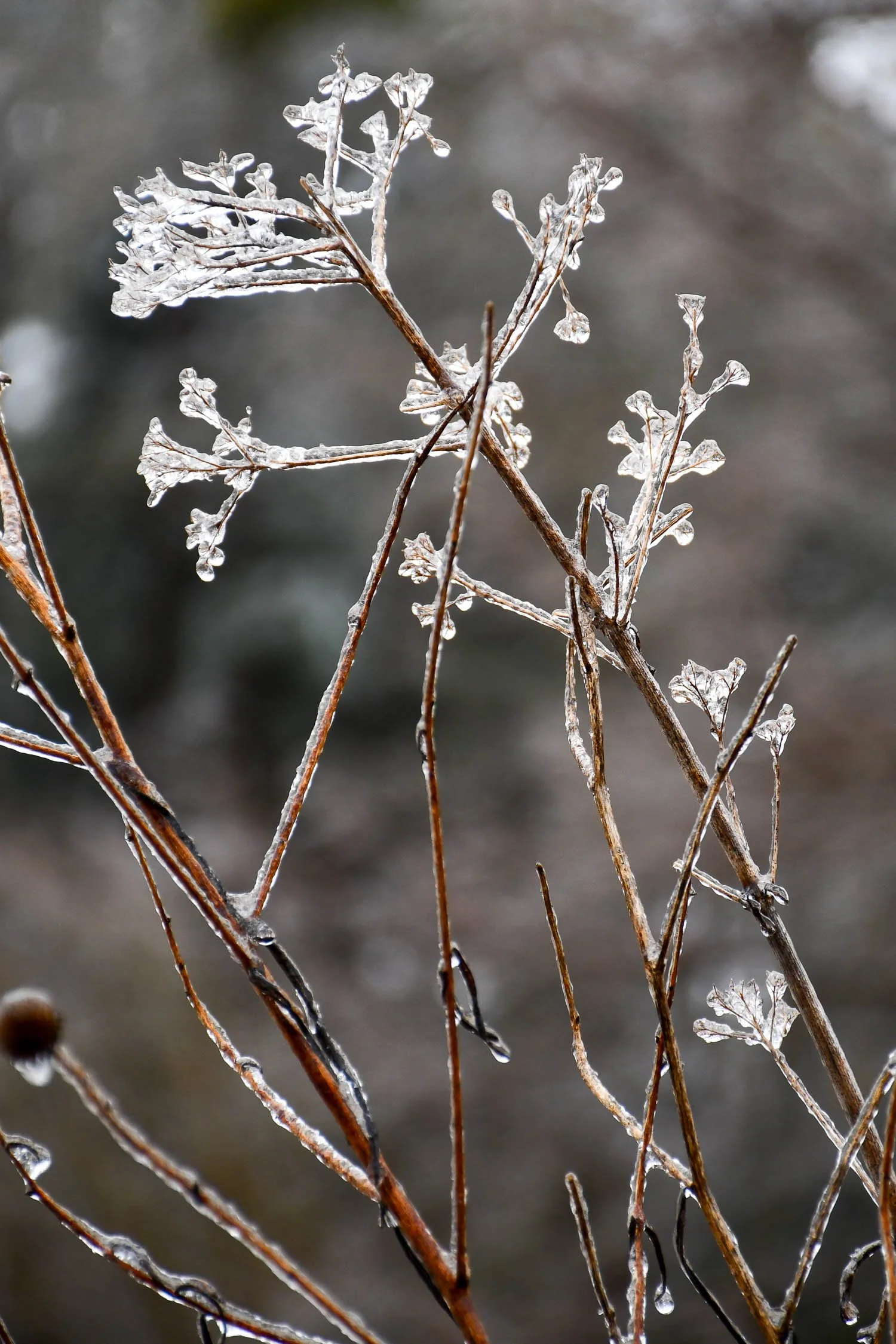
Isn’t this odd? The left stem of Helianthus angustifolius (swamp sunflower) barely covered with ice while Eutrochium fistulosum (hollow Joe Pye weed) clearly has a thick layer. It left me wondering why the difference?
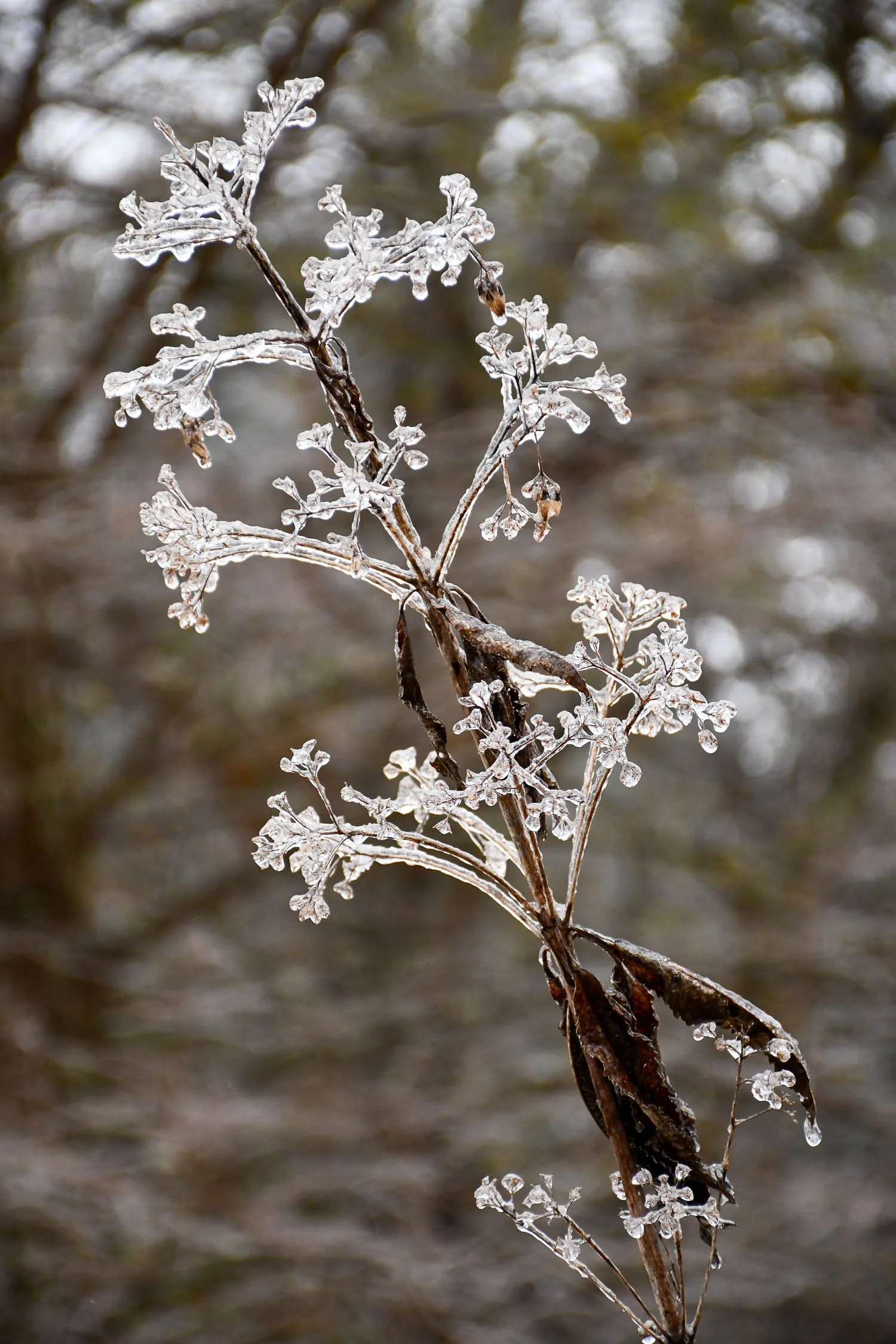
Another hollow joe pye weed plant with the dazzling inflorescence. Every joe pye weed in the garden appeared the same with their ice coatings. My suspicion is the pedicels were horizontal, which allowed them to capture more water to then become ice.
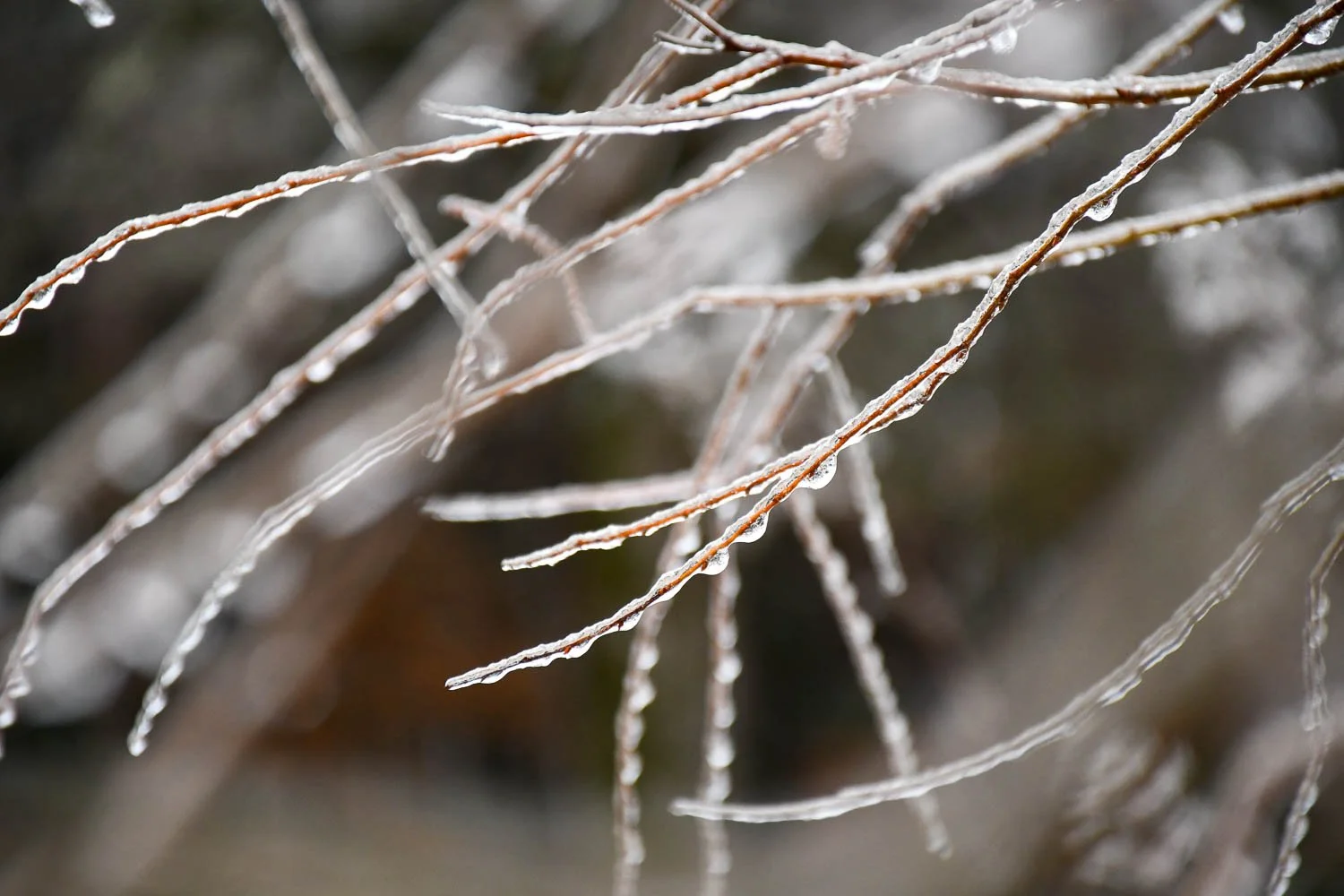
You can also see these horizontal branches of Salix nigra are loaded with ice as well. The trees glowed against the sky with their icy coating.
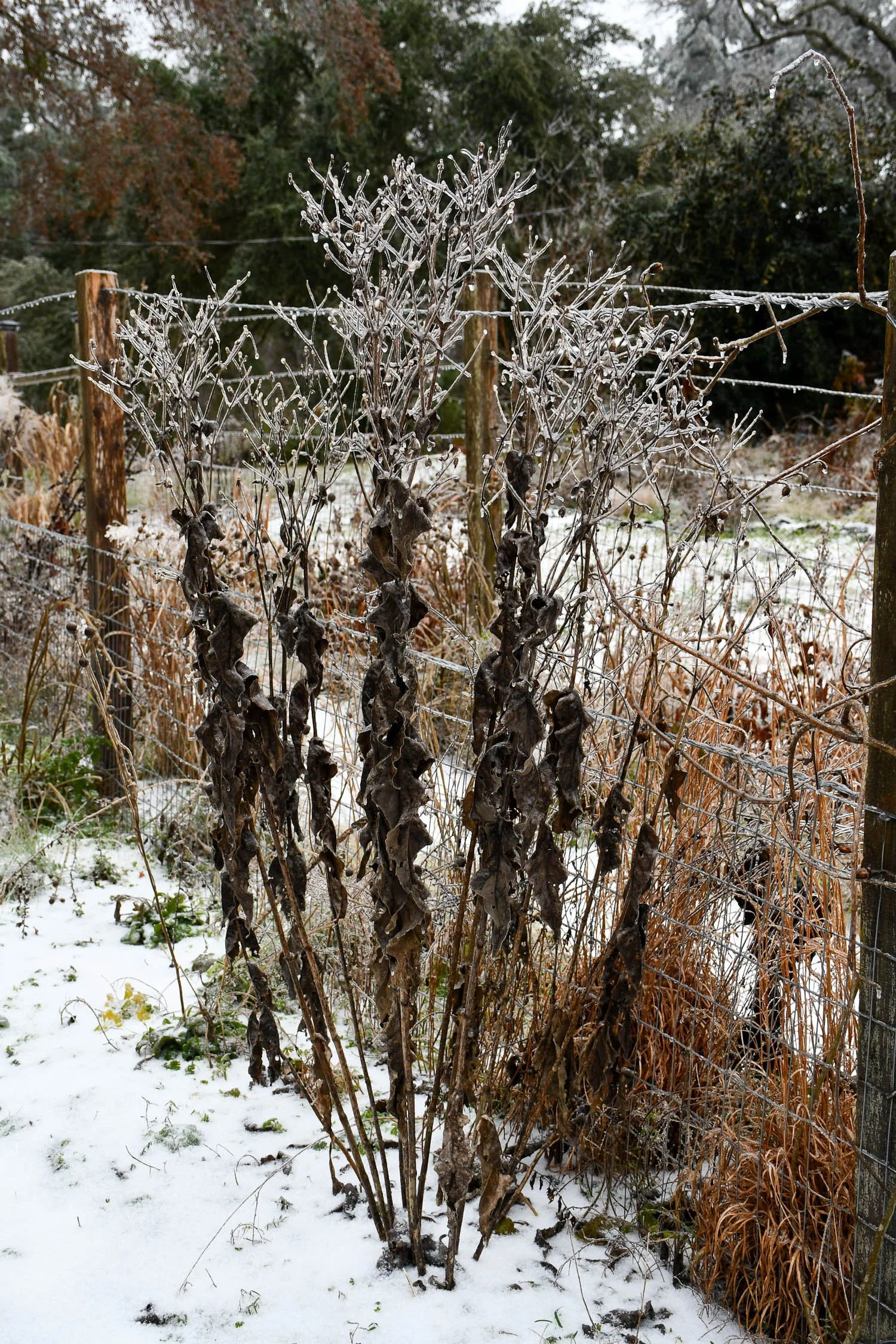
I was very impressed to see the Silphium perfoliatum (cup plant) remain standing after the ice storm. If they can stand after this storm, I believe they can be strong elements throughout winter.
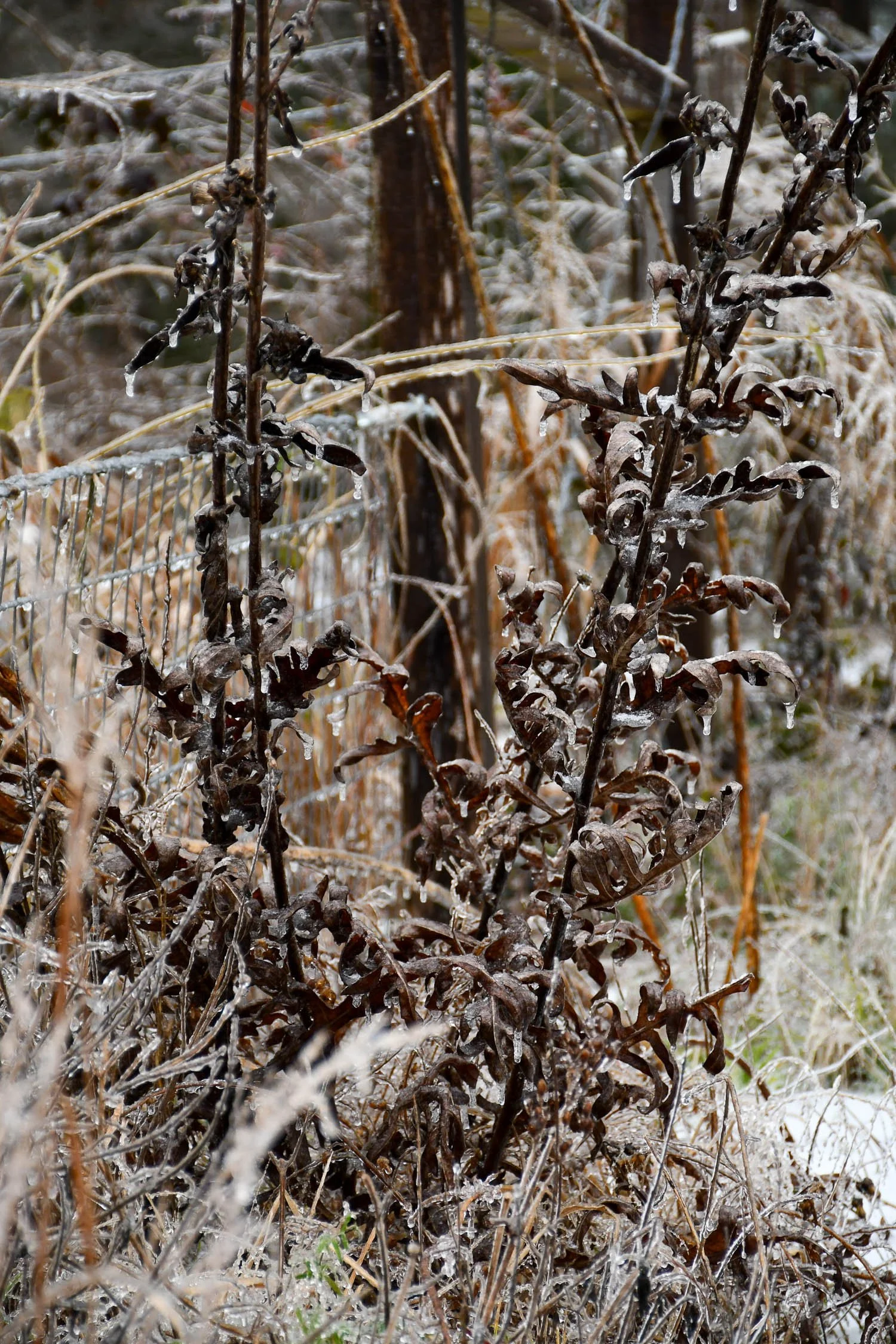
I saw the same thing with Silphium laciniatum (compass plant). The culms remained up right.
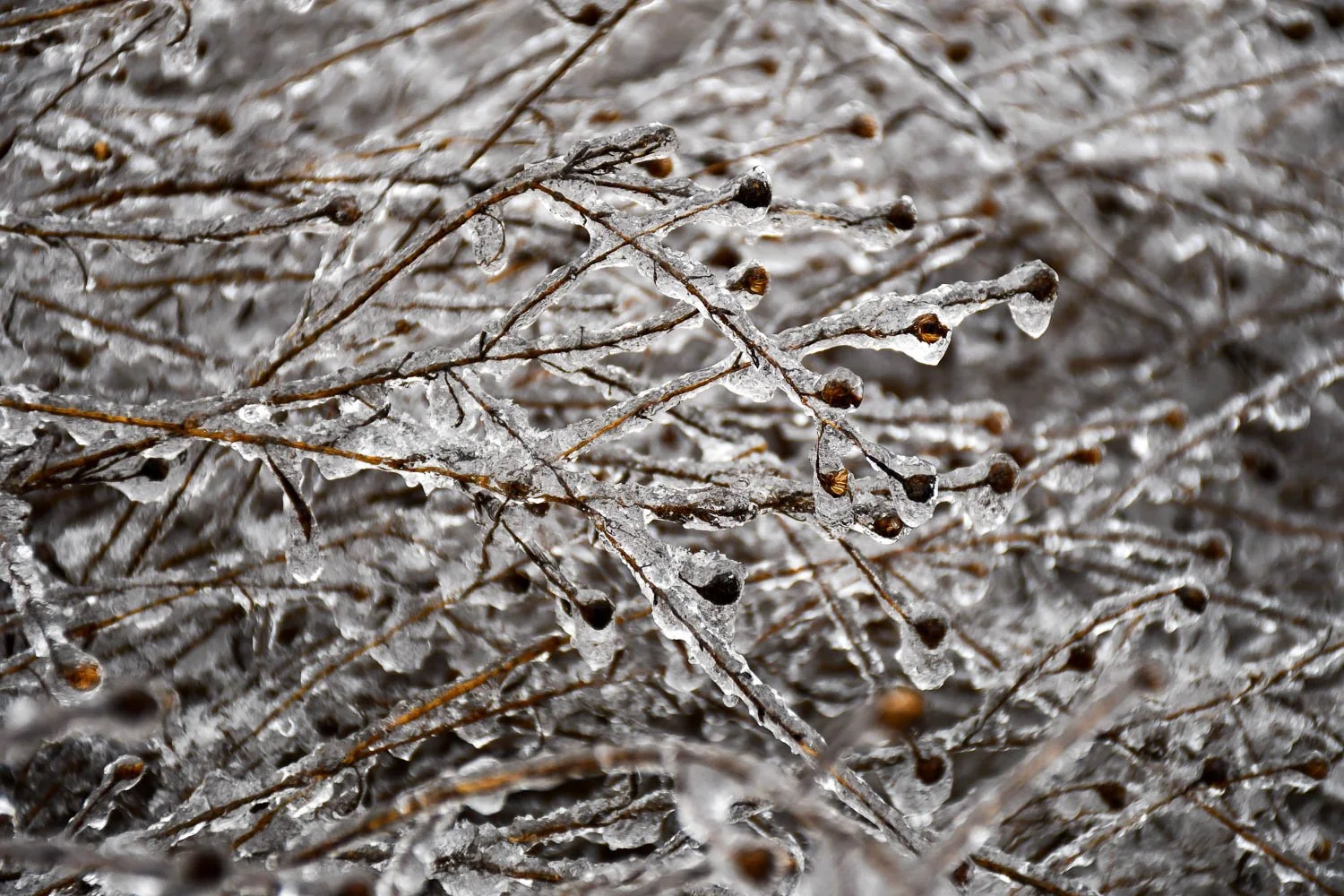
Boltonia diffusa (southern doll’s daisy) is really growing on me for its low growth habit, fall flowers, and dark stems in the winter. Here we see the stems and spent flowers coated in ice.
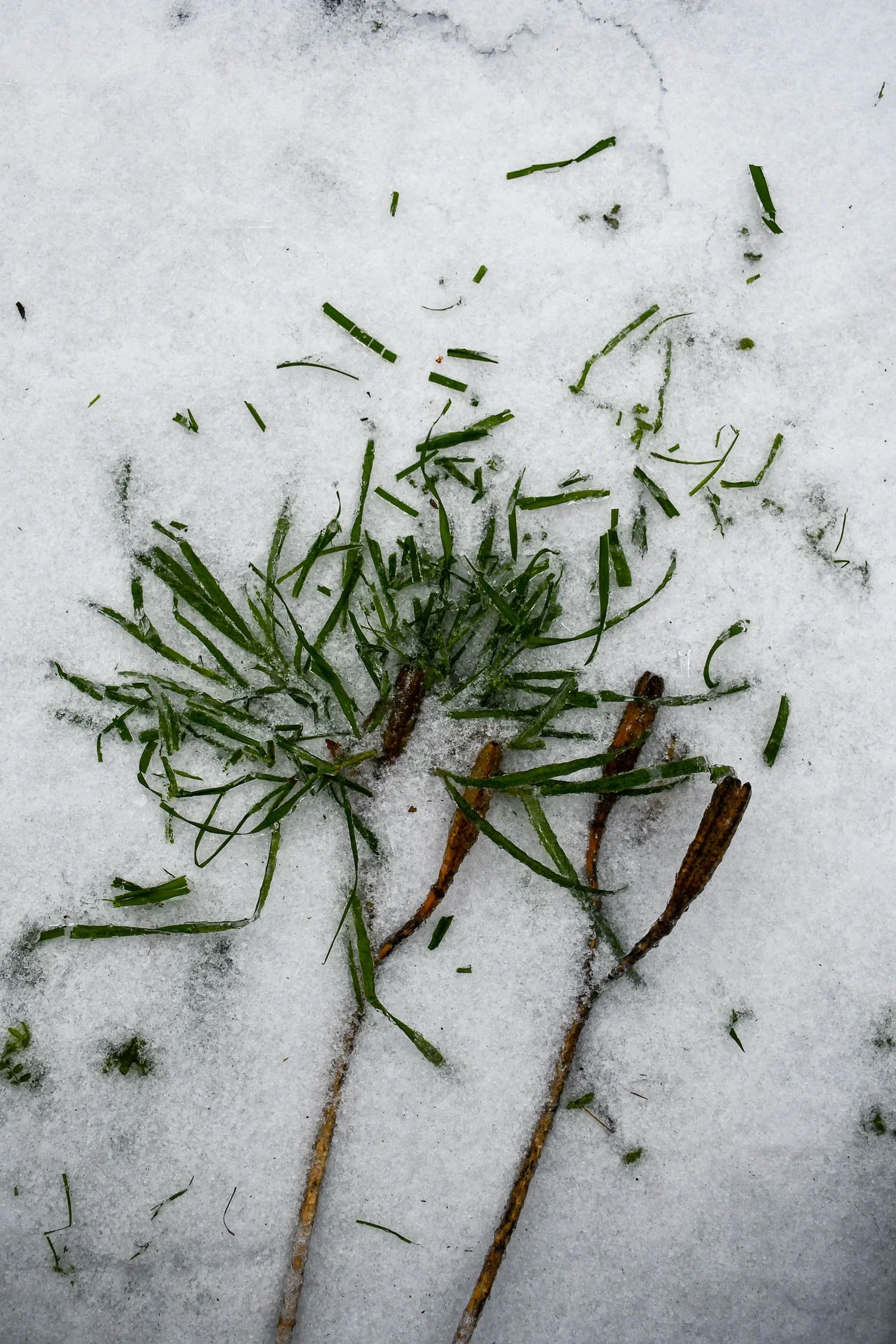
One last thing I noticed as I walked outside was that any herbaceous plant I brushed past would break off. Stems, twigs, and even leaves like you see here on this weedy rye. For some it was the weight of the ice, but for others it was the frozen foliage that shattered apart.
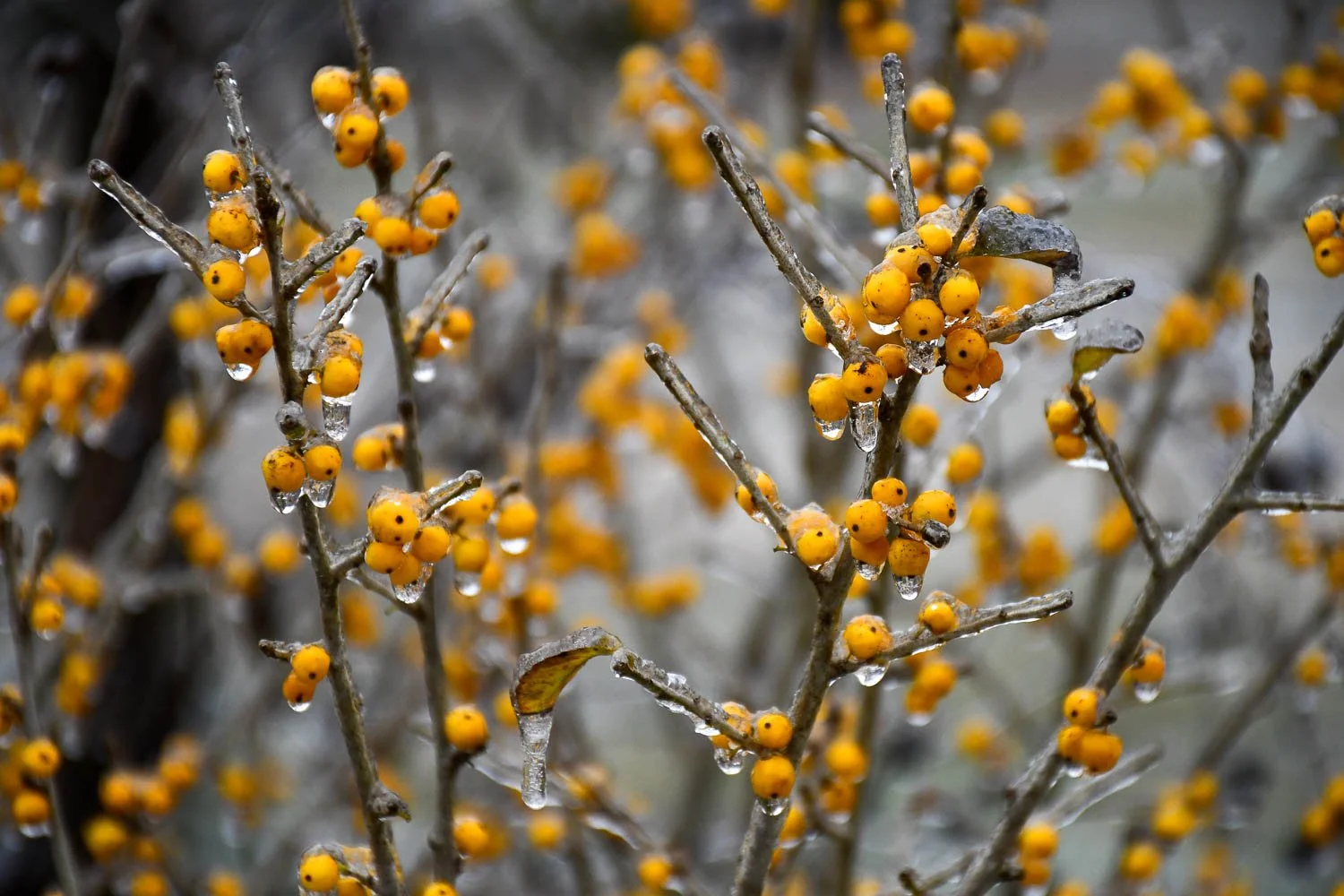
The golden orbs of Ilex decidua ‘Finch’s Golden’ (possumhaw) pop with a coating of ice.
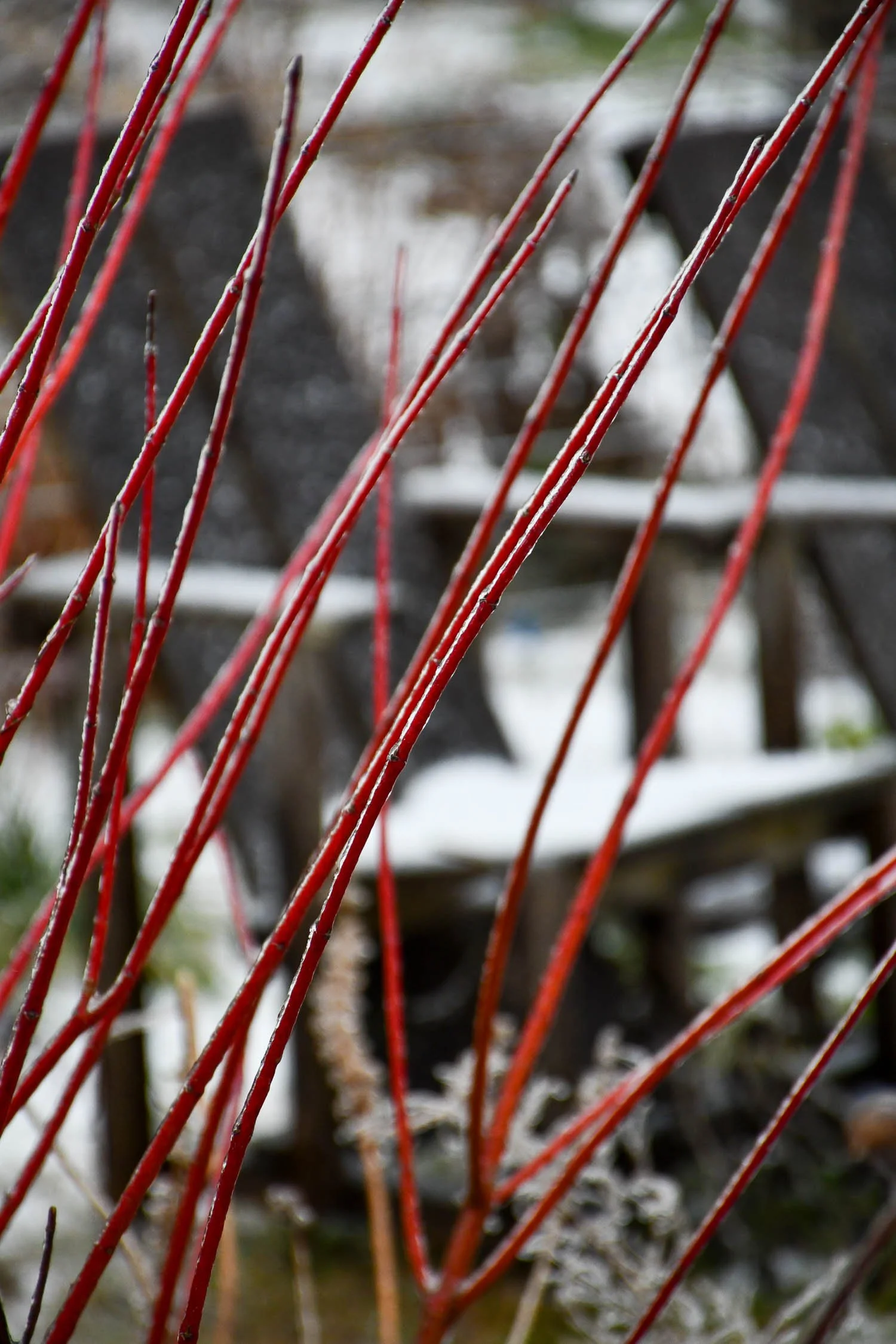
I love the fiery twigs of Cornus amomum ‘Cayenne’ (silky dogwood, header image). The color is even more intense with some ice or rain on them.
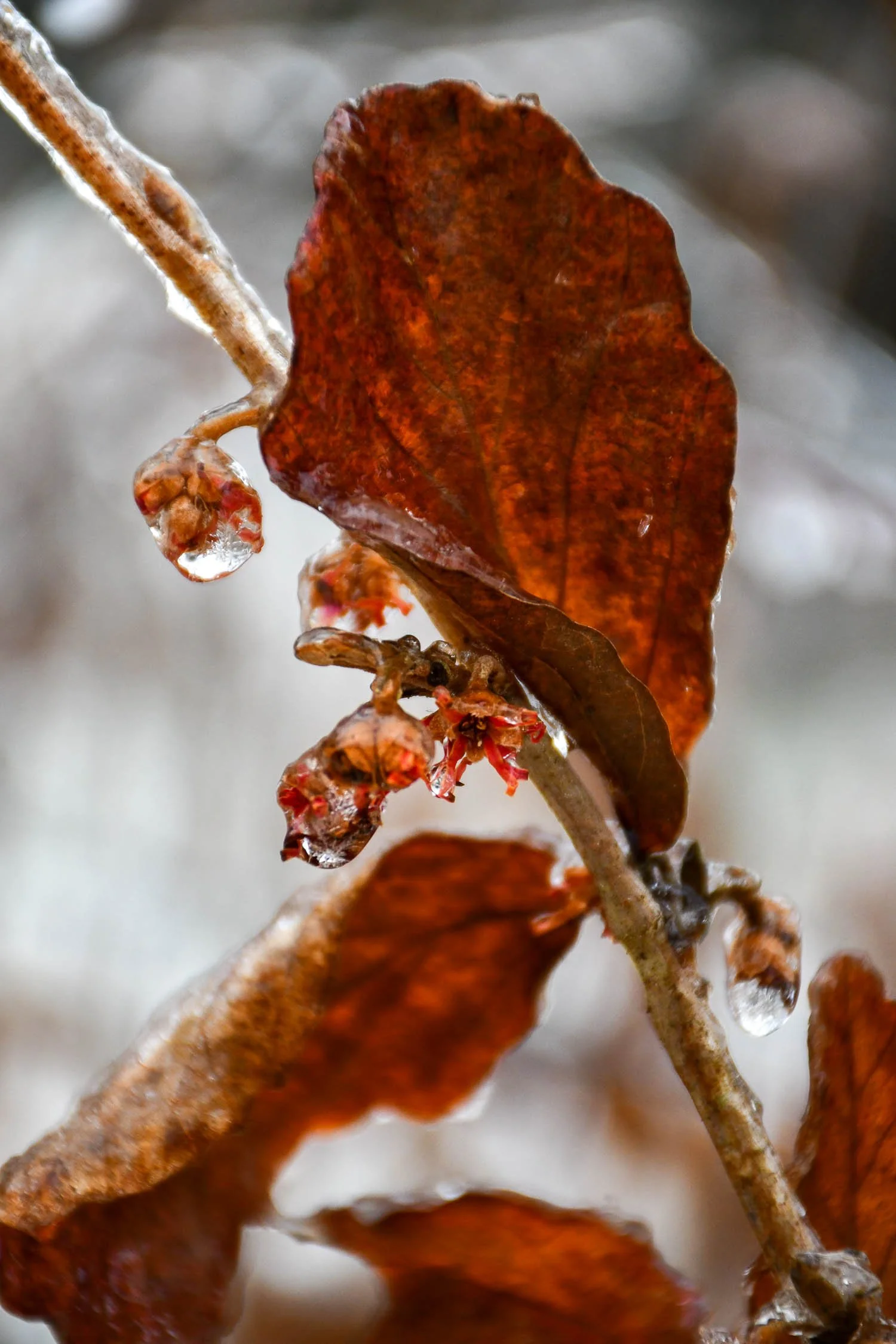
The last blooms on my Hamamelis vernalis (Ozark witch hazel) were coated with a bit of ice. The petals tolerate freezing well and will often curl to help offset the issue.
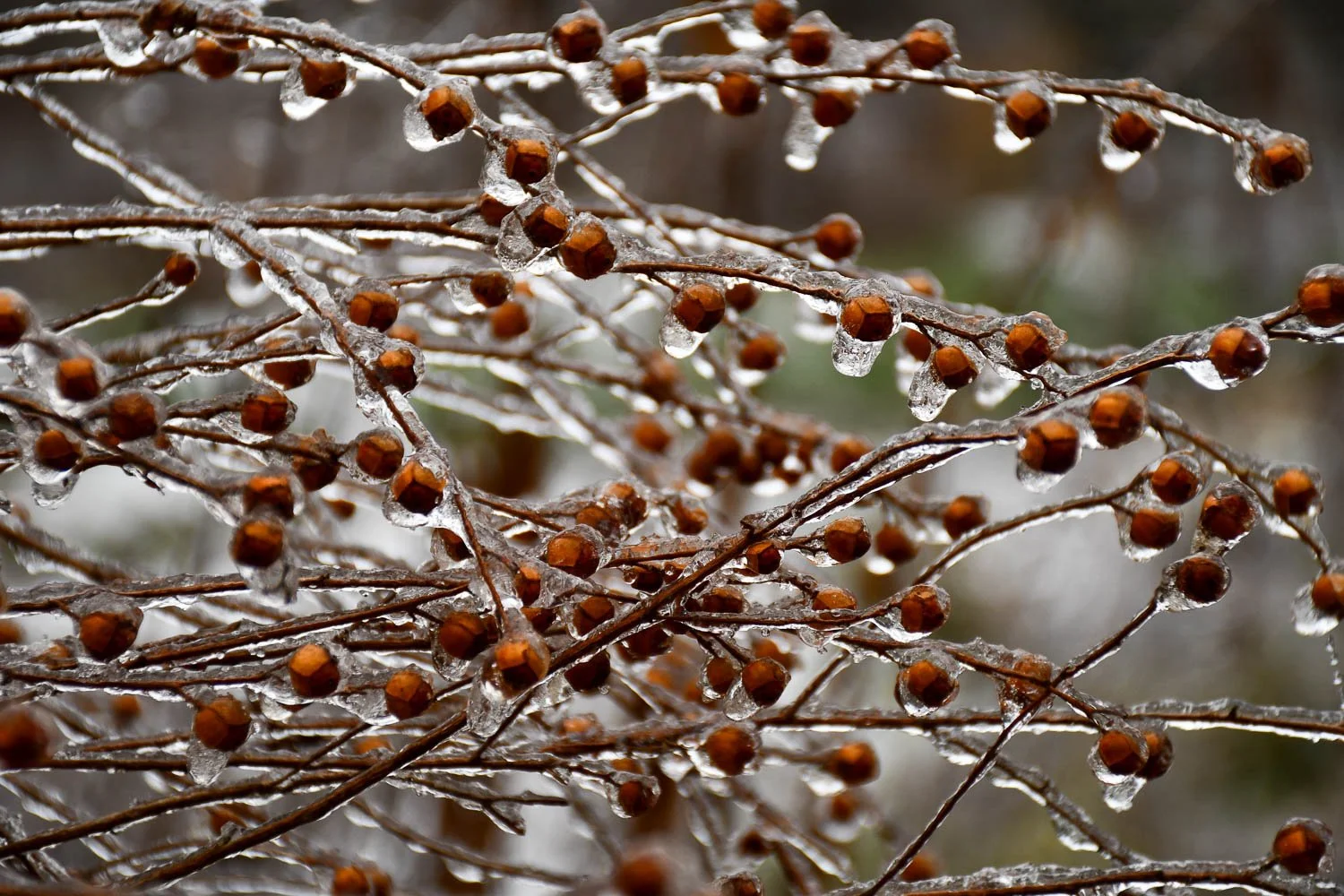
One of my favorite plants to look at during ice storms is Ludwigia alternifolia (seedbox). The box-shaped seed capsules always get a good coating of ice.
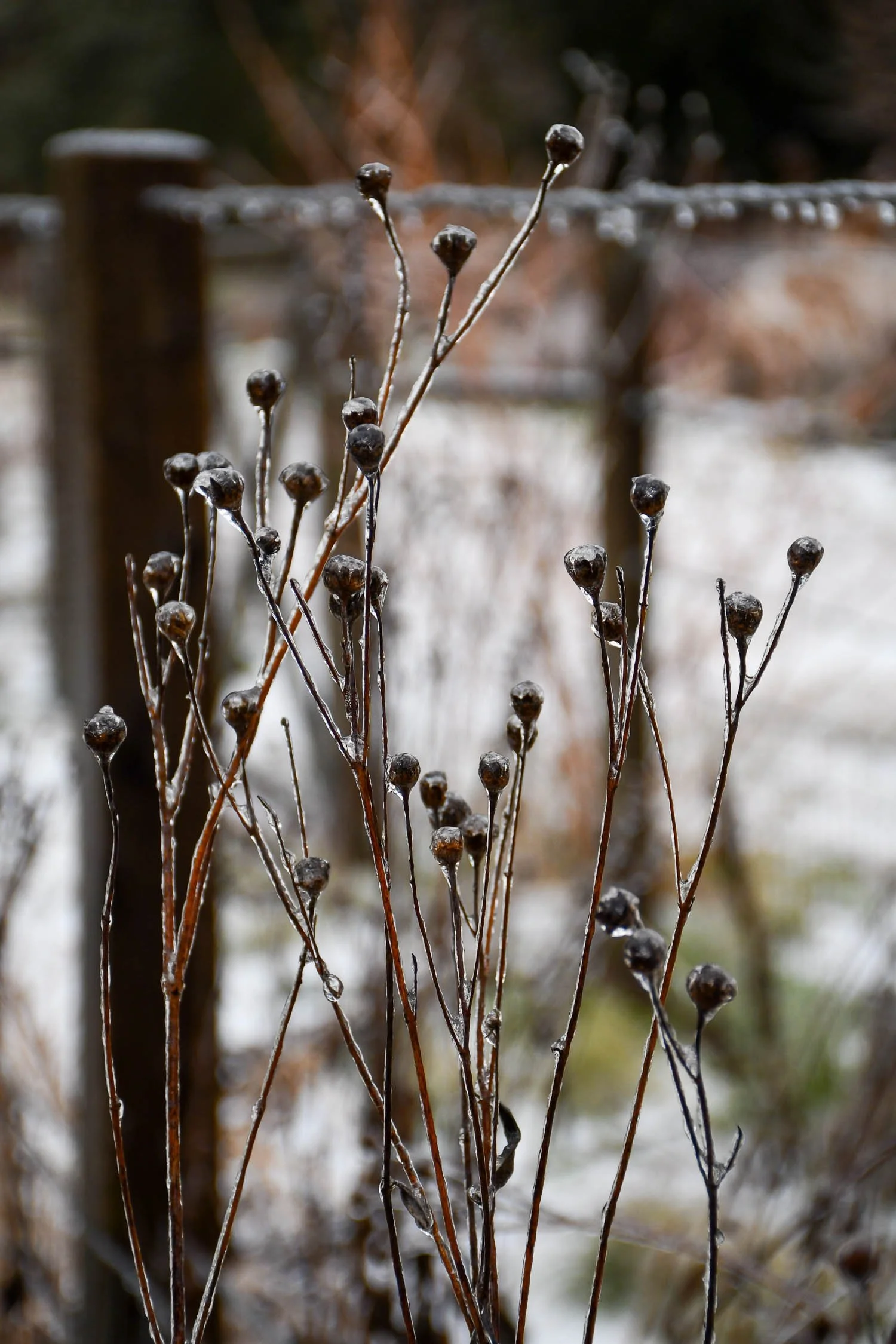
I figured that Coreopsis tripteris would collapse with the ice, but it also stood upright well.
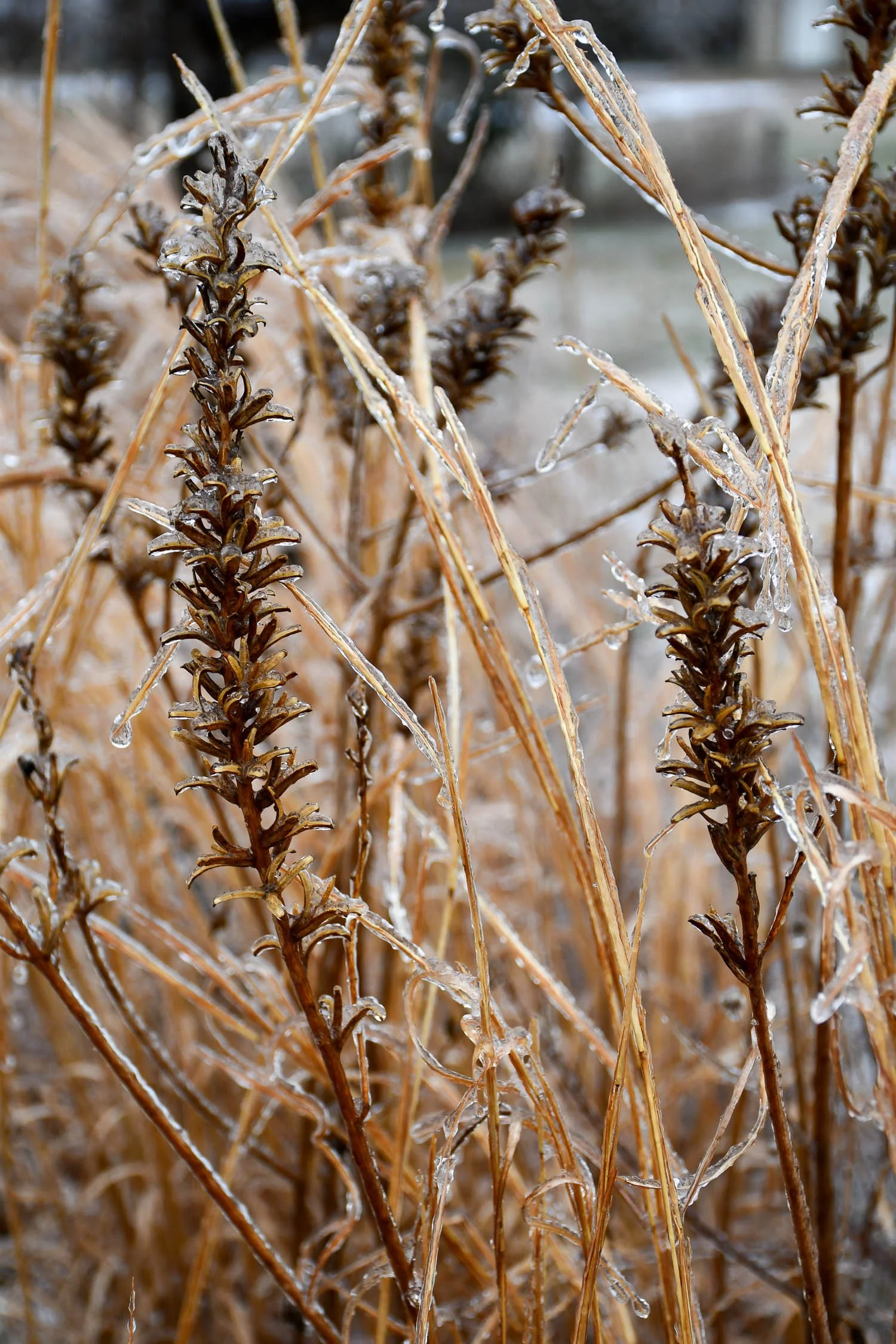
The split seed pods of Oenothera rhombipetala (four-point evening primrose) offer a unique texture after an ice storm against the blades of broomsedge.
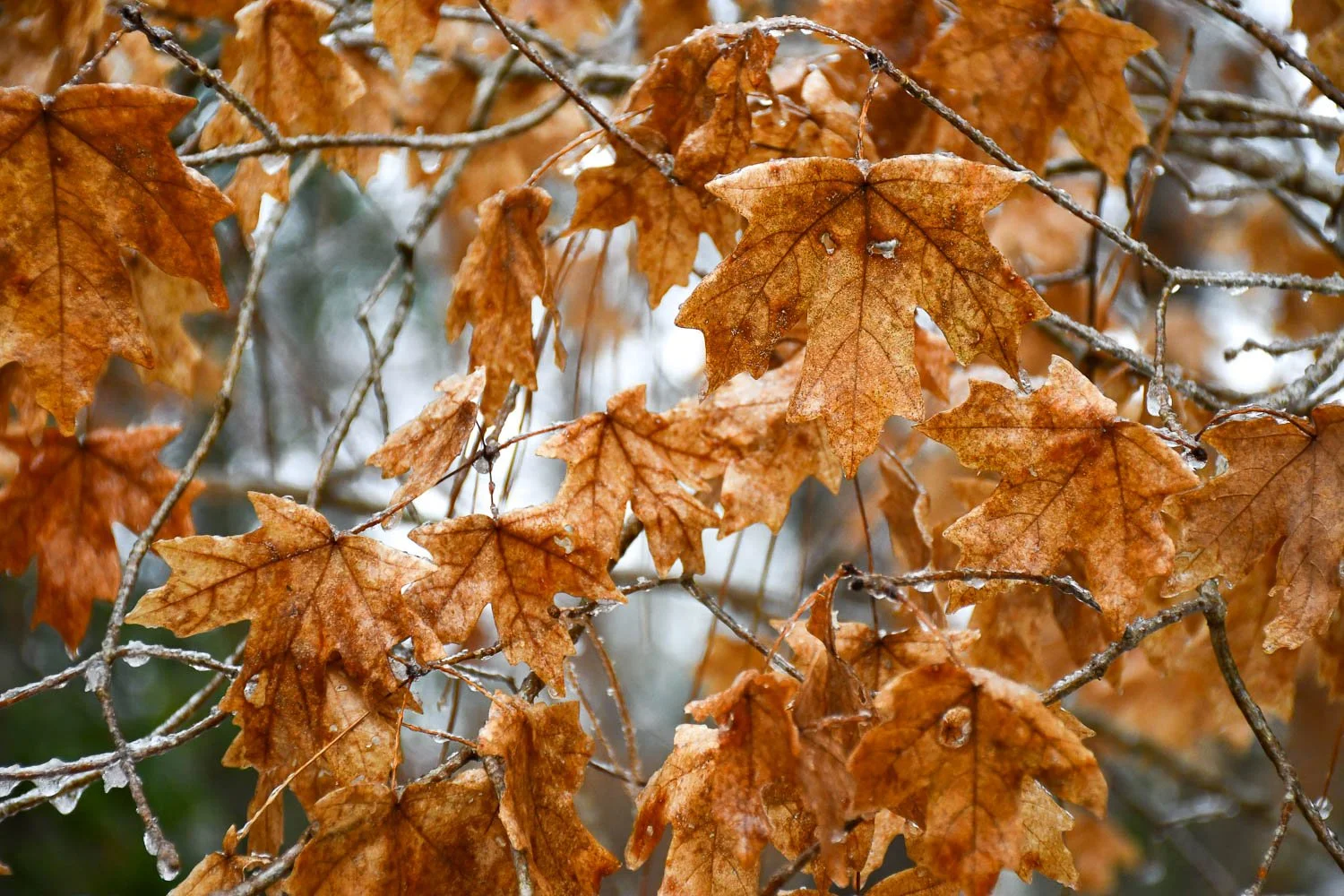
I went for a walk in the woods beyond our house to enjoy the winter scene, and I noticed that the marcescent leaves of Acer floridanum (southern sugar maple) barely held any ice at all.
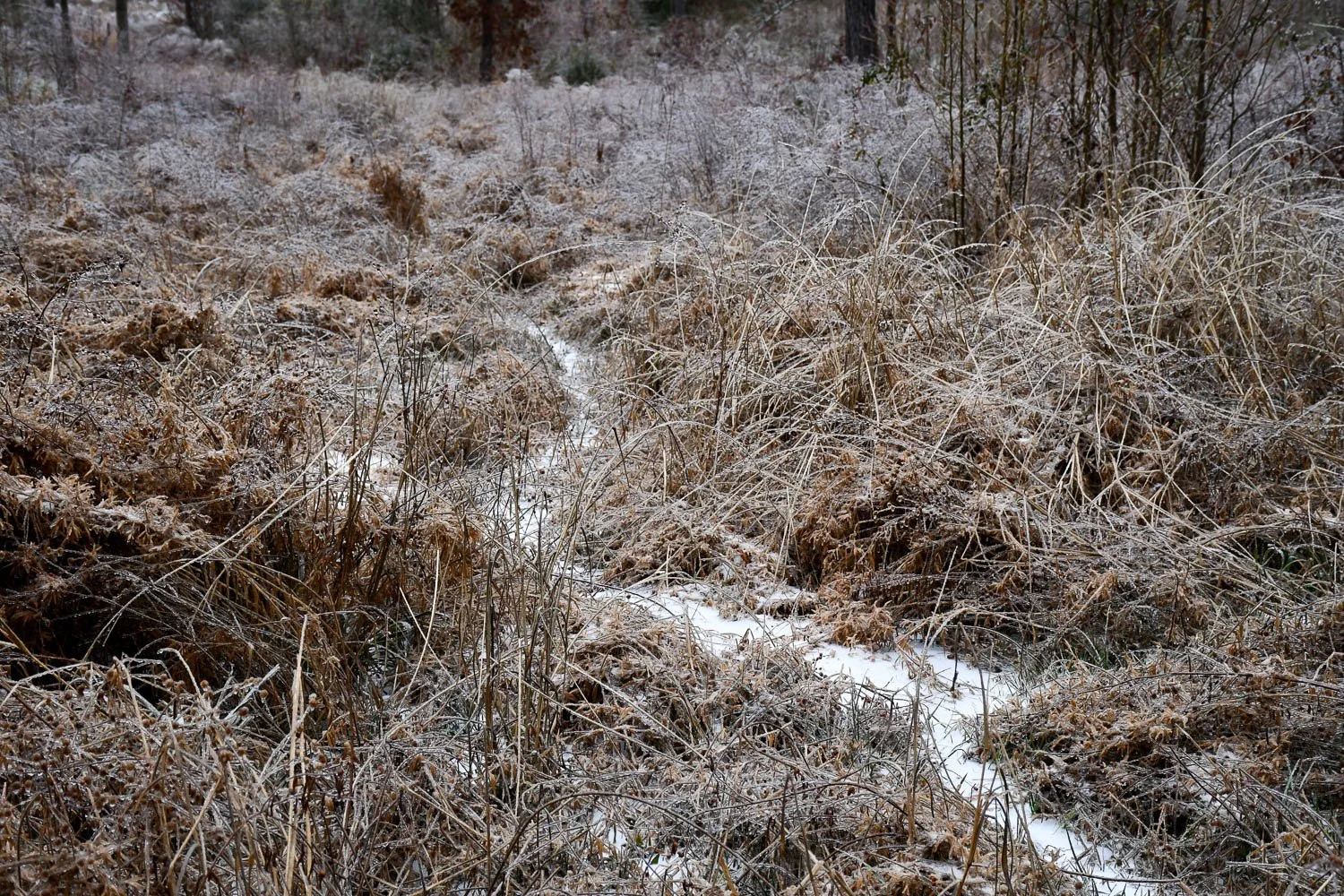
It helps to pay attention to where ice and snow settle and where it melts, and how long it stays. Such observations can tell you where warmer and cooler parts of your property are.