There are few things that feel as good in life as that first warm stretch after a cold winter.
That’s what we enjoyed this past weekend here at Ephemera Farm. I finished the great cutback, and the garden is cleaned of last year’s growth. In the areas I cleared a few weeks ago, the early foliage of Arnoglossum plantagineum (prairie Indian plantain) and Rudbeckia maxima (giant coneflower) are already making a strong presence at ground level.
And, the plantings are beaming with Narcissus (daffodil). They are one of the non-native species I use to fill an empty gap at the beginning of the season. My naturalistic plantings can look quite devoid of plants until early March when the first wave of color from Phlox (phlox), Glandularia (rose vervain), and Lupinus (bluebonnets) start. The Narcissus glow on both the bright and solemn days we have in February.
It’s taken me a few years to figure out which species will grow well here in east Texas where we have less cold than further north. I now have a handful of varieties that have proven to bloom well.
Last weekend was a good time to pause and admire their attributes. I was reminded of how important the process of plant selection is from my friend Molly Hendry when we spoke together a few weekends ago in South Carolina. She shared while she was at Great Dixter, Fergus Garrett had grown 10 different types of Muscari (grape hyacinths) in pots and then had the interns evaluate which of them were the best. They were asked to consider flower, form, foliage, how they would fade, and more, and they were then to tell Fergus which were the best. I admired that great attention to detail. It clicked with me how simple this approach was for us gardeners to examine a plant's attributes, and it's something I've been thinking about as I prepare for the next Botanic Bootcamp on the power of plant selection. So, I walked the garden collecting flowers and foliage to compare.
Narcissus pseudonarcissus (Lent lily) has been the dominant daffodil I’ve used in my beds. The light yellow flowers are not too overpowering for the space. And, after they finish flowering the thin blue leaves echo well with Rudbeckia maxima and Eryngium yuccifolium (rattlesnake master). I make sure I go through and remove the seed pods so that they don’t seed around and that redirects energy back into the bulb.
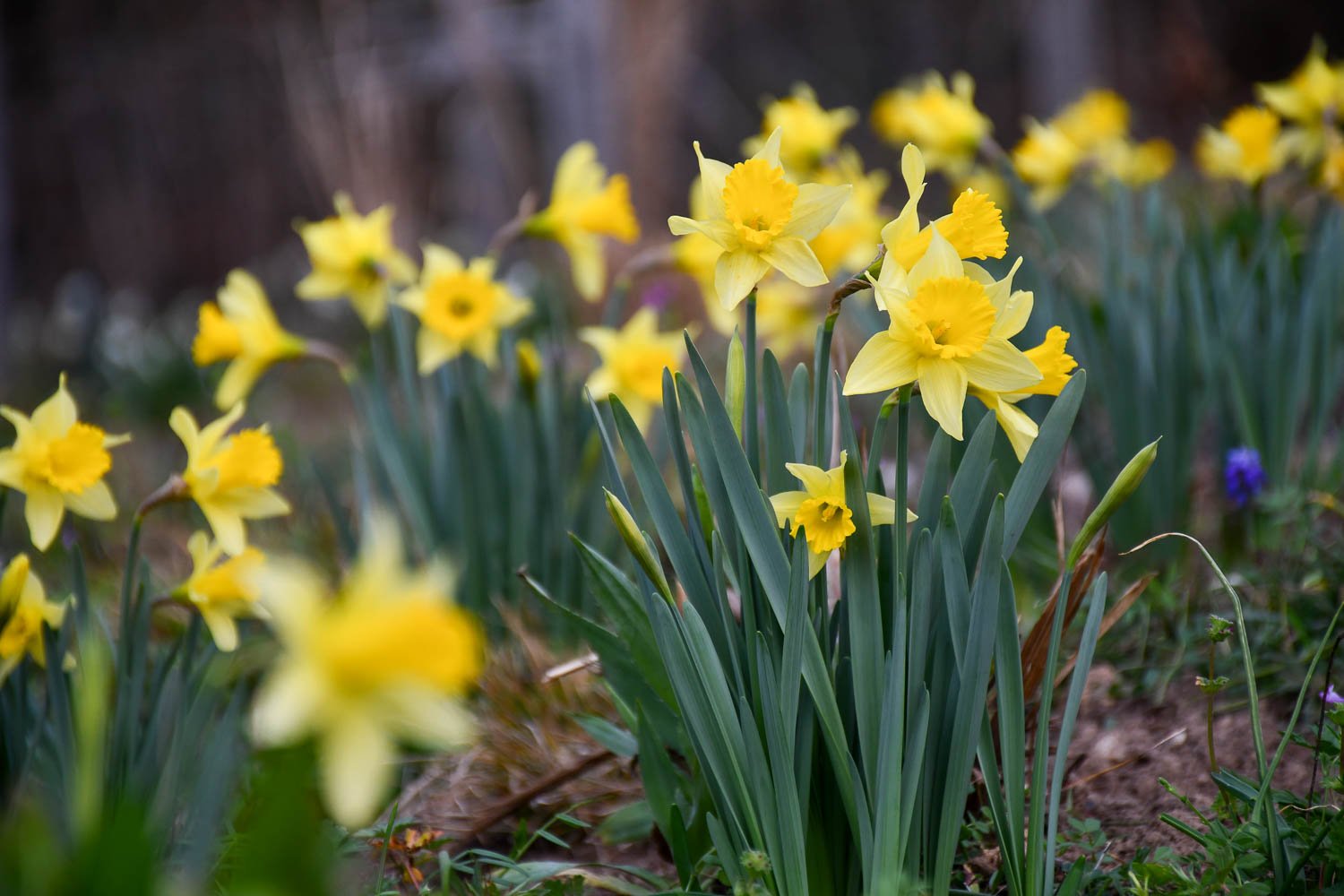
In the core beds near the house, Narcissus pseudonarcissus blooms with a soft yellow.
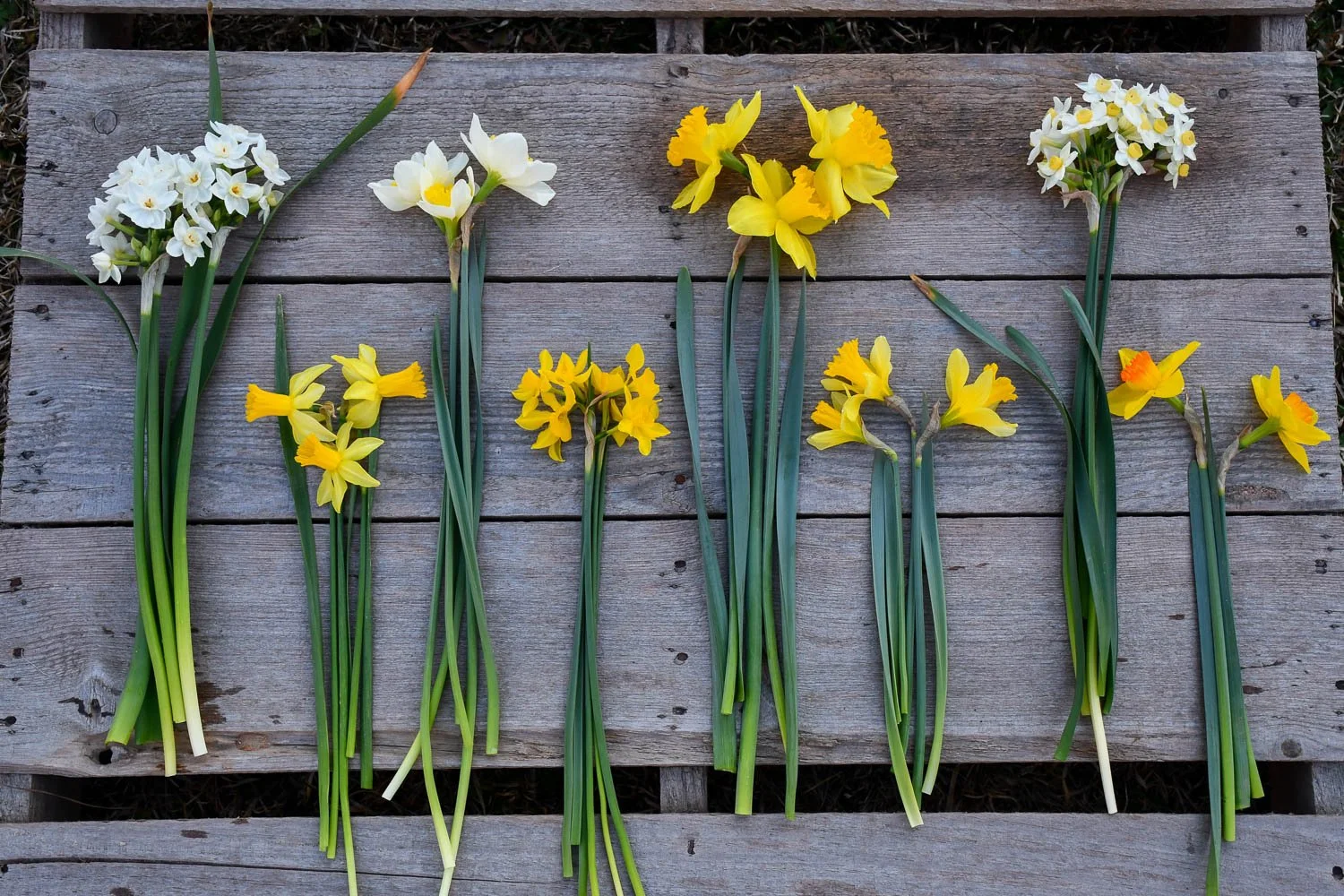
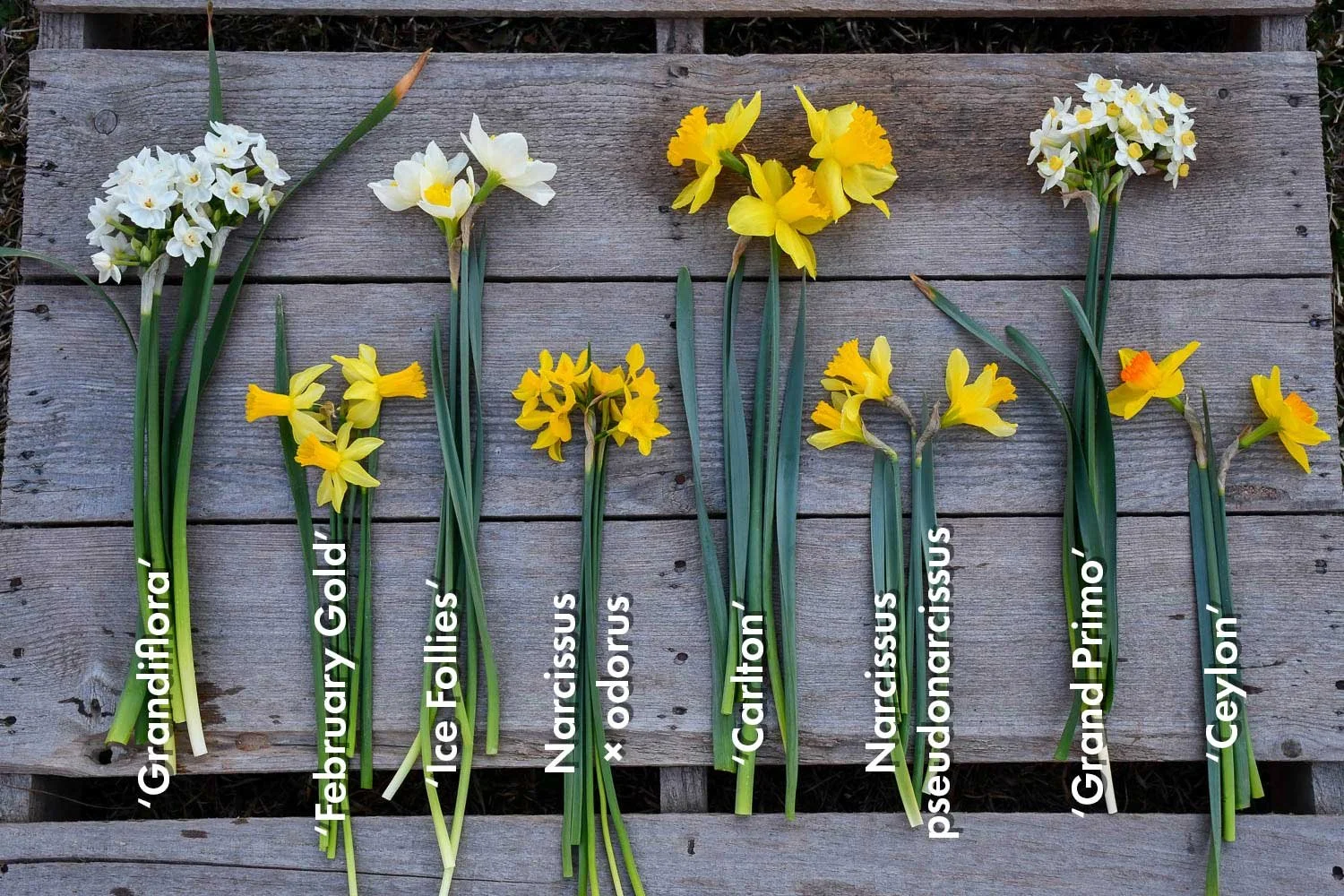
I have debated over the years if I have one or two different types of Narcissus tazetta (tazettas), but after amassing this collection, I can see the differences. Both were nameless backroad rescues. One has a darker cup and thinner foliage, which could be ‘Grand Primo’. The other has a much larger presence in the garden with its flowers and larger leaves. Greg Grant suspects it is an old timey cultivar called ‘Grandiflora’. On this one, I noticed a bit of damage in the middle of the thick blades where they bend. My guess is that spot is where the sun shines on the freezing mornings, and the tissue burned a bit. Because the foliage can show winter damage and the volume of blades produced, I’ve decided to not plant them in any beds. They can start looking too flimsy after flowering. Instead I hoard them under my blackberries. I love using them here to smother the weeds out.
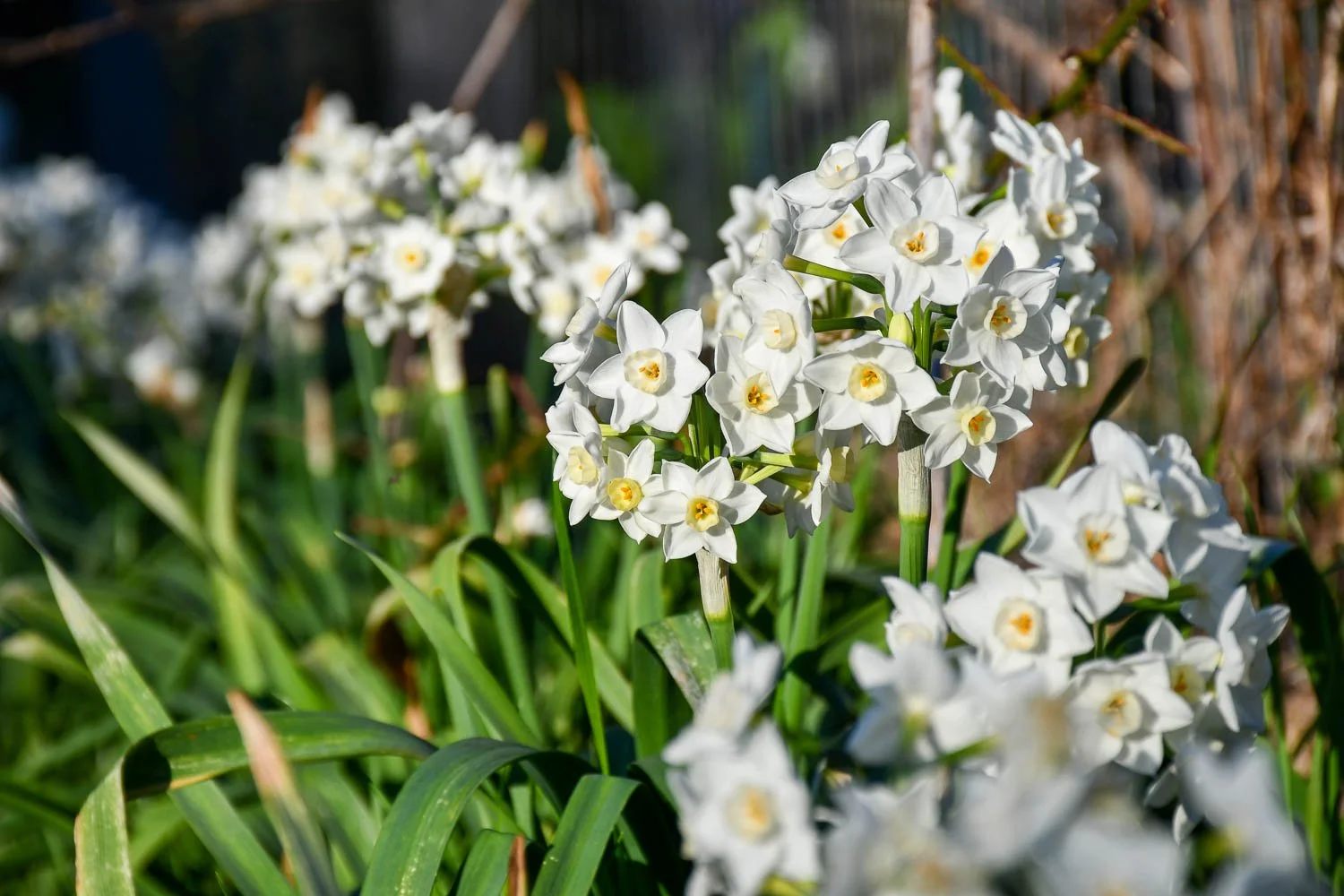
Narcissus tazetta ‘Grandiflora’ cover the ground under our blackberries with their thick foliage.
Most of the rest of my Narcissus have been in trial beds waiting to see where I can use them most effectively. ‘February Gold’ is a new one I bought a few years ago, and I am ready to commit to planting them into beds on the western side of the garden where I have more warm colors from Salix ‘Flame’ (willow) and Cornus amomum ‘Cayenne’ (silky dogwood). Over the period of a few years, I watched as other bulbs planted at the same time like ‘Tête-à-Tête’ and ‘Jetfire’ melted away, but ‘February Gold’ continued to weave more golden flowers. For us it’s early and started blooming February 5 this year, even beating Narcissus pseudonarcissus that opened on February 9. The green verdant leaves are different than the many others I have with a bluish cast. For me the leaf color is the driving factor of putting them on that side of the garden. The green foliage pairs better with the warm colors.
I have bulked up hundreds of Narcissus × odorus (campernelle), and I’m eyeing putting them on a hillside on the eastern part of our property where it stays wetter just down from our ‘Ann’ Magnolia (hybrid magnolia). The flowers are a strong yellow, and they have these thin green leaves that aren’t as strappy as others. Perhaps this year I’ll be able to check that off my list.

Another perspective of the flowers so you can enjoy the insides of the coronas.
I love ‘Carlton’, but the large flowers are a bit overpowering, and they are also an intense yellow. I haven’t quite decided where I want them to go yet, but I’m leaning toward mixing them in with the campernelles so that they can play a bit off the same color with just different shapes.
I have two Narcissus that feature a color shift between the petals and the corona. I love ‘Ceylon’. The orange cups are so striking on this Narcissus against the yellow petals, and it is one of the only orange cup types I’ve had success with so far. And I’m delighted that ‘Ice Follies’ is growing well for me. I have seen it here and there in east Texas and finally decided to give it a try. It was one that I grew back in Tennessee, and I love how the petals fade from a creamy yellow to almost white while the cup holds a buttery yellow color. I still haven’t decided where to place then, and that’s ok. I can enjoy them in the patch for now in their holding beds.
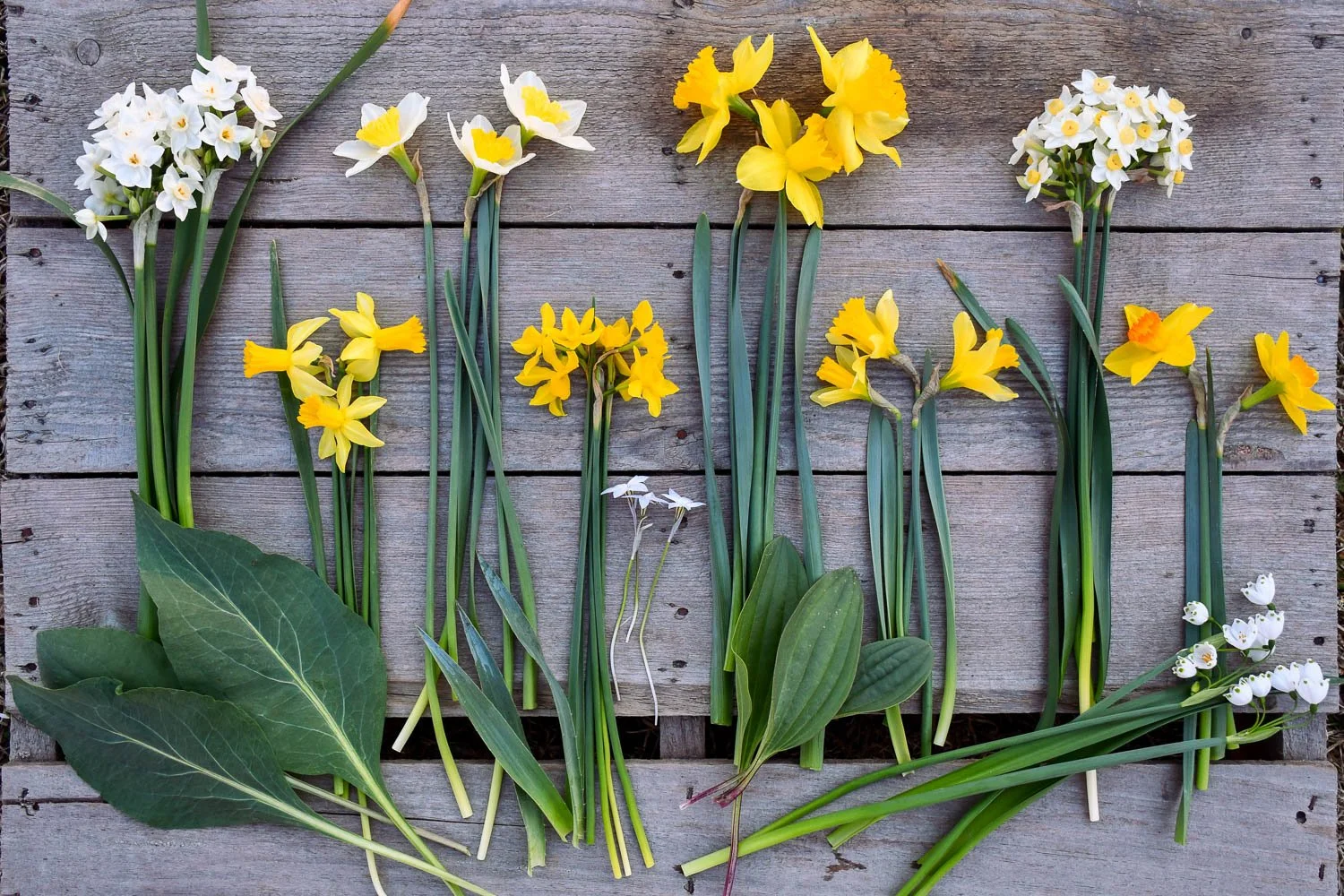
Foliage and flowers to consider mixing with Narcissus left to right: Rudbeckia maxima, Eryngium yuccifolium, Ipheion uniflorum (starflower), Arnoglossum plantagineum, and Leucojum aestivum ‘Gravetye Giant’ (summer snowflake).
Before I gathered them into a bundle for taking inside, I walked the garden and collected foliage and flowers from other plants that they will share space with in the coming weeks before going dormant. I focused on plants that have hints of blues and greens to see if there are combinations that I should further consider.
Many solo planted bulbs have bulked up over the years, and I’m keen on dividing some clumps this spring and moving them around. And, after I put them in their new spots, I imagine the joy they will bring in future springs. But for now, I’ll enjoy this one.