Food Prairies

I love the look of a prairie.  I'm not sure when the adoration began, but my earliest memory of taller-than-turf grasses is as a child walking on the back hill at my grandparent's house where my great-grandfather had allowed the vegetation to grow wild for a few seasons. 

I can see it now—my head barely bobbing out of the ocean of amber broomsedge (Andropogon virginicus) as I trod along the paths I had tromped down.  It. Was. Fun. 

While the prairie at my grand-parents house is long gone, seeing grasslands like this one basking in the glow of sunset brings back memories of my childhood prairie rambles.

While the prairie at my grand-parents house is long gone, seeing grasslands like this one basking in the glow of sunset brings back memories of my childhood prairie rambles.

Parts of west Tennessee actually used to be tallgrass prairie, and that little patch of broomsedge on the hill was remnants of that ecosystem being expressed.  Now, it's uncommon to find a large patch of tallgrass in west Tennessee since much of the land is farmed.  You instead see traces of the prairie along the roadside and in fencerows, mere borders of the angular, agricultural puzzle pieces that cover the countryside.  Still, even these little slivers can be inspiring to a horticulturist such as myself, and on my driving trips to and fro, my eyes scan the open roadsides (very safely of course!) for plant patterns and new species. 

I believe this love of grasslands is why I have gravitated toward designed plant communities and mixed plantings of perennials that have really taken off within the past few years.  Seeing that people were actually wanting to create designed grasslands was and is thrilling for me as a horticulturist.  And, to be able to go and experience some of these designs over the past few years has been enlightening.  Inspiring.  Exciting. 

Piet Oudolf's Hummelo, a central nexus for the mixed planting movement. Here, grasses and forbs seamlessly intermingle together and appear as if planted by nature. From my reading of Hummelo, I learned this planting where the nursery used to be is m…

Piet Oudolf's Hummelo, a central nexus for the mixed planting movement. Here, grasses and forbs seamlessly intermingle together and appear as if planted by nature. From my reading of Hummelo, I learned this planting where the nursery used to be is mainly derived from a seed mix.

Flowering Echinacea (purple coneflower) and verdant Amsonia hubrichtii (threadleaf bluestar) on the High Line provide a foil to the metallic cityscape of New York City.
Flowering Echinacea (purple coneflower) and verdant Amsonia hubrichtii (threadleaf bluestar) on the High Line provide a foil to the metallic cityscape of New York City.

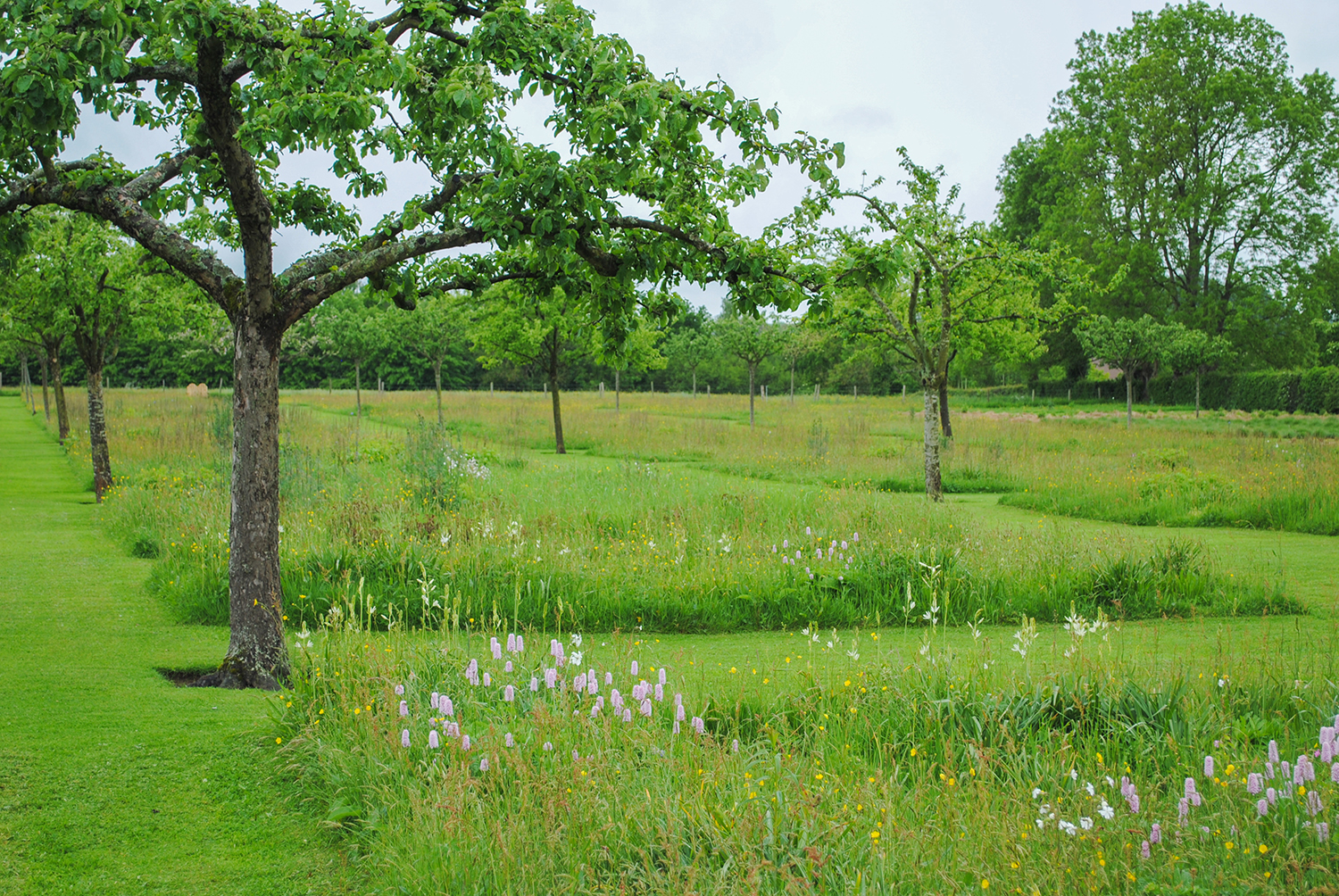
The rectangular meadow patches at Le Jardin Plume in France are anything but square.

The rectangular meadow patches at Le Jardin Plume in France are anything but square.

Eryngium yuccifolium (rattlesnake master) and Kniphofia 'Wet Dream' (red hot poker) erupt from the haze of muhly (Muhlenbergia capillaris) at Chanticleer's elevated walkway.

Eryngium yuccifolium (rattlesnake master) and Kniphofia 'Wet Dream' (red hot poker) erupt from the haze of muhly (Muhlenbergia capillaris) at Chanticleer's elevated walkway.

Now, I'm wanting to learn more about how do we create and employ these mixed plantings in the southeast US.  Much of the approach has been developed in regions further north, and I believe that the technique needs to be trialled and tweaked for the south.   Our habitat is different, our climate is different, and our species composition is different. 

And, in an attempt to learn, this semester my students and I will be designing grassland-style plantings in the Sprout garden on the campus at SFA.  With Sprout we focus on creating tangible growth for plants, students, and the community to bridge the gap between horticulture and people.  So far, we have found relevance with students and the locals though our growing food and cut flowers.   And, now part of this garden will be planted to provide food for beneficial insects like pollinators and predators.  Students care about sustainability, and designed plant communities are considered a more sustainable approach to landscaping

We call these areas food prairies, since the garden has been designed with food in mind AND because the areas will provide food and habitat for beneficial organisms.  The name arose one day in a conversation with my colleague Dawn Stover, another meadow aficionado.  I was telling her about how I wanted to plant perennials in the Sprout garden to make it more beautiful and to add habitat and resources for beneficial organisms, and she commented on how we would have food for people and food for our insect friends.  From that conversation, the name for these plantings just clicked.    
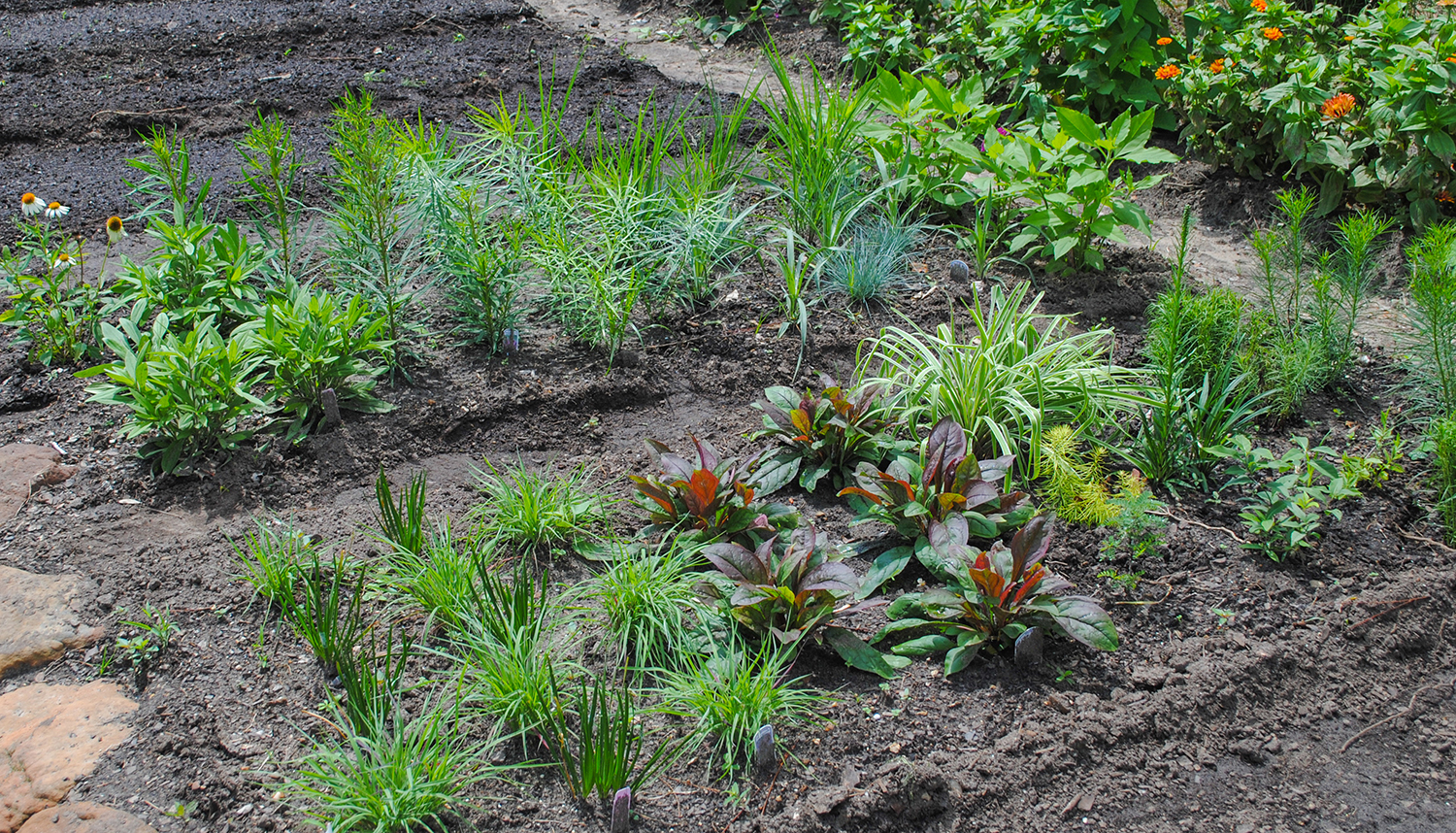
Of course, to know what will grow well in mixed plantings in the southeast, we must evaluate plants. Thanks to trial material from Hoffman Nursery, Intrinsic Perennial Design, and Jelitto we've been able to assess many different species in unofficia…

Of course, to know what will grow well in mixed plantings in the southeast, we must evaluate plants. Thanks to trial material from Hoffman Nursery, Intrinsic Perennial Design, and Jelitto we've been able to assess many different species in unofficial trials like you see here.

Since the Sprout garden is designed to resemble a reclaimed farm, the prairies will fit in quite nicely with our overall theme by resembling fencerows between fields.  After all, most agrarian areas have some type of wooly part or "idle spots" as Aldo Leopold called them where wildflowers and grasses bloom in the absence of disturbance.  Usually, these areas are rejects and castaways, but in our garden this flora will be planted on purpose.  Plus, research shows that having fencerows that have been enhanced with pollen- and nectar-rich plantings can reduce pest pressure in surrounding fields.  

I'll keep you posted on the food prairie's progress.  Conceptualizing them and designing them is exciting. The whole process makes me feel like a kid again.  

Cut flowers are not sustainable?

Maybe my students at SFA shouldn't create any more flower bouquets, you know, since they're not sustainable and will be thrown away. Or, NOT.

Maybe my students at SFA shouldn't create any more flower bouquets, you know, since they're not sustainable and will be thrown away. Or, NOT.

I read an interesting article about the absence of flowers at the Olympics.  Via Thrillist, "A Rio 2016 spokesperson said handing out tropical flowers to the athletes -- which would later be thrown away -- would be wasteful and not sustainable."

Wow, isn't that weird!?  Flowers, a renewable resource.  Not sustainable.  Hmm...

I'll admit at first I was angry, miffed that the Rio Olympics had degraded part of my hortiCULTURE into trash.  "Now we have to do yet ANOTHER marketing program...," I thought.

But, the quote’s peculiarity continued to eat at me.  What was it?  

I asked myself, "What if they are right?"  What if cut flowers are not sustainable?  I know there are qualms about the ways flowers are grown—fertilizers, pesticides, fair work practices, and transport to name a few.  Therefore, I would understand that kind of comment, and horticulture is working hard to remedy those growing challenges.

But, their perspective doesn’t seem to be centered on the production practices; it's on the flowers being thrown away.  Just like a bottle or old tire, it'll be tossed once it's used.  

The focus on flowers shouldn’t be the landfill.  They are part of the magic moments in our lives that feed our souls.  And, being so, they aren't sustainable because they will fade. 

So will a sunset.  A laugh.  A tree.  A life.  A shooting star.  An ice cream sundae.  A song.  A kiss.  A painting.  

These things each have a beginning and an end.  As Ben Rector says, "It's the walking in between" that make these treasures count.  The middle ground is where memories and the quality of life grow, and intangibles are sustainable. 

In this case I see common sense and sustainability as disjointed.  Ty Montague has taught me that every action an organization takes is part of its story, and the Rio Olympics committee's actions don't match their story.  

Are the flowers any less sustainable that the amount of resources that were used to make the trinkets that are now being given to the athletes with a sustainability sticker slapped onto the present?  I would love to see some of that data.  They could have done SO MUCH MORE with flowers and sustainability like wrap them in biodegradable sleeves, or start a flower composting program at the Rio Olympics.  

The essence of sustainability is to preserve the earth so that life is worth living.  A flowerless life is not.  


Ruts in Grass

This afternoon as I walked my bicycle up a very steep hill near my house, I noticed riding lawn mower ruts in the grass of a neighbor's yard.  At first, one or two, but then more became visible as I rounded the corner.  

It was ironic.  In trying to beautify, they had made their property ugly.  A tool made to control had created a mess.  Of course, part of the reason why those ruts were there is because the slopes were WAY too steep for a rider.  

Questions began to swirl in my head.  Did the owners mow it?  Or, even worse did they hire a professional to do it?  I thought of analogies like how beauty chasers alter and ultimately destroy their bodies in a vain quest for looks or how in the pursuit... or make that the purchase of happiness drains not only the back account but the soul.  

Ultimately, the take away for me was there are tools in horticulture that make our lives easier.  But, we need to make sure that we are using the tools appropriately and that they are actually helping us accomplish our goal.  We are here to improve and enhance life—not destroy it.  

It is February, and I'm sure the scars will heal once the grass begins to grow again.  But, the mark on my mind stays.  

+++++++

Today, I saw Sanguinaria canadensis (bloodroot) in bud and the first Vinca major (bigleaf periwinkle) blooms open.  


Sprout Germinates

Colorful lettuce grows in neat rows in the Sprout garden.

Colorful lettuce grows in neat rows in the Sprout garden.

I’ve been at Stephen F. Austin State University (SFA) for a year and a half now, and in the haze of starting a new job (and, a wonderful haze it has been!), I haven’t had a chance to record the progression of thinking I’ve had on garden projects at SFA.  Thus, I wanted to start doing a series of blog posts to bring myself (and you) up to date on my activities.

I was so thrilled when I got the job at SFA.  Teaching about plants and horticulture has been my career goal since I was at least a freshman in undergrad.  The biggest challenge I would face at SFA was student enrollment.  The number of horticulture students were at a lull (much like they are across the country), and my colleagues were trying to discover a way to increase enrollment.   They shared with me that a fresh face would help, but I knew that we had to do more that just be present.  We had to visibly show the students that we were relevant and that we cared about their lives and their futures.

While I was pondering how to engage with more students, I was also trying to see where I fit.  I’ve had the herbaceous plant craze for several years, and I knew that there was an opportunity to beef up the perennial collections.  On top of that, SFA already has a large woody plant collection, and several of my colleagues across the nation are doing great work with woody plant breeding and evaluation. So, in the spirit of zigging instead of zagging, I starting laying the groundwork for working with herbaceous plants.

That was also the time when I realized there was a way we could weave edibles into the mix.  In conversations with Dawn Stover, the research associate at SFA Gardens, I discovered there was an edible garden on campus, the SFA Sustainable Education Community Garden.  This garden's original focus was to grow produce and then donate it to the community, but eventually, the garden produced so much food that some of it was being sold at a small farmer’s market behind our ag building on the SFA campus.

I quickly realized that this garden was it.  This garden is how we could begin to bridge the gap to help connect horticulture with students.  If we couldn’t at least engage their hearts, we could bridge a connection with their stomachs.

And, of course, I don’t have to belabor how big edibles are right now with young people.

I offered to take over the garden and revamp it since SFA Gardens had many other projects on their plate.  Right off the bat, I knew that the SFA Sustainable Education Community Garden needed a mission (and a shorter name).  But, I hate the word mission because so many organizations have missions but never really follow these framed statements on the walls.  We would have a story as Ty Montague describes, and our day-to-day actions would tell our story, a story I hope would attract both students and people from the community.  

Plants were an obvious choice to be part of our story.  But, which plants?  I chose to focus on edibles and 21st century relevant herbaceous plants (plants for zone 8, urban areas, designed plant communities, etc.).  I felt that both areas would help us to be relevant to students.  We could grow the plants, evaluate them, use them in classes, and report our evaluations to the public.

I wanted our story with the garden to also focus on students.  One thing that I heard over and over at SFA is that they wanted students to have more hands-on learning, and I saw the garden as an opportunity for tangible growth for students.  I wanted the garden to be something that students enjoyed and be designed to get students talking and engaged.  We as a people are ultimately social organisms, and one of the best ways to engage people with horticulture is to get them excited and share ideas with their friends.

The community was also a central focus.  Dawn told me that one of her favorite parts of the farmer’s market was that we had the opportunity to connect horticulture with a different audience on campus.  And, I saw that we could do more events and tours to help educate, inspire, and connect with people in the community even more.

Plants.  Students.  Community.  And with that trinity, we rebranded the garden as Sprout—a garden for tangible growth for plants, students, and the community.  Not too shabby if I do say so myself.  I even doodled a new logo for the garden.

We also have one more part of our story woven into all three of those parts.  Fun.  We want to teach people that gardening is fun and enjoyable and adds to the quality of life.  And, we try to embellish everything that we do in the garden with that philosophy.

I hope that my brain dump will help guide you if you are faced with a similar situation in your career.  Thanks for reading about the start of Sprout.  Soon, I will do a post about our first year successes and failures.  Until next time, keep growing!