TIM BOLAND BIO
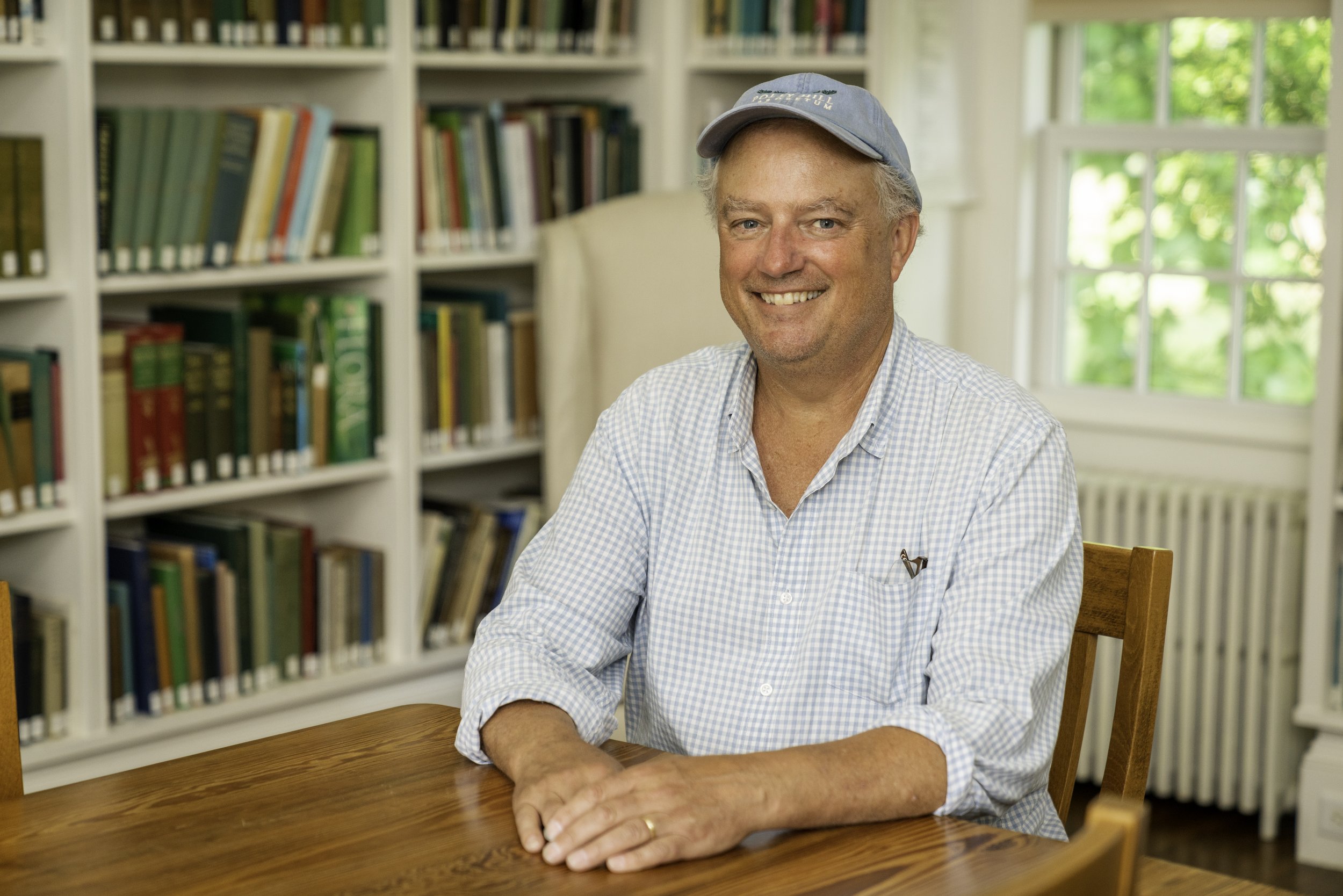
Tim Boland is the Executive Director of the Polly Hill Arboretum, located on the island of Martha's Vineyard in West Tisbury, Massachusetts. He holds an undergraduate degree in Horticulture and a master's in Botany, Plant Ecology, and Systematics from Michigan State University.
Tim specializes in oaks from all over the world. He is involved in various plant conservation projects to preserve threatened oaks in North America, Europe, and Asia. He is a member of the Board of the International Oak Society (IOS) and chair of the Oak Conservation and Research Committee. He helped develop a special fund that has thus far supported 28 research projects worldwide where oak species are vulnerable to extinction.
In addition, Tim and his conservation partners published a modern flora of Martha’s Vineyard in 2022. He also has expertise in propagating rare North American trees and shrubs. He has been involved in seven seed expeditions, mapping and collecting two species of native North American Stewartia, while also pursuing native azaleas. He is very involved in plant propagation of Martha’s Vineyard endemic plants. Throughout Tim’s career, he has bridged the gap between botany and horticulture and loves teaching aspiring students about the beauty, mystery, and utility of plants. Tim plans to retire this year after twenty-four years leading the development of new infrastructure and programs at the Polly Hill Arboretum. When asked what is next? He jokingly asserts, “I think I’ll get involved with plants!”
To learn more about Tim and the Polly Hill Arboretum, pollyhillarboretum.org.
SHOW NOTES
Tim's early gardening experiences with his mother and grandfather, who planted redbuds on Mother's Day
Growing up near a labeled campus arboretum that further introduced him to more plants
Studying landscape ornamental horticulture at Michigan State
His transition from zone 4A to zone 7 at The Scott Arboretum where broadleaf evergreen hollies were a revelation
The circuitous path to Polly Hill Arboretum
Polly Hill starting her arboretum at age 50 at her parents' Martha's Vineyard property while living in Wilmington, Delaware
Polly’s philosophy on growing from seed instead of buying plants, saying "I'll miss the teenage years — they're the most interesting"
Polly releasing roughly 60 cultivated varieties into the horticultural trade over her career
How conservationist David Hamilton Smith came to preserve the land after encountering a Magnolia macrophylla Polly had grown from 1961 collected seed
The origins of plant record keeping through the American Horticulture Society's plant science data center, dating to a 1974 meeting involving leaders from botanic gardens
Polly sending her plant records to a scientist at Woods Hole to be entered into an early database system
Tim's practice of keeping all invoices and purchase records as his own form of tracking plant provenance and trials
Polly Hill's dead file containing roughly three times as many cards as her successes, with perhaps 20% or fewer of introductions succeeding
Fred Galley's advice at the Scott Medal: focus on the successes that are so grand, not the failures
Tim's curatorial internship program, with 13 to 15 former interns now working as curators or plant recorders at various institutions
Polly's approach to sowing seeds directly in the ground without a greenhouse, particularly effective for plants with long germination delays like stewartias
Teaching seed-sowing courses to local farmers interested in adding native plants alongside food crops
Another of Polly's guiding principle: "Just imagine what you can do if you just get started"
Tim's experimental approach to propagation, trying four or five different treatments simultaneously on difficult seeds
The value of plant society informal conversations and learning propagation tips from fellow members over lunch or at the buffet
Consulting Dirr and Heuser’s The Reference Manual of Woody Plant Propagation and IPPS as go-to references before trying novel propagation approaches
The word "amateur" meaning "lover of," and how that spirit defined Polly's relationship with horticulture
Tim's propagation conversations with Polly in her golf cart, working through whether a plant could be grown from seed or needed to be cloned
Collecting 400 permitted seeds of the federally endangered Triosteum perfoliatum (late horse gentian) and eventually succeeding through cuttings after seed germination attempts over five years failed
Recognizing family resemblances as a propagation clue linking Triosteum to Symphoricarpos, which roots easily
Core principles for ethical wild plant collecting: always ask permission, check the plant's conservation status, and take ecological notes on associates and site conditions
Learning the importance of ecological note-taking from veteran plantsman Rick Lewandowski
The value of partnering with people who have deep local and indigenous knowledge of the land
Examples of non-classically-trained plant people with immense knowledge
The indigenous Wampanoag tribe's involvement in and support of collecting efforts at the lighthouse land on Martha's Vineyard
Hardiness as the most critical factor in provenance, with the plant's genome acting like a deck of cards played out over tough years
Polly deliberately sourcing Stewartia from northern populations like Williamsburg, Virginia, and the Delmarva Peninsula for cold hardiness
The MV Wild Type Program growing only plants native to Martha's Vineyard to preserve local provenance
Underutilized natives on Martha's Vineyard including Ostrya virginiana (hop hornbeam), Cornus alternifolia (alternate-leaf dogwood), and Lindera benzoin (spicebush)
Challenges with propagation of our native Stewartia (silky camellia)
The Asiatic stewartias being relatively easy to grow from seed compared to the two native species, particularly Stewartia serrata named by Steve Spongberg as a new species after examining herbarium specimens at Kew
Polly collecting seed at the Arnold Arboretum's Bussey Hill with her Stop & Shop bag
Tim's interest in oaks beginning with a search for Quercus muehlenbergii populations in the herbarium at Michigan State
Herbarium curator Jose Panero's frustration with oak taxonomy due to hybridization, which eventually led Tim to study evergreen oaks in Oaxaca, Mexico
Witnessing oaks being cut for charcoal and acorns used for food in Oaxaca, deepening Tim's understanding of oaks' cultural and conservation significance
Joining the International Oak Society during graduate school and being inspired by California oaks at an early meeting
Inviting Doug Tallamy to speak at Polly Hill in 2005 when Bringing Nature Home was released
The Oak Conservation and Research Grant, now supporting roughly 28 projects and $200,000 in field work in Mexico, Indonesia, Vietnam, and Malaysia
There’s an Oak for Everyone, Tim and Matt Lobdell's article for the American Horticulture Society featuring cultivated oak varieties suited to a range of garden sizes
Quercus prinoides (dwarf chinkapin oak) as the most underrated native oak, maxing out around six feet with excellent fall color and highly sought acorns for wildlife
The book The Tree Book by Michael Dirr and Keith Warren as a resource for new mid-size oak cultivars, with Tim encouraging people to request these from municipalities to drive nursery supply
Post oaks on Tim's property estimated at 300 to 500 years old, resprouted from historic harvesting
Coppicing as a strategy for managing oaks and other trees and shrubs, including as a way to rejuvenate plants and keep them in scale
Asimina triloba (paw paw) as a deeply loved underutilized native, with Tim collecting seed across their full range for a USDA grant, traveling with bushel baskets of seed in a small hatchback
Attending the very first paw paw conference around 1994 and taste-testing so many varieties
Kentucky coffee tree as another underrated native, with the male form ‘Espresso’ offering incredible fragrance and lacy, acacia-like compound foliage that filters light beautifully
Pityopsis graminifolia (narrow-leaf silk grass) a silvery-leaved, late-blooming native
Liatris (blazing stars) as an obsession, with a recent order from Prairie Moon Nursery to trial new species
Tim's practice of thinking six months out as both a gift and a curse of the gardening mindset
Slowing down in recent years to actually sit on garden benches and take in beauty
Using a mental image of something beautiful in the garden, like a witch hazel cultivar in bloom, to calm his mind before sleep
His garden myth to bust: sterile, clean conditions are ideal as contaminated or recycled growing media leads to damping off and losses of hard-won seed
Using waxed butcher paper on a bench wiped with isopropyl alcohol as part of a fastidious seed-sowing routine
Polly's philosophy distilled into a retirement motto: "It's never too late to germinate"
Encouragement for the next generation to seek out conservation horticulture and how growing rare plants that make a difference for the planet, not just for personal joy
To learn more about Tim and the Polly Hill Arboretum, pollyhillarboretum.org.
KEEP GROWING