SHELBY RADCLIFFE BIO
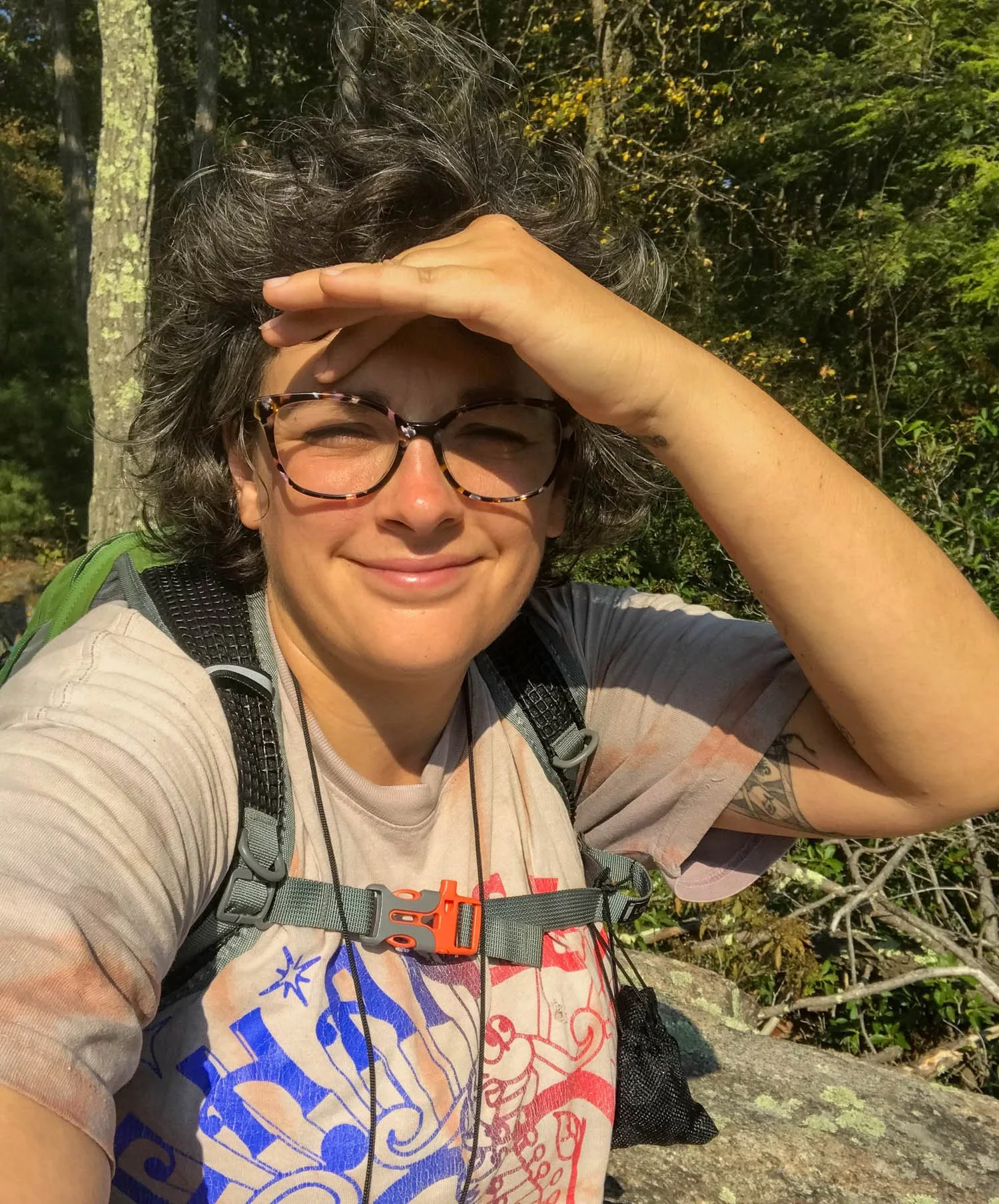
Shelby Radcliffe is a horticulturist and landscape designer whose work at Emergent Gardens blends art, ecology, and human experience. Raised in Central Florida, her early connection to natural ecosystems and photography shaped the way she observes and imagines space. After years in creative practice and small-business leadership, Shelby trained professionally in public gardens, including Wave Hill Public Garden & Cultural Center in Bronx, NY and the U.S. National Arboretum in Washington, D.C.
She completed the University of Florida’s Environmental Horticulture Certificate Program, has volunteered with several organizations, and developed a native plant micro-nursery that became the foundation for her evolving, provocative home garden. At Emergent Gardens, her designs seek to balance beauty, function, and resilience for the benefit of living beings—now and into the future.
You can learn more about Shelby on Instagram at @millennialmatter and Emergent Gardens at @emergentgardens or emergentgardens.com
SHOW NOTES
Growing up in Central Florida, being locked outside by her father to explore the woods, creeks, and lakes near her neighborhood
Discovering natural dyes after noticing spiderwort in her front yard, which led her down a plant identification rabbit hole
A formative moment at Brooklyn Botanic Garden in fall 2021 that led her to pursue horticulture professionally
Accepting an internship at Wave Hill in 2022
The lesson that observing and waiting are types of action, and that the first year in a new garden should be spent mostly observing
Learning to respect a gardener's deep knowledge of their own space, especially when they have years of context you don't
Choosing the US National Arboretum's Friendship Garden because of her admiration for Oehme van Sweden and Phyto Studio
Reading Planting in a Post-Wild World by Thomas Rainer and Claudia West as a formative influence
Balancing creative freedom with restraint
Thinning and redefining swaths of Penstemon digitalis (foxglove beardtongue) in a garden, later affirmed by designer Claudia West
How to edit plantings to enhance their appearance
Founding Emergent Gardens with partners Evan Galbicka and Jacob Villi after clients sought her out for design and install work
Adaptability as the most important quality when starting a native plant design business, including willingness to compromise
Budgets being harder than they look, with cascading decisions around plant sourcing, sizing, and cost
How every new plant you grow teaches you something, and that your capacity to learn is larger than you think
Starting designs by researching the historic ecosystem of a site as a foundation for plant selection
A recent project blending a Florida prairie and flatwoods-inspired matrix in the front yard with a cottage-style border near the porch
Growing hyper-local plants collected from nearby fields and roadsides and placing them in a garden context to surprise people
Sporobolus junceus (pinewoods dropseed) as an underused grass that generates excitement when planted en masse
Her passion for sedges and the challenge of getting people excited beyond the familiar Muhlenbergia capillaris (pink muhly grass)
Growing Dichanthelium scoparium (velvetleaf witchgrass) from seed, spending two years identifying it, and watching it become a garden conversation piece
Verbena haleii (Texas vervain) and Oenothera simulans (southern evening primrose) as locally collected roadside wildflowers that stop neighbors in their tracks
Inspiration from Dune Gardens
Using Pityopsis graminifolia var. aequilifolia (scrub goldenaster) for the yellow flowers and to provide color in garden beds
Helianthus radula (rayless sunflower) as a bizarre, attention-grabbing native that acts as a preview for the fall and winter garden, with basal foliage growing dramatically larger than expected in more nutrient-rich, moisture-retentive soil
Amsonia ciliata (fringed bluestar) propagated from abandoned field cuttings into 100 plants, now generating strong reactions in its third full year
Carex cherokeensis (Cherokee sedge) as her current favorite sedge, sourcing from regionally appropriate nurseries like Charleston Aquatic & Environmental
Carex leavenworthii (Leavenworth's sedge) thriving in sand and full sun, and Carex texensis (Texas sedge) coming up for future projects inspired by John Greenlee's meadow designs
Carex tenax (wireleaf sedge), a xeric Florida native sedge she is trialing for upcoming projects after promising iNaturalist observations
Carex gulsonii (Gulf Coast sedge), a Gulf Coast sedge with a weeping habit and beautiful seed heads propagated from ditch-collected seed
Bridging the tension between beauty and ecological function through education, positive examples, and learning what already excites the client
Substituting Hydrangea quercifolia (oakleaf hydrangea) and viburnums for clients who miss the hydrangeas they grew up north
Using herbicide before planting and UV-resistant plastic solarization to reduce initial weed pressure
The Roy Diblik push-pull Dutch hoe as her preferred long-term weed management strategy in mulch-free plantings
Dense ground-covering plantings as green mulch to cool soil, reduce erosion, and absorb heavy rainfall
Planting more trees and shrubs to create windbreaks, canopy, and long-term resilience in exposed Florida landscapes
Shrouded in Light as a recommended book for naturalistic planting with shrublands
Florida's diversity of at least 80 ecosystems and its top-five national ranking for plant endemism as a great joy of gardening there
Garberia heterophylla (garberia) and Chrysoma pauciflosculosa (woody goldenrod) as late-season Florida natives that extend garden interest well into winter
Lying on the ground to observe plants from below, such as discovering the bark detail of Hypericum hypericoides from a new angle
Rethinking plant placement to make overlooked features visible, such as pairing a plant with built-in seating or a sloped sightline
Researching each new plant thoroughly using Flora of the Southeastern US, Florida Plant Atlas, Florida Natural Areas Inventory, Jan Midgley's propagation books, and iNaturalist
Using iNaturalist as a design research tool to see how a plant looks across different regions and conditions
Her design process combining hand sketches, collages, Adobe Illustrator, and extensive site walking
Aesthetics After Finitude as a formative theory book that shifted her thinking toward non-human-centered perspectives on landscape
Florida Wildflowers and Their Natural Communities by Walter Kingsley Taylor as her gateway into native plants
The Florida Meadow Manual by Gage LaPier and Isabella Gattuso Brown as a groundbreaking, research-backed resource for Florida meadow design
Busting the myth that weeds have no value, noting many native plants carry "weed" in their name and deserve a closer look
Propagating more gardeners by sharing passion authentically, focusing on the positive, making horticulture feel accessible, and leading with joy over doom
Also, advocating for more funding for horticulture education and public garden staffing, echoing John Little's Care Not Capital work
You can learn more about Shelby on Instagram at @millennialmatter and Emergent Gardens at @emergentgardens or emergentgardens.com
KEEP GROWING