A Good Bog Burn
My heart sank when we drove around the corner and saw the rising sun filtering through the haze.
“Wow, that’s pretty,” Andrew said.
I said, “Yea, but that’s not fog. It’s smoke.”
Andrew Bunting, a dear friend who was my boss during my 2008 internship at The Scott Arboretum and now works for the Pennsylvania Horticultural Society, was in town visiting. We had left before daylight had even thought of breaking and drove an hour and a half to see Sarracenia alata (pale pitcher plant) in the wild. The bog in its spring glory is a horticultural sight to witness.
But, the smoke hovering like a gray blanket above the highway made me have serious doubts we would see any. My concern that this venture was a wasted trip grew when we turned onto the side road. “Maybe it’s just limited to here,” I thought to myself. But, the further I drove, I became more convinced they were probably all toast. The only hope would be the bog staying wet enough to stop the fire’s advance.
We got to the last turn and drove the ash-covered dirt road through the smoldering Pinus palustris (longleaf pine) forest. It was likely burned just a couple of days before. When we got in sight of the first pitchers, I was relieved. The bog hadn’t totally burned! My perspective shifted once I realized that we still had some plants alive. This burn would give me a chance to document disturbance on our southeastern plant communities.
And, I was being shortsighted and not thinking of the benefits of fire to the plant community as a whole. Many of these southeastern plant communities co-evolved with fire and need to be burned occasionally for maximum health and diversity.
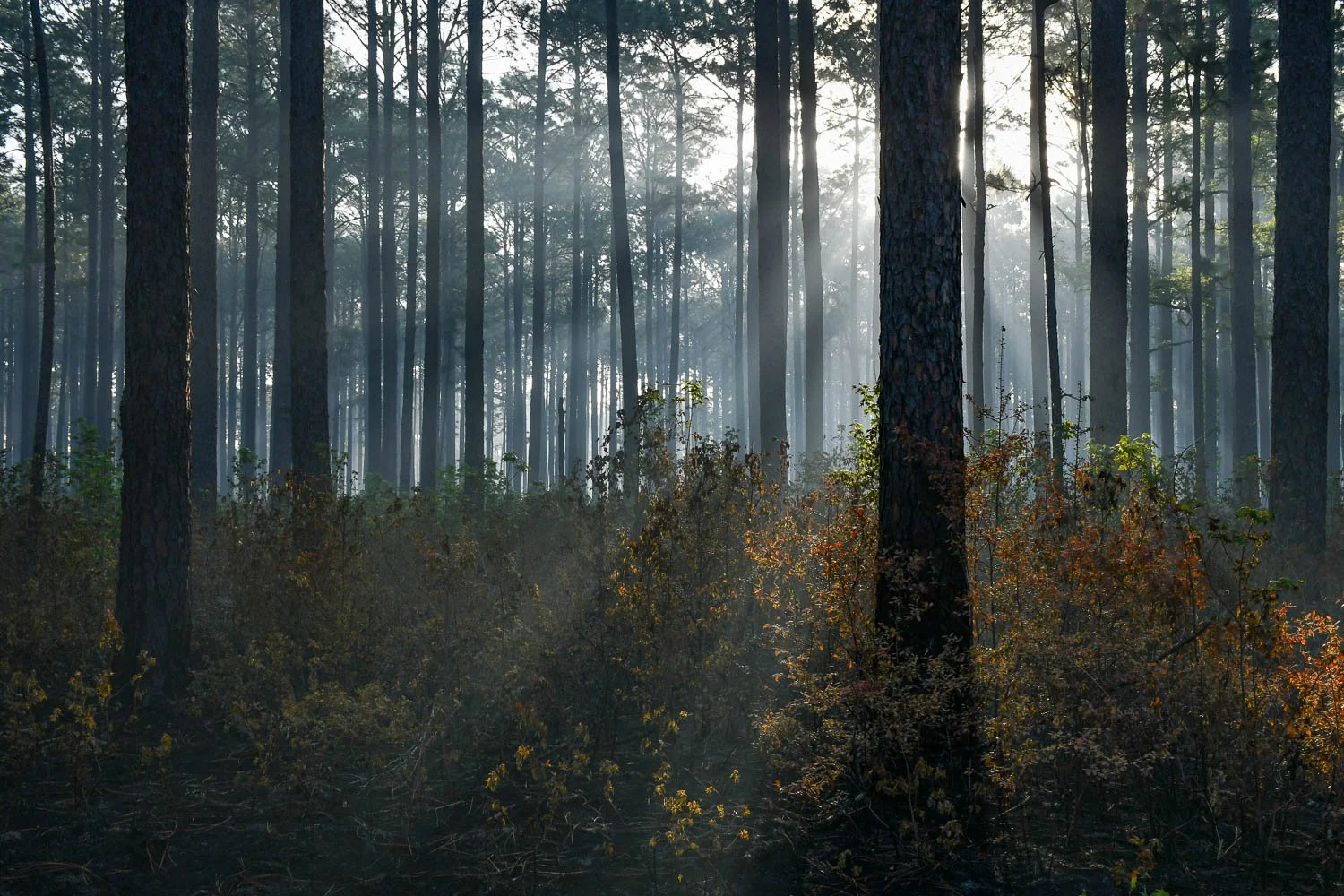
God rays are more prominent with the haze of smoke in this Pinus palustris (longleaf pine) forest.
We got out of my Tacoma with the shafts of light filtering through the pines, and Andrew pulled out his phone to check bird songs with Merlin. We heard a Hooded Warbler, and then my ear heard something I hadn’t heard in years—a Northern Bobwhite. I had been to the bog a half dozen times, and I never paused to pay attention to our feathered friends.
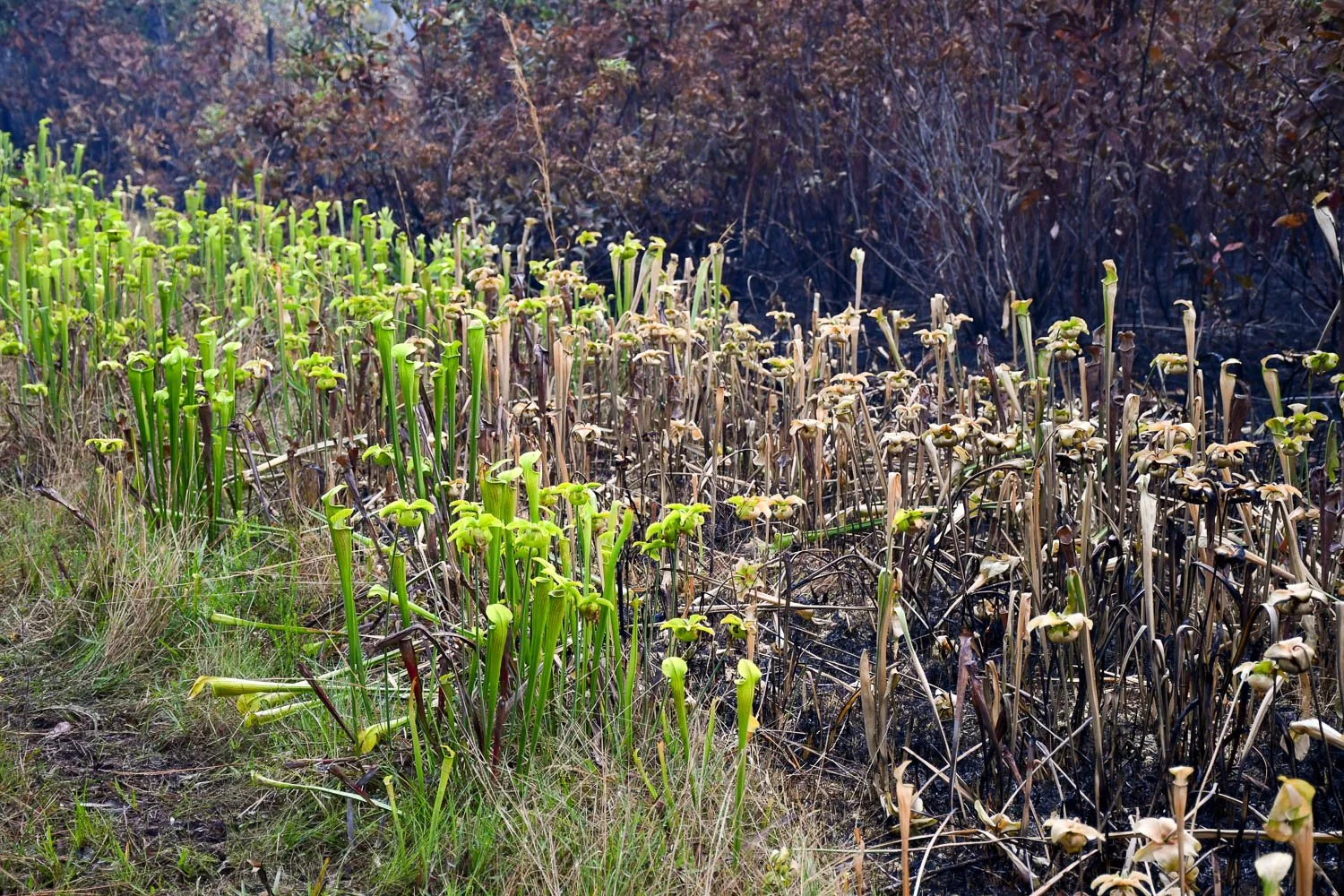
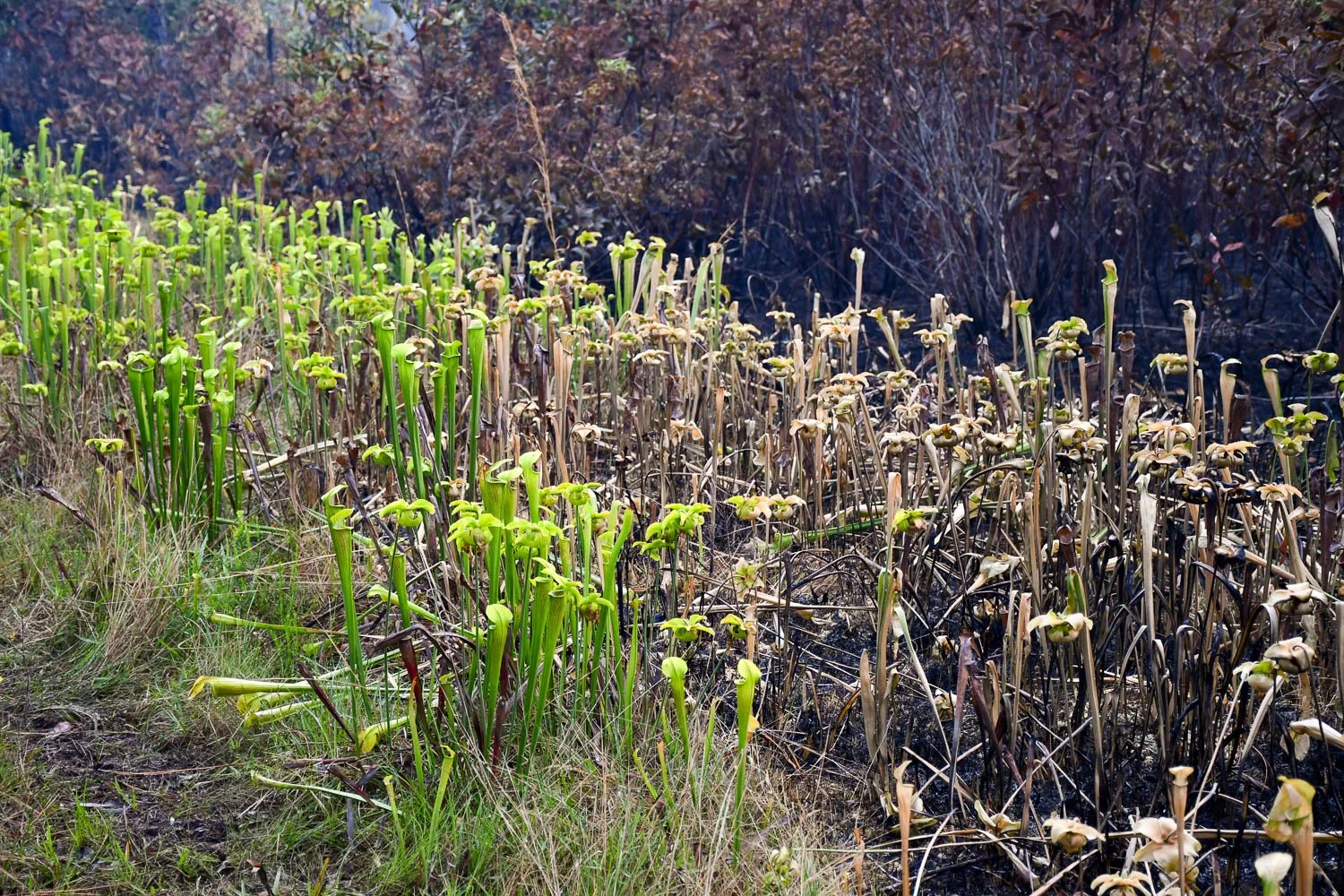
We made our way into the clearing by the powerline to see the first big community of pitchers and saw the edge of where fire burned (header image). Some pitchers were still verdant and green, but others were bleached by the fire.
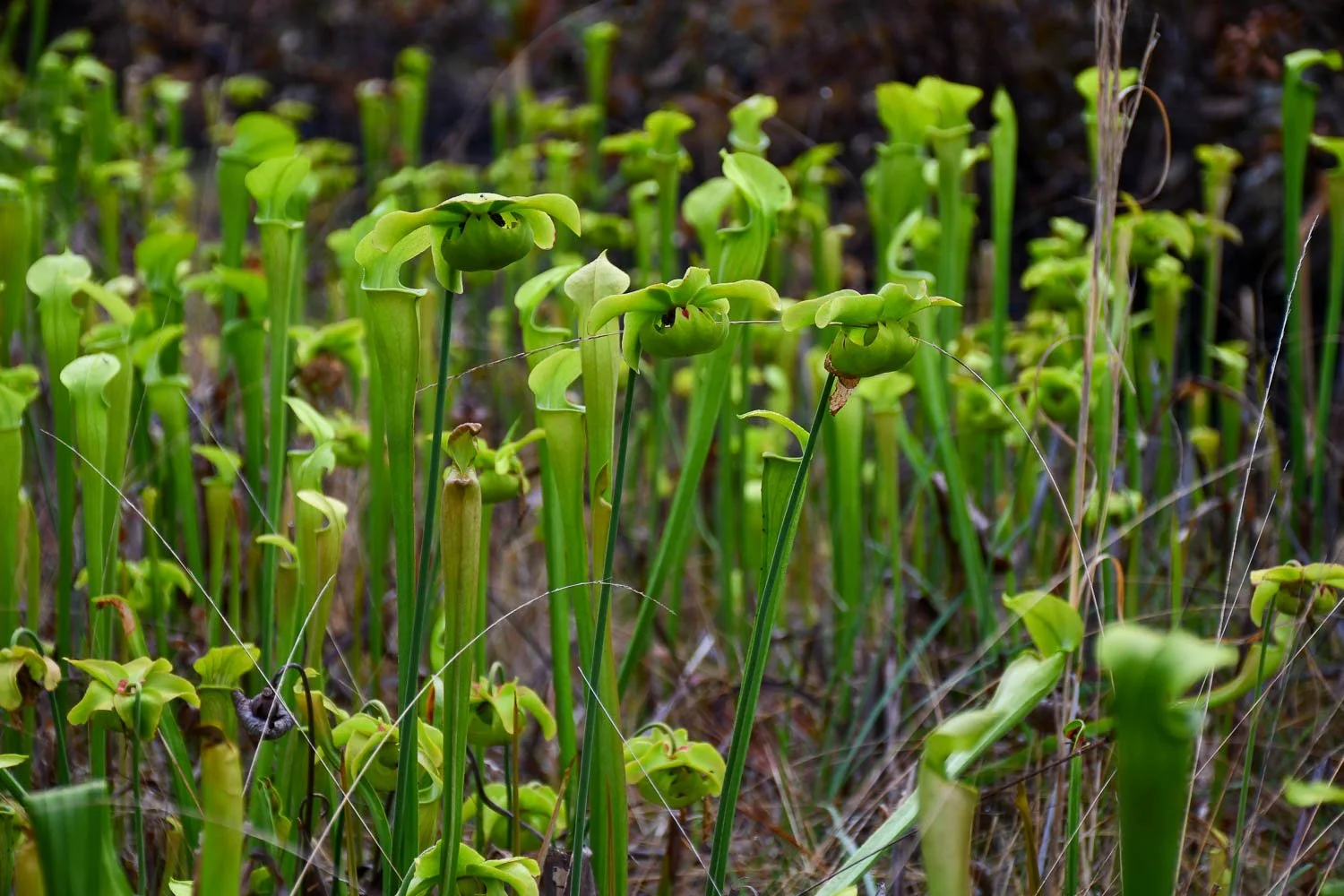
A healthy unburned stand of Sarracenia alata. The flowers had just finished blooming.
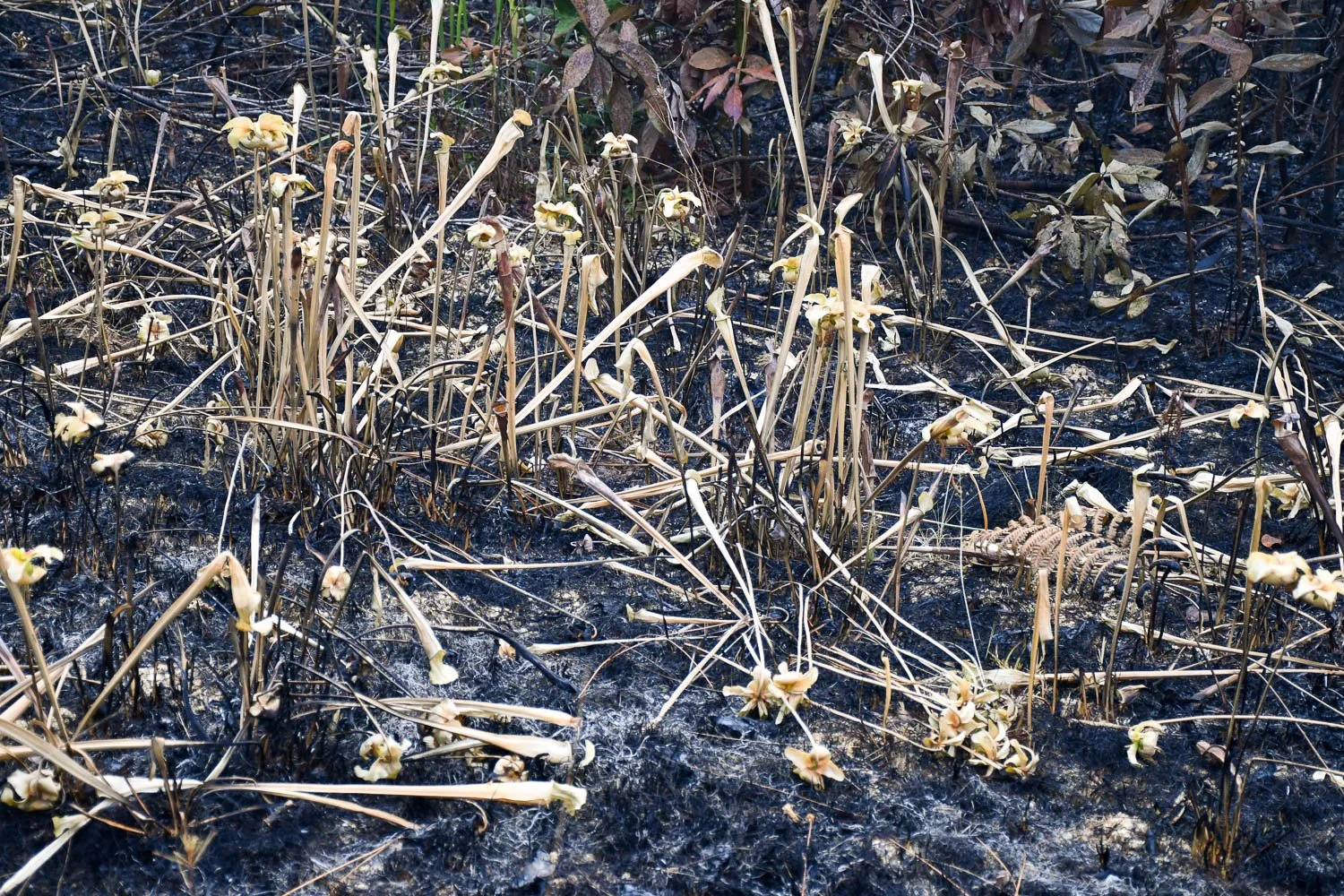
But, nearby we also saw scorched earth. While it looks bad, I’m sure these plants are already rebounding.
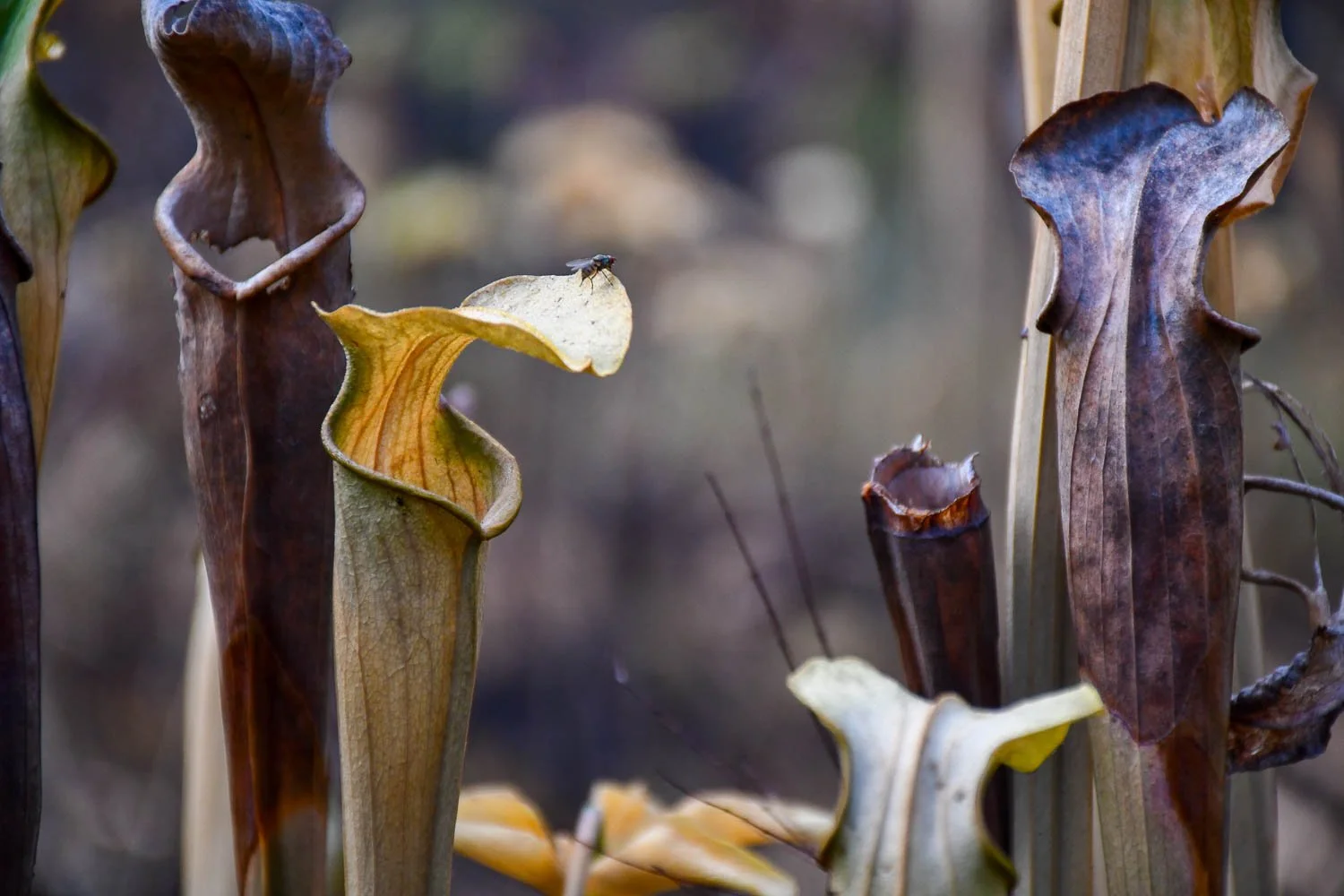
Will a fly still enter a dead trap?!
From here we made our way into the larger woodland area of the bog where we saw patches of burned grass and pitchers again. Our shoes would become covered with soot and then cleaned a bit with the next unburned patch of grass.
In the wettest spot was a dense wooded area where we saw Magnolia virginiana (sweetbay magnolia), Viburnum nudum (smooth witherod), Rudbeckia scabrifolia (rough-leaf coneflower), and Toxicodendron vernix (poison sumac). My guess is that this section is so thick because the fires can’t pass the wetter conditions.
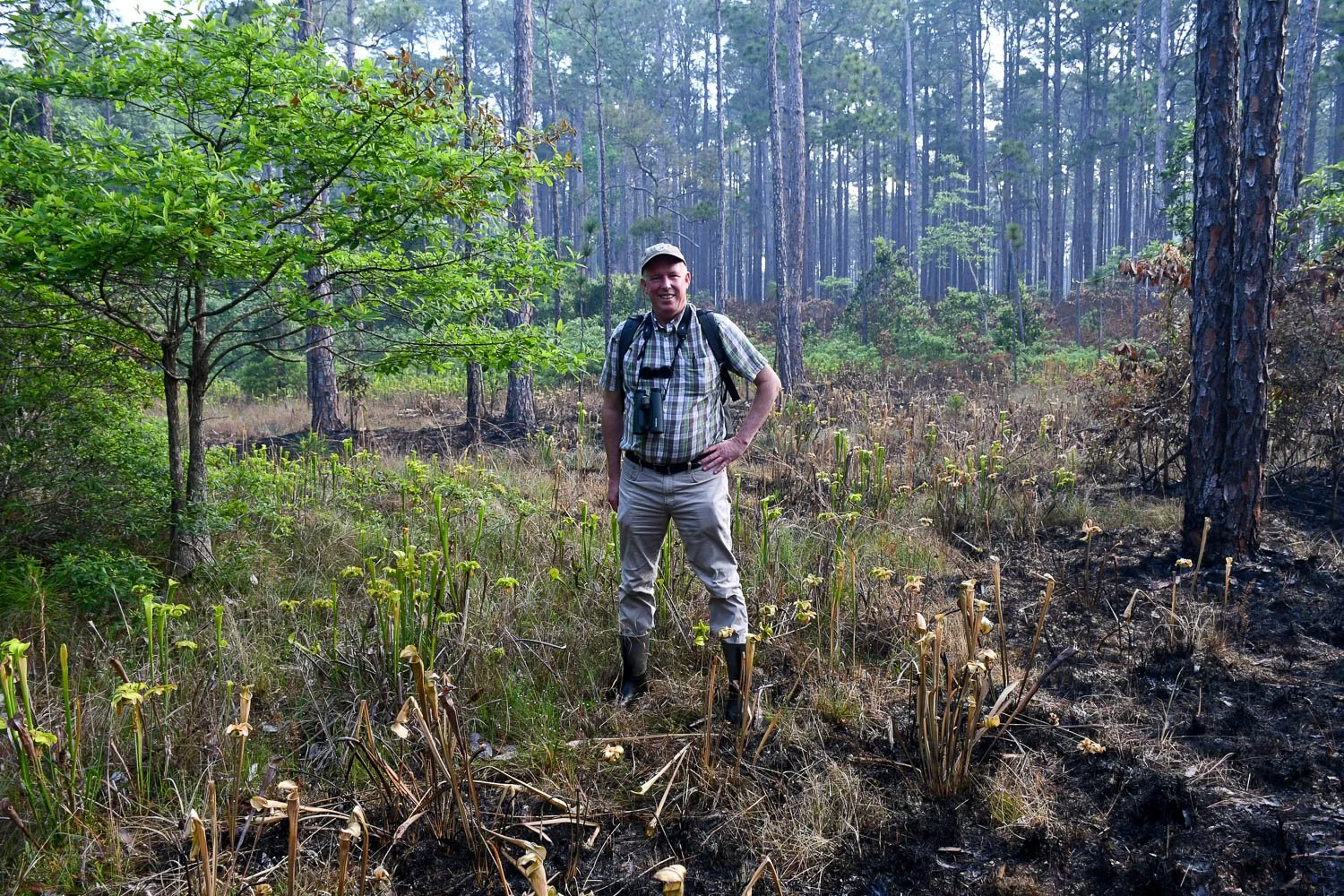
Andrew standing on the edge of the burn line. He also loved seeing the juxtaposition between the burned and unburned pitchers.
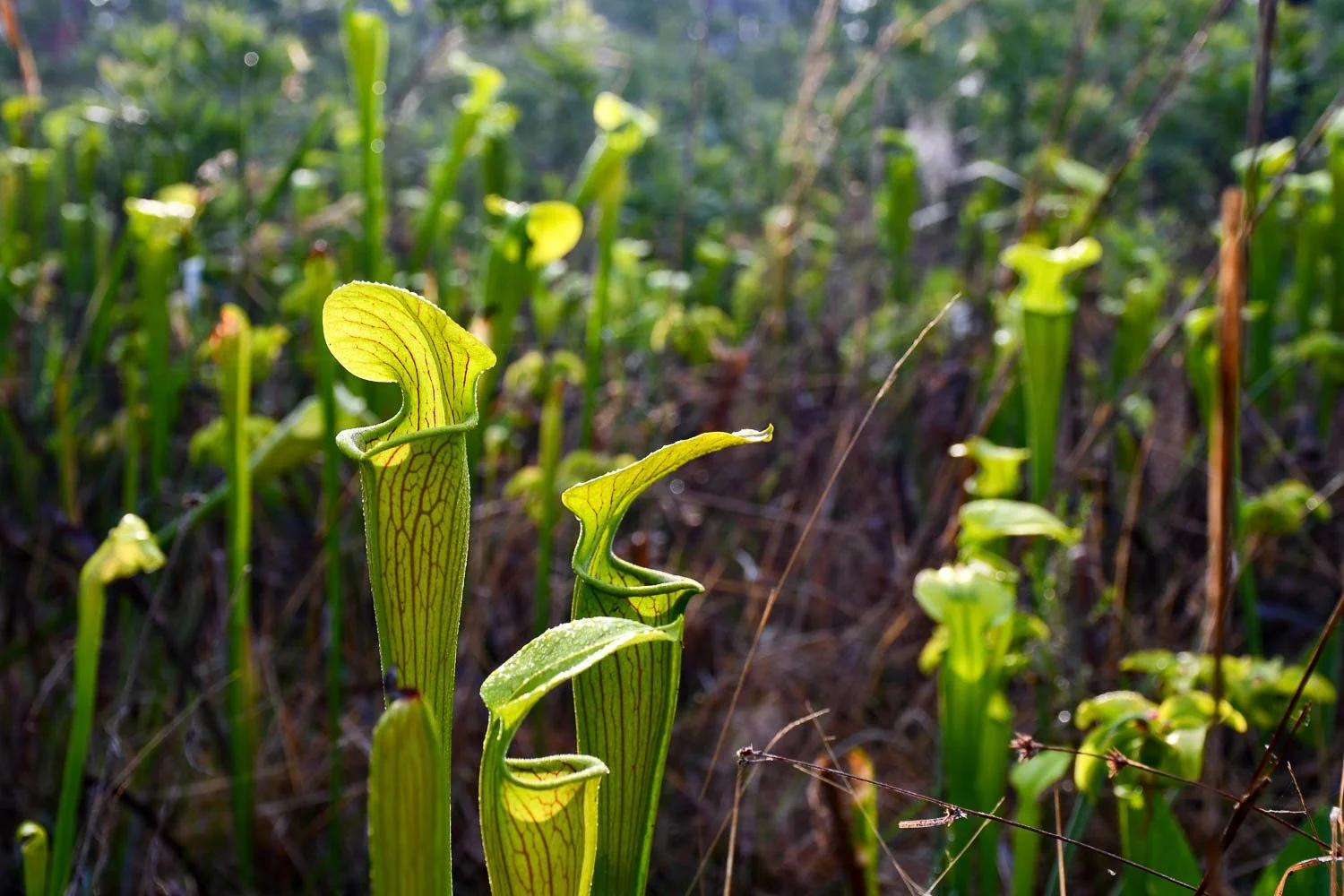
The hoods of Sarracenia alata glow like little candle flames against the rising sun.
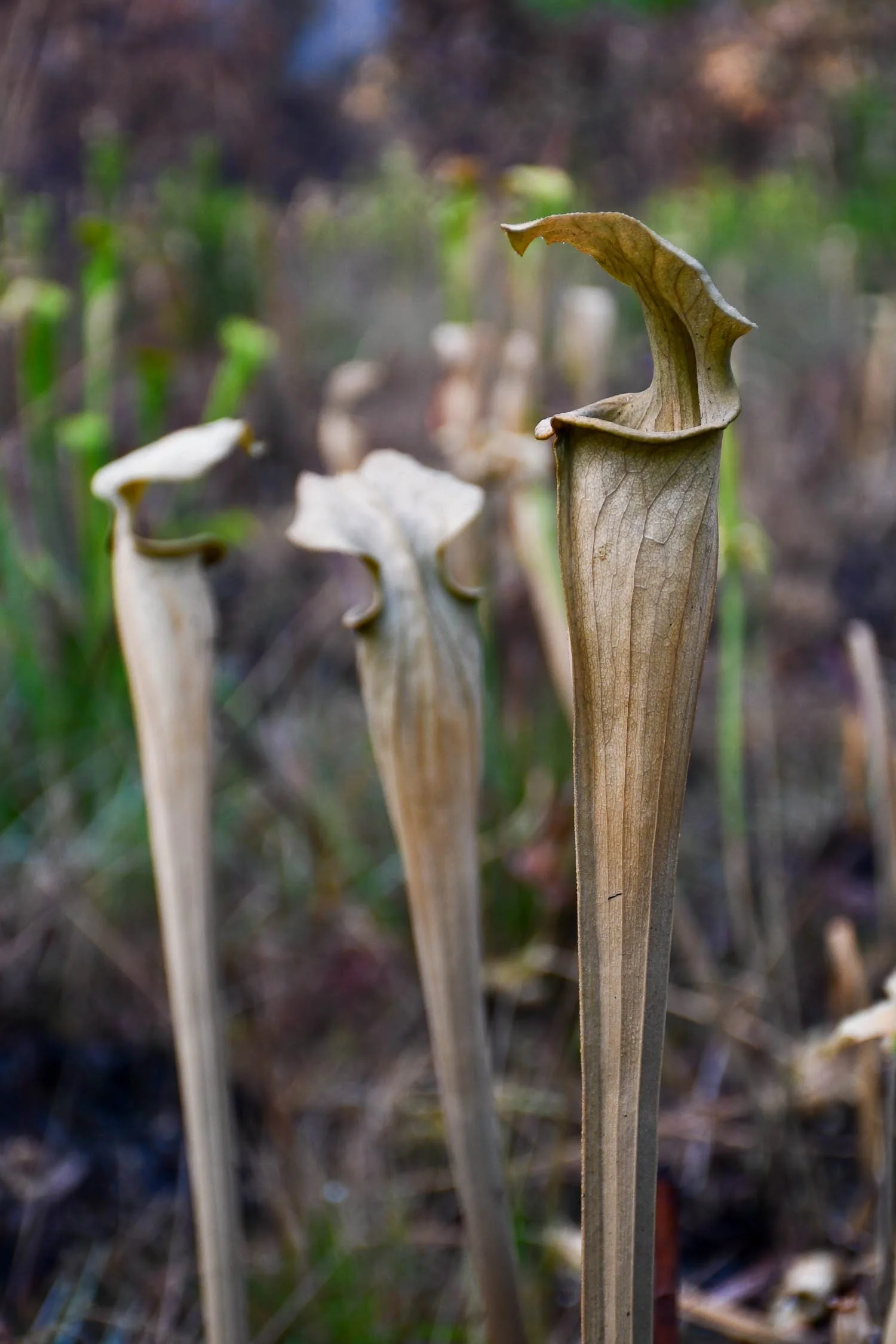
The ghost of a Sarracenia alata (pale pitcher plant). I thought these dead pitchers were a bit haunting.
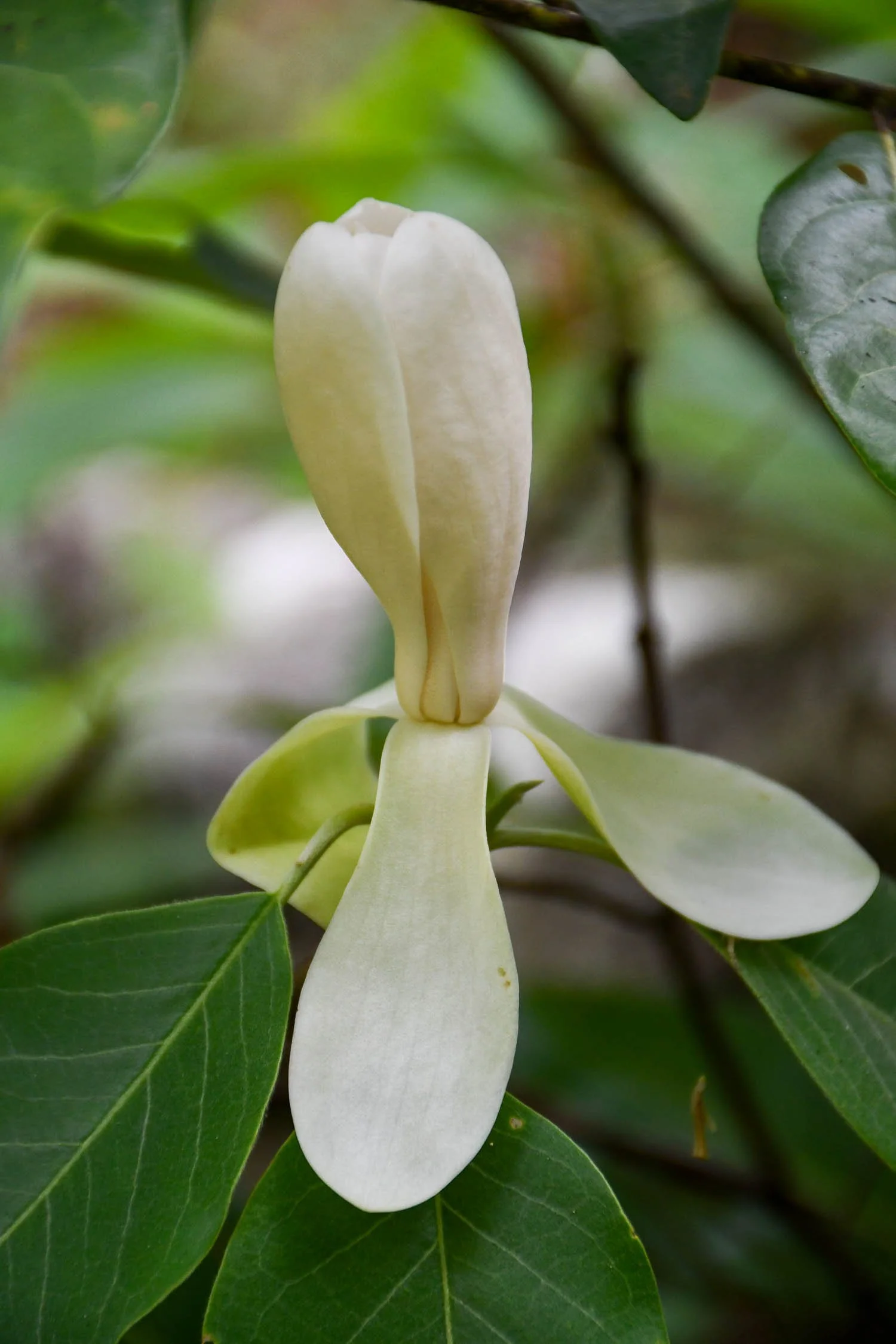
A flower unfurls on an unscathed Magnolia virginiana (sweetbay magnolia)
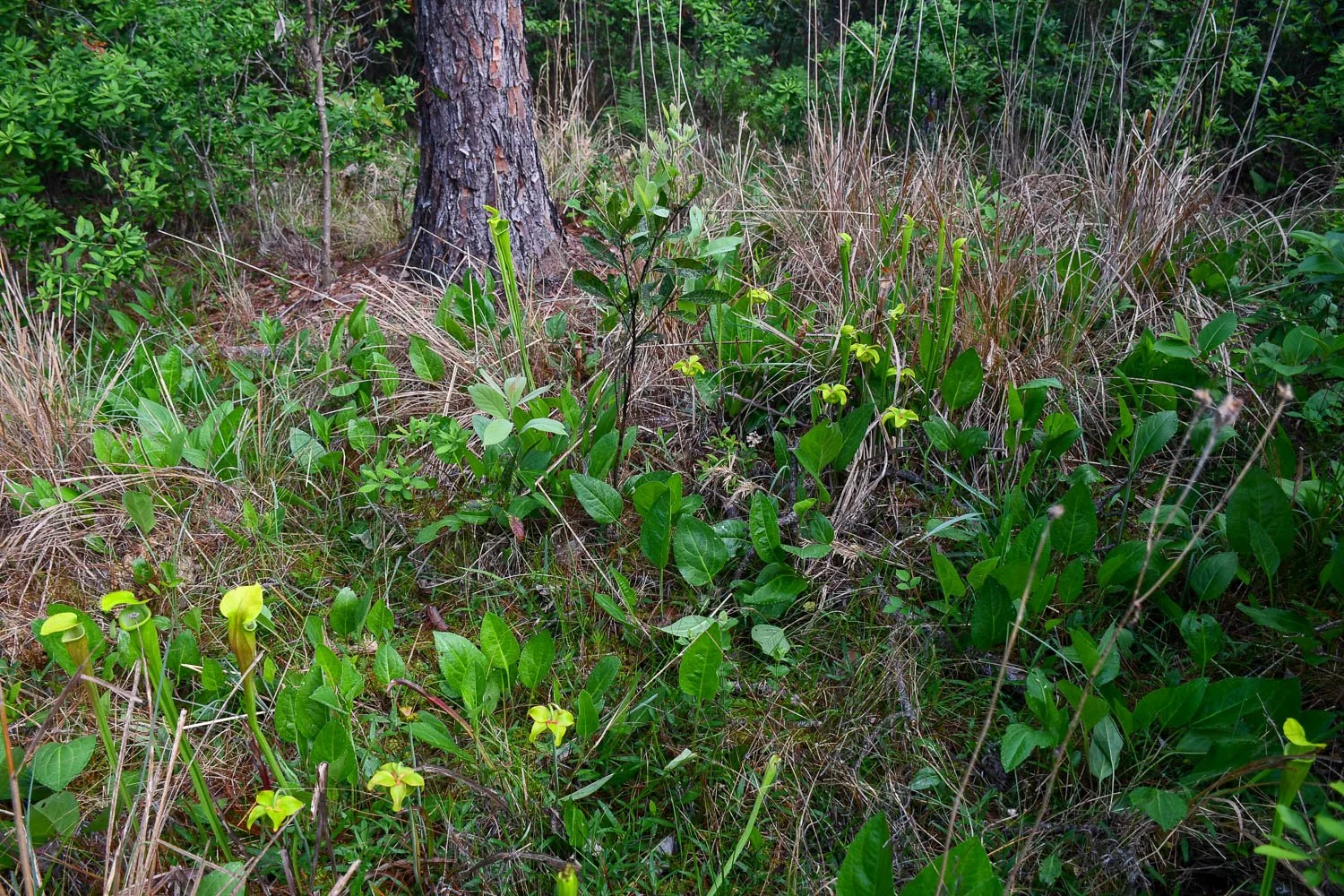
In the center of the bog is an area that stays wet. One cool native plant that occurs here is Rudbeckia scabrifolia (rough-leaf coneflower), an endemic in Texas and Louisiana.
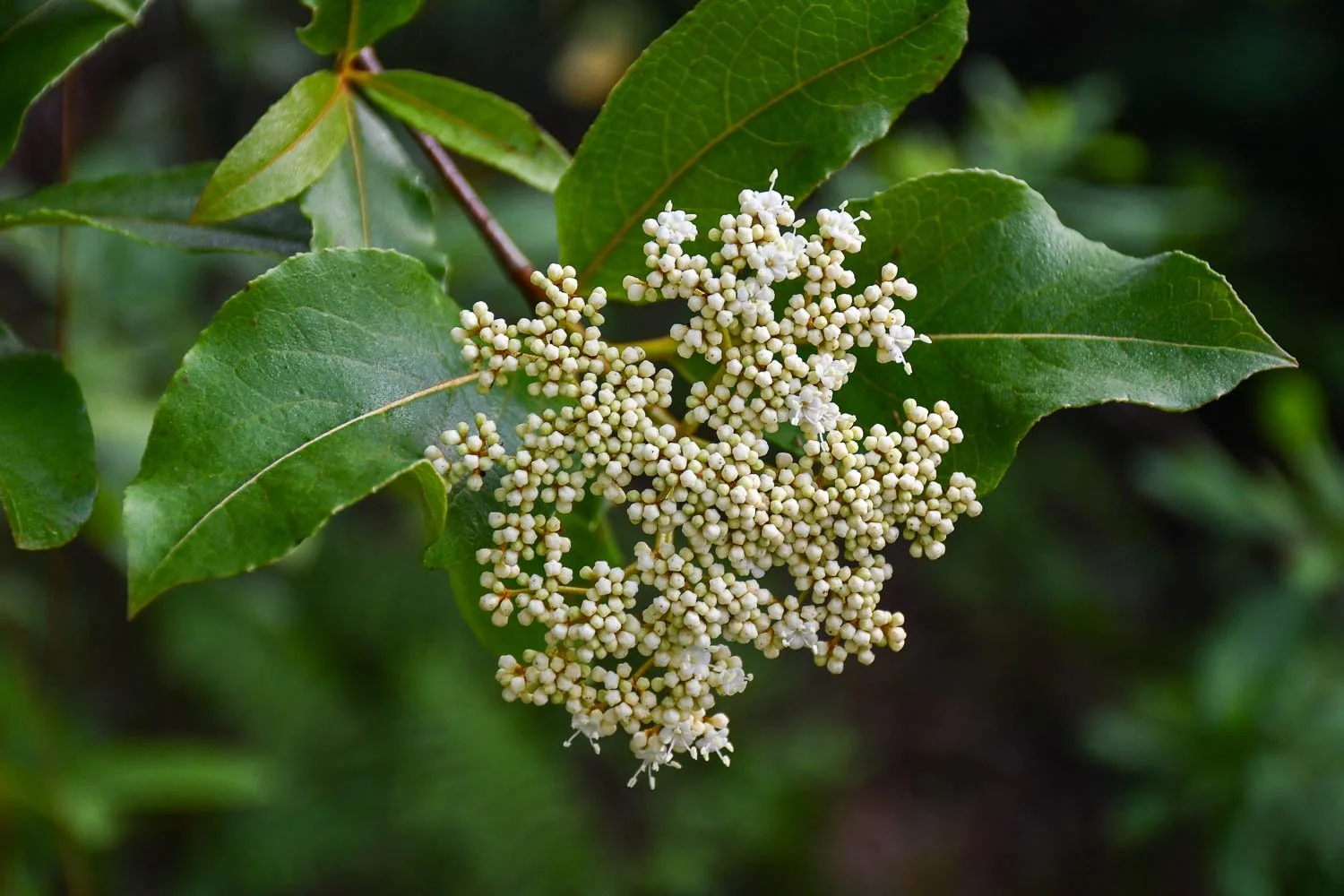
We saw some nice tall plants of Viburnum nudum (smooth witherod) in the wetter part of the bog. They were just coming into bloom.
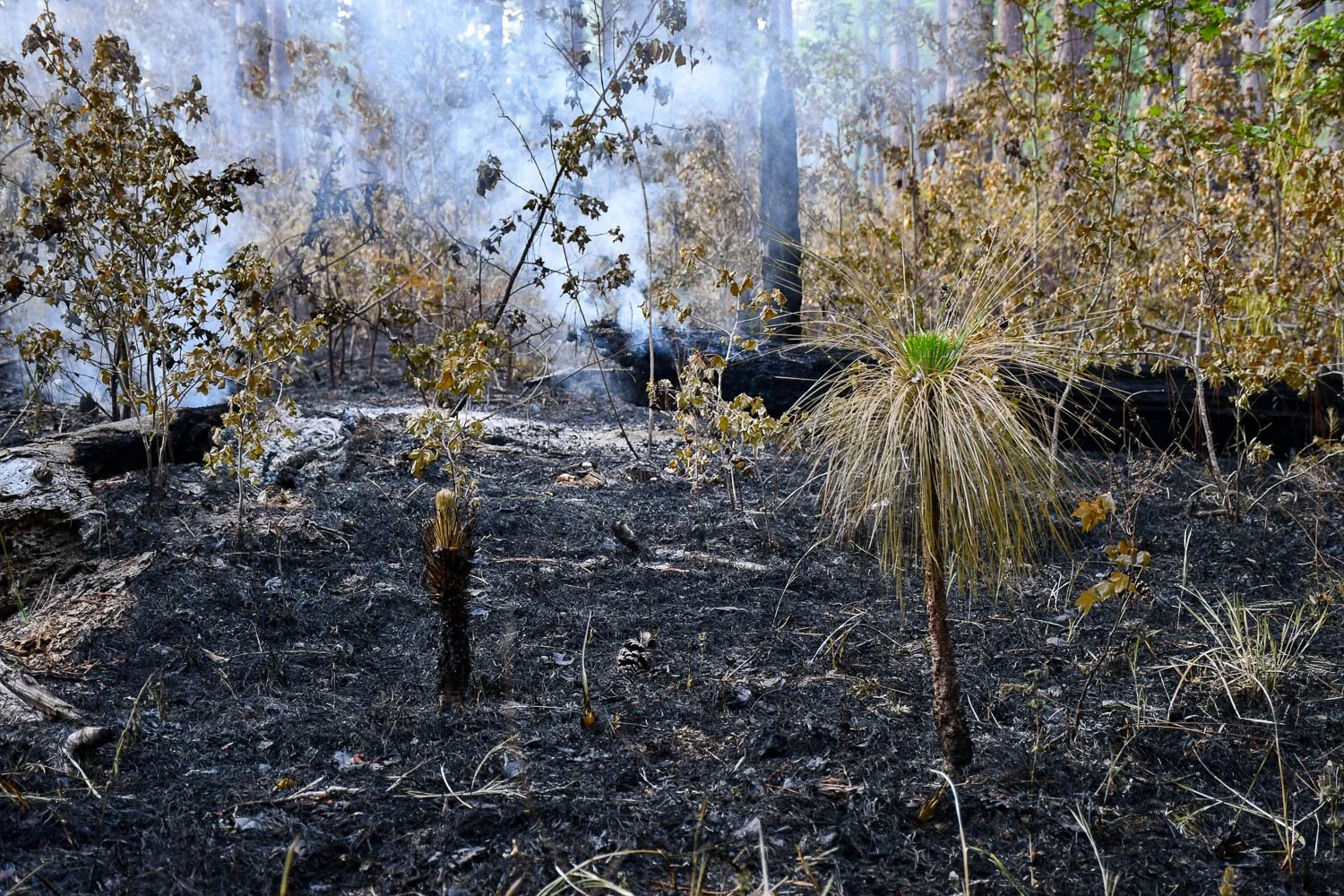
As I alluded to earlier, fire was a critical part of some southeastern ecosystems. In teaching about Grime’s Triangle, I share how disturbance is one of the two factors (the other being stress) that plants have had to evolve strategies for survival. Disturbance is where all of the biomass of a species is removed above and/or below ground. Research has shown that Sarracenia seed germination responds positively from fires. Fire also can help to sustain open conditions for Sarracenia to thrive in helping to reduce woody plant conditions. As a fire burns through an area, it often kills woody plants. Grasses and forbs replace the woody species, which can then create conditions for another fire. These grass-fire cycles can then continue to occur over time.
However, in many areas of the southeast, we have repressed fire. We can attempt to recreate disturbance in our gardens by cutting, mowing, and disturbing the soil, but sometimes it just isn’t the same as a good ol’ fire.
As we left the bog, I really appreciated what I first thought was going to be a horrible visit. I haven’t had the chance to appreciate a good burn ever that I can recall, and I thought you readers would enjoy seeing it, too.
After we left the bog, the drive home had even more rewards as we saw great native plants in their natural habitats in east Texas. I’ll share a few photos of some options you should consider for your garden.
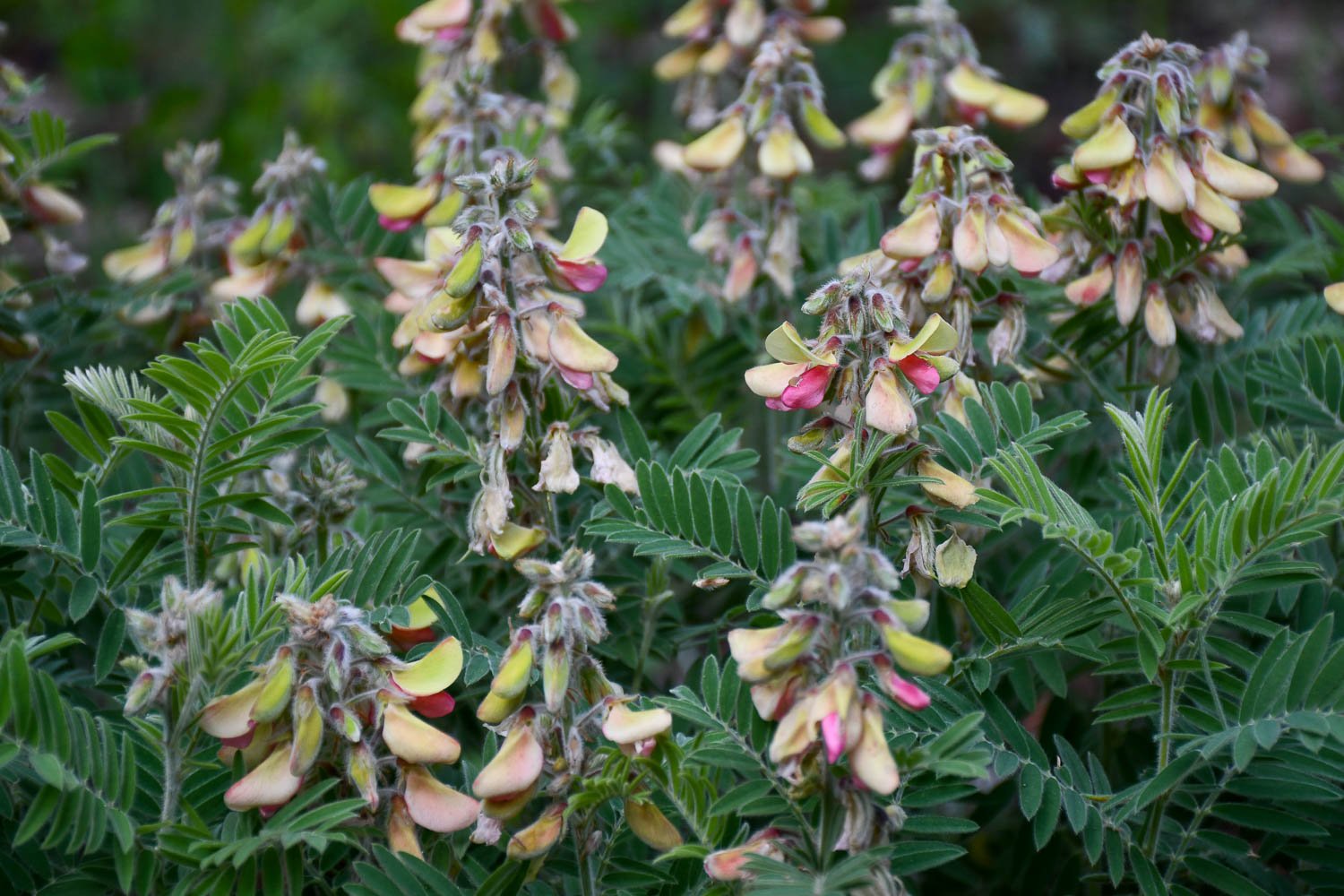
Tephrosia virginica (goat’s rue) has lovely pubescent compound leaves, and in the spring it’s adorned with yellow and pink blossoms.
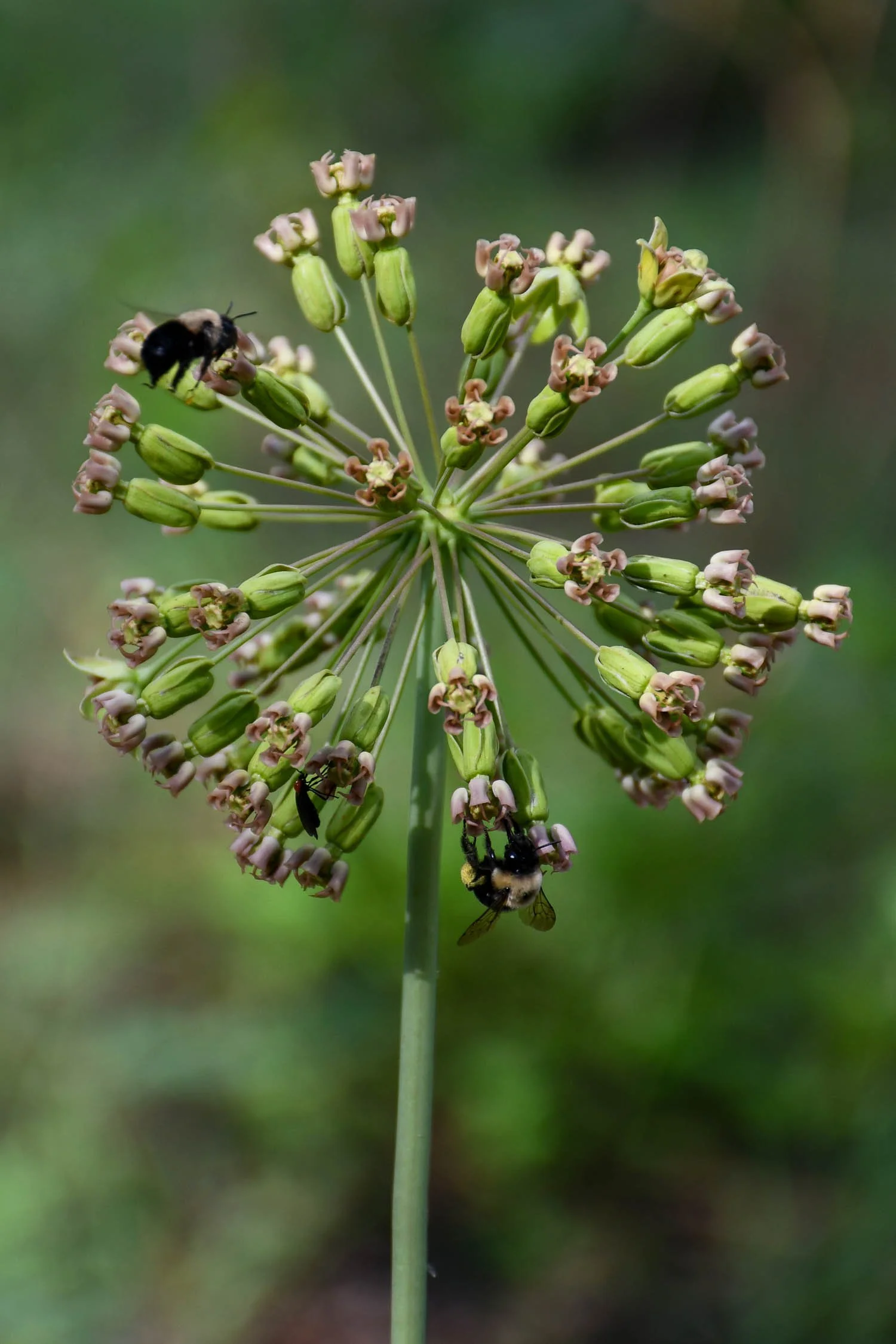
I had to turn the truck around to go back and see this wonderful specimen of Asclepias amplexicaulis (clasping milkweed). The bees loved it, too!
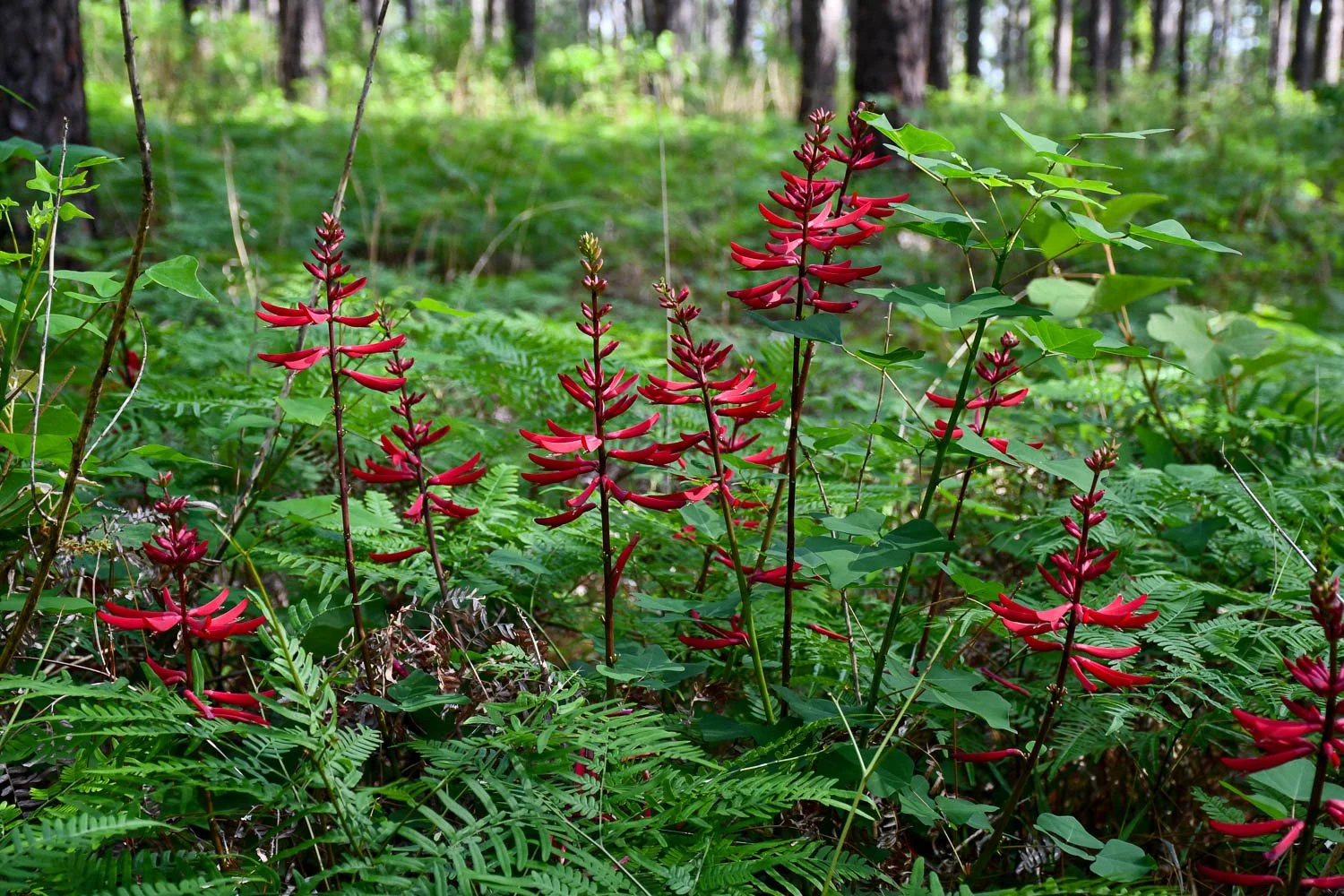
Andrew spotted the brilliant red flowers of Erythrina herbacea (coral bean). This understory native provides such striking colors in mid-spring.
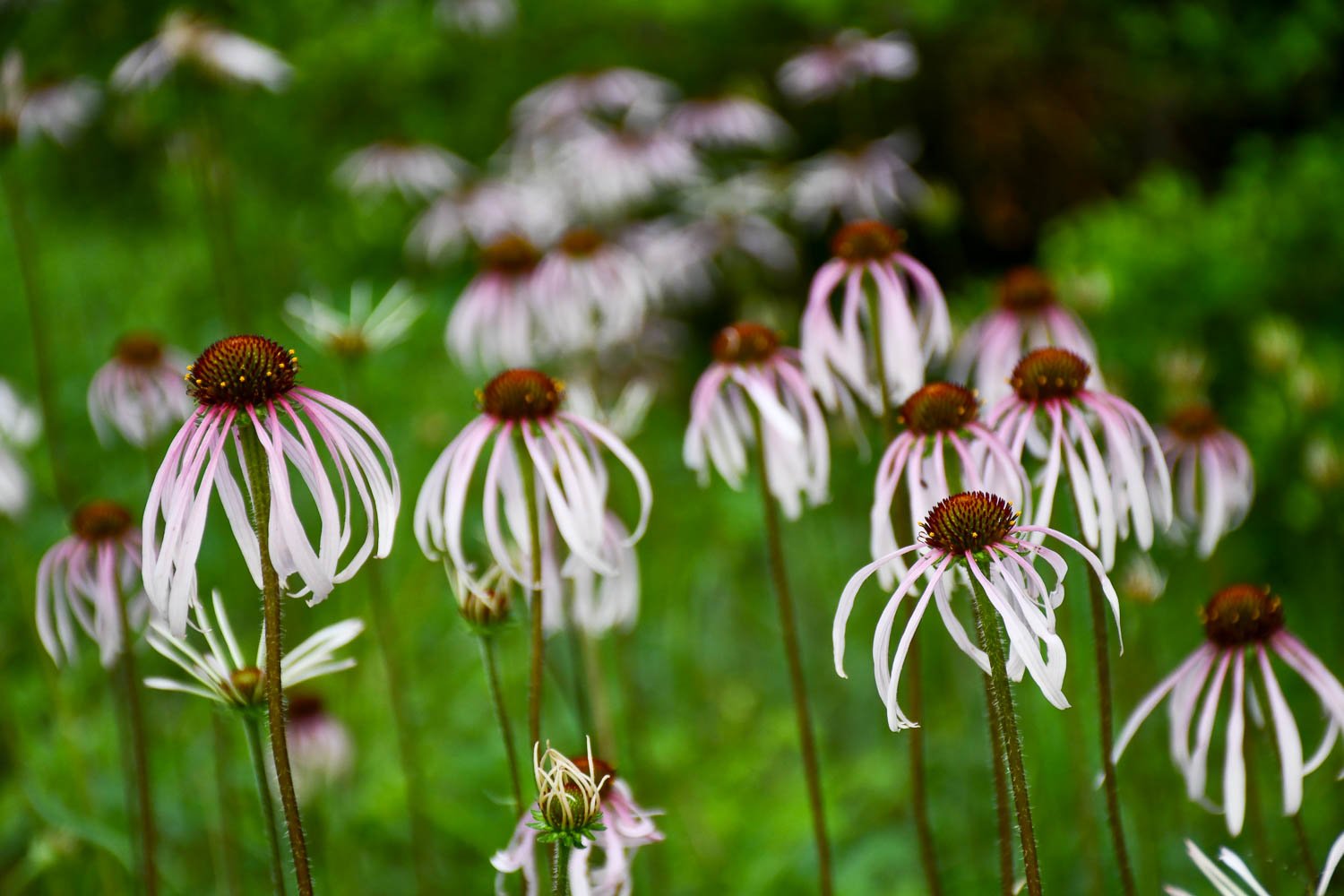
We pulled off to see a great patch of our native Echinacea sanguinea (sanguine coneflower). They have these soft pink rays that darken near the base.
Keep Growing