We are in the last weeks of spring, but it feels like summer is already here. The days are creeping into the 90’s, the late light with the moon this weekend means I’m out to 9 pm, Magnolia has us harvesting blackberries and blueberries twice a day, and seeds from the spring wildflowers are ripening and going into bags for drying.
And, the vegetation in our plantings is rising above the fading waves of color from spring. Some plants like Silphium (cup plant), Eutrochium (Joe Pye weed), and Eryngium (rattlesnake master) I don’t disturb as they ascend. Others like Cuphea micropetala (candy corn plant) and the various asters that are trying to flower I set back with a haircut before the days start to shorten here in a few weeks. That should be enough time for them to grow more foliage before autumn.
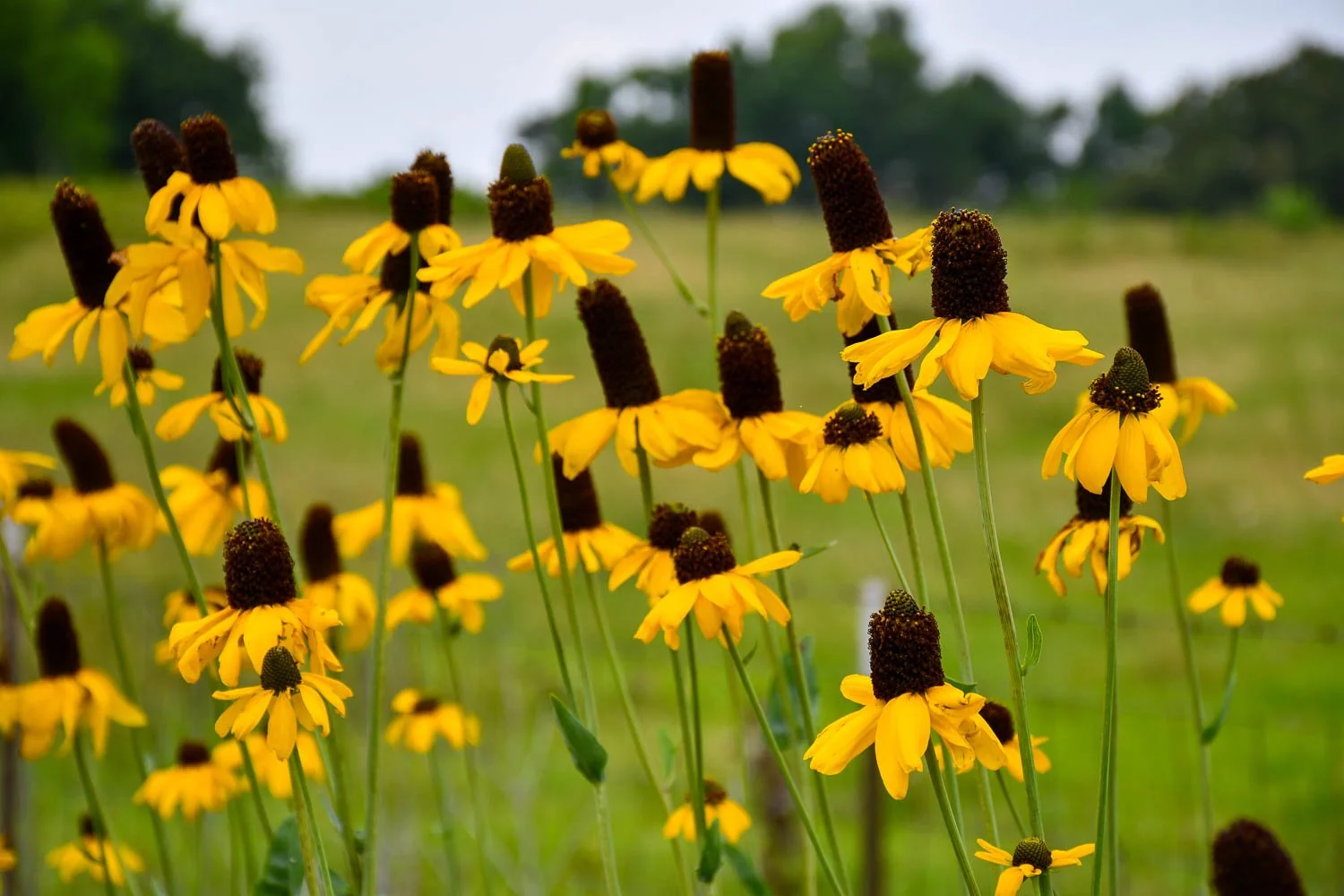
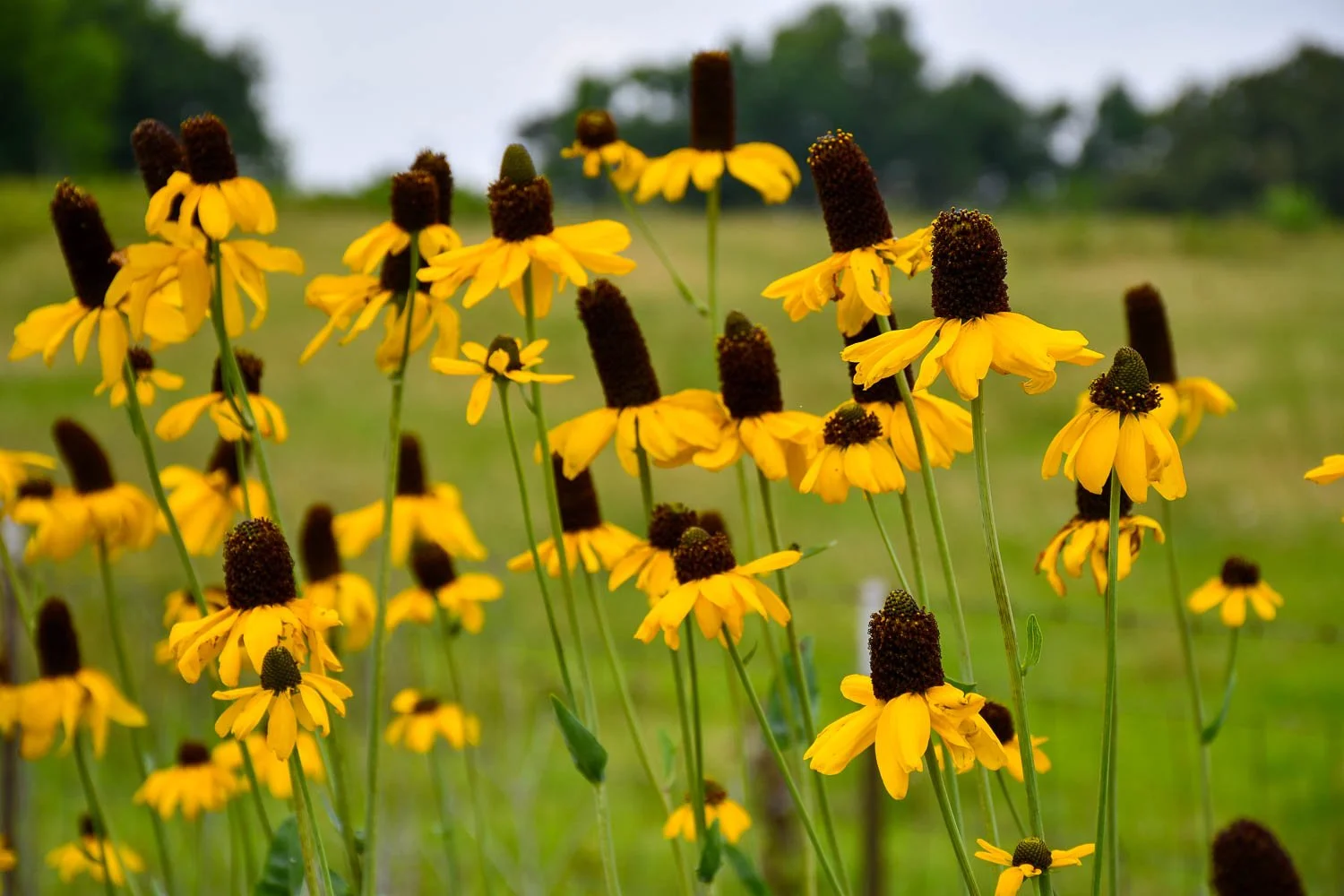
But, none of the soaring foliage can compare to the rockets of Rudbeckia maxima (giant coneflower) that rise in late spring. They have been soaring above our garden for the past few weeks.
Rudbeckia maxima is one of these rare perennials in the southeast that has a strong four-season presence. We enjoy the basal rosettes of foliage that emerge right after our winter cut back. The foliage is a gorgeous glaucous blue that rivals attractive hostas. Once weather warms, the stems start to elongate and produce the heads with bright yellow rays and chocolate-colored disks. After a few weeks, the flowers fade, and their seedheads can last into fall and winter. They usually drop their seeds, but the gray-stem contrails of their ascent still mark the sky.
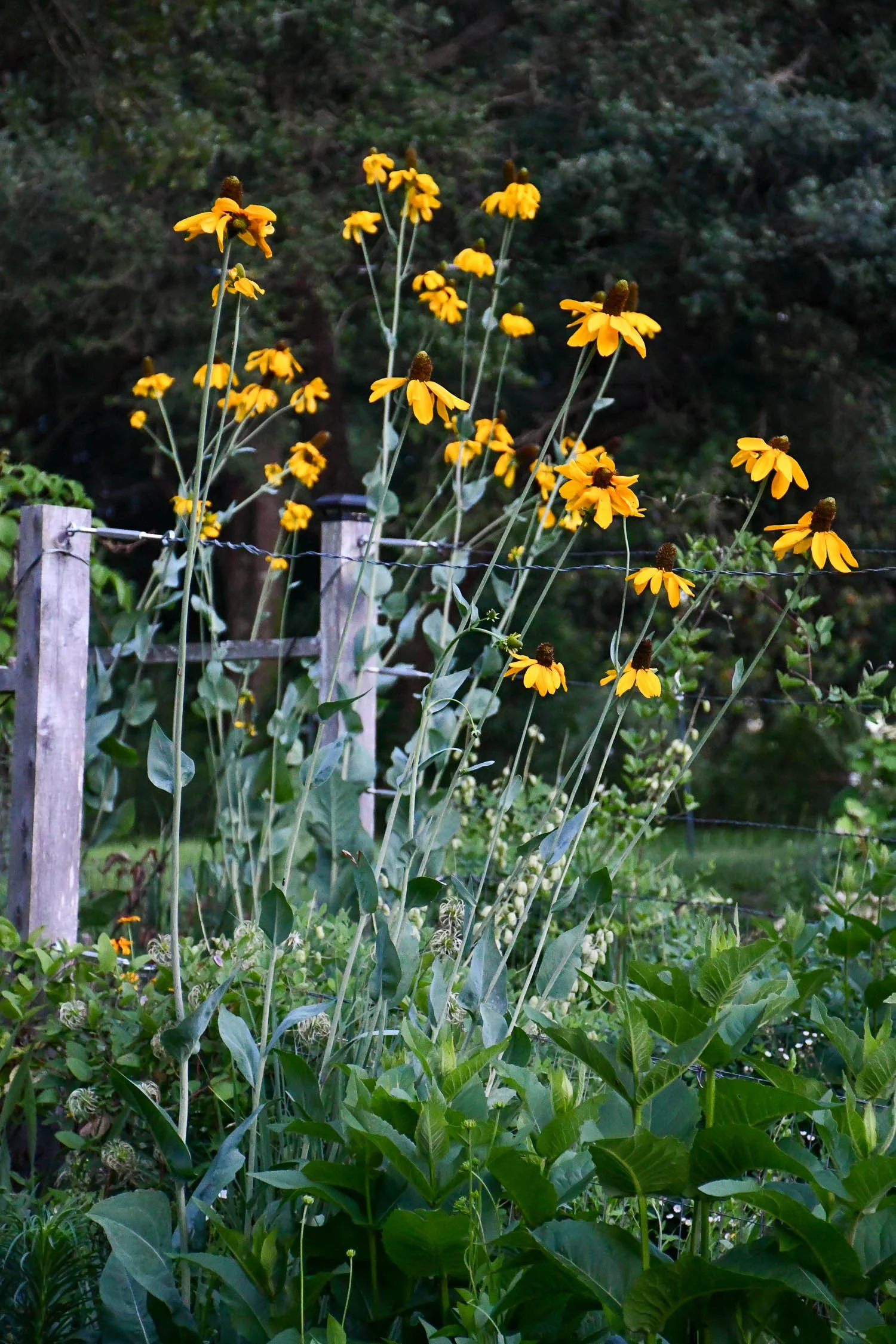
In the late evening light the blue color of the leaves of Rudbeckia maxima really stands out.
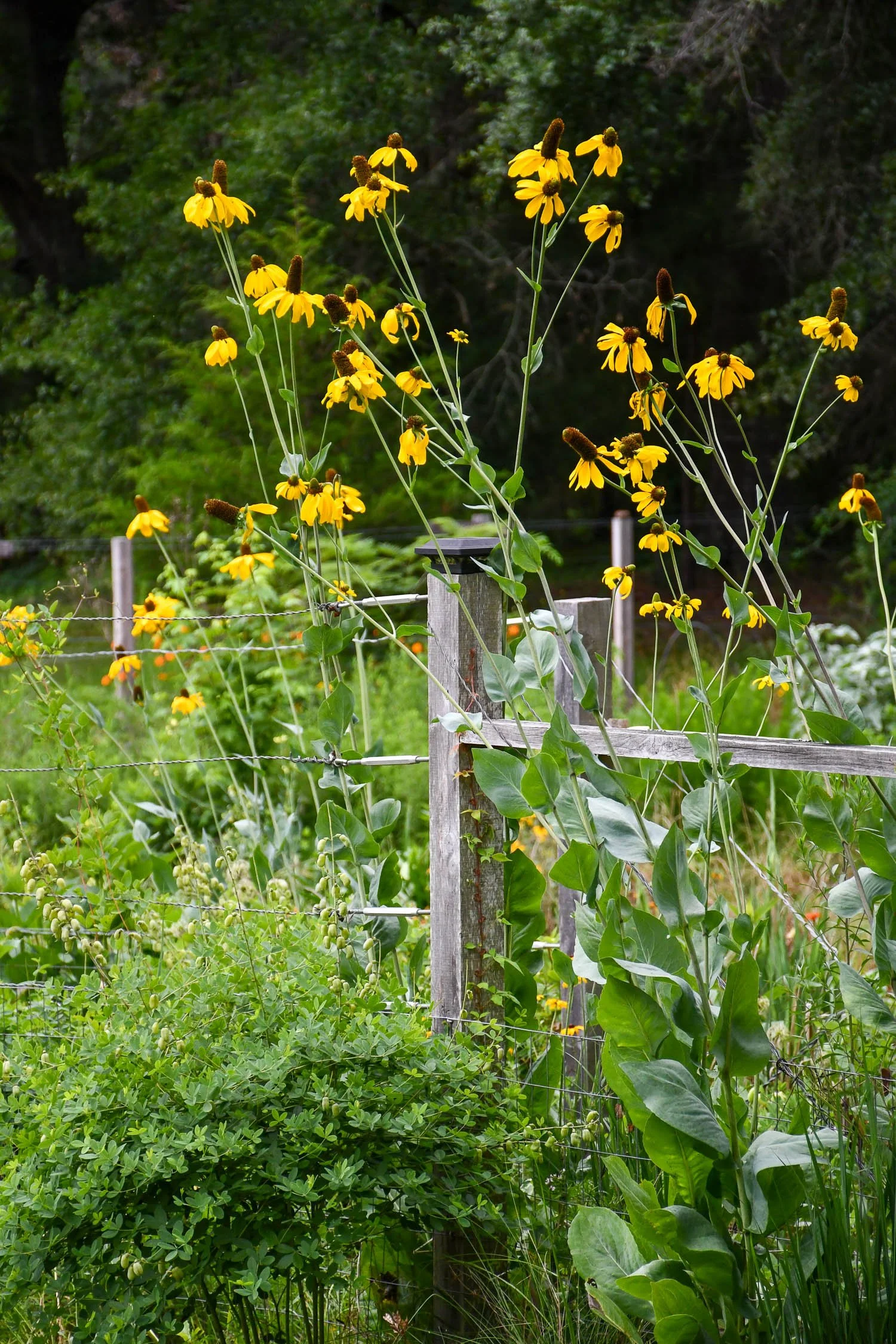
Rudbeckia maxima serves to pull the eye skyward in our garden.
I don’t know why it took me so long to start using this native more prominently. I originally had them in a spot that got half day sun, and they flopped all over. I’ve moved them to the front of our patch where they can thrive and really help to pull the eye over the top of the plantings near the house. In more sun with drier soil they stay more upright. I would say their average height is around 6 feet tall, but one plant now measures 8 feet tall.
My plants came from just up the hill where they occur plentifully. Growing up we had one in our garden that my mom loved. Sadly, it faded away. I thought that perhaps it was a finicky plant, but after moving to Texas and seeing the fields and roadsides abundant, I’ve changed my mind.
Where they occur, I find them in groups. When Thomas Rainer visited years ago, we pulled off and discussed how we both thought it to be a plant of lower sociability. We both realized how well it worked in these larger groups. That’s the joy of seeing plants in the wild. From my observations over the years, it can have medium-to-high sociability and still look ok. Yes, the leaves can smother vegetation nearby, but I wouldn’t consider it a ground cover like high sociability plants can be. I also have to keep in mind that these fields and roadsides where I see it are modified habitats. There could be conditions in these spaces that allow them to occur more frequently.
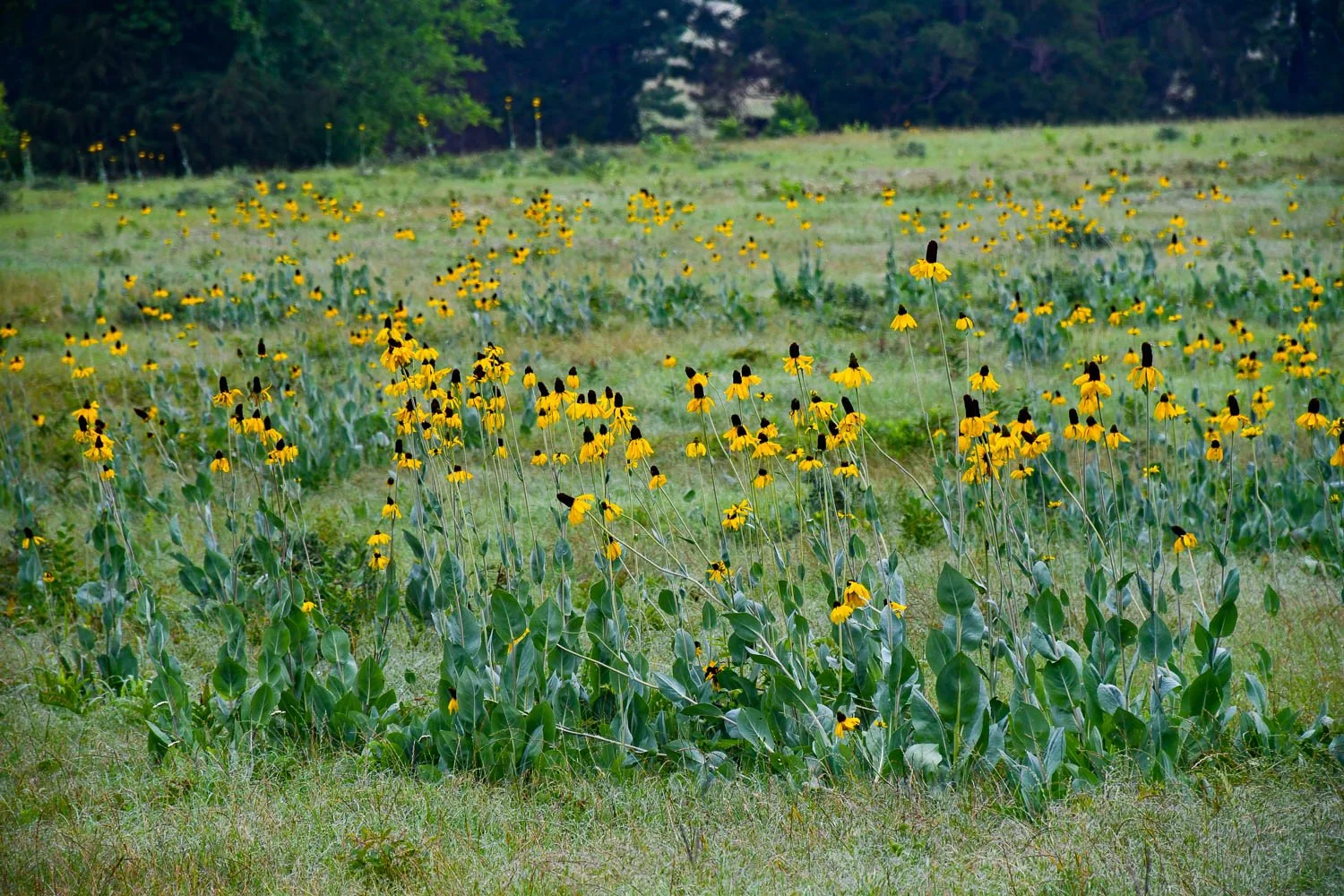
Rudbeckia maxima thrives in a pasture. I doubt it is a favorite of the cattle.
Sure, you’ll find solitary plants here and there, but give a plant a few years, and the numbers will grow. I started with half a dozen plants and now I have an ample number to the point I had to start roguing seedlings. It has a unique strategy for dispersal. The tall inflorescence can fall to drop the seeds, and then they are a good distance away from the mother plant. Seedlings readily germinate, and within a year or two they are already sporting flowers. If you don’t want to wait on seed, you could propagate this plant from root cuttings. I’ve dug mature plants before only to discover a few weeks later new shoots arising from the roots.
I do have to deal with them flopping occasionally. The heads can become heavy. Usually there are enough shoots that I can prune out one or two that bend under the weight. However, sometimes I have to stake and tie the stems to keep them upright. Every year I tell myself I need to practice the perfect time to cut them back to keep them a bit shorter. In the wild, most stems have no trouble staying upright, but in my garden they can have a tendency to flop.
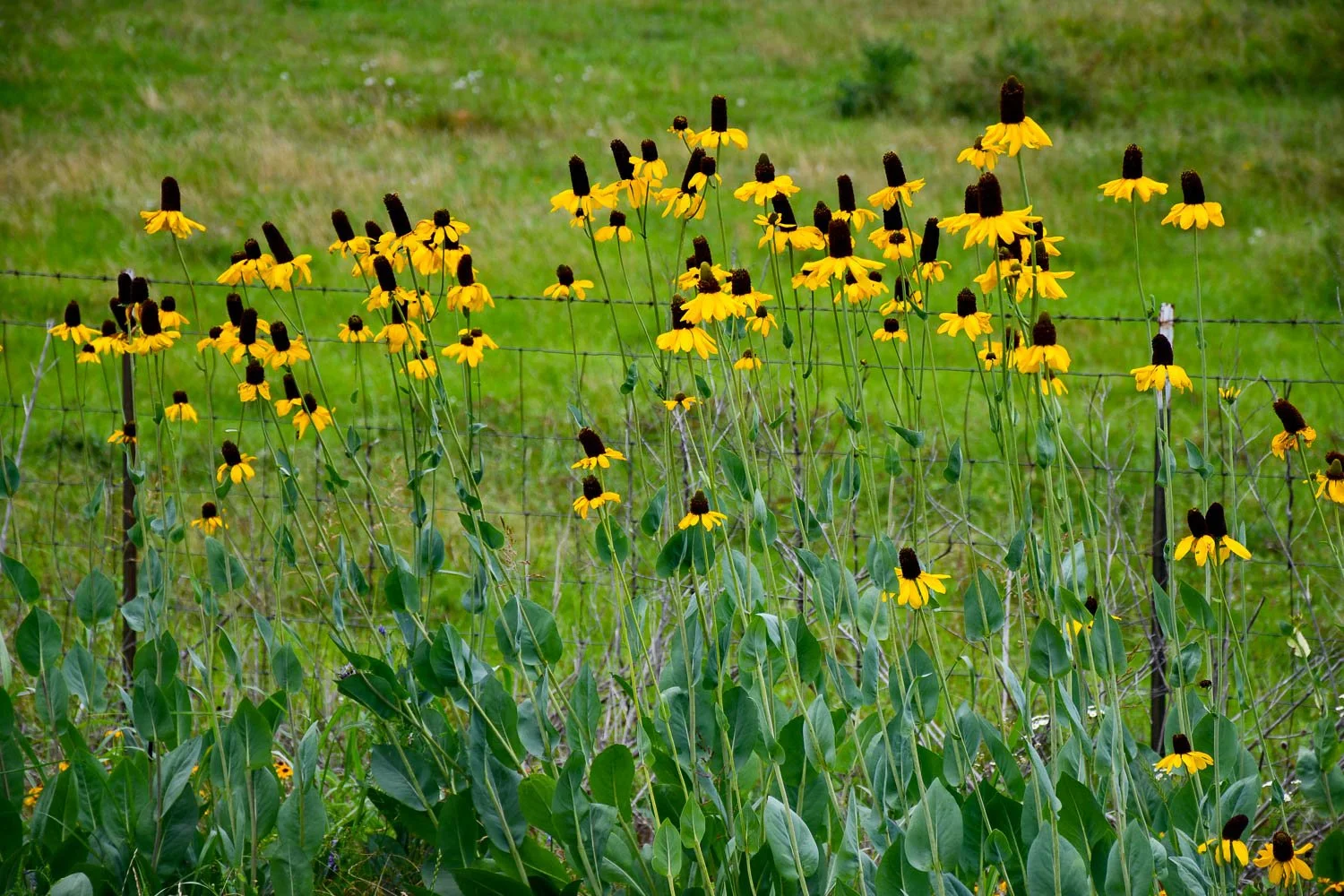
Maybe one day I’ll have larger patches of Rudbeckia maxima on the wilder parts of our property like this roadside colony?
I’m already looking to see where I can add more of this plant in my garden, and I hope after learning about the wonder of this plant you are, too. I’m going to plant some on the west side of the garden to balance their occurrence on the east side. And, I need to broadcast them along the wilder edges of our property. Who knows, maybe one day I could have groups just like I see up and down the road.
KEEP GROWING