How Nature Places Woodies and What It Teaches Us About Design
My bootcamp session Woodies in Naturalistic Design on May 18 at 6 pm CDT is great for learning how to use trees and shrubs in naturalistic plantings. This session gives you a practical framework for reading your site for trees and shrubs, understanding woody plant behavior, and placing shrubs and trees so your garden builds structure, shines through seasons, and works ecologically from the ground up.
Think for a moment about the last tree or shrub you planted. How did you pick it? Where did you decide to site it? Did you consider how to plant it to seamlessly integrate it into your garden? Or, does it feel like it’s sticking out like a sore thumb?
Placing woodies in plantings can be a source of frustration for designers. Many of us choose plants based on visiting garden centers, inspiration we saw online, or from looking through plant lists. These unfocused decisions can lead to a garden that feels more like a plant collection than something that appeared to happen naturally. And, when we work with woodies that may be around for decades or even centuries to come, thoughtful decisions matter.
To assist us, we can turn to nature for inspiration. We can think about designing with woodies in naturalistic plantings from the perspective of how nature places plants both in the wild and human-altered landscapes.
PLANT COMMUNITY ARCHETYPES
When we look at nature, woody plants arrange themselves into typical patterns based on a variety of factors like water availability, light levels, soil, and competition.
In Planting in a Post-wild World, Thomas Rainer and Claudia West talked about simplifying landscape design by discussing plant community archetypes. They stated, “Focusing on each [plant community] individually could take a lifetime, and more important, distract rather than clarify our task. After all, a montane oak-hickory forest of Virginia may be meaningless to someone in southern England, but a forest is a concept that both will understand. In order to create plantings with emotional resonance, we must first start with a point of reference that has broad appeal.”
They distilled plantings down into a few simple categories. They listed forest, woodland/shrubland, grassland, and edge, and below I’ve teased those out a bit. I also added hedgerows and fencerows as they are prevalent plant communities that exist due to human disturbance.
FOREST
Forests are where woodies grow to the max. Dense foliage cover from the layers of trees above prevent much from growing underneath save for patchy shrubs, ephemeral forbs, and shade-tolerant perennials. Shade levels vary based on the species present and influence what can grow below. For example, deciduous trees will provide light to hit the floor during the winter and early spring for ephemerals; however, evergreens rarely allow light to penetrate, thus limiting what can grow below.
Naturalistic plantings in dense forests often focus on enhancing the plantings at ground plane with stress-tolerant perennials and self sowers. Shrubs can grow in this space, but they may struggle from the lack of light. Also, visual sight lines are important in such a space as having too many shrubs or other plants break the view and can make one feel claustrophobic.
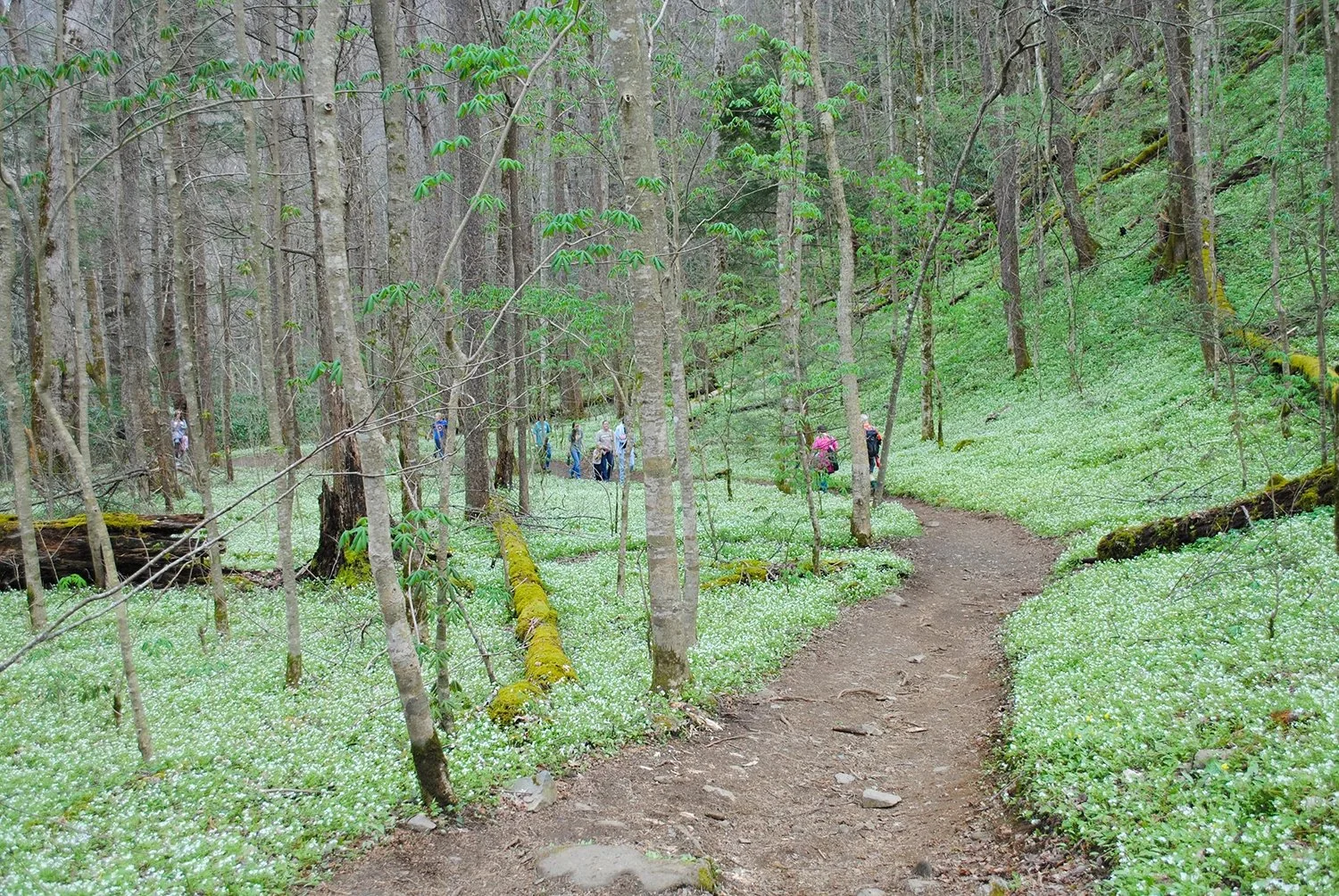
At Porter’s Creek Trail, notice how the ground cover layer is Phacelia fimbriata (fringed phacelia). You can see into the distance without shrubs or other vegetation blocking your view.
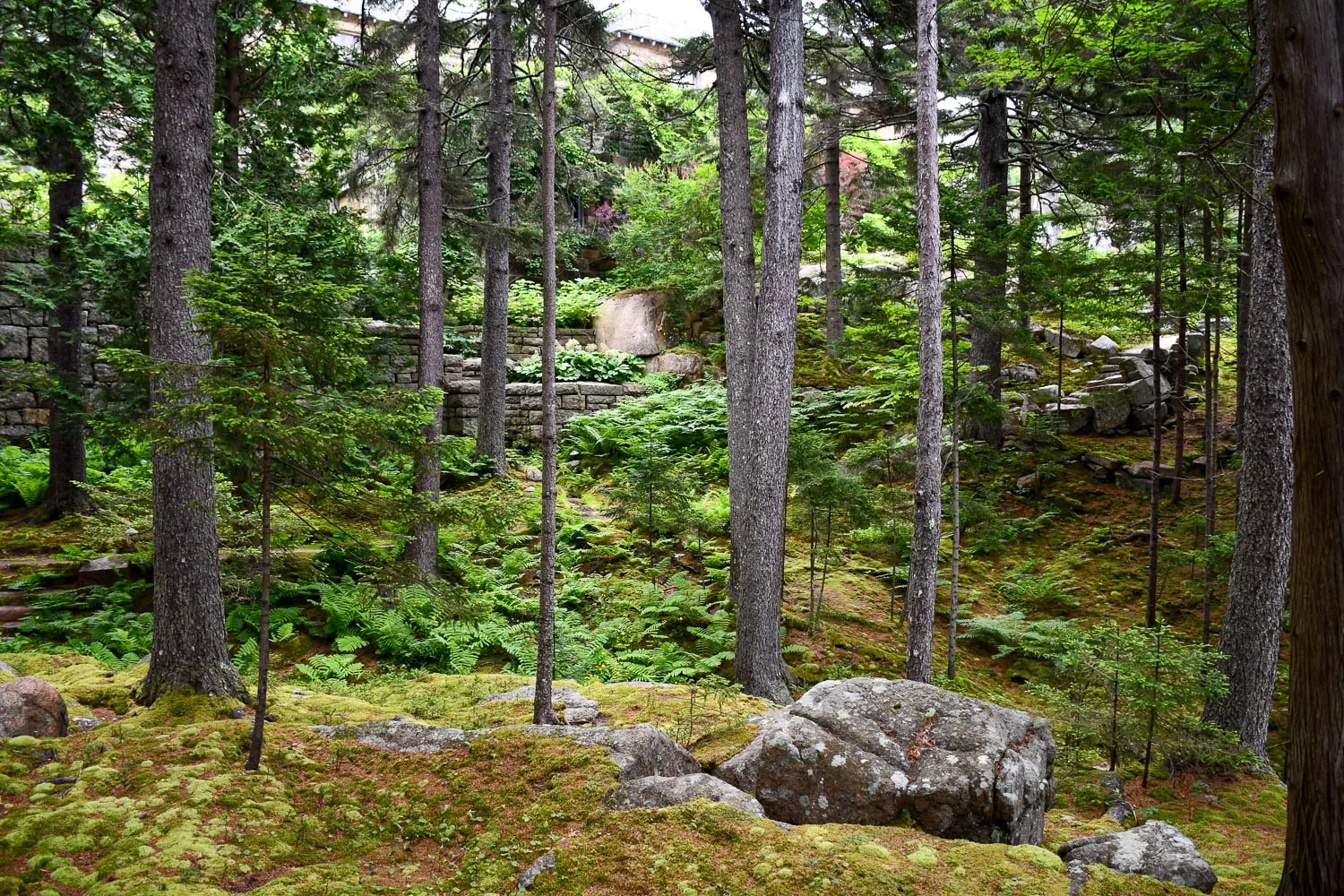
At Skylands, moss, ferns, and lichen dominate the layer under the forest.
WOODLANDS
Woodlands tend to be more open where trees are sparsely arranged. The open space is enough for allowing other grasses and shrubs to get established. I have visited glades and pine barrens from North Carolina to Tennessee and admired the diversity of plant species in these varied landscapes.
With a woodland approach, there are opportunities for the woody plants to shine as anchor species. Shrubs and larger perennials can be in orbit around them and grade to shorter grassland habitat.
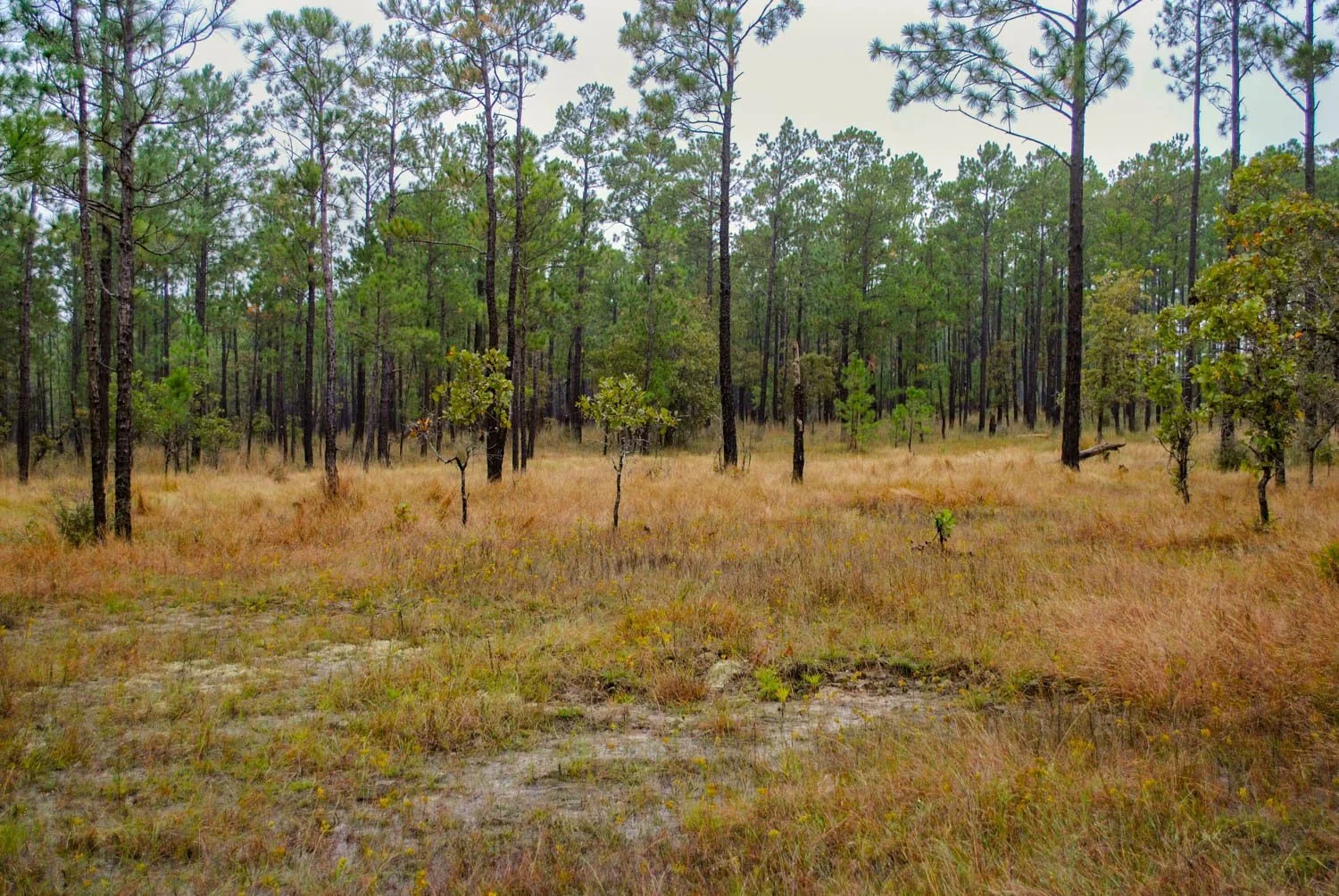
A barren in east Texas offers a glimpse at a woodland in the wild.
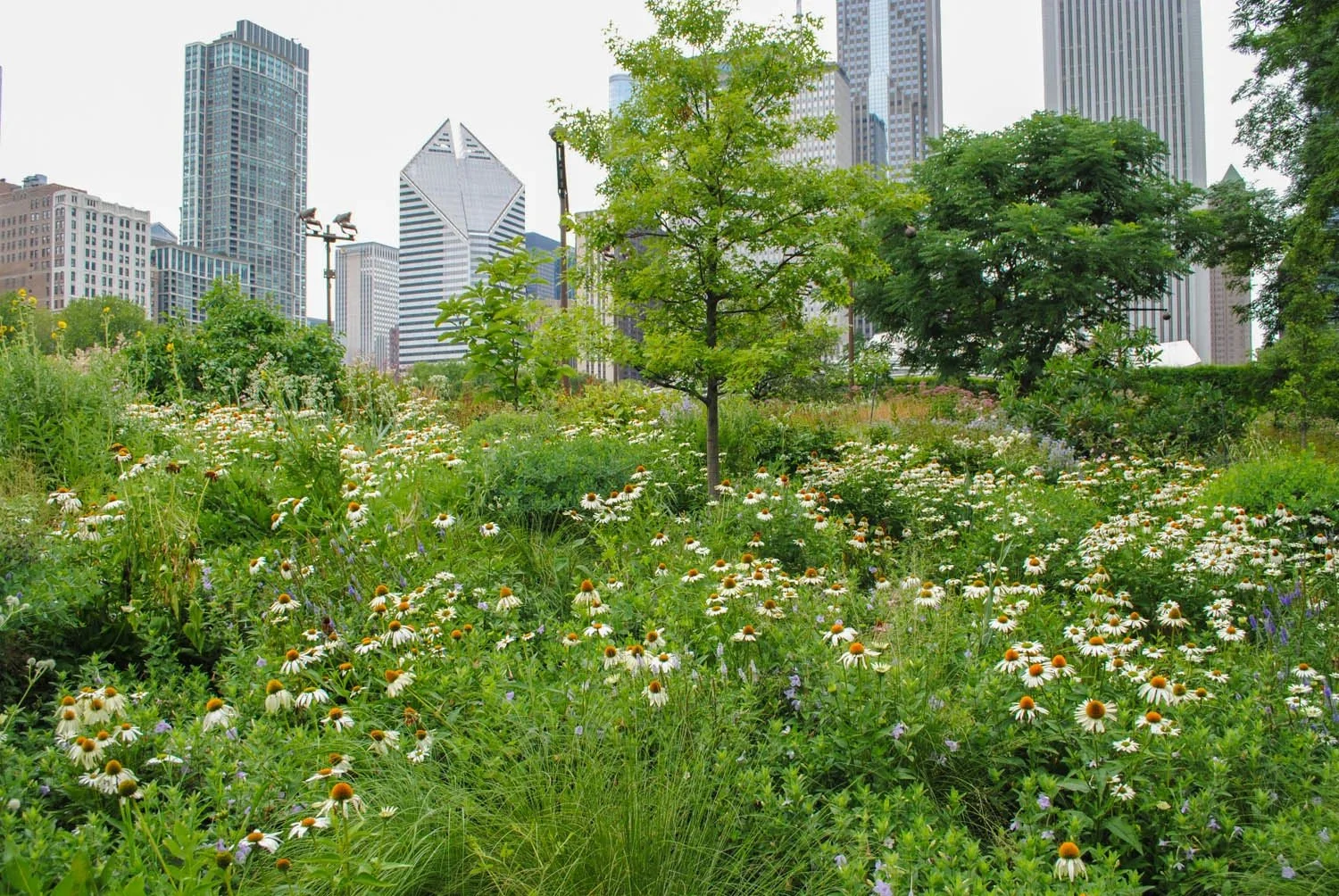
The dark plate in the Lurie Garden features increasing numbers of trees to create the appearance of a woodland.
SHRUBLANDS
Shrublands are where we see shrubs dominate. These spaces may be in transition toward a woodland or forest, or they could also be stable successional states where management strategies or their density means trees cannot gain a foothold in the space.
We can use shrubs dominantly in a space, or they can be more sparse and mixed with herbaceous plants. In the southeast, I’ve seen shrublands in the mountains, at the beach, and in environments where trees struggle to grow or where they have been removed.
We apply this planting style often to cover a large space with the desire to have minimal management like an island bed of Itea virginica (Virginia sweetspire) or Ilex vomitoria ‘Nana’ (yaupon) in a parking lot. Shrublands are often most effective if we can see over the tops of them. And, we can be creative in integrating perennials into the space to maximize four-season interest.
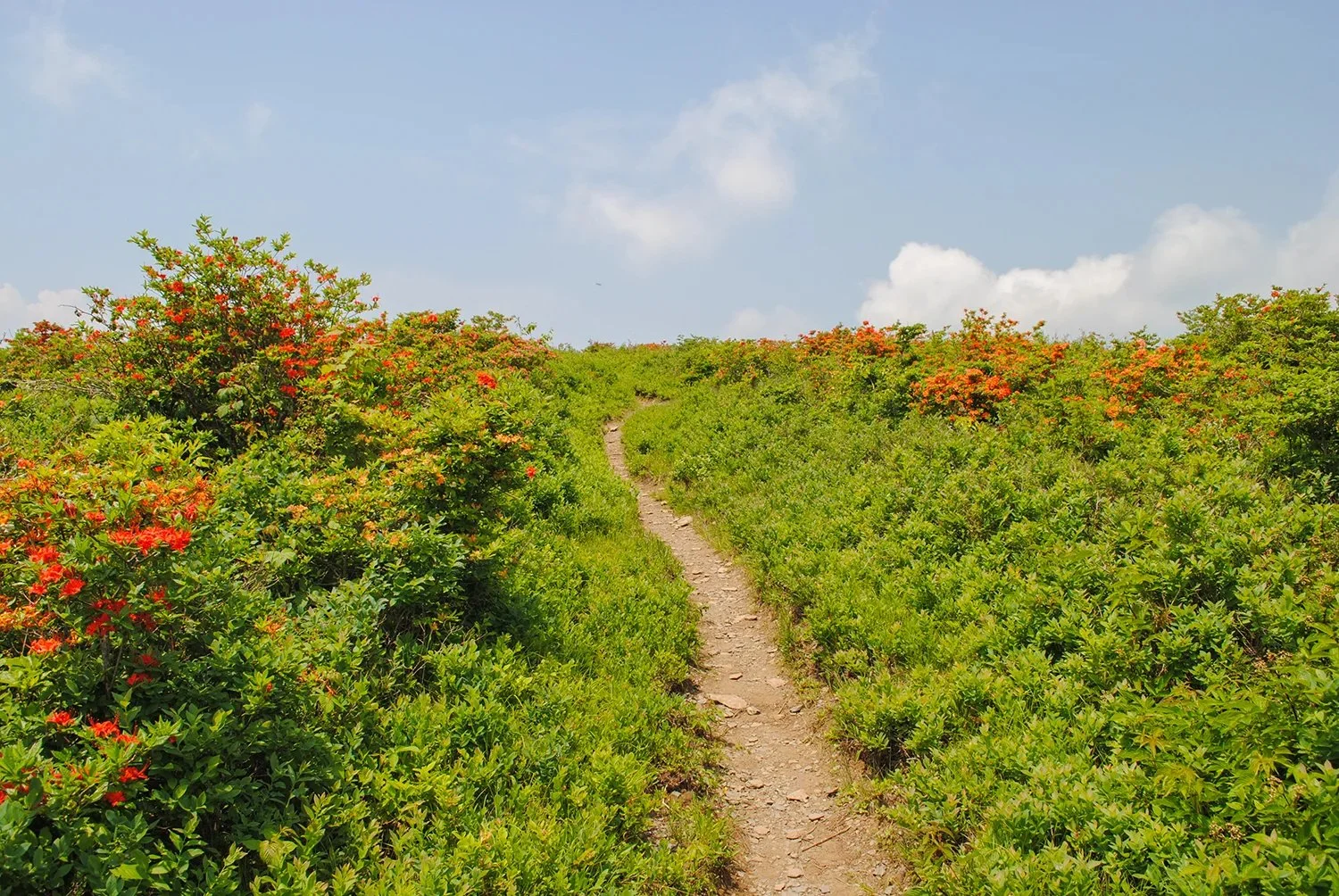
On Gregory Bald Rhododendron cumberlandense (Cumberland azalea) and Vaccinium sp. (blueberry) form an almost impenetrable layer for walking through save for this trail.
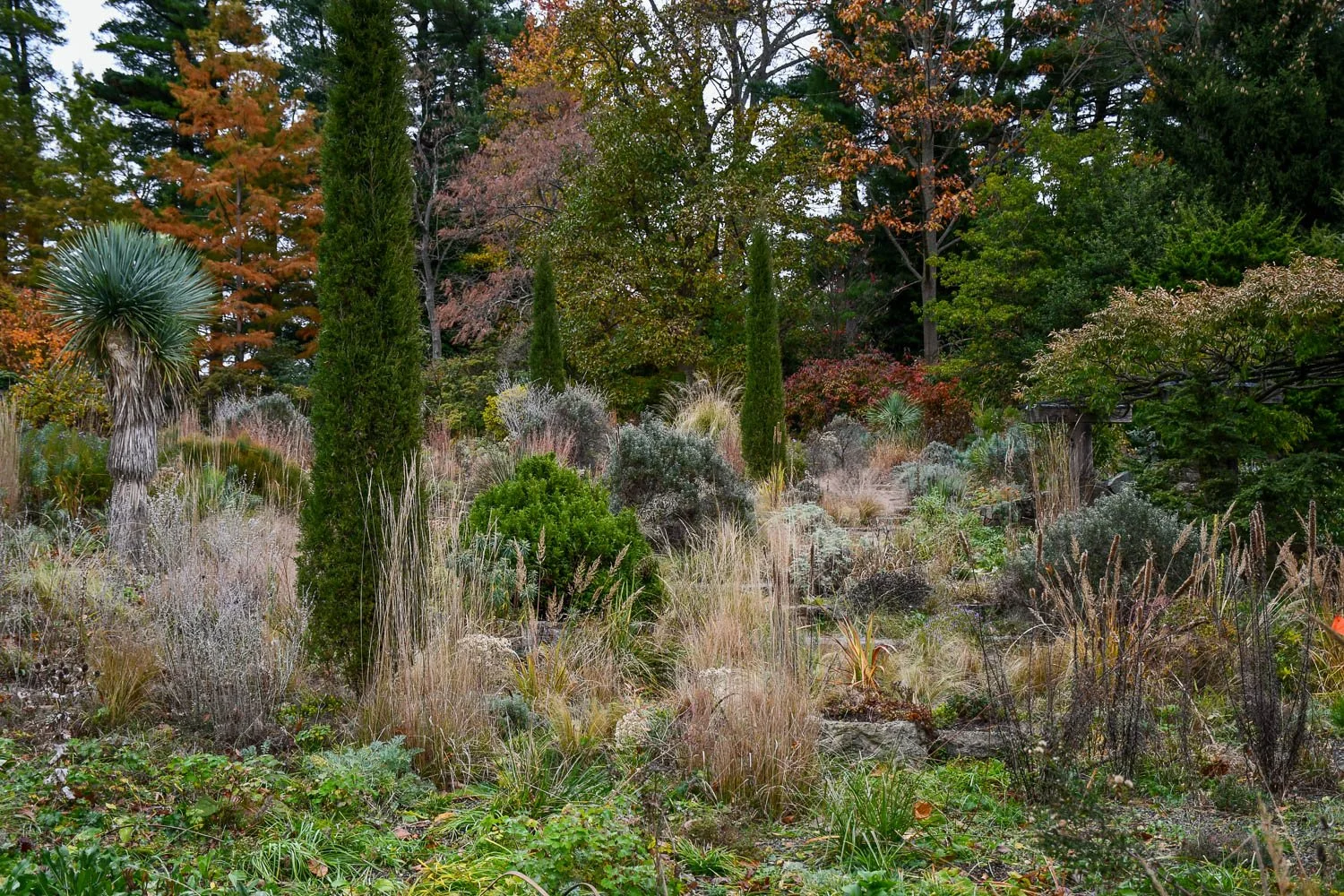
The gravel garden at Chanticleer features a dominant shrub layer mixed with grasses and other forbs.
EDGES
Edges (also called ecotones) are where plant communities shift in response to changing conditions (wet to dry, light to dark, fertile to less fertile). Even disturbance and differences in mowing schedules can create this varied habitat as you traverse a landscape.
Edges are often what we encounter most in a homeowner’s property. The changing light levels as one moves from the house wall outward, the treeline on the fencerow that grades from shade to light, and gradient from the pond to the drier hill all create shifting conditions that can result in different species growing. We can use or enhance edges to tell a story with our plantings. When you walk across a landscape, overt repetitiveness can become boring. Changes in the landscape can keep things varied.
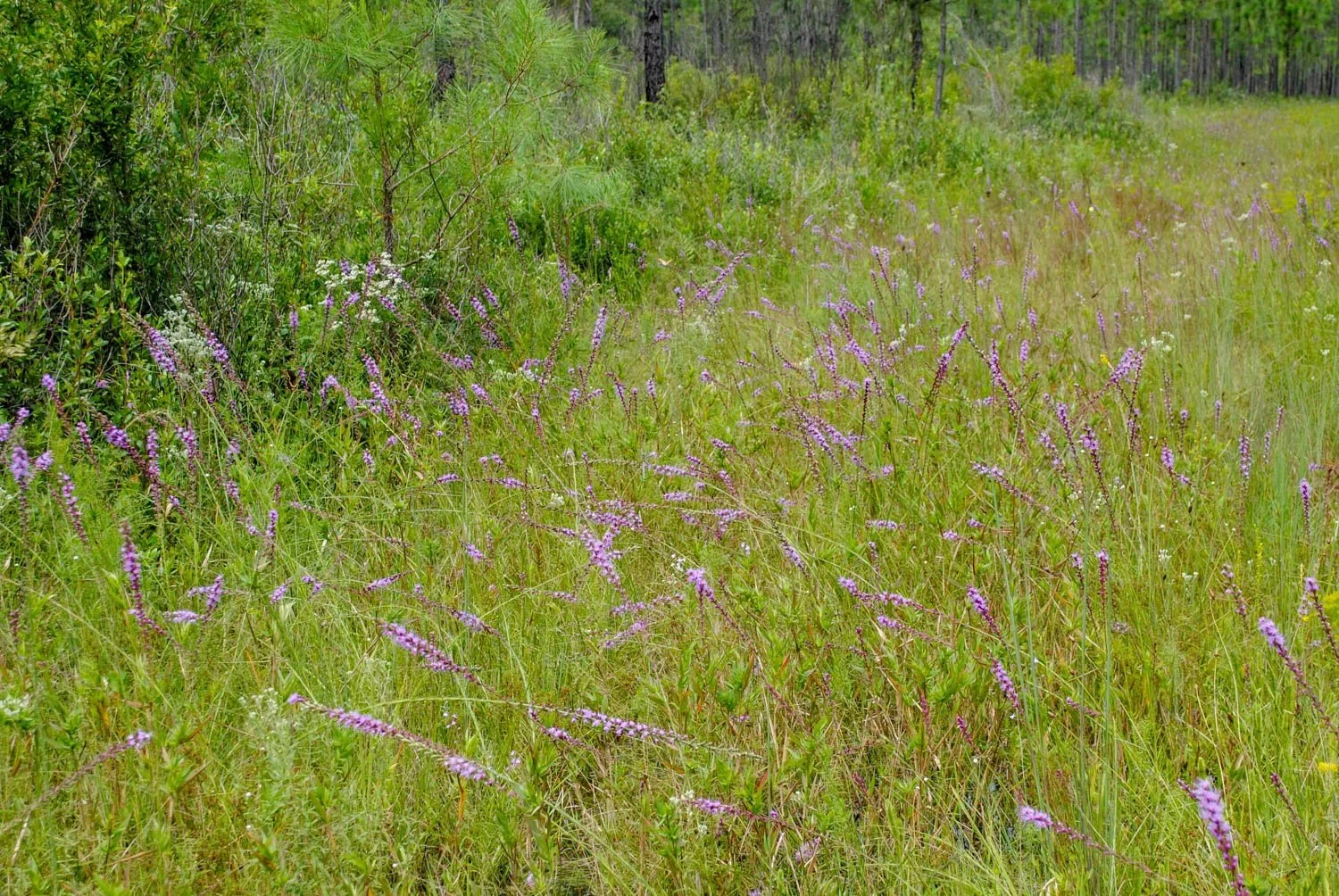
The vegetation in the Green Swamp abruptly shifts from grasses and Liatris pilosa (blazing star) to shrubs and then taller trees.
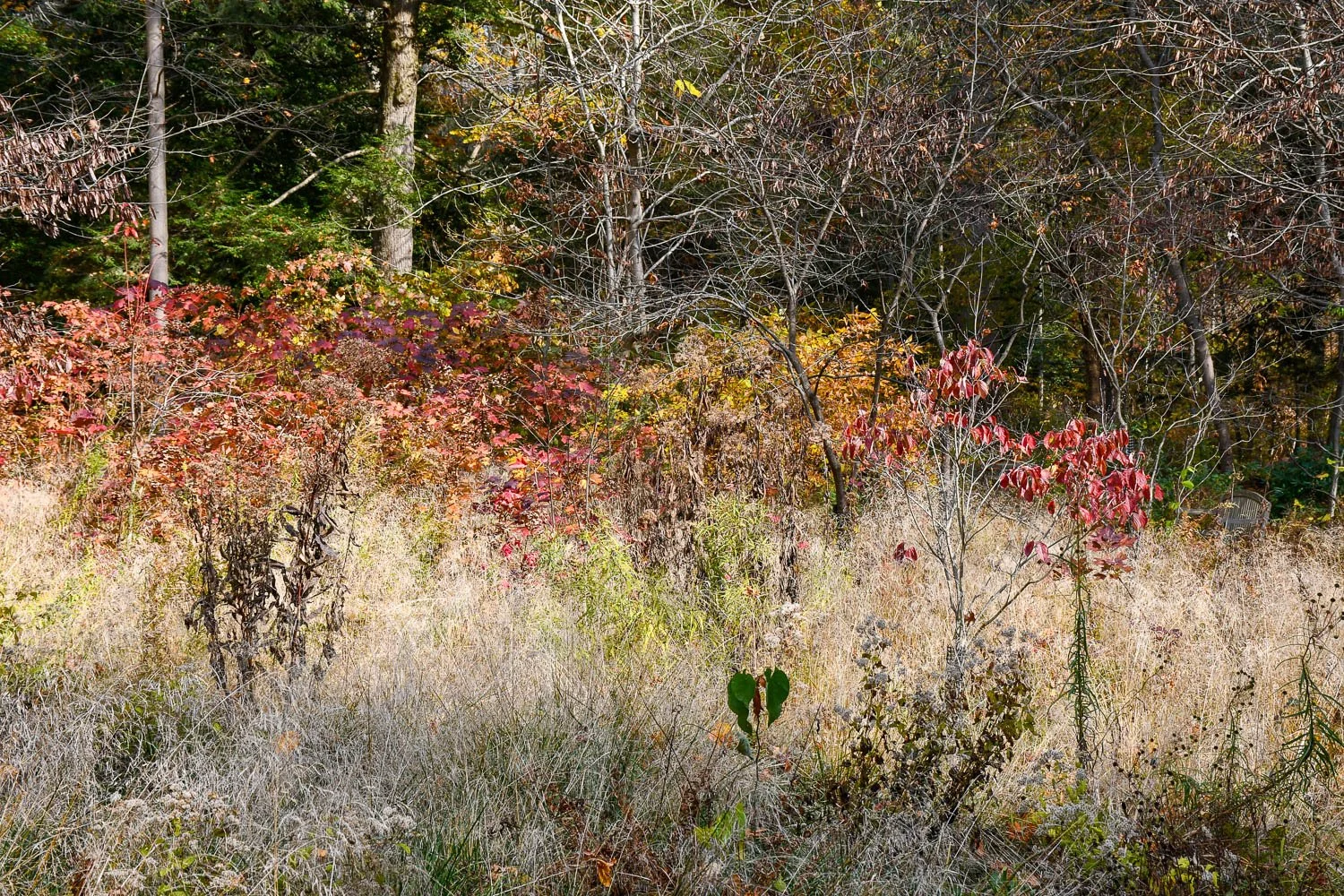
In Peirce’s Woods at Longwood Gardens, the plants shift from grasses to shrubs to taller trees along this edge gradient.
HEDGEROWS AND FENCEROWS
Hedgerows and fencerows are in a way man-made plant communities. The former was named for the living hedges that separate fields, and the latter from vegetation that arose from not maintaining these barriers. I don’t feel they neatly fall into any of the above categories. They are almost like someone cut a transect, a long brownie bite of a forest or shrubland. They also feel too narrow to be an edge. But, the next time you drive, pay attention to their prevalence. They are everywhere, and these linear plant assemblages are in some cases the greatest opportunities for biodiversity in fractured environments. I like to think of fencerows as nature seeping back into the landscape cracks after the clearing effects of man.
In some cases these are purposefully planted to create habitat. With these spaces you may be unable to turn them into a forest or a woodland, but you can augment what you have. You can add diversity to the periphery of the hedgerow or fence row. And, they can be worthwhile for us to use in gardens as well.
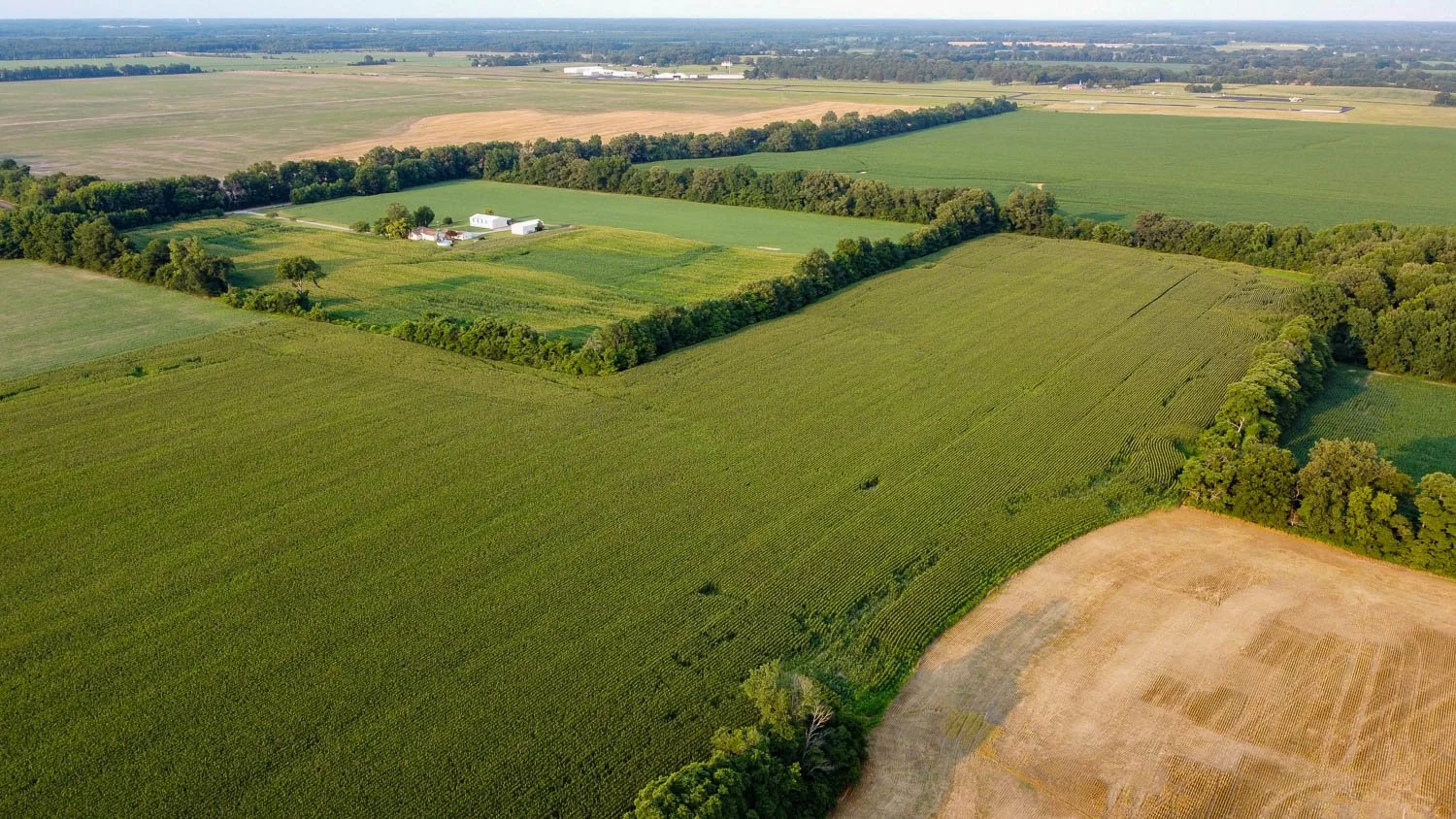
Fencerows and hedgerows criss cross our country, and in some areas may be the last foothold for diversity.
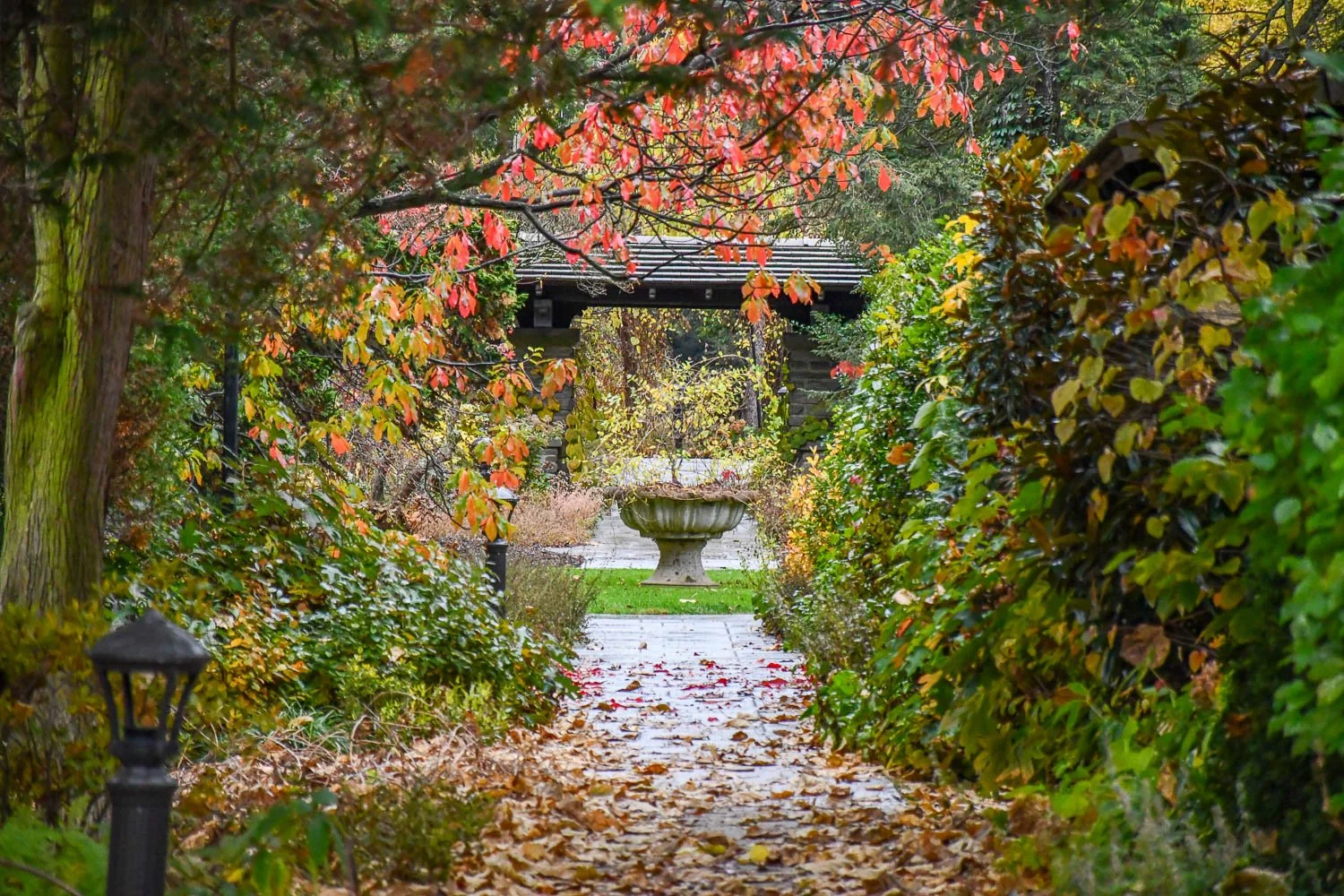
We can bring the concept of hedgerows into the garden, too. At Stoneleigh the wildlife hedge on the right offers a separator between spaces while also providing habitat for creatures in the garden.
WHICH DO YOU CHOOSE?
Here are some considerations on how to place woodies on your own site.
Which do you already have? It’s worth asking what woody plant arrangement do you already have on site and if you can enhance the essence of that woody planting because it’s better to work with the site instead of against it. For example, if you have a small forest filled with invasive species behind your house consider slowly clearing the intruders. When we purchased our property, we had a few trees scattered here and there. Our closest archetype was a woodland with open grassland spaces. So, I’ve set about enhancing that. I planted orchard trees to reinforce that character. And, on our fencerows I’ve started adding woodies to that space like Asimina triloba (pawpaw), Viburnum dentatum (arrowwood viburnum), and Cercis canadensis (eastern redbud) in the hopes to enhance the diversity after clearing out Ligustrum sinensis (Chinese privet).
How much space do you have available? When planting woodies, always keep their final size in mind in relation to the space you have. It may be hard to create a forest in a small backyard with an oak, but we can be strategic and choose trees that will mature at smaller sizes.
Is water available? One of the governing factors for woodies and especially trees is the presence of moisture. In the US, the 100th meridian has long been considered where the US gets too dry going west to be able to support trees. So, when siting woodies it’s important to remember that they will need regular watering during establishment. Before you plant, consider how you will deliver water to the trees and shrubs. Planting in the winter helps to alleviate that strain, but trees may still need water as they establish over the coming years.
Consider repetition to create coherence. In the wild you often don’t just see one tree by itself unless it’s the last tree settlers left centuries ago when cutting the forest in a field. Often we see woodies repeat to create the sense of a forest, woodland, or grassland. Consider when you plant trees to make small groves. Consider planting trees at different sizes. Maybe plant three large Magnolia virginiana (sweetbay magnolia) surrounded by a half dozen gallon plants. It makes it appear as if the grove is growing and spreading naturally.
If you need more ideas, consider joining us for the Botanic Bootcamp session Woodies in Naturalistic Design on May 18!