In my studies of mixed plantings, I've noticed that bulbs are frequently prescribed to add flavor to the plant recipes. And, why not? You've gotta love the little, ephemeral jewels! Just a few can add spice and zing to a garden, and no matter the season, it seems some are always popping out of the earth, blooming feverishly, or returning to the ground from whence they came.
In horticulture design we often use geophytes—plants that return every year from underground storage organs—to fill a niche, whether it's a place or a time in the garden when little else is in flower. Take spring, for example. Bulb foliage and then bloom carpets the ground long before anything else has barely emerged from winter slumber.

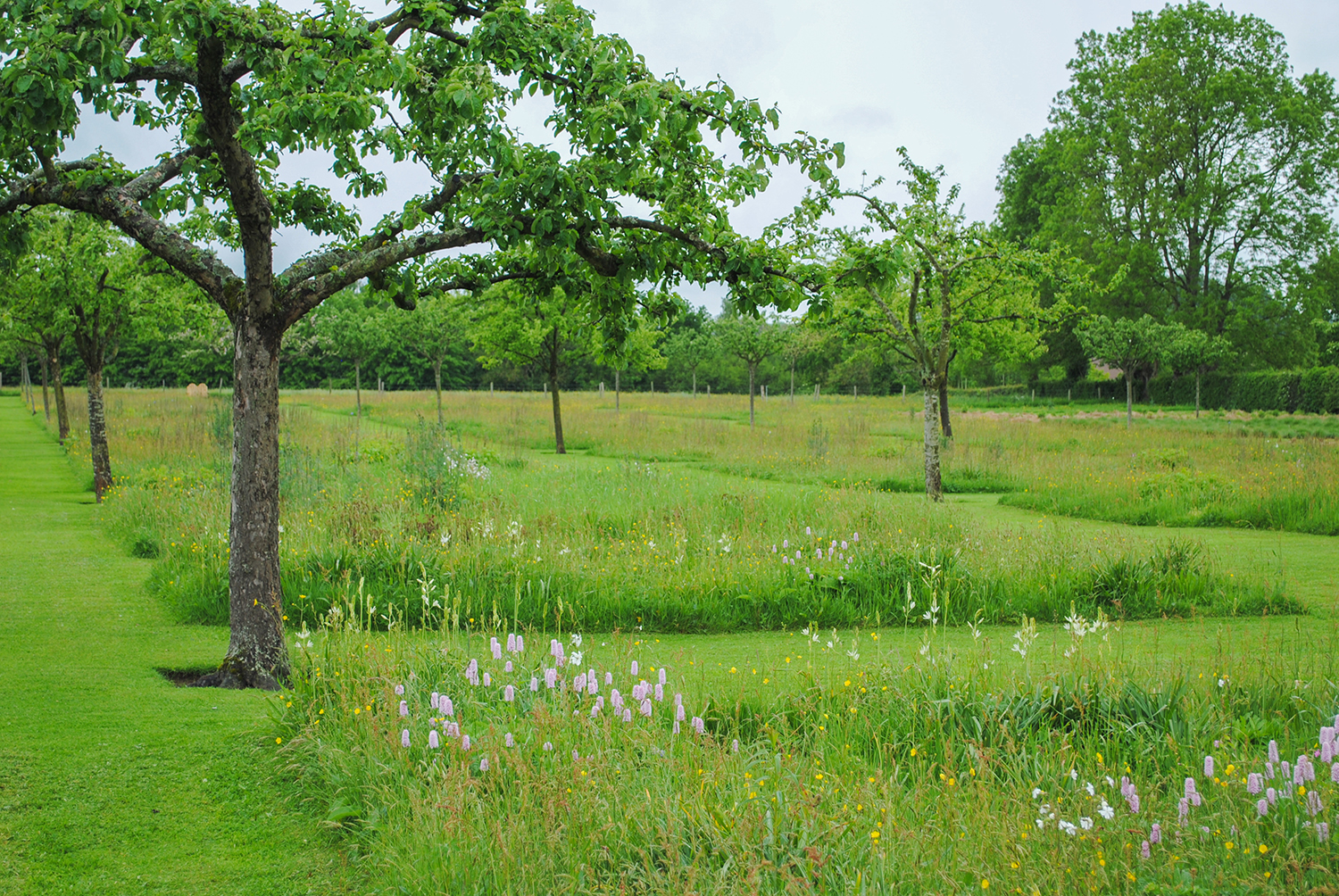
Tulipa ‘Orange Emperor’ (tulip) and Muscari armeniacum ‘Valerie Finnis’ (grape hyacinth) jump out of their beds in the gravel garden at Chanticleer in Wayne, PA while other perennials keep pushing snooze. This photo was taken in late April 2014.

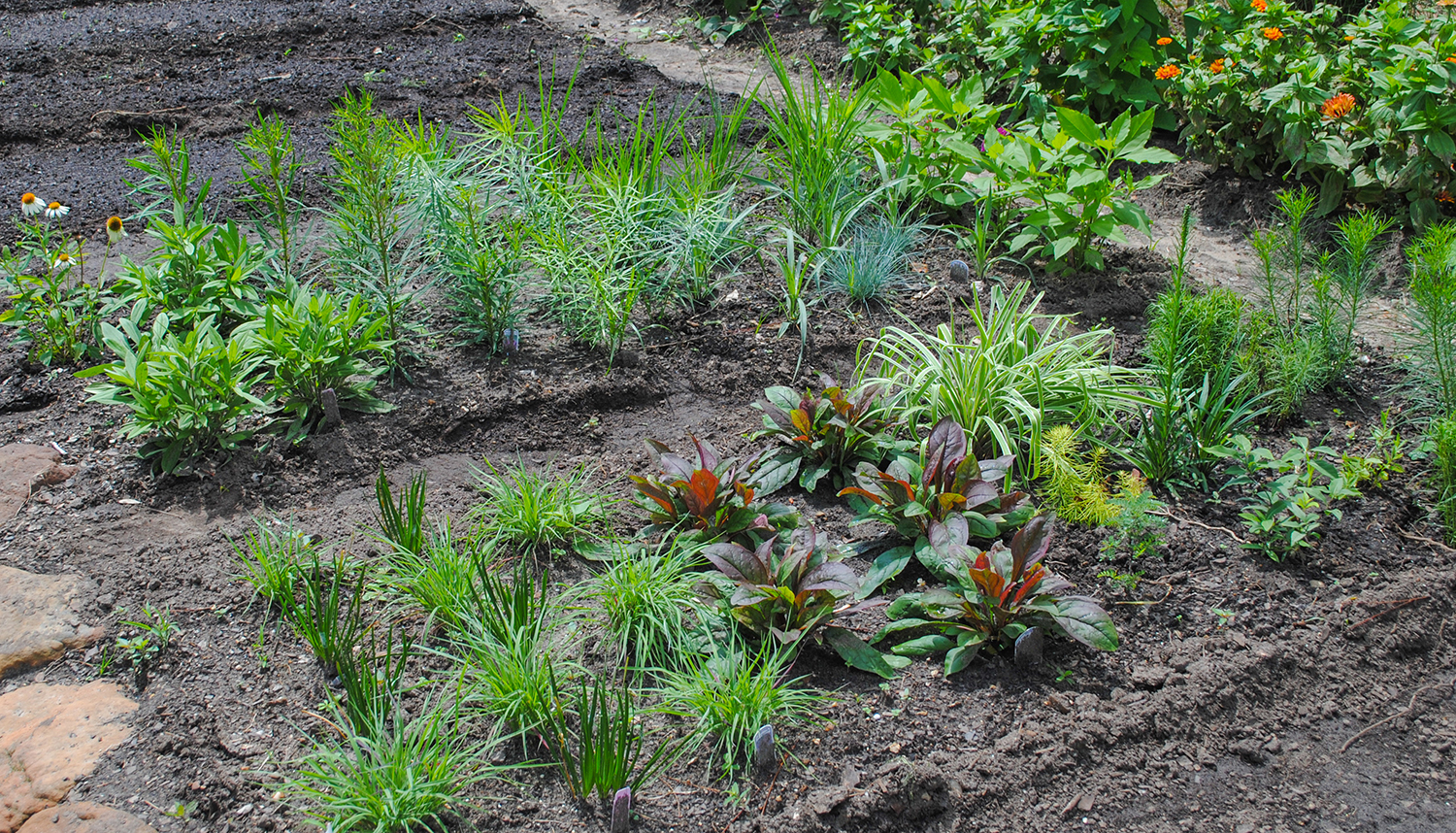
Early Narcissus mix and mingle in one of Greg Grant's bulb prairies in Arcadia, TX. Note that this photo of bulbs blooming in the south was taken on 12 February 2017, a full two months earlier in the year than the photo above.
In thinking of how to integrate bulbs into matrix-style plantings here in the deep south, that's where I've hit a snag—the foliage. For us, spring bulbs are winter bulbs, often having finished flowering long before the vernal equinox. And, if they are flowering that early in the year, it means we need to back up even further for when the foliage actually emerges. Many paperwhites (Narcissus papyraceus) are already in their full greensleeves before Christmas, if not in bloom. In fact, I noted one paperwhite that had it's foliar costume on right before Halloween on 19 October 2016 and was in subsequent bloom on 11 November 2016. This time of the year is usually when people are planting bulbs, not watching them flourish and bloom!!!

A bee rests on the parchment-like petals of Narcissus papyraceus.
The early bulb foliage presents a maintenance problem in a planting where a myriad of other grasses and forbs are. I'll quote Piet Oudolf and say that "brown is a color, too," and I don't think it is right to cut short our freeze-and-then-dried finale by removing winter interest very early to allow the bulb foliage to emerge. I delight in seeing the ghosts of perennials past remain on into January. But, if we wait to cut back, we risk damaging these recharging solar panels that keep the bulbs blooming, especially if a carte blanche cut is performed over an entire area.
Those that use the designed plant community concept further north don't run into this problem. For them, they get full die back in the fall and winter and then can have a massive clean up and/or mow down in the spring as Roy Diblik elegantly illustrates on his website. (Thanks, Roy!) The cold keeps the bulb foliage in check so that the two usually don't coincide.
So, how does one reckon with all this foliage? More specifically, how shall we have our spring... or should I say winter display?
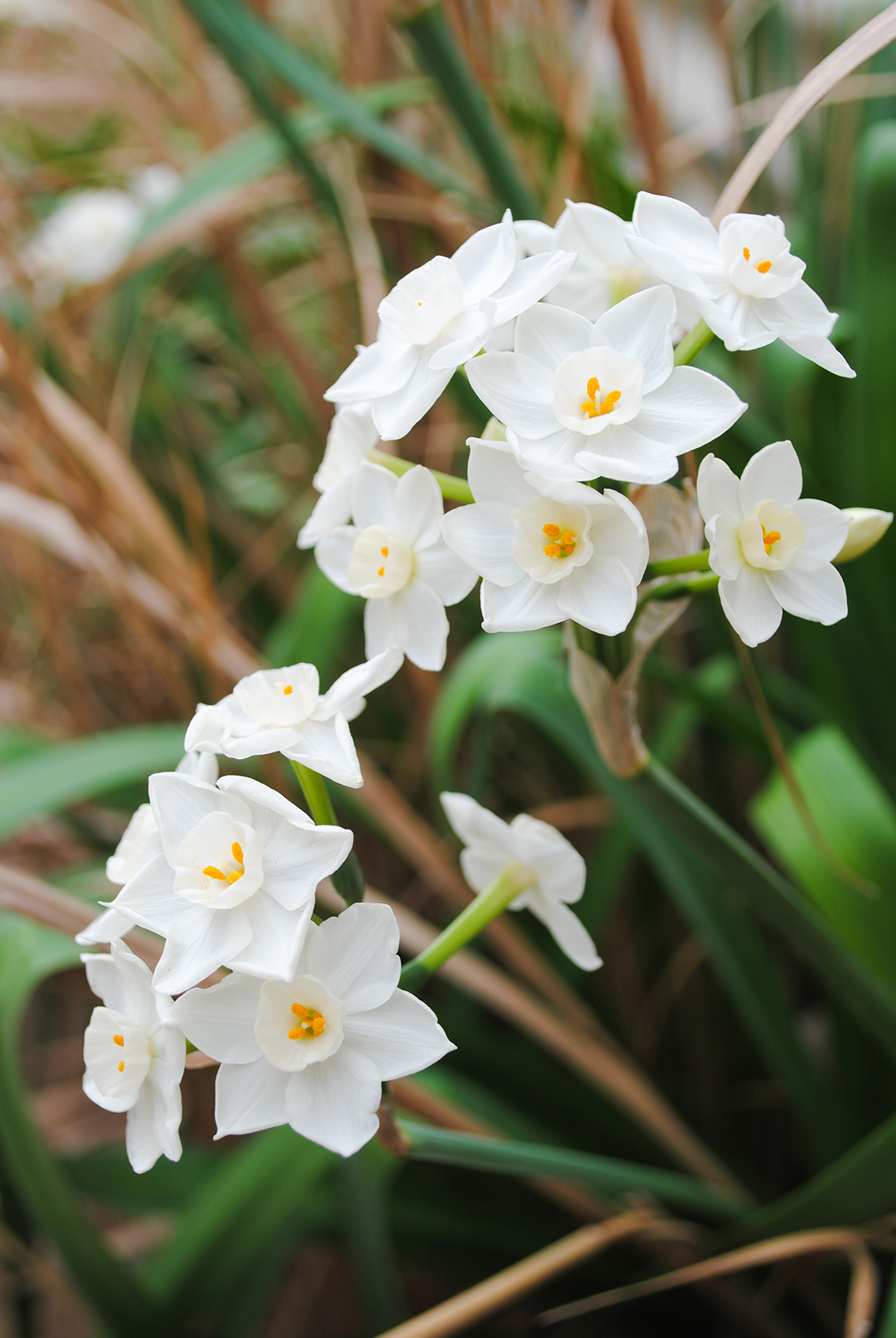
Narcissus tazetta 'Grand Primo' (Chinese sacred lily) flowers and fades amongst blades of Panicum (switchgrass) foliage. It's brown vs green. How do we in the deep south enjoy the architectural show of our winter grasses while integrating bulbs into mixed plantings?
Here's some ideas that I've had as I've pondered that question.
1. Don't plant bulbs. Hahahaha! An option, yes. But, it's quite boring. Next.
2. Planting a later flowering species. I really sank my teeth into searching for these bulbs. I remember thinking, "Surely, there are later spring-flowering geophytes that will perform well here in Texas."
Last winter (2016), I started noting every Narcissus that I could and the weeks I saw them in bloom. Paperwhites started as early as December and continued into January. Next, Narcissus italicus (minor monarque) began flowering in January along with Narcissus × odorus (campernelles), and finally, Narcissus tazetta 'Grand Primo', Narcissus tazetta 'Erlicheer', and Narcissus 'Ice Follies' (daffodil) were the last of the bunch, blooming throughout February. This year, as of 10 February 2017, all of these were in flower. Thanks to a visit this year to Greg Grant's gardens in Arcadia, TX, I can also add Narcissus jonquilla (jonquil), Narcissus pseudonarcissus (Lent lily), Narcissus × intermedius (Texas star), and Narcissus 'Carlton' (daffodil) to my list, which I've learned usually bloom in early-to-mid February here in east Texas. From my local colleagues, I understand this parade of performances is typically what we experience here in east Texas.

A family photo of Narcissus that shows the wonderment of hybridization, all thanks to the handy work of Greg Grant. He arranged; I photographed. From left to right: Narcissus tazetta 'Grand Primo', Narcissus × intermedius, Narcissus jonquilla, Narcissus × odorus, and Narcissus pseudonarcissus. Those noted with a hybrid '×' in their name exhibit intermediate characteristics between the two species on either side. (Note: Straight tazetta is the supposed parent for Narcissus × intermedius.)
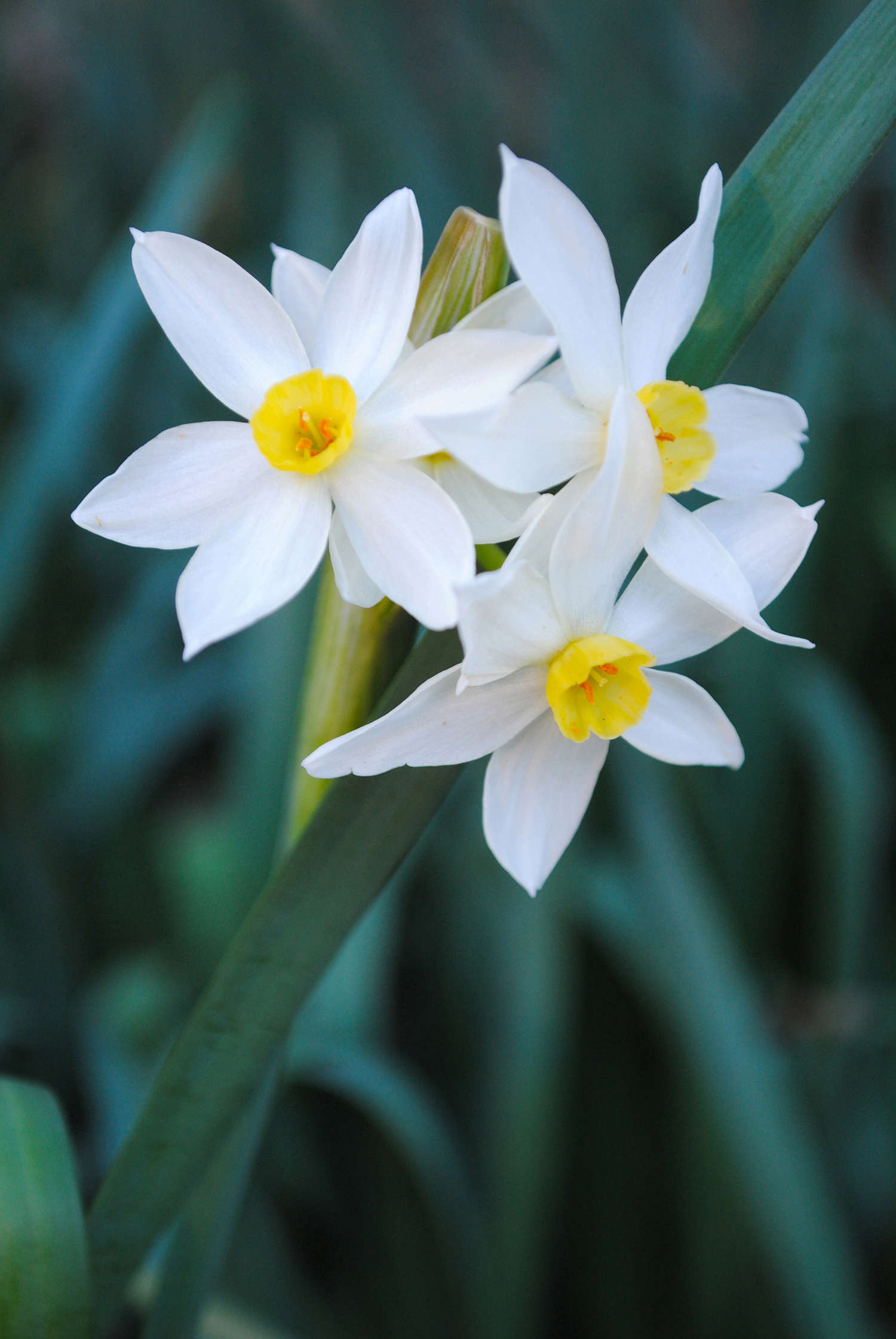
The buttery yellow coronas of Narcissus × italicus

Narcissus × odorus, a vigorous hybrid for the southeast originating from crosses of Narcissus pseudonarcissus and Narcissus jonquilla. Occasionally, these geophytes will throw up flowers that have less than six petals. Do you spy any in the photograph above?

'Erlicheer' is one of the last Narcissus to flower in the deep south. Overall, double forms of Narcissus are usually later than their single counterparts.
I also considered species other than Narcissus. Leucojum aestivum (summer snowflake) is definitely a candidate. As of 10 January 2017, it's foliage was a mere four-to-six inches out of the ground. Last year when we had a mild winter, these beauties were in bloom on 29 January 2016 with their full accompaniment of foliage. This year, I observed the first bloom on 2 February 2017.

Summer snowflakes are winter snowflakes in zone 8.
Muscari neglectum (starch hyacinth) is on my list, too. Right now, it's stringy foliage is starting to poke up, and last year, it was in bloom on 20 March 2016.
I believe that Tulipa clusiana (lady tulip) and its cultivars would work as well. While I haven't trialled them in the ground in Nacogdoches yet besides what I grow in containers, I have reports that they grow well in Houston, much further south than us.

The blushed-red and buttery petals of Tulipa clusiana 'Cynthia' look almost candy-like.
For the majority of the other early spring species, it's either too hot or too wet for them. However, thanks to Brent and Becky's Bulbs, we are trialling some additional types to see if there are others out there that will perform well for us.
3. Cutting Time. If we can't change the plant palette, perhaps we can adapt the timing of our cut to fit the plant's growth to avoid damaging bulb foliage. But, this practice is going to have limited application because weather varies so much during the cooler months of the year. During the 2015–2016 winter, it was so mild I had to finally cut grasses back in January that were still showing some green from the previous fall. However, this winter, a cold snap on 6 January 2017 dropped us from 75°F to 25°F in one day and was followed by two nights of 16°F and 18°F. This arctic blast killed many of our perennials down to the ground. Some years we'll have die back, and other years we might not. Because of varying weather conditions each winter, I don't believe that in the south we have the opportunity to wait and then cut everything back in one fell swoop like our friends up north if we include early season geophytes in our plantings. If we wait for everything to die back, the bulb foliage may likely already be fully emerged.
4. Strategic Intermingling. Instead, I believe that one will have to go in and edit the mixed planting as he or she sees fit. That may add more work for those who are wishing to do large scale bulb and perennial plantings.
And, this practice ties in well with my observations of plant growth here in Texas. One of the climatic characteristics that has amazed me about living in zone 8b is that our growing season never really stops. Last winter, I also noted what other species still looked good during the winter. All winter long, Carex cherokeensis (Cherokee sedge) that we trialled from Hoffman Nursery looked absolutely incredible. Even with the arctic plunge we had in early January 2017, the plant is still holding it's green.
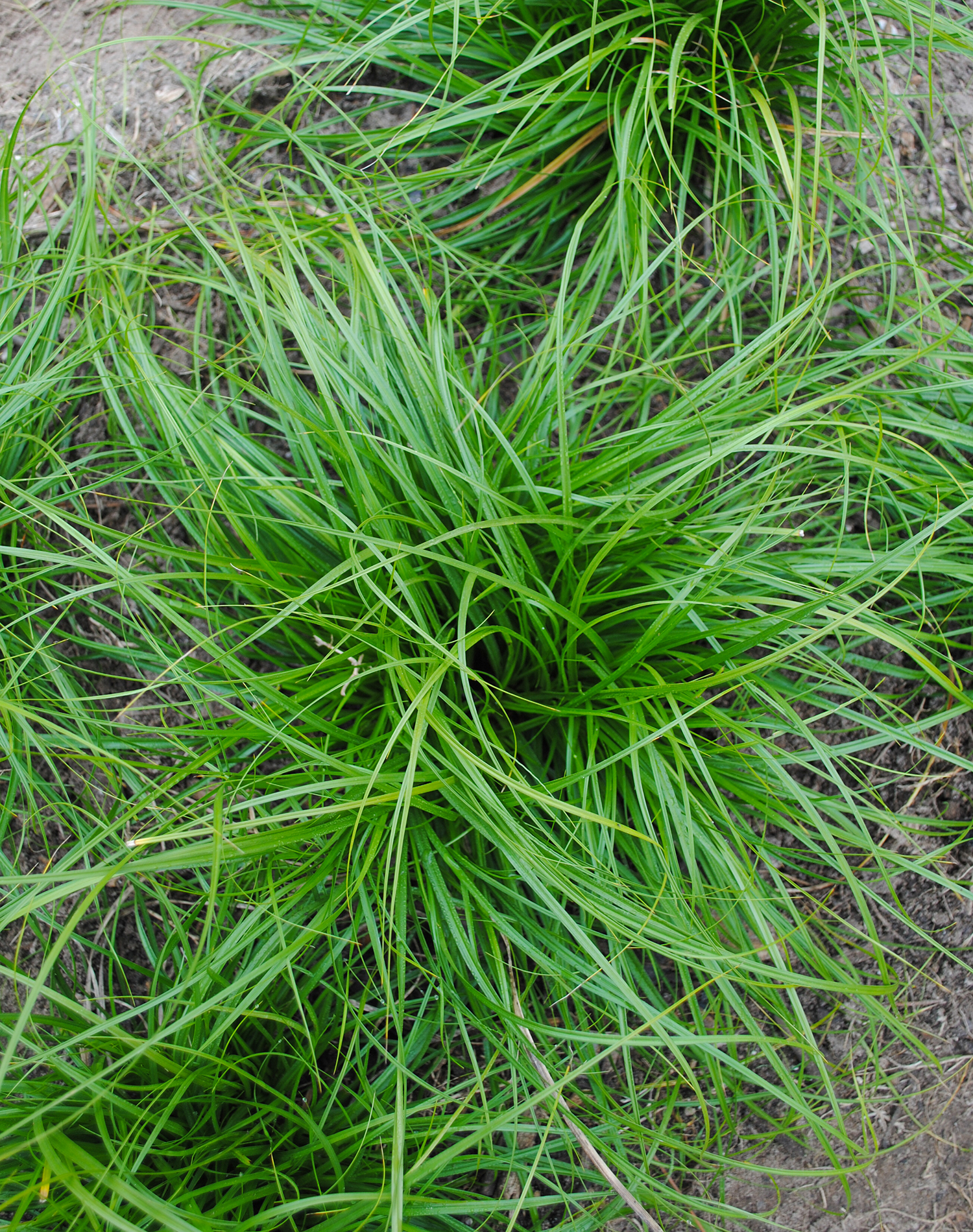
In the middle of winter, Carex cherokeensis keeps it's green.
The foliage on our native Rudbeckia maxima (giant coneflower) is also surviving the winter like a champ. The leaves barely show any sign of winter damage, and many plants are beginning to produce new foliage now for the spring.
The foliage of these other perennials also presents a management challenge if included in matrix plantings. Perhaps we could interplant bulbs whose leaves emerge early with some of these winter-foliage stalwarts? Thus, we could combine plants that have similar cut back requirements.
If it's green, do not clean. If it's brown, cut it down.
I believe that strategic intermingling is the best option to be able to maximize bulb foliage growth AND the winter interest display. And, as we integrate this approach into our gardens, I'll report back to you.
With the presence of bulb foliage in the gardens of the deep south, we may never have a slate that we can just fully erase in February for the new year like our northern counterparts. But, we may not be the only area of the world reckoning with bulb foliage in the near future. I asked Cassian Schmidt about the above conundrum when we spoke together at the Perennial Plant Conference in Swarthmore, PA last fall, and he told me they are also having to cut back foliage for their bulb emergence earlier and earlier at Hermannshof in Germany. Even last year in London, Narcissus were in full flower in December, a surprising and startling observation in a world where temperatures are on the rise. As a result we may have to begin adapting our gardening practices to the change.