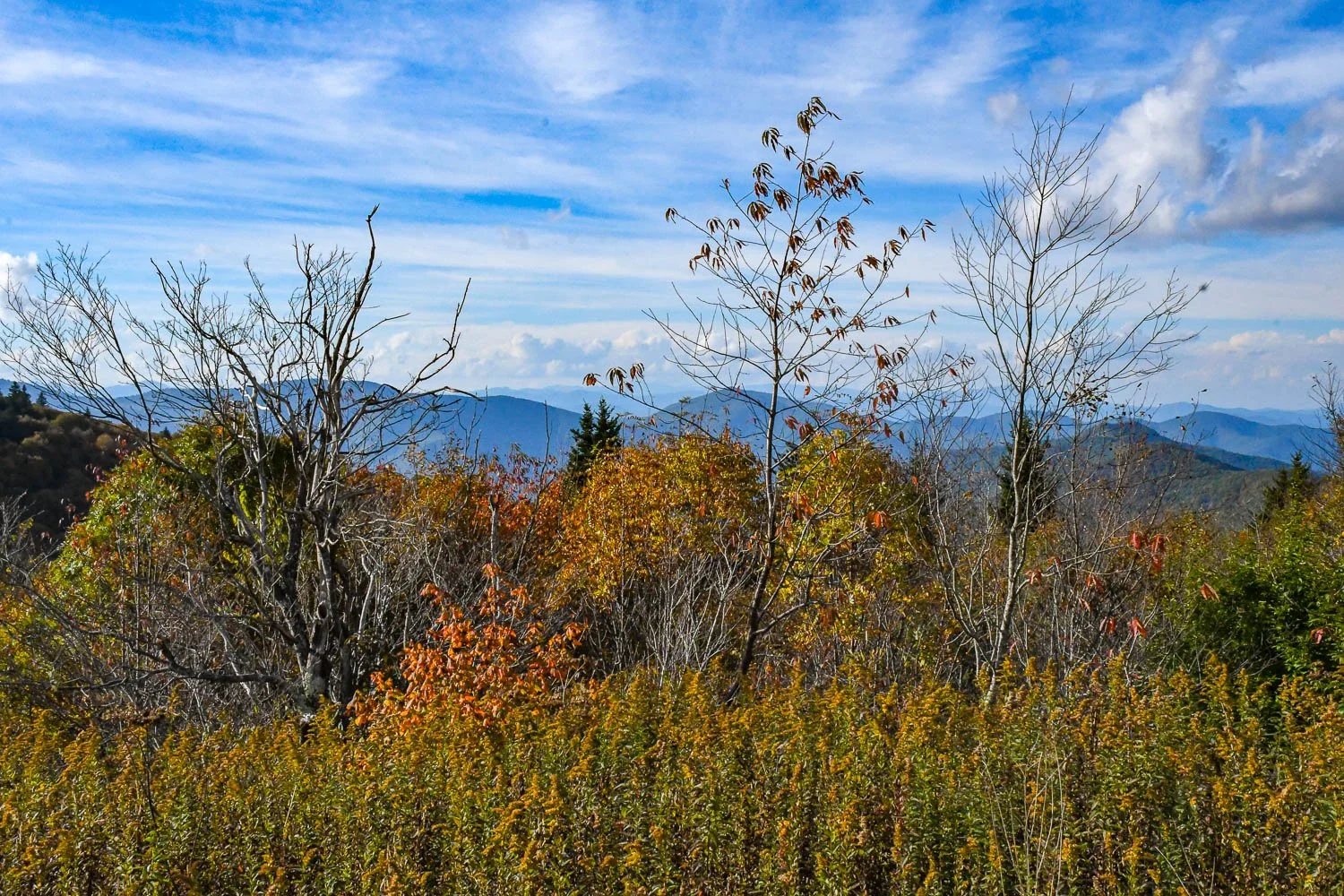
I traveled to South Carolina to speak at the Golden Corner Native Plant Festival a few weeks ago. I love talking up naturalistic design and ecological planting for the Southeast. Since the festival was held in upstate South Carolina, I had the opportunity to explore the mountains for the first time in fall in 10 years.
One of my favorite things in the world is being in the mountains, a love that was likely instilled in me with all of our family trips that we would take leaf peeping in the Smokies throughout my childhood and even through graduate school. And they are so spectacular in autumn when they are clothed in the last colorful flowers and leaves of the season.
My goal for this trip was to find some type of grassy plant community, something open to capture asters and goldenrods and other plants in bloom at the end of the growing season. I figured that Black Balsam Knob would be a great place since its open top creates conditions for a grassy ecosystem to thrive. When I happened to mention to Brent Antrim at Southern Highlands Reserve that I was looking for such an area, he recommended Sam Knob near Black Balsam Knob. I am so glad I followed his advice.
I parked at the trailhead in mid-afternoon. The sun shone bright in the autumn air as cumulus clouds climbed over the mountains in the distance. The trail started as a mostly straight path through filtered autumn light cast by golden leaves of various birches. The fall foliage had just started to clear its throat, and I knew in a week or two it would be spectacular. Like most paths in the wilderness, there were plenty of highlights to discover in the understory. And, the monarchs, there were so many of them. I saw more that day than I’ve probably seen in my life.
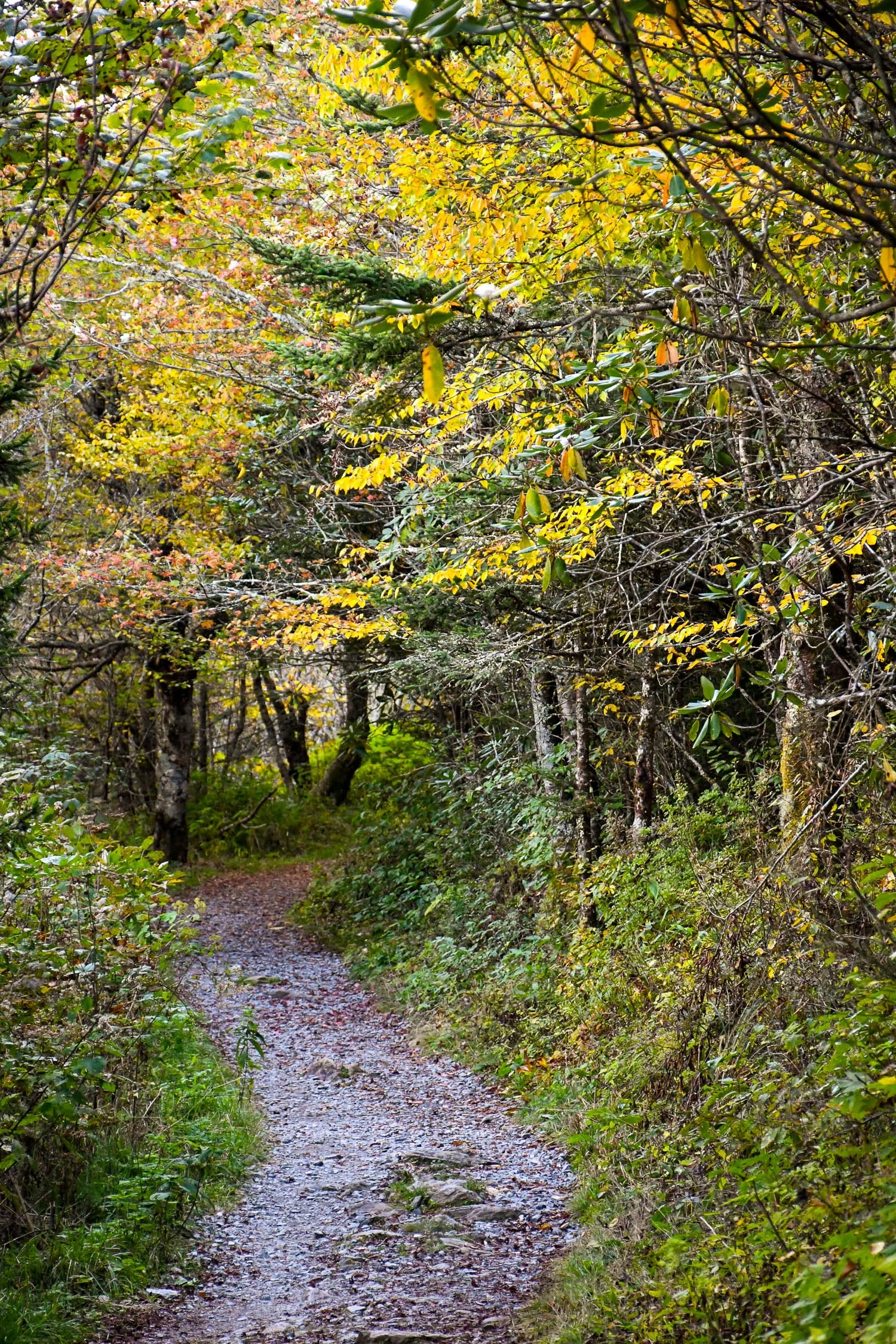
The path, dressing in autumnal foliage, that leads to Sam Knob
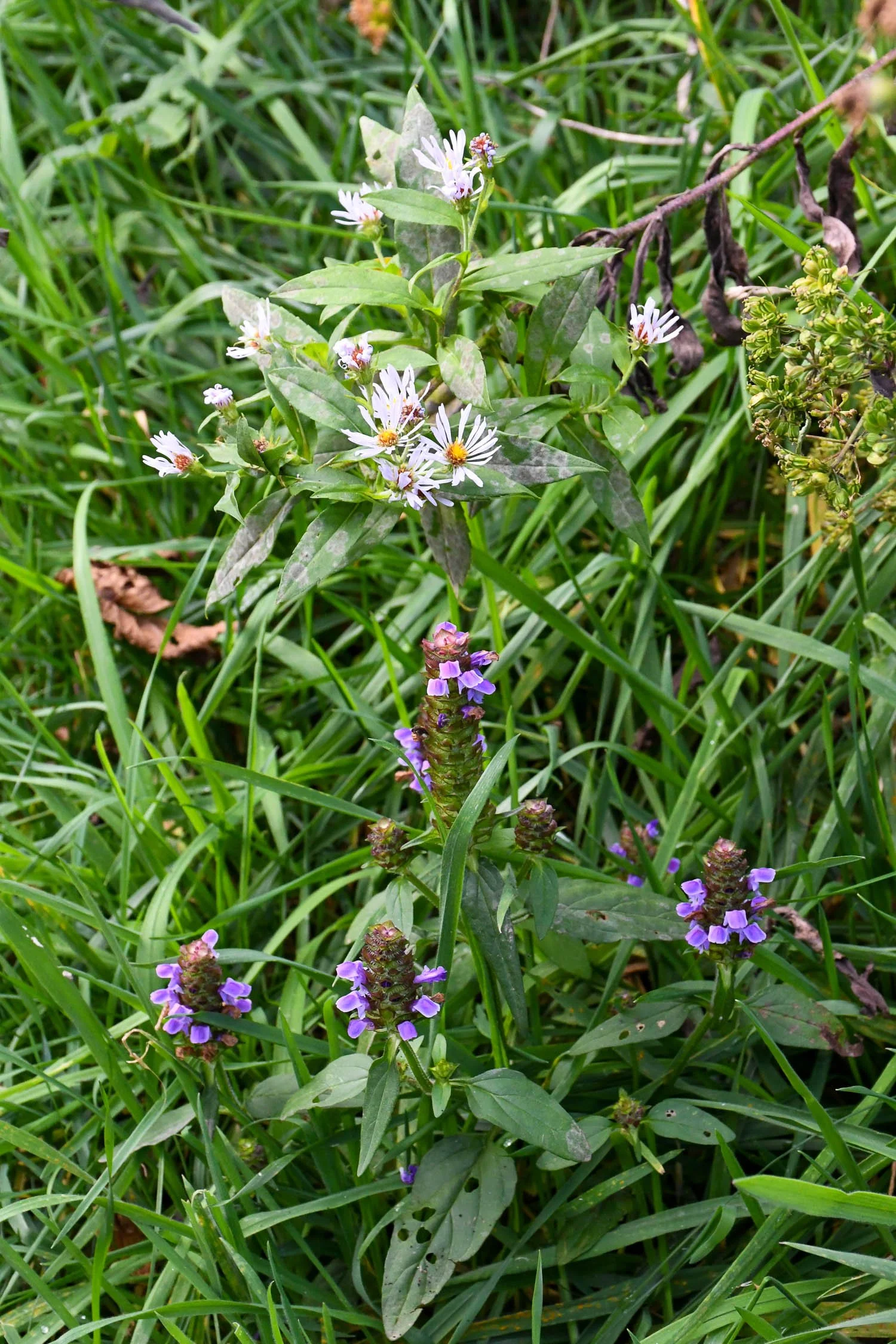
Prunella vulgaris (self heal), which is usually finished flowering for us in Texas in May, was in full bloom right next to asters.
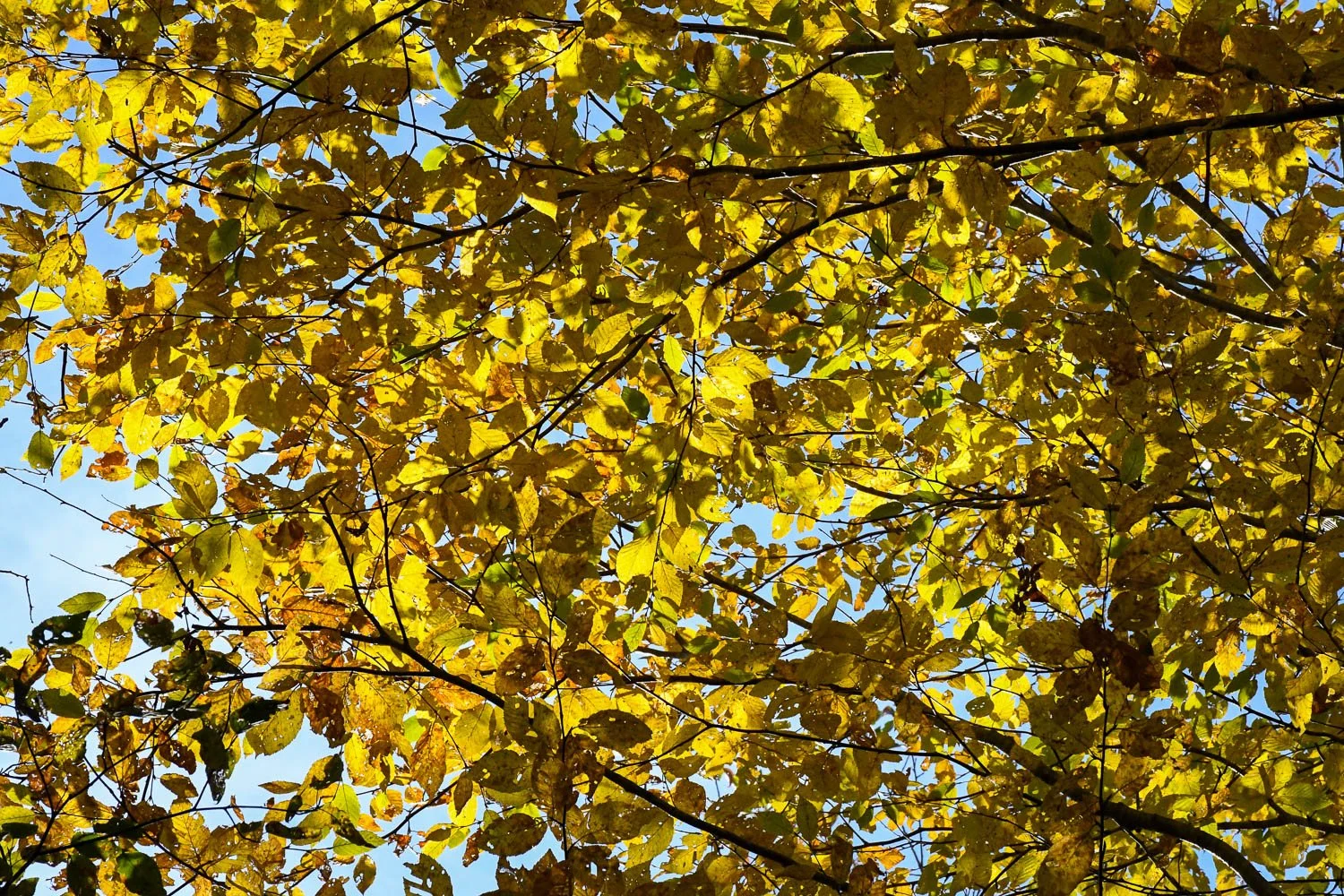
The golden glow of Betula alleghaniensis (yellow birch). Birches support over 300 species of butterflies and moths.
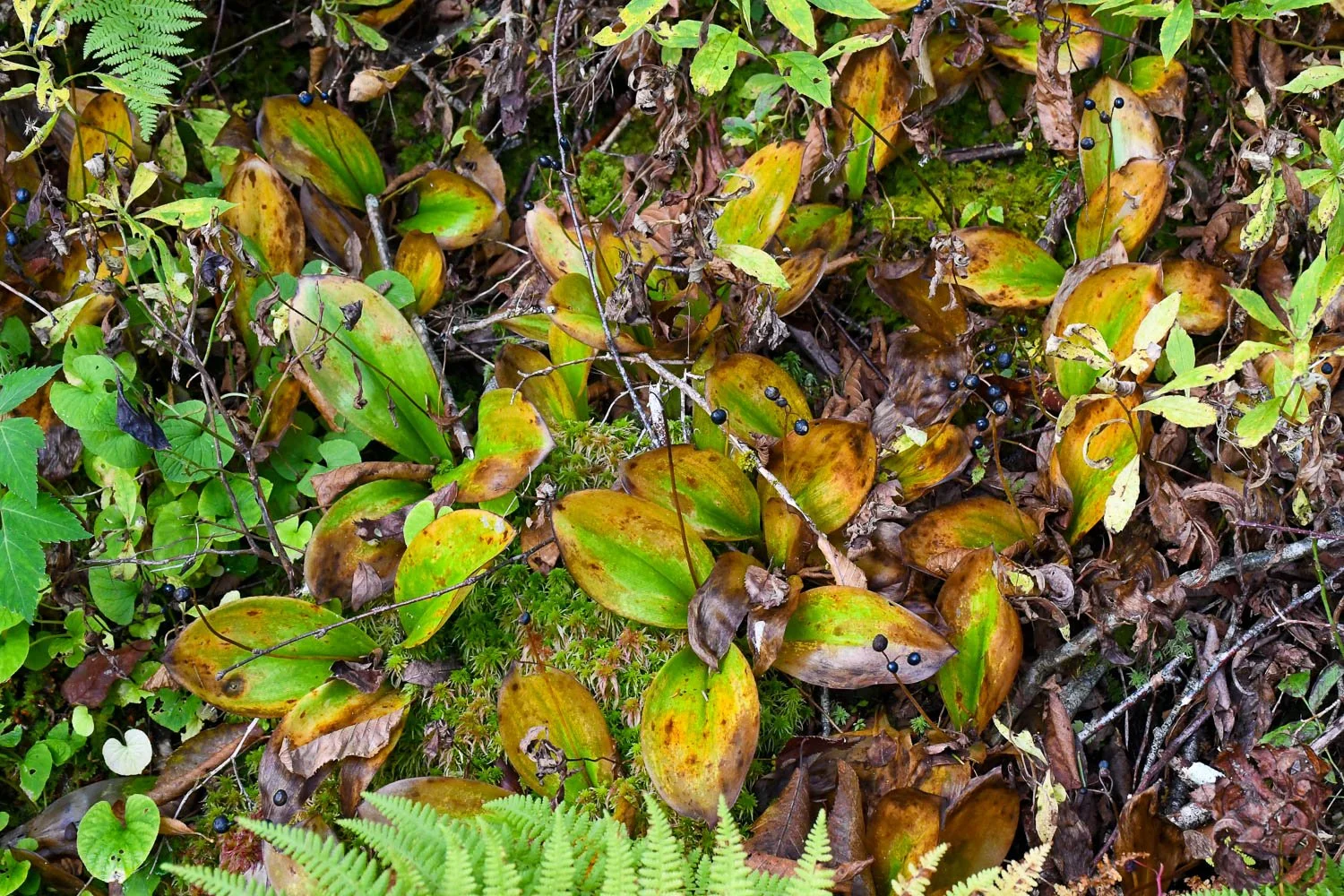
The bold leaves of Clintonia umbellulata (speckled wood lily) dotted the ground in a matrix of moss.
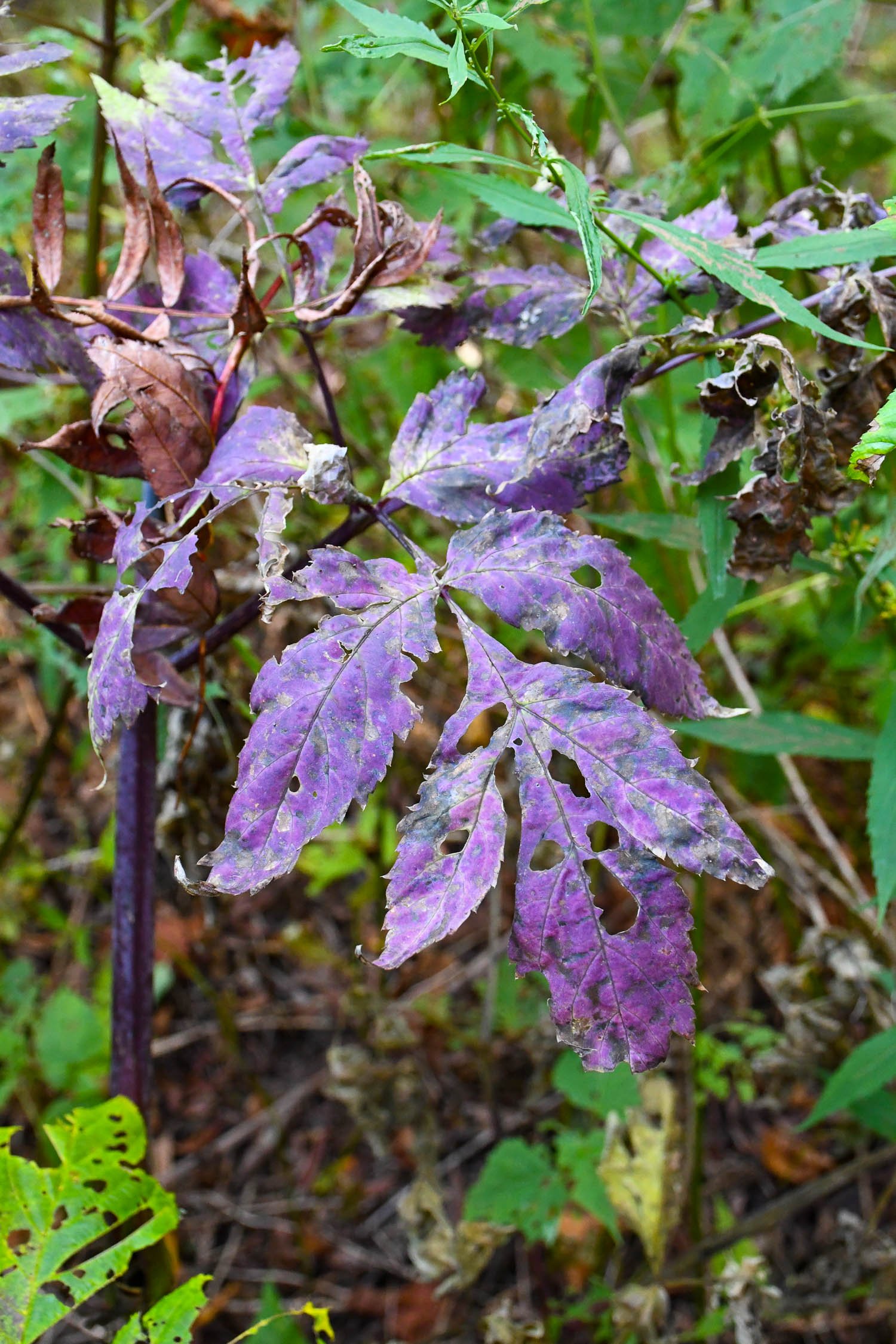
In one spot, Angelica triquinata (filmy angelica) was showing off fall color.
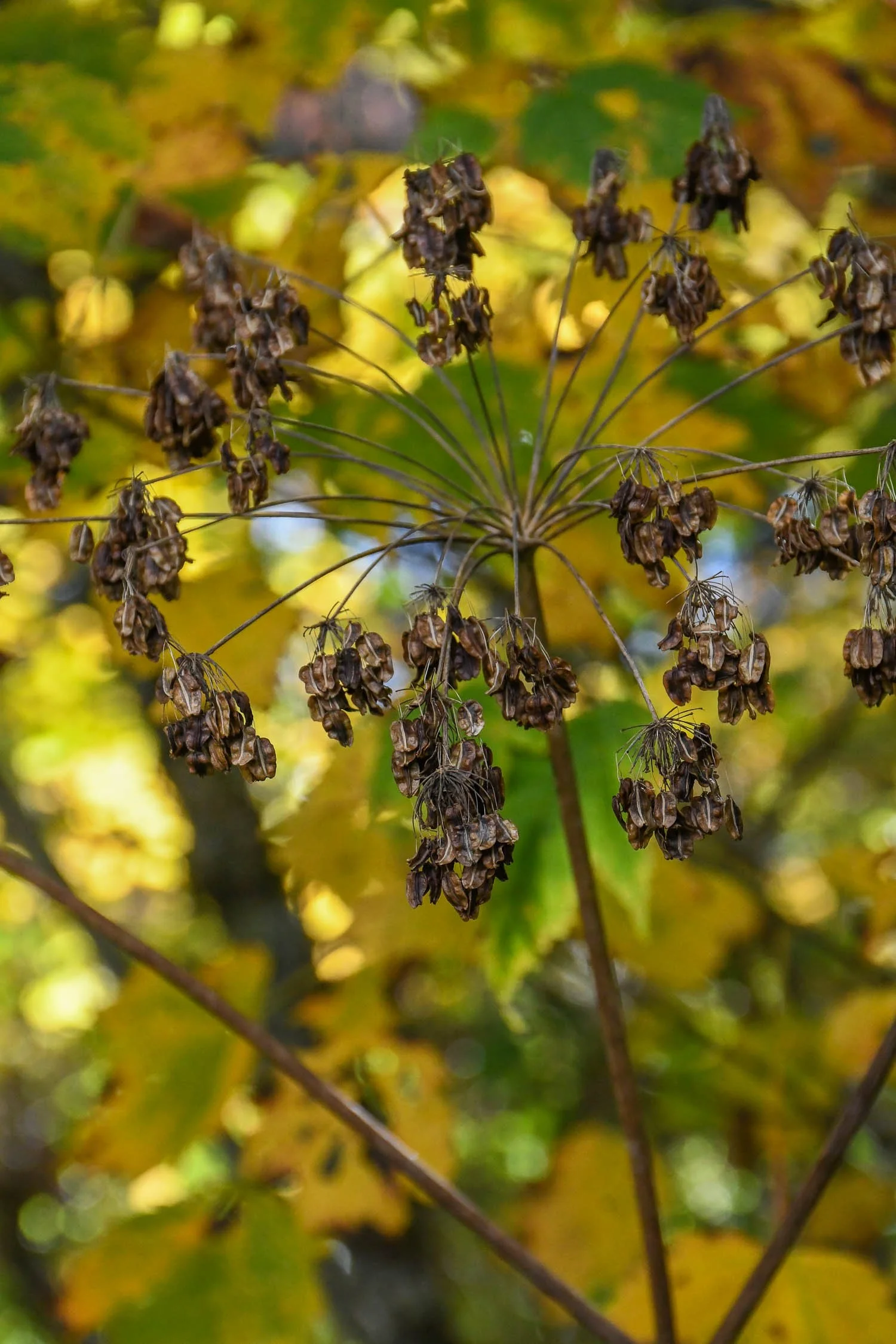
And, in another spot Angelica triquinata
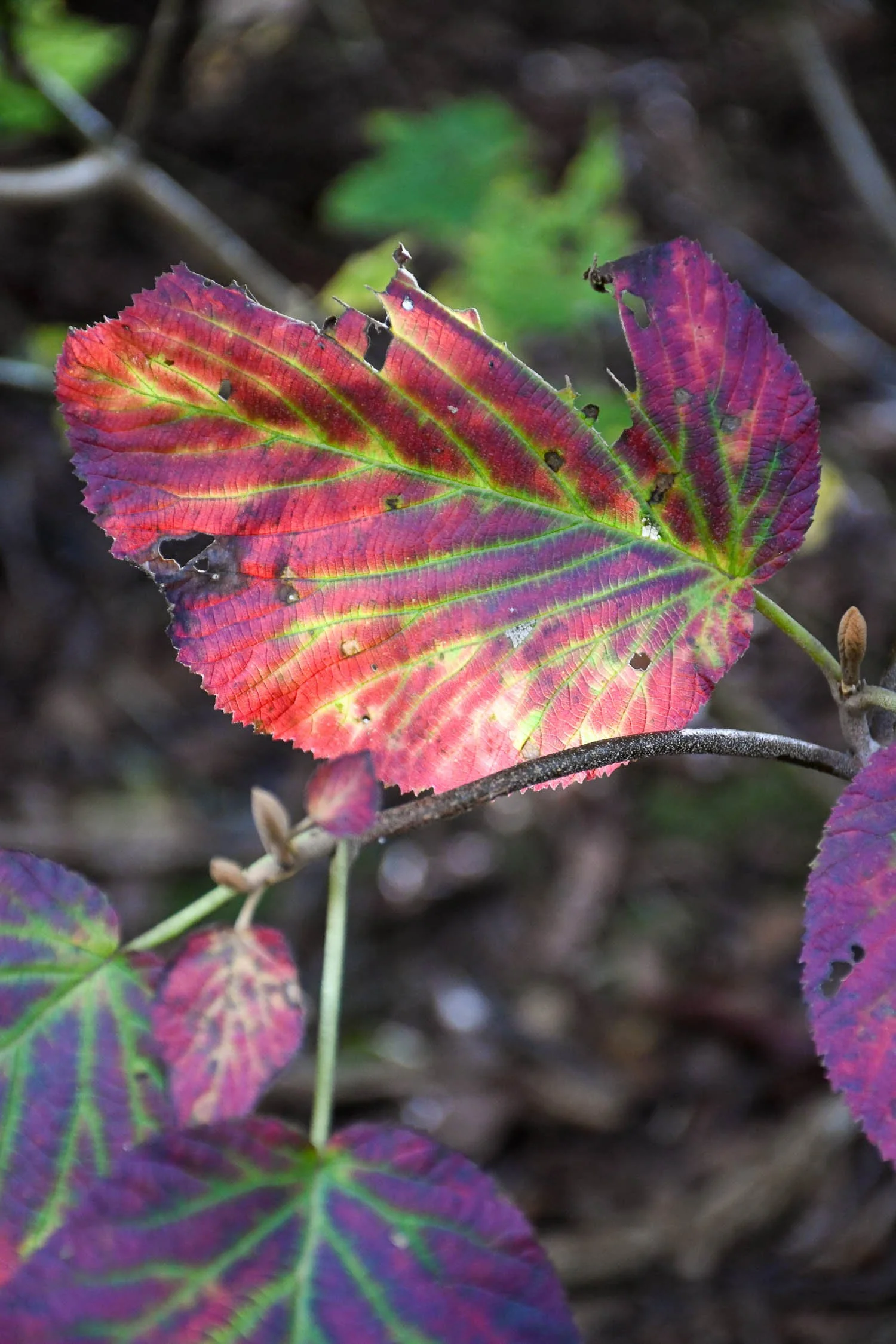
Anthocyanins appear to give this Viburnum lantanoides (hobblebush) a bit of color in their last days.
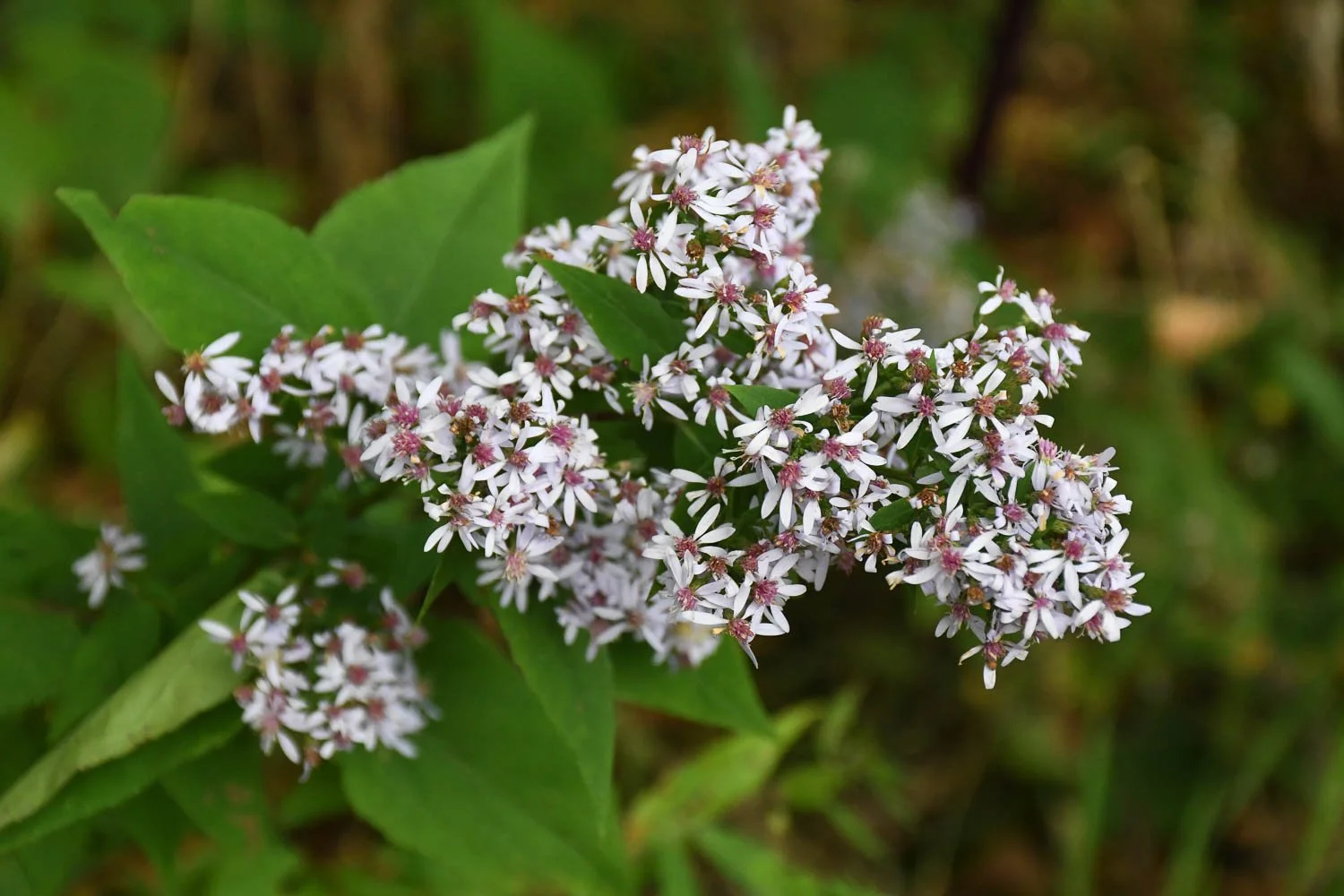
I saw an abundance of stems of Symphyotrichum cordifolium (blue wood aster) reaching towards the trail with their colorful blooms. Since the disks on this one are mostly dark pink, they indicate to pollinators they are finished flowering.
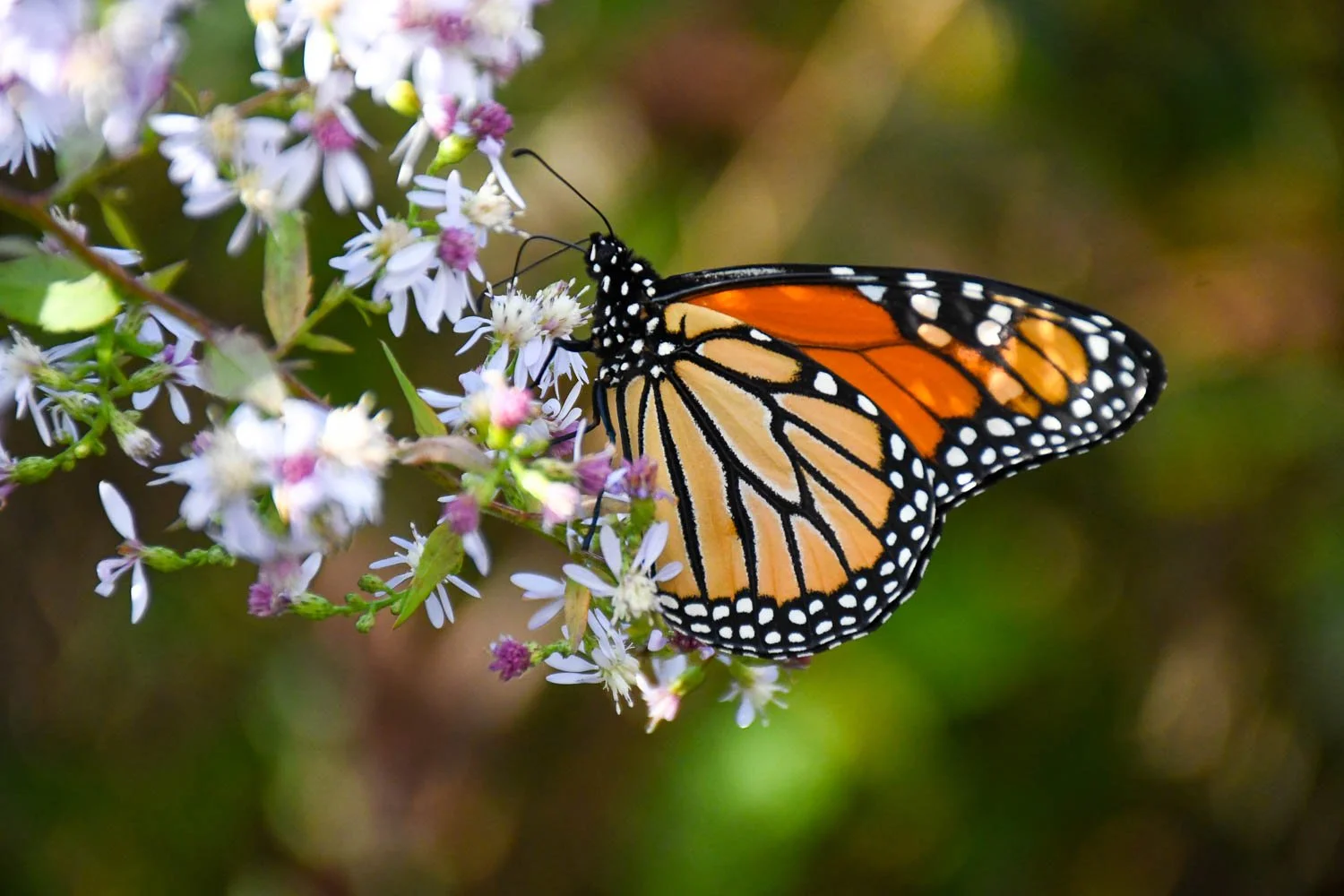
I was so surprised by the number of Monarch butterflies I saw on this trip. Many were filling up for their trip south on aster flowers.
Eventually I came to a clearing with a mostly barren copse of trees then proceeded to walk down a set of wooden stairs. At the bottom I discovered this lovely meadow.
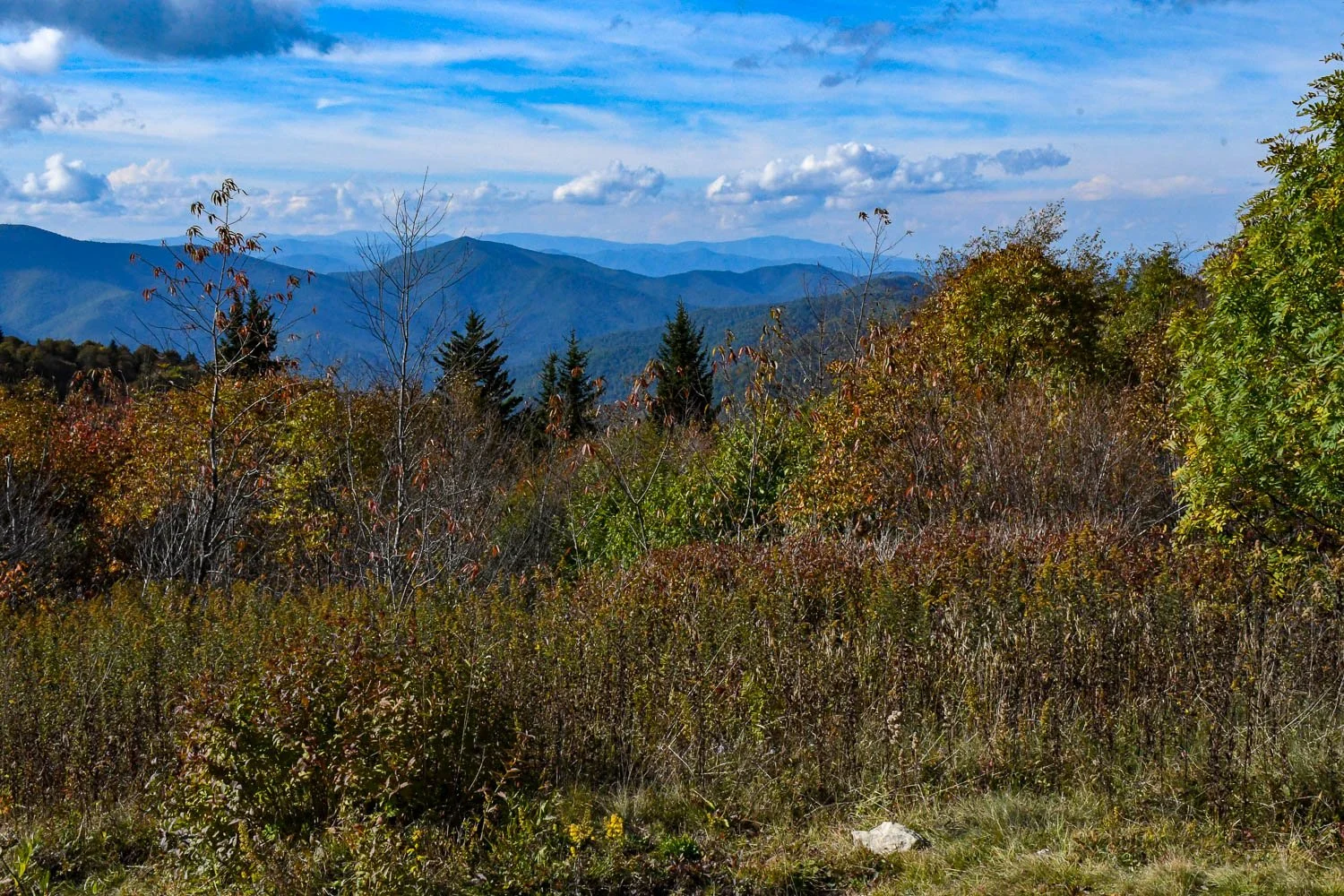
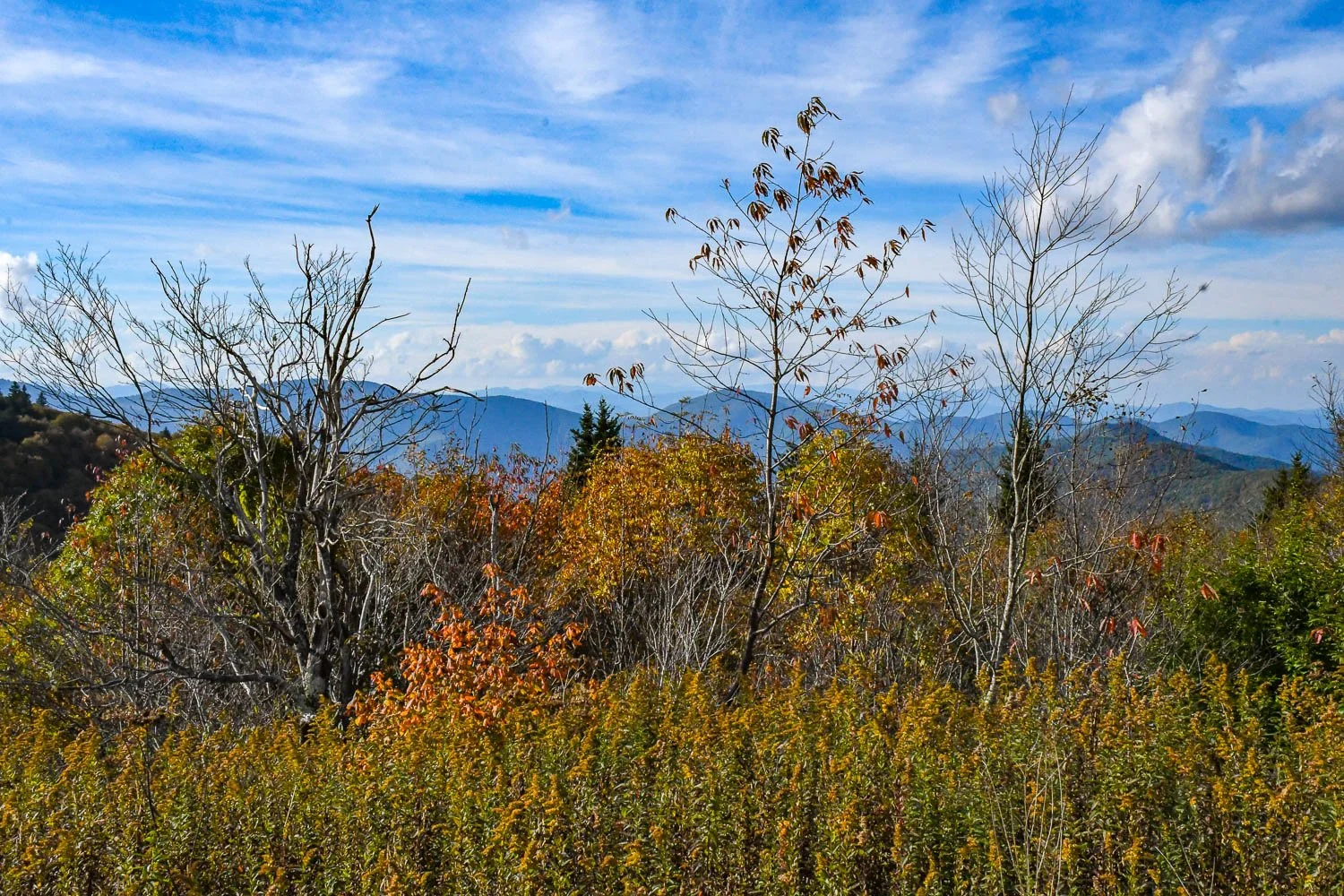
Near the top of the stairs was a mostly clear view of the Blue Ridge Mountains.
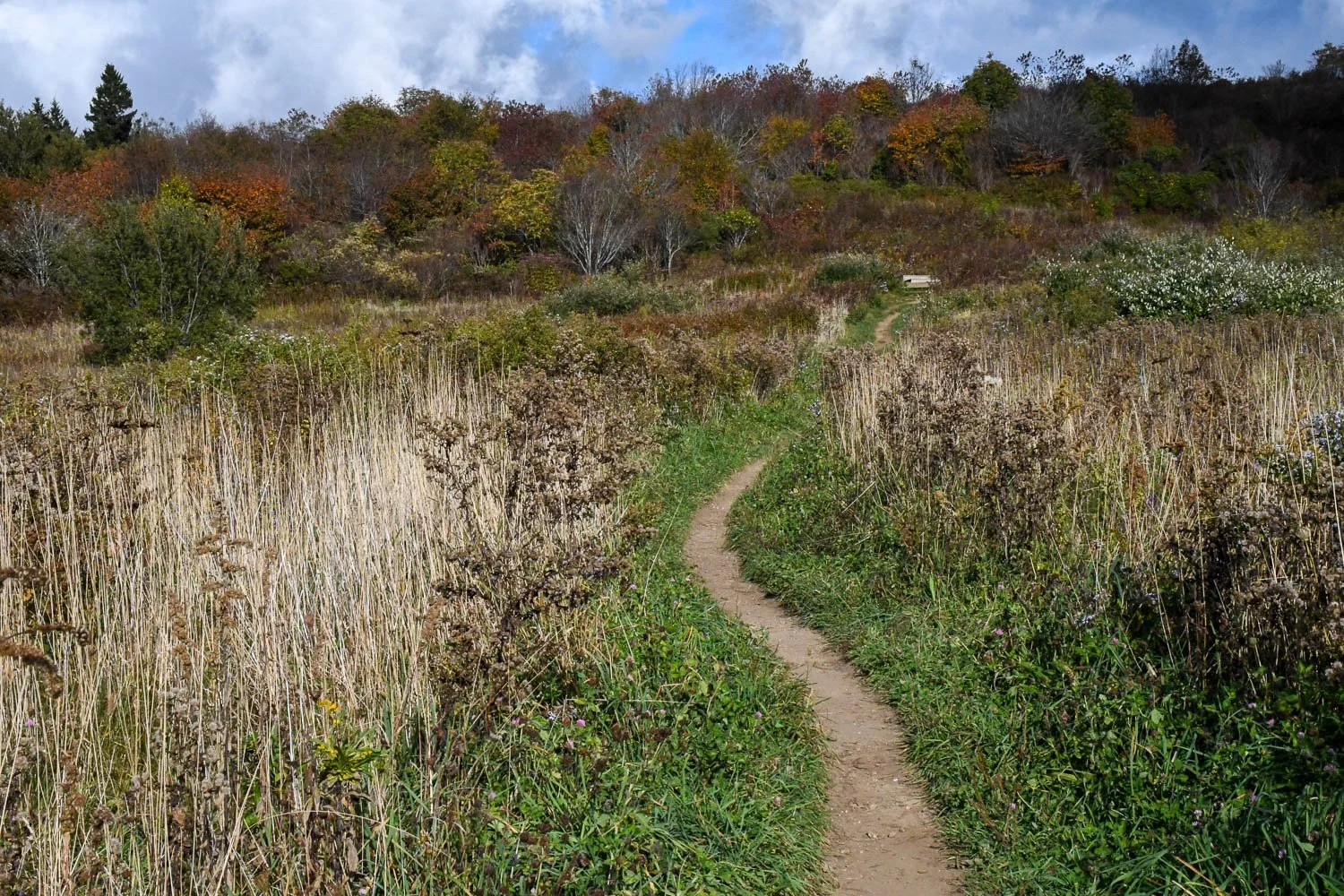
The path that leads from the wooden steps into the meadow
The meadow was a good study on edge habitat. Taller trees graded to shrubs and large perennials which faded to the shorter grassland habitat. Such transition lines can provide inspiration for our plantings, and I find they are always worth pausing to appreciate.
Along the edge Acer rubrum (red maple) showed the first hints of fall color. In one of my favorite spots a large clump of Eutrochium fistulosum (hollow joe pye weed)—probably five feet wide—was just fading from bloom but still enjoyed by Monarchs as it approached closing time.
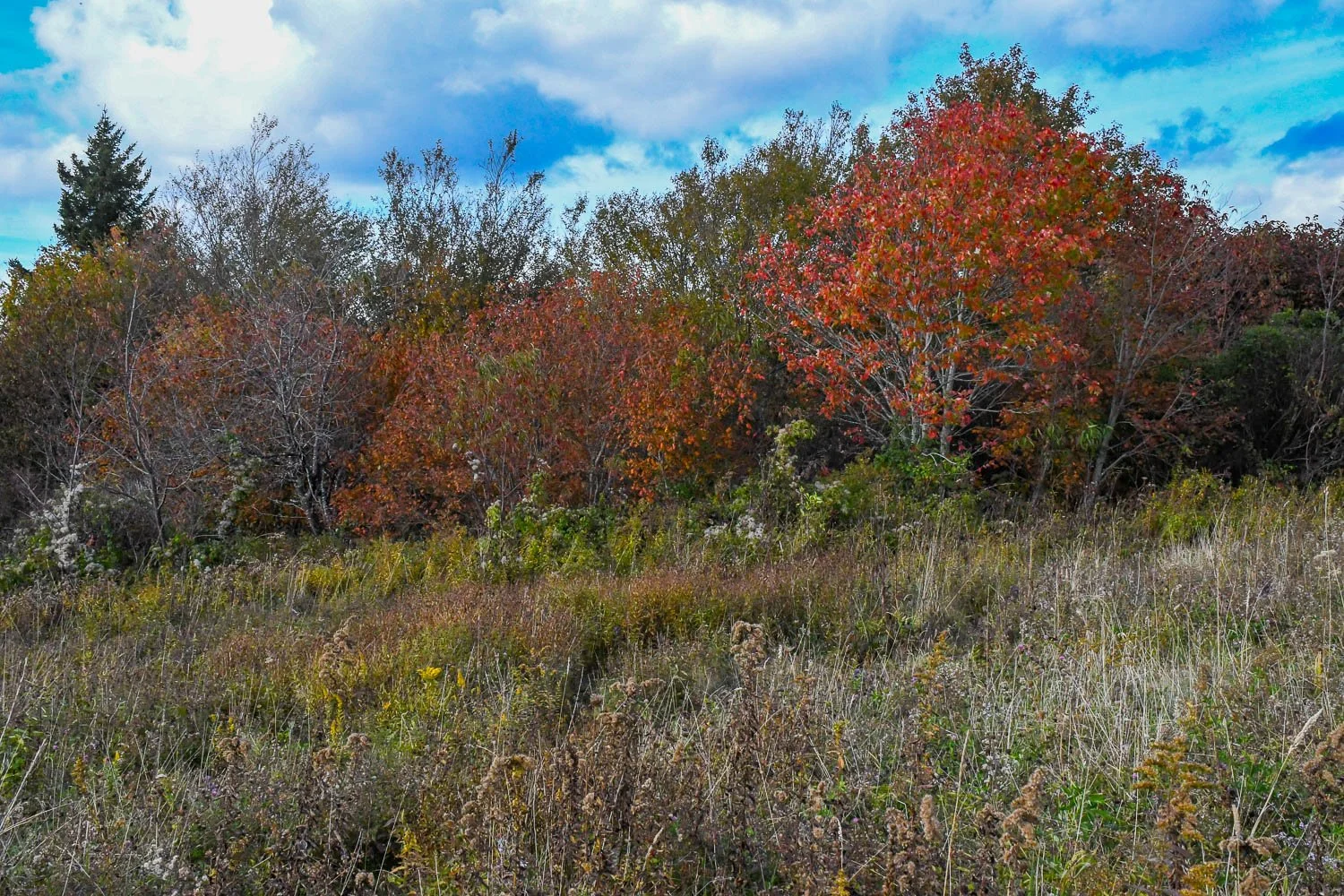
Some of the best fall color I saw on the trip at high altitudes was in this little thicket of trees.
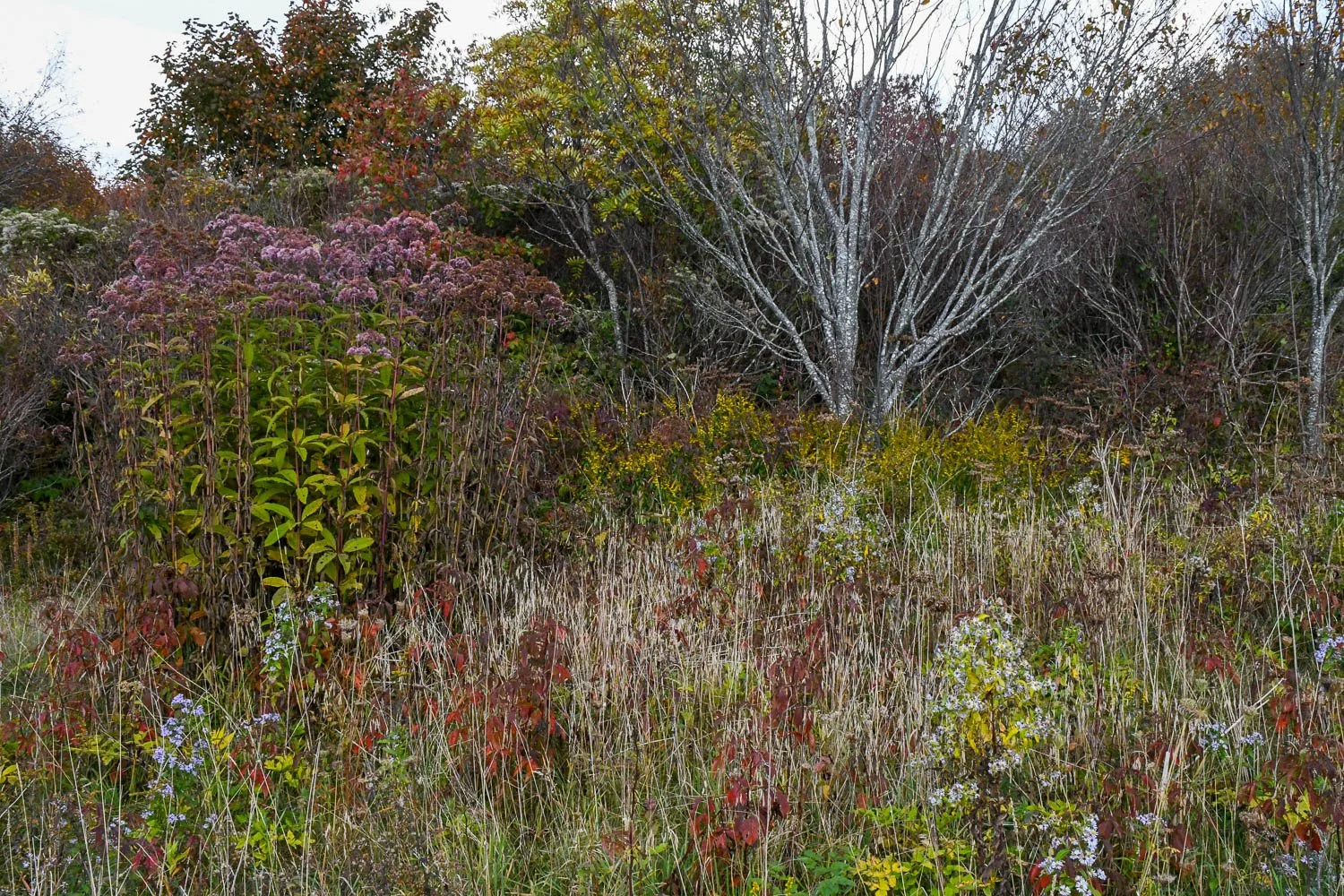
I just love the diversity in this image. The large clump of Eutrochium fistulosum (hollow joe pye weed) with Monarchs flitting about. The whitish bark on the tree behind with the skirt of Solidago (goldenrod) underneath. And, the floral diversity found in the meadow.
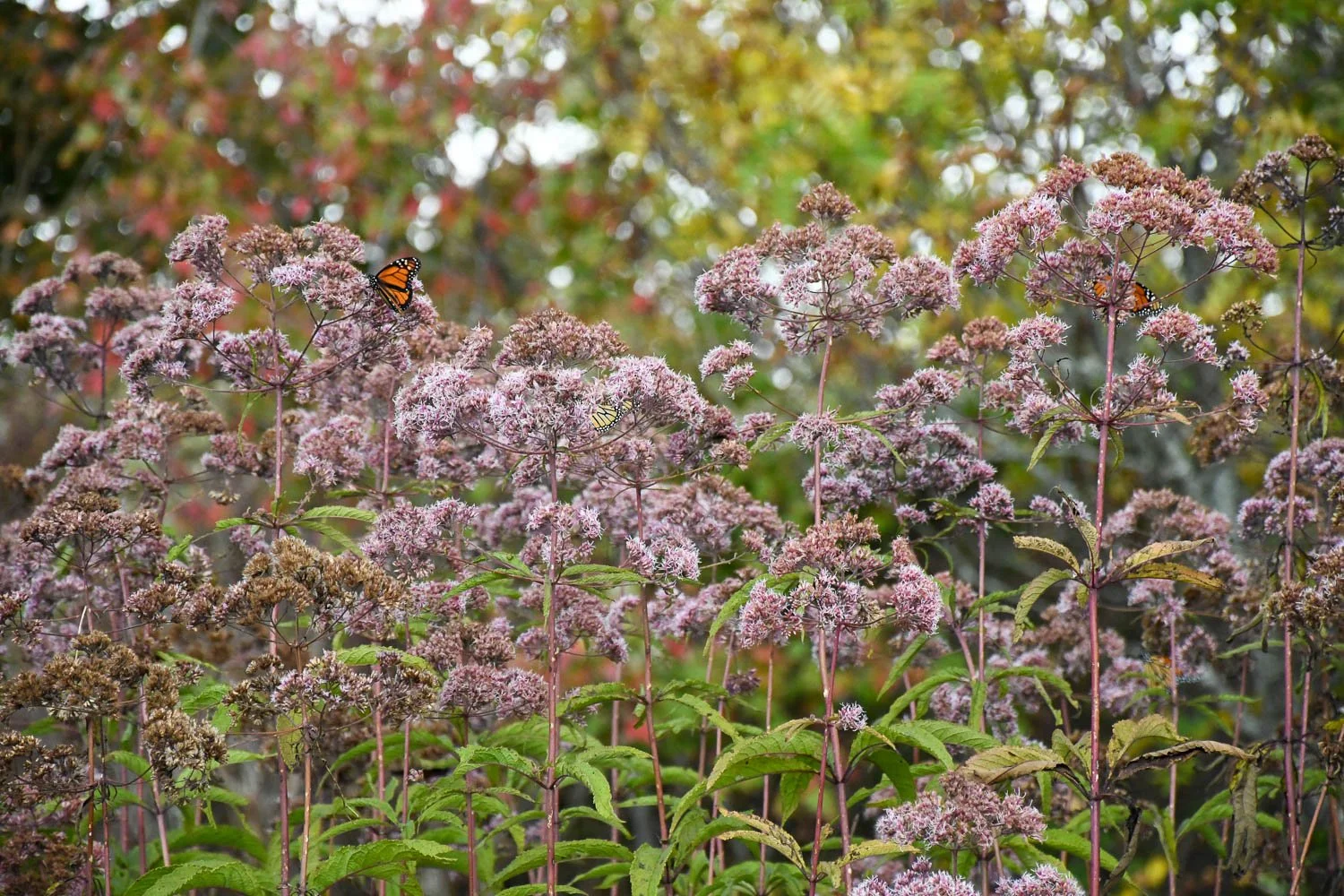
I only counted three Monarchs in this image, but trust me. There were more at other times!
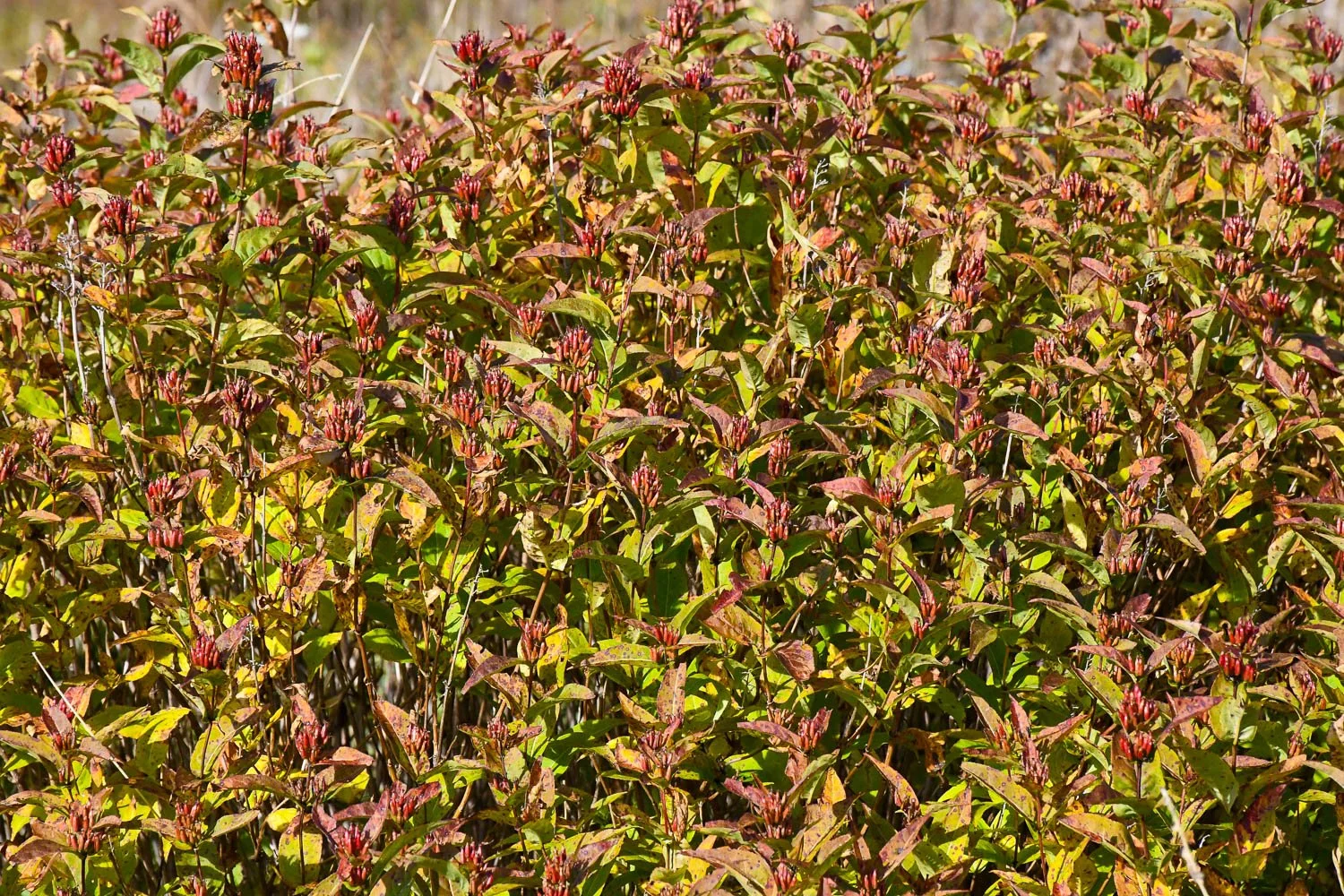
One of the colorful shrubs found along the edge of the meadow was Diervilla sessilifolia (southern bush honeysuckle). It’s an underused member of the honeysuckle family.
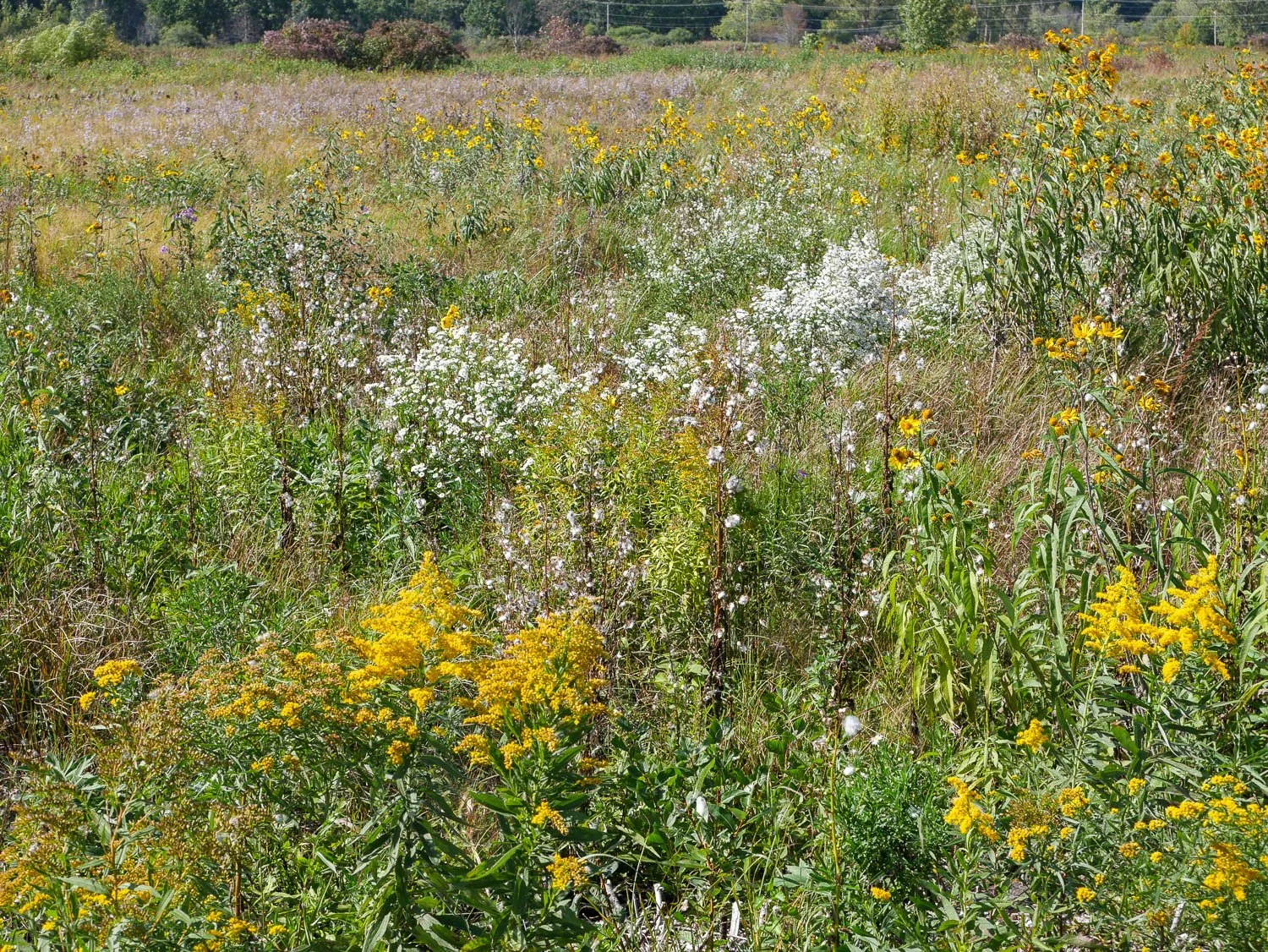
Sure, this grassland was mostly senesced, but there were still some jewels tucked in the faded grass blades. Gentianella quinquefolia (stiff gentian) was everywhere, asters dotted the meadow with colors, and blazing star spikes still stood strong. I just stood and enjoyed the tapestry of late-season wildflowers as the bright sun was occasionally broken by billowing cumulus.
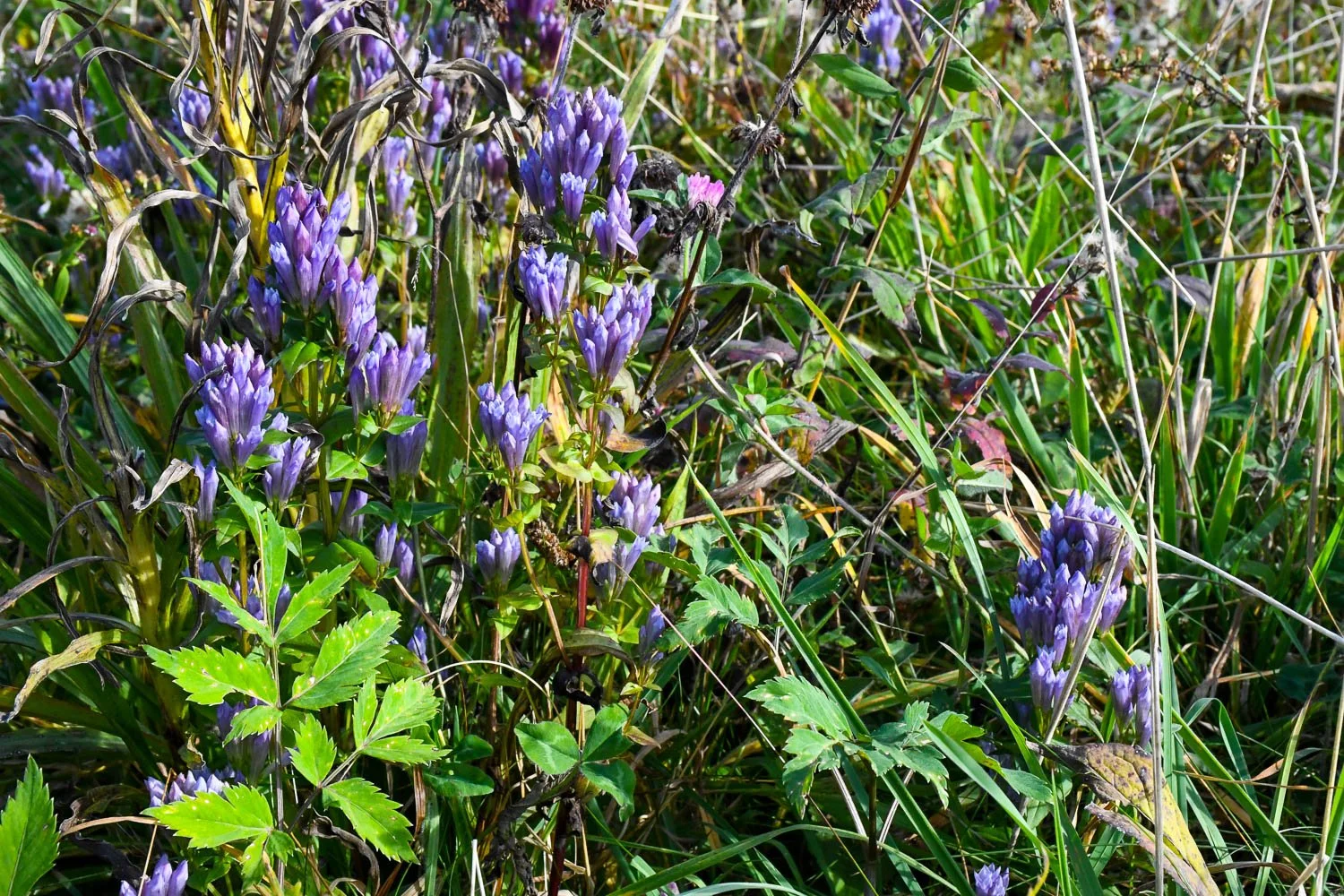
I hadn’t seen Gentianella quinquefolia in almost 15 years, and it was good to see this low-growing ruderal scattered amongst the grasses.
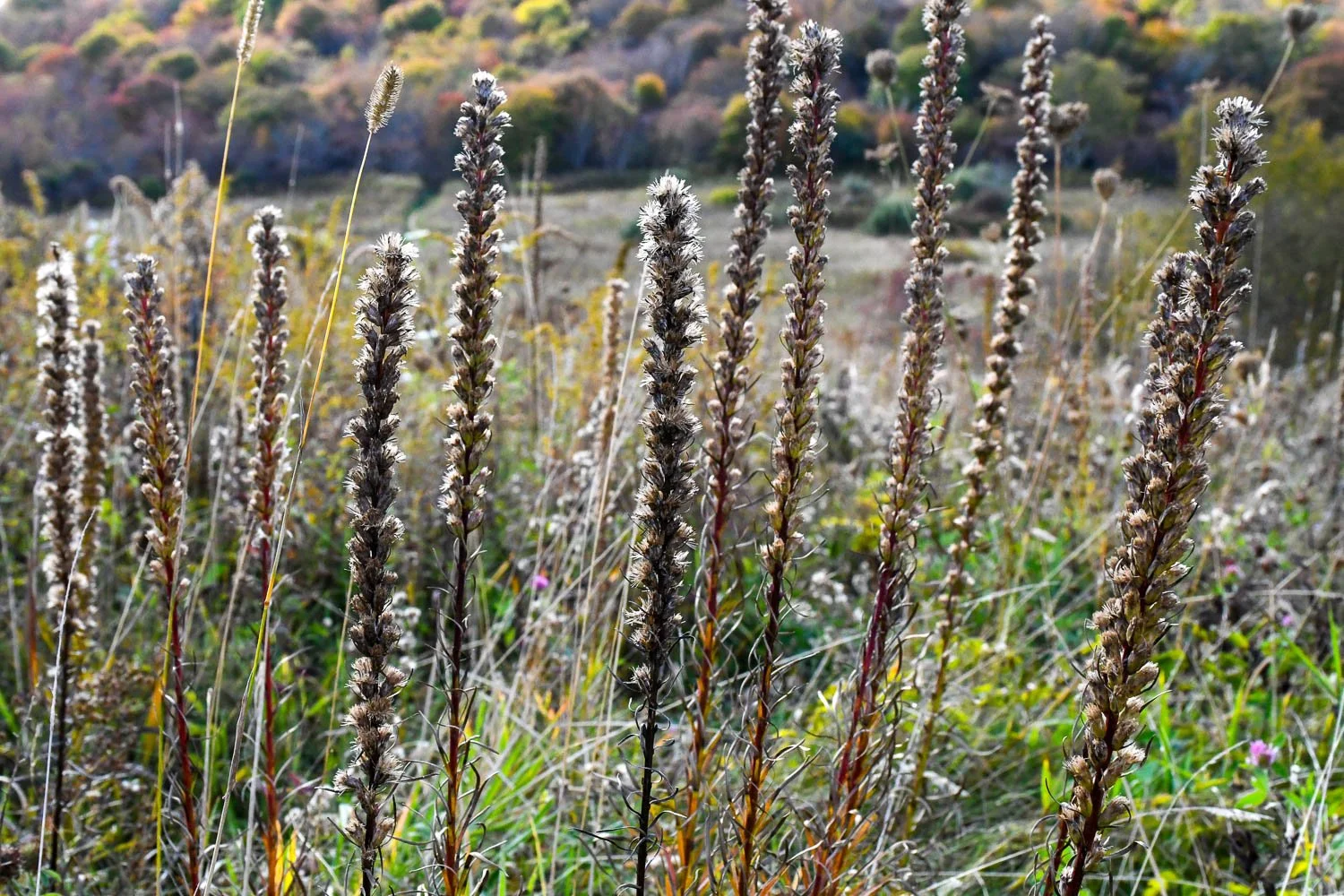
The pappi on Liatris spicata (dense blazing star) are so great for catching light.
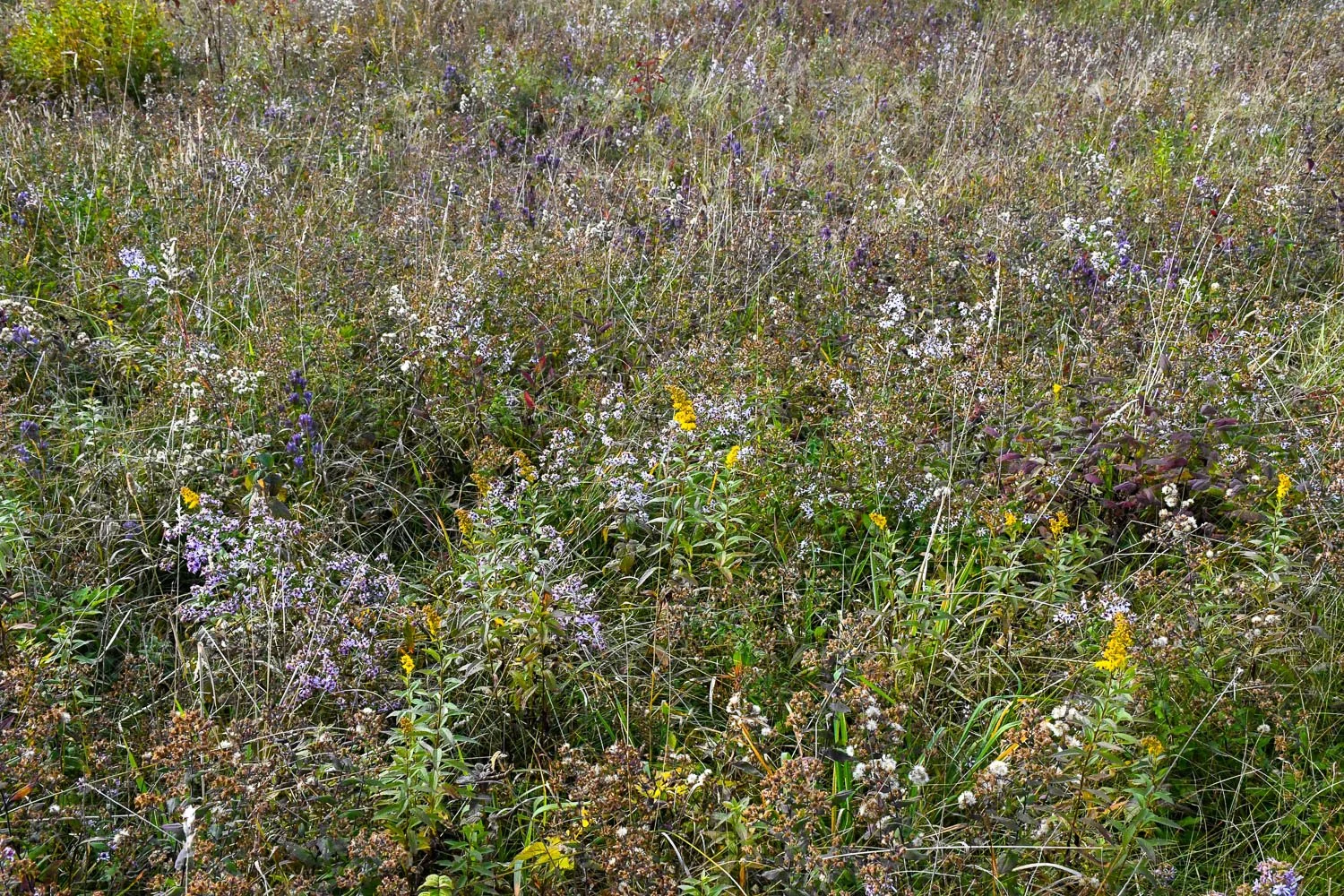
A smorgasbord of asters and goldenrods in this high elevation meadow provides great late-season color.
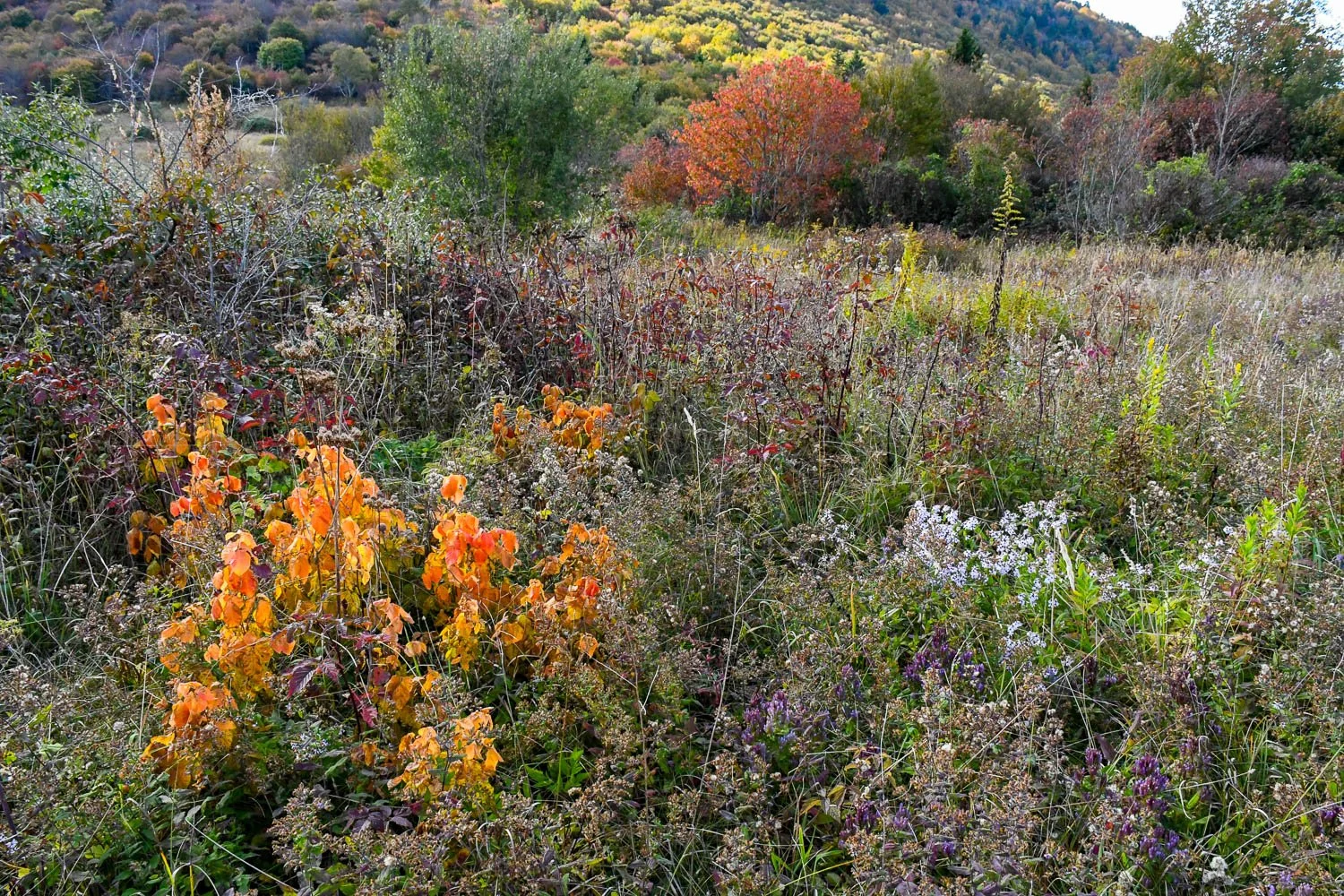
You may not know that Toxicodendron radicans (poison ivy) can have quite striking fall foliage!
With the day waning, I made my way back to the parking lot filled with sights and thoughts of the mountains. Such places are good for the soul and for learning to see how plants grow in the wild to bring those ideas back into the garden.
KEEP GROWING