Tridens flavus | purpletop
If you feel your naturalistic plantings are missing something, it’s probably more grasses. Join us for an engaging one hour session on Designing with Grasses on September 21, 2026 at 6 pm CDT!
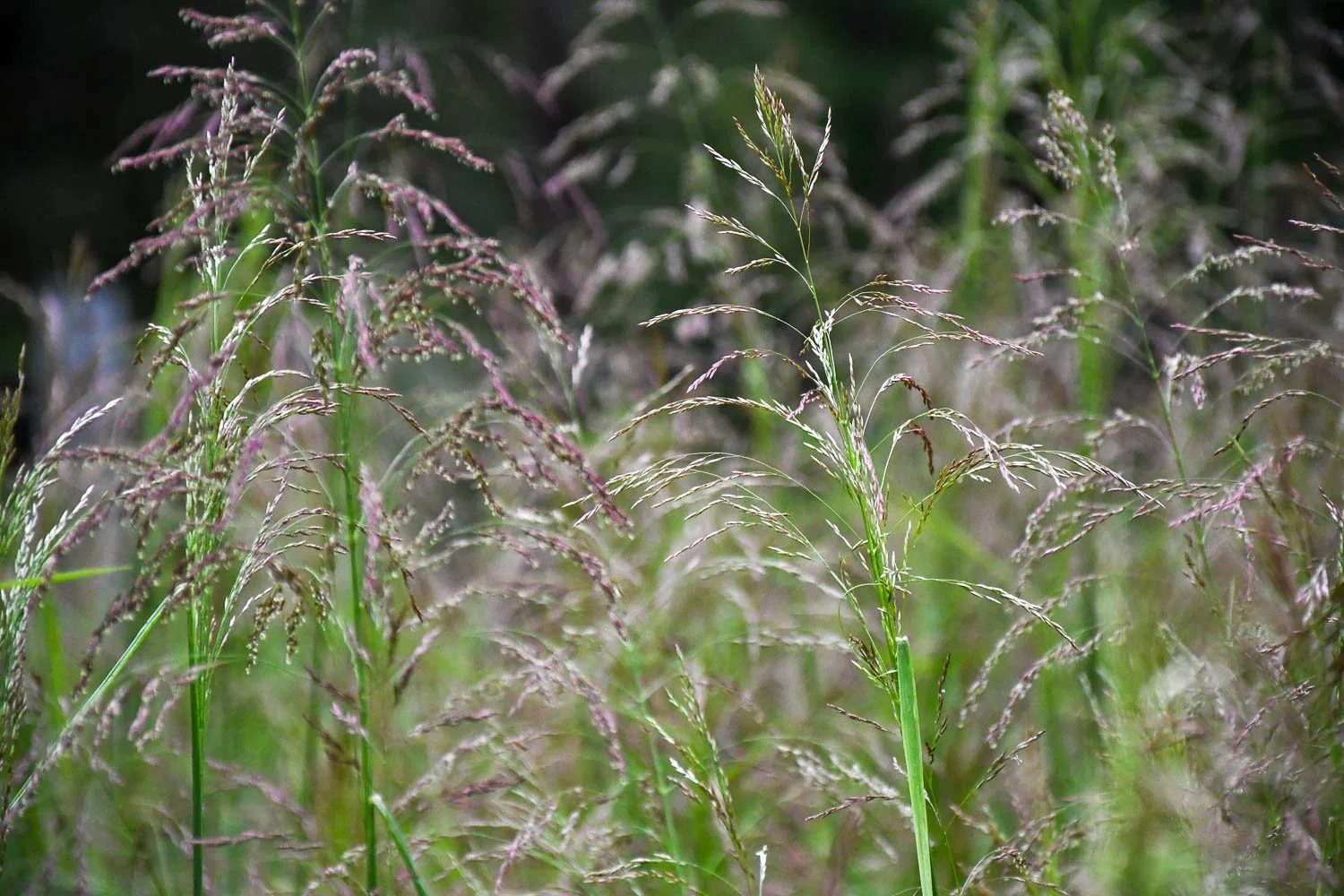
One of the highlights of autumn here in East Texas is seeing Tridens flavus (purpletop) in bloom on the roadsides. They have one of the prettiest grass inflorescences. Sure I can appreciate a plant here and there, but hundreds or thousands of purpletop panicles create this burgundy haze that is stunning.
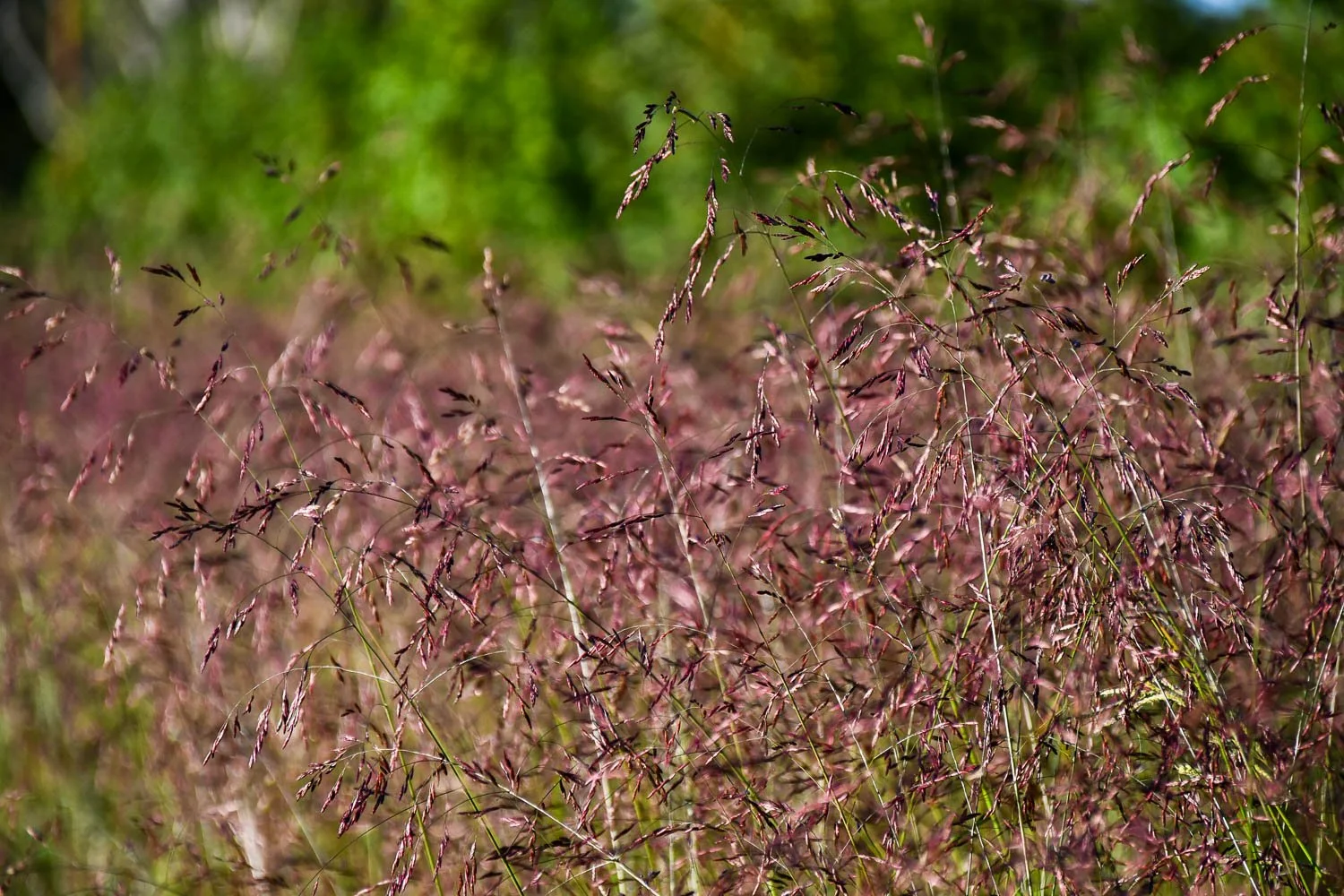
The burgundy haze of Tridens flavus (purpletop).
For years I've told myself I’d love to have that effect in our garden. We've had a clump or two on the back fence row, no doubt seeded in from the birds. To increase their numbers, I made time one Sunday afternoon last fall to collect a good batch of seed of this wonderful native grass. I sowed them back in the spring in a tray and then planted them in my new trial bed. I spaced and placed them assuming they would top out somewhere around waist high since that’s the height I’ve observed.
Imagine my surprise to find the blooms at eye level! They have amassed so much vegetative growth this season. They started as small 1.6 × 1.6 × 2.7 inch plugs planted in April, and they are now taller and fuller than some of my Panicum virgatum ‘Northwind’. I even cut a few purpletop clumps back in the summer to mimic the roadside mowers, and I can't even tell I disturbed their growth. The plants might be six inches shorter. Might.
When I think why, my mind goes to the site. I brought some soil in from another part of the yard to raise the area up a bit, and I mulched it to keep weeds down. However, other plants in the same space don’t seem beefier than normal. I also guessed that Tridens flavus might be a C4 grass, and with a bit of research, I discovered I was right. C4 grasses have a modified photosynthesis pathway that allows them to grow better in heat and drought than the majority of other plants that have C3 photosynthesis. That’s why many of our warm-season grasses make great planting candidates for a warming world.
I still enjoy their blooms even if I have to look up a bit. In the mornings the sun shines through the trees and irradiates the burgundy panicles. And, I find the low rays of the sun really bring out the flower colors in the evening. It is fun to grow a plant yourself and watch it change daily—the flower pushing out from the culm or the stamens dangling one day and then fading to tan later as the seed ripen. And, touching the seeds leaves a greasy feeling in your hand, hence the other common name grease grass
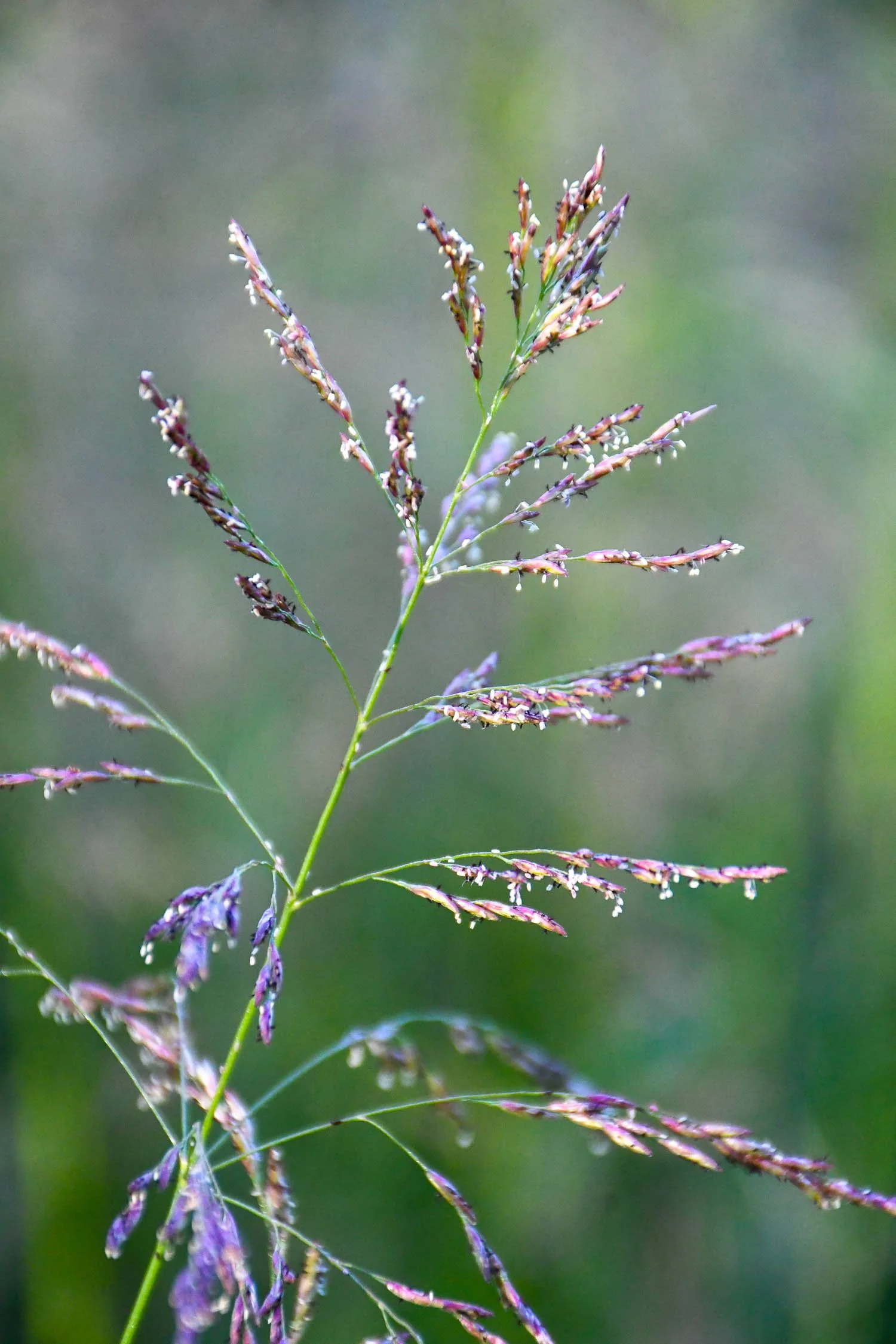
A close up of a Tridens flavus (purpletop) panicle reveals the dangling stamen.
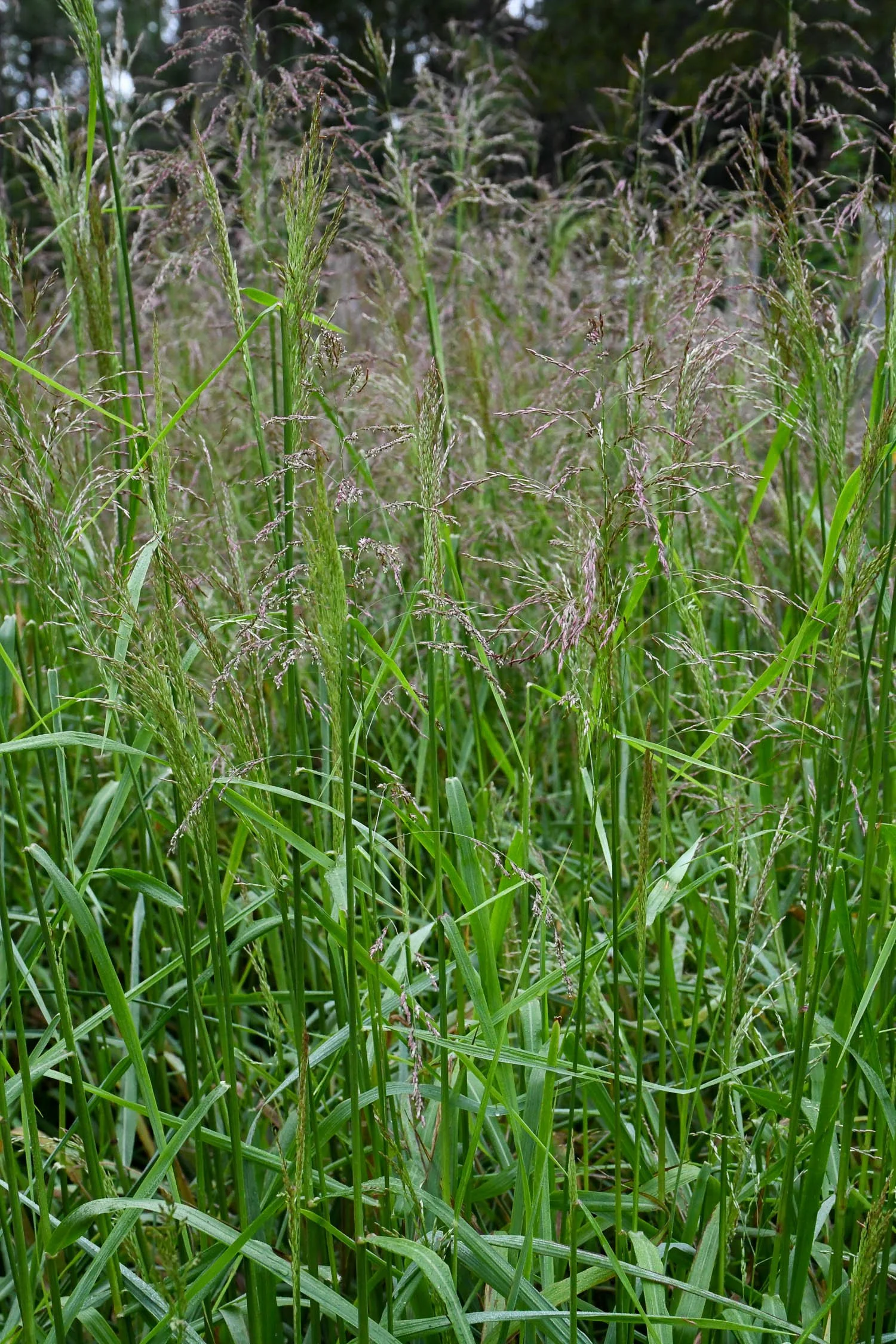
Tridens flavus has produced so much vegetation this year.
Plants on the roadside have also just begun to flower, but the hard cutback in mid-July from the mowers keeps them much shorter. But, for both my plants and those in the wild, their blooms are all roughly the same level, and that creates the appearance of this burgundy band across a space.
Another reason I'm thankful for having this patch at the house is because most of the flowers will be mowed again when the roadside crews come through soon. One spot I love to stop at has been mowed all summer by the property owner. If only I could share that the grass is a host for the Common Wood-Nymph and skippers. Or, that the seeds are enjoyed by birds and mammals alike. Maybe that would sway him or her.
The only issue I’ve seen so far is the foliage has a bit of browning, but it’s not that noticeable. And, I’m worried that they may flop over with the next good rain; however, they made it through Tropical Storm Edouard with no issue. I regularly see seed heads persist into the winter, so maybe their lodging is nothing of concern.
These experiences I had with purpletop must be considered when we all bring a new grass into our gardens. Questions on height, seasonality, warm-season or cool-season, C3 versus C4, disease pressure, and more must be considered. And, how will they be used?
I’m already thinking of where to use this grass in my designs next year. The front of the patch needs more tall grasses, and it will play well with the Pancium virgatum ‘Northwind’ already there. I’m envisioning having alternating groups of each grass. Andropogon virginicus (broomsedge) has been mostly lost from the orchard thanks to its ruderal nature, and I believe purpletop would be a great longer-lived replacement. I also want to sow seed around the periphery of our property to really capture that burgundy color that the flowers produce.
I’ll need many plants for that. With saving more seed and growing my own, I’ll have easy access to plenty more seed for next year.

Keep Growing