What do you do when a plant you didn’t sow shows up, looks great, and offers real ecological value? I’ll answer that and more in Designing with Short-lived Plants, 20% off through November 16!
It’s funny, I might not have noticed the abundance of life on a plant if I hadn’t been spraying to kill a pest.
My Swiss chard lately has been plagued by southern beet webworms, so much so that its appearance a few weeks ago resembled Swiss cheese. So, a night or two each week I’ve been donning my headlamp, mixing up some Bacillus thuringiensis subsp. kurstaki (Btk), and heading out to the garden after dark to control caterpillars on our fall vegetables. I like to spray after the sun sets, because UV light from the sun reduces the viability of the bacteria. And, I figure that since the caterpillars are mostly eating in the night, it’s a perfect time to apply.
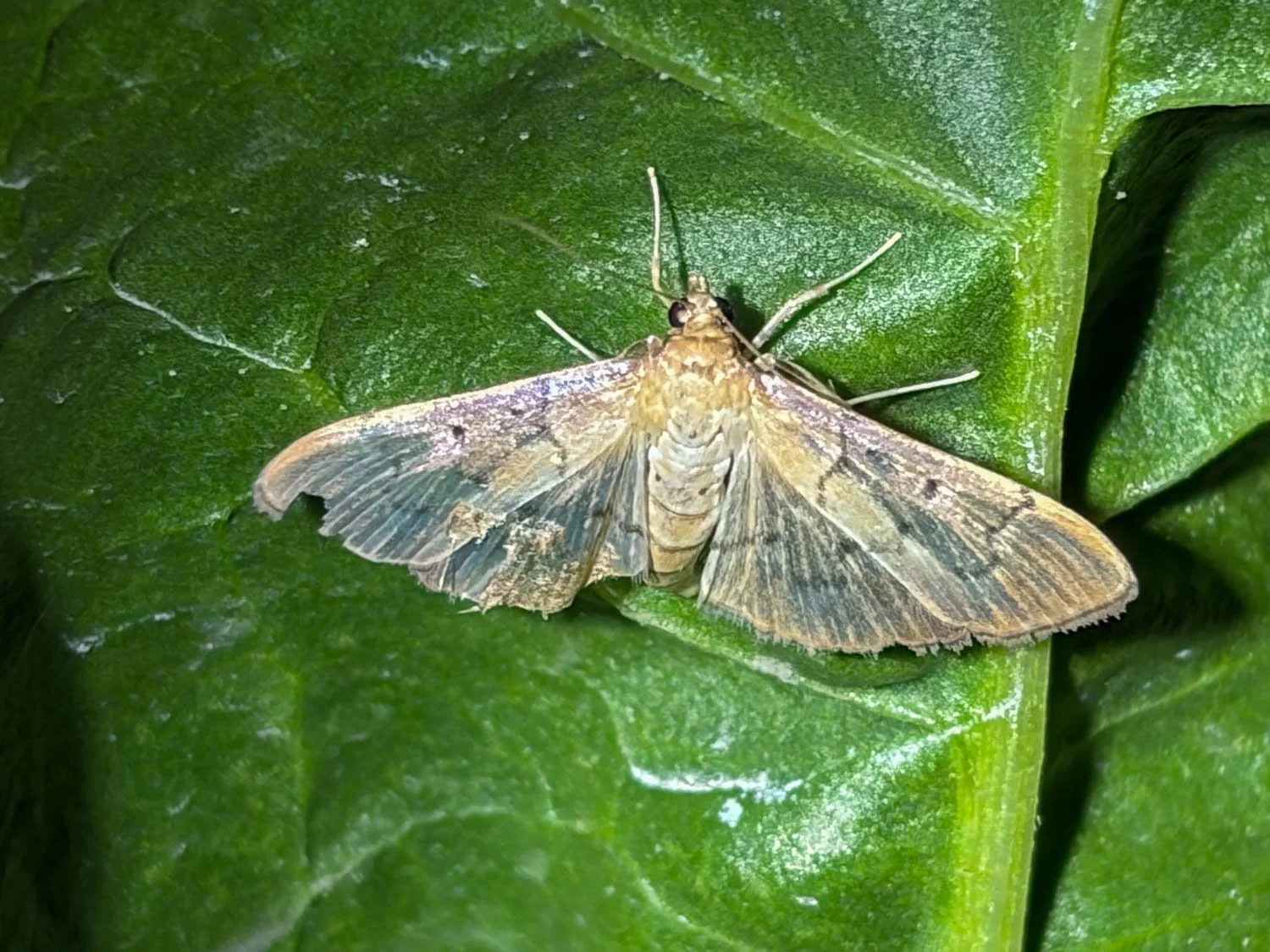
The culprit that started it all—an iPhone camera mugshot of Southern Beet Webworm Moth
I’ve been trying to spot the troublemaker laying eggs, and anytime I see a moth fly by the Swiss chard, I home in on it with my headlamp. But, this week when my light just happened to shine over a Eupatorium compositifolium (yankeeweed) a few feet away, I was taken aback. Over 50 yellowish-red eyes the size of minuscule diamonds shined. I walked over to investigate further, and I was stunned to discover dozens of moths that were partaking of the floral feast. I never knew this aster family member attracted this much activity at night.
I immediately pulled out the phone and tried my best to align the lens with the headlamp to photograph what I was seeing so I could identify them later on iNaturalist. Feel free to correct misidentifications below.
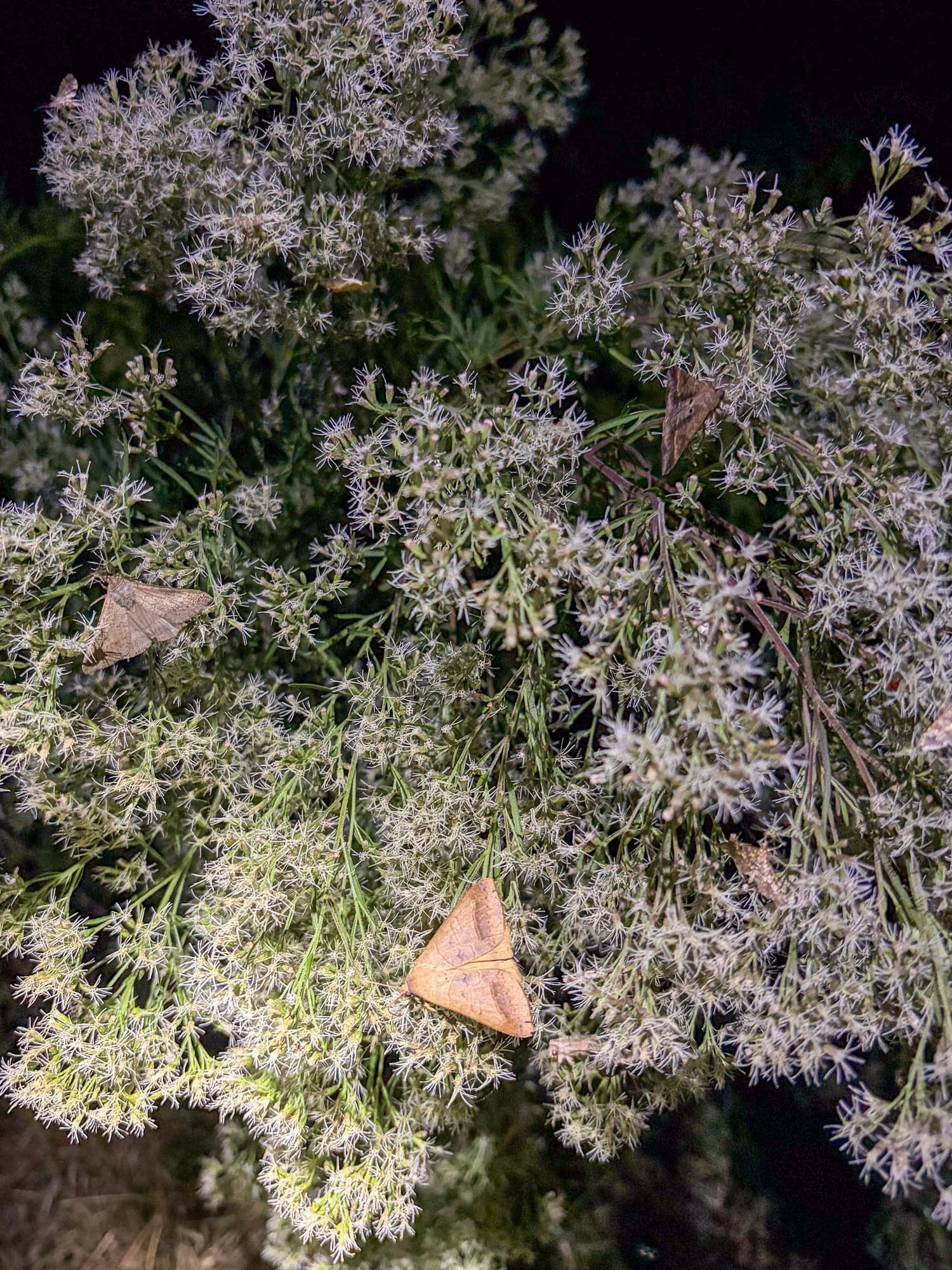
How many moths can you count? (I see at least 9!)
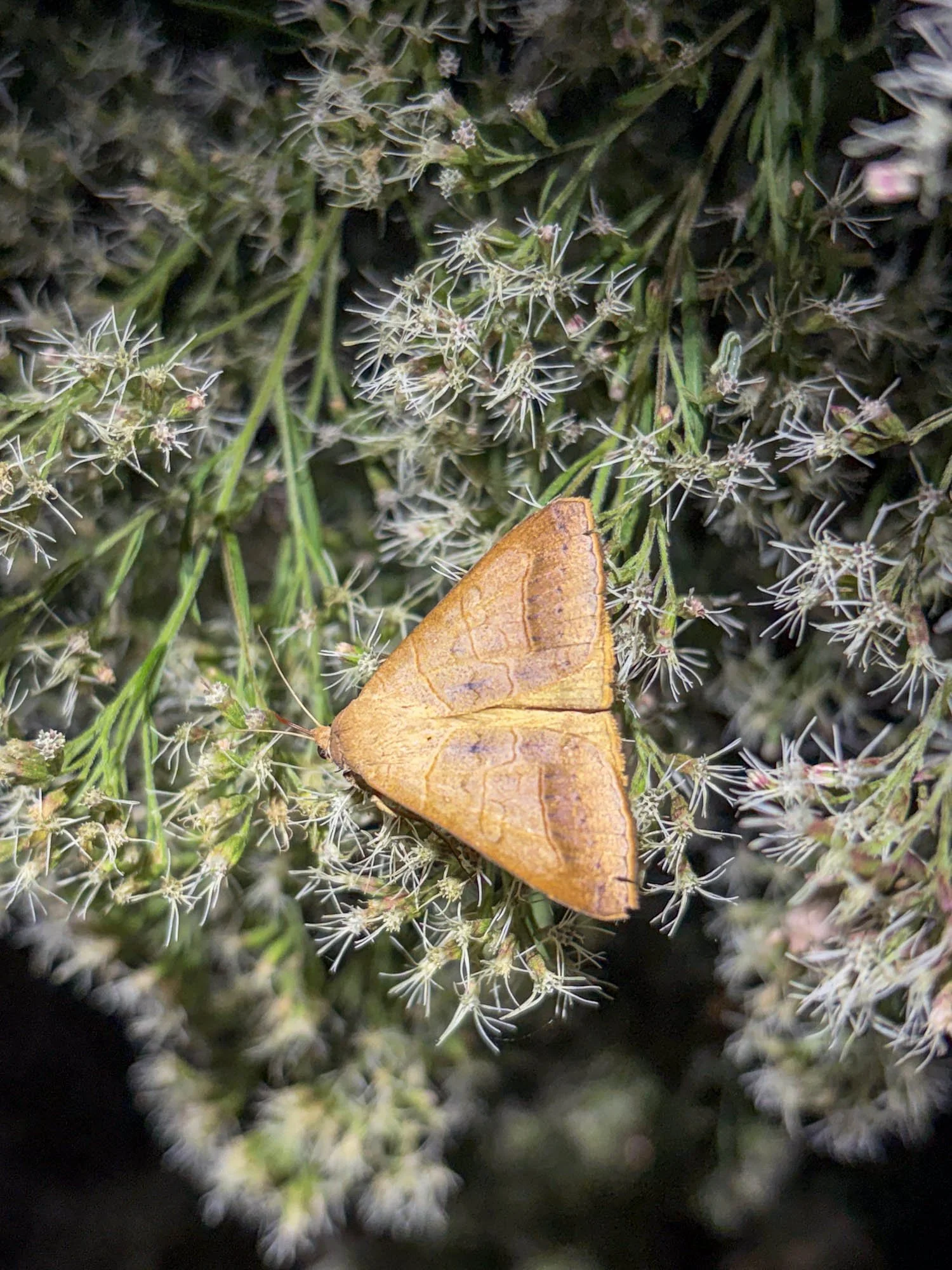
Look at this beautiful Withered Mocis! The triangular shape is so striking.
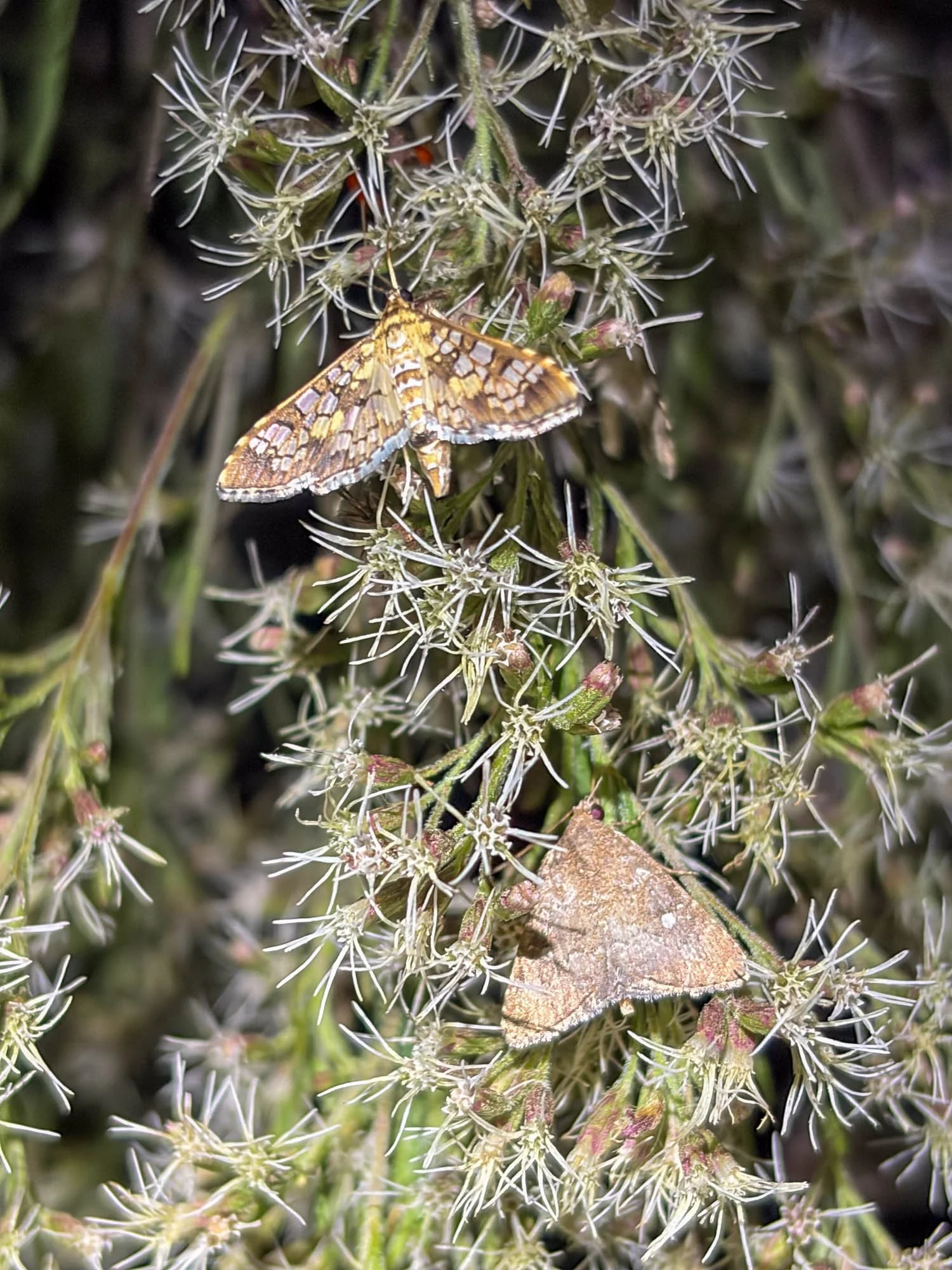
Stained-glass Moth and Eight-spot Moth enjoying the flowers of Eupatorium compositifolium.
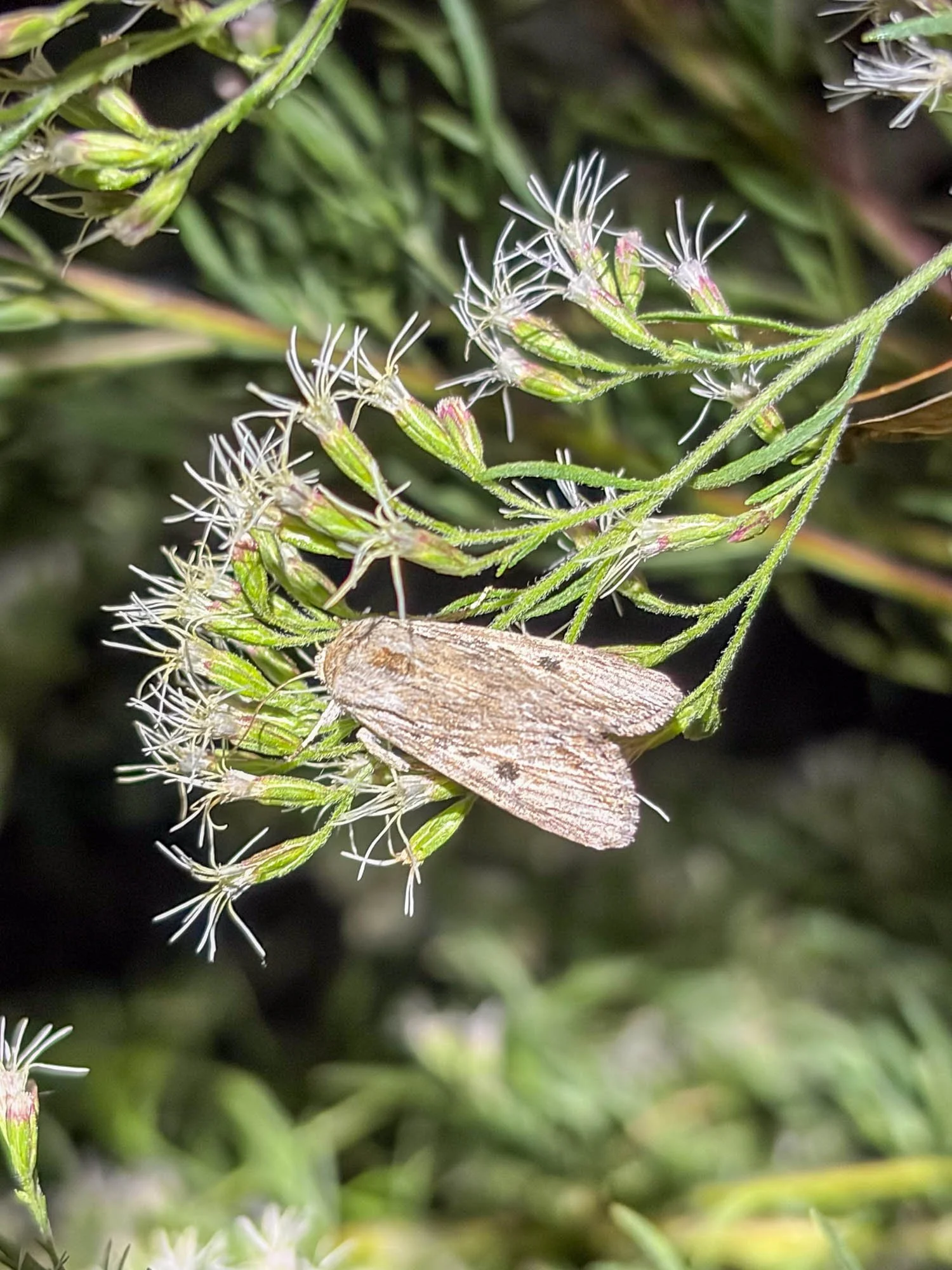
Curses. Not all moths are desirable. Southern Armyworm Moth is a consistent pest each fall.
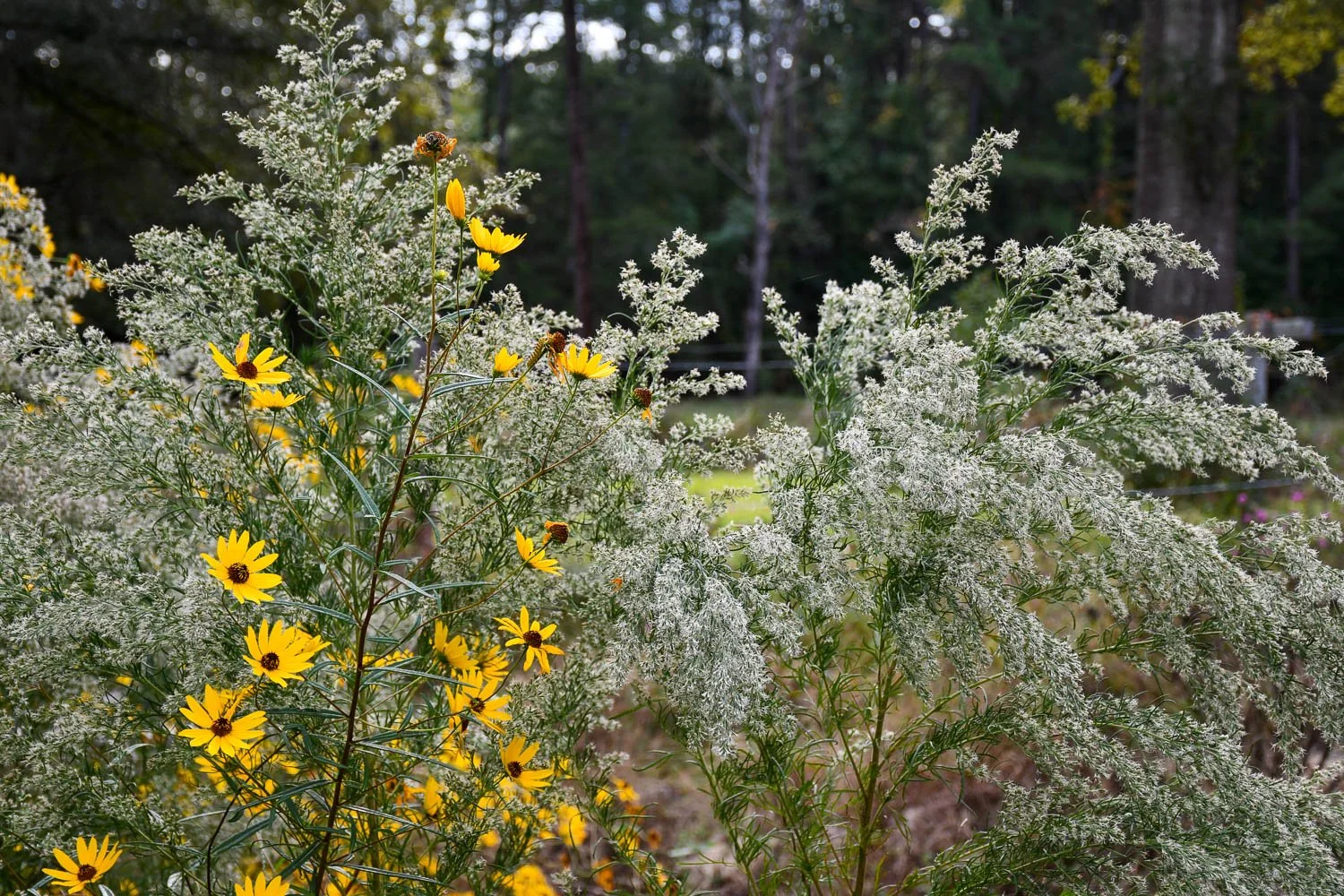
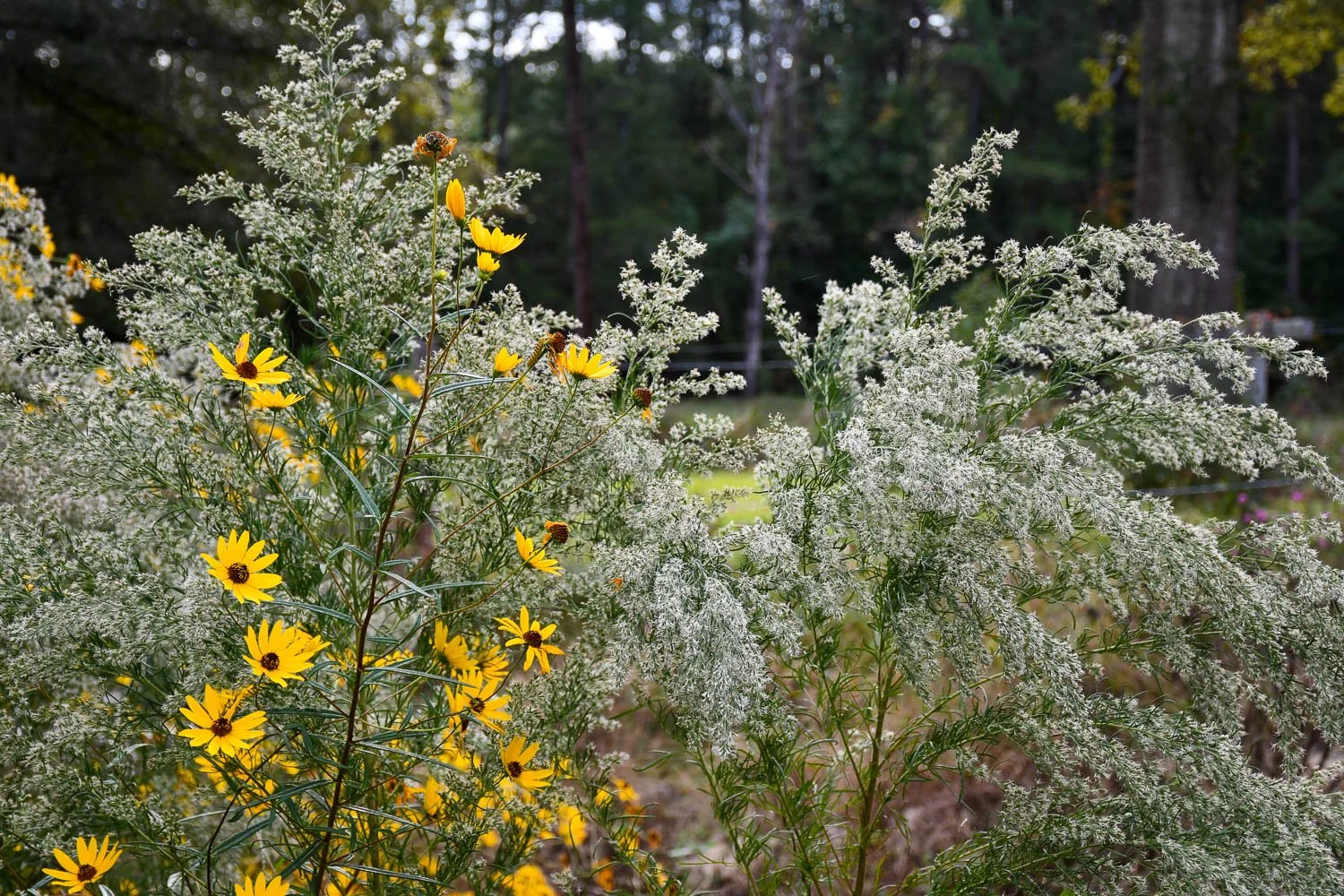
I’m used to seeing Eupatorium perfoliatum (boneset) in our backyard in fall. I enjoy their white flowers, but my goodness do they seed around. A couple years ago, a different form appeared in our backyard. It had a daintier appearance with its pinnatifid leaves, and it had a sweet fragrance that lightly wafted through the air. So, I left it, and a couple of seeds have blown into this space right next to the vegetables. I let them grow over the summer until now they are five feet tall and in flower. Over the past few weeks thousands of little flowers with little white baby eyelashes have appeared on each branch.
Discovering yankeeweed is a beacon for nighttime moths is a bit serendipitous. Parts of the patch have gone a little wild because I’ve been working on building up the beds. In the wintertime, I have the issue that some days the soil where we grow our vegetables is so wet it can be barely worked. I’ve been bringing soil in from our backyard from along the edge of the swale that I excavated to elevate the beds 4–6 inches and get better drainage. In these spaces I haven’t gotten to yet have seeded a number of wildflowers like Rhexia mariana (Maryland meadow beauty), Symphyotrichum praealtum (willow-leaf aster), Helianthus angustifolius (swamp sunflower, header image), Eupatorium capillifolium (dog fennel), and yankeeweed (header image).
Of course, I’d never really noticed any insect activity until tonight. But, I also hadn’t been out much with a headlamp, which makes the argument that maybe gardeners should explore their gardens more at night. I took my own advice and walked 30 feet over to where I knew another yankeeweed was and sure enough, it was also covered with several dozen moths. I noticed the night was warm enough that they were still actively feeding, even though a slight chill had started to appear in the air.
I wondered are the same number of moths also on Eupatorium perfoliatum? I headed into our backyard where I could see the white flowers shimmering under a nearly full Hunter’s Moon. I shined my headlamp, and I didn’t really see that many moths on any of them. So, it seems yankeeweed has a knack for being a moth magnet.

Whoops! Camera took a photo facing the wrong way!
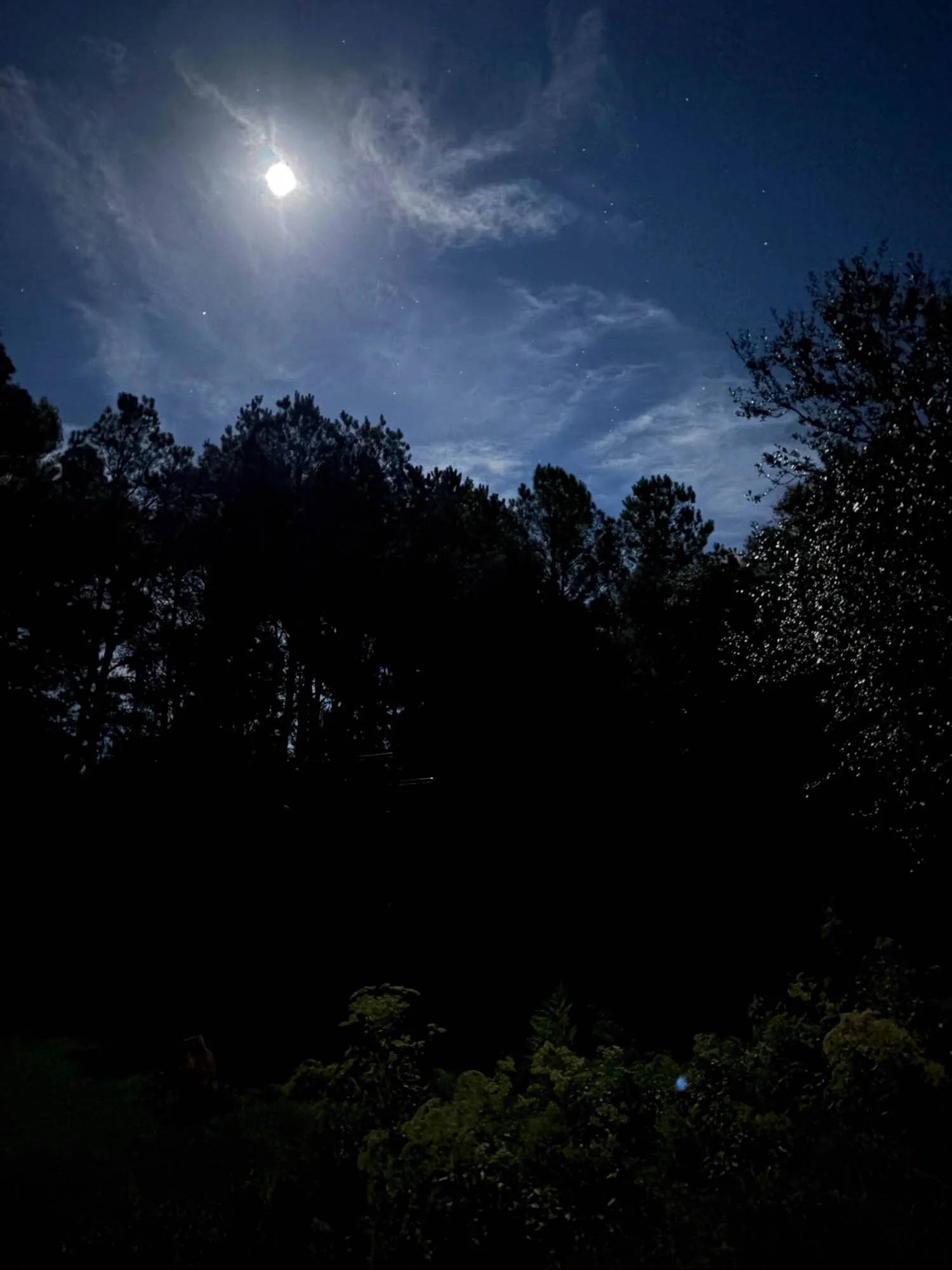
You can just make out the whitish flowers of Eupatorium perfoliatum (boneset) in our backyard.
In the morning, I checked again, but the plant was mostly bare save for the one Milkweed Assassin Beetle I found. So it seems that just by chance I’ve stumbled upon another great plant that we can have for providing resources for our nocturnal species.
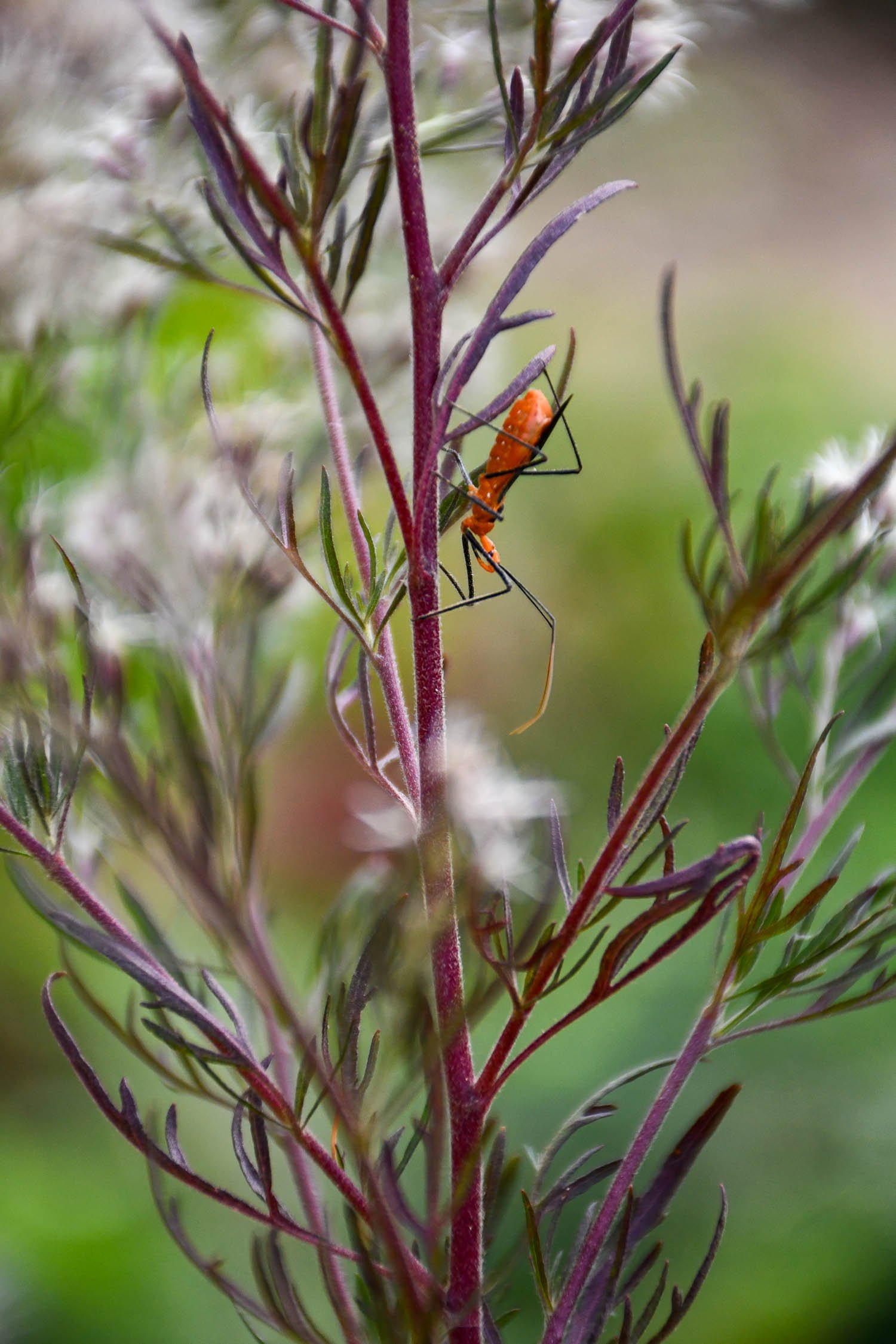
In the daylight, I discovered a Milkweed Assassin Beetle on the plant. Perhaps it’s waiting for a moth to come tonight?
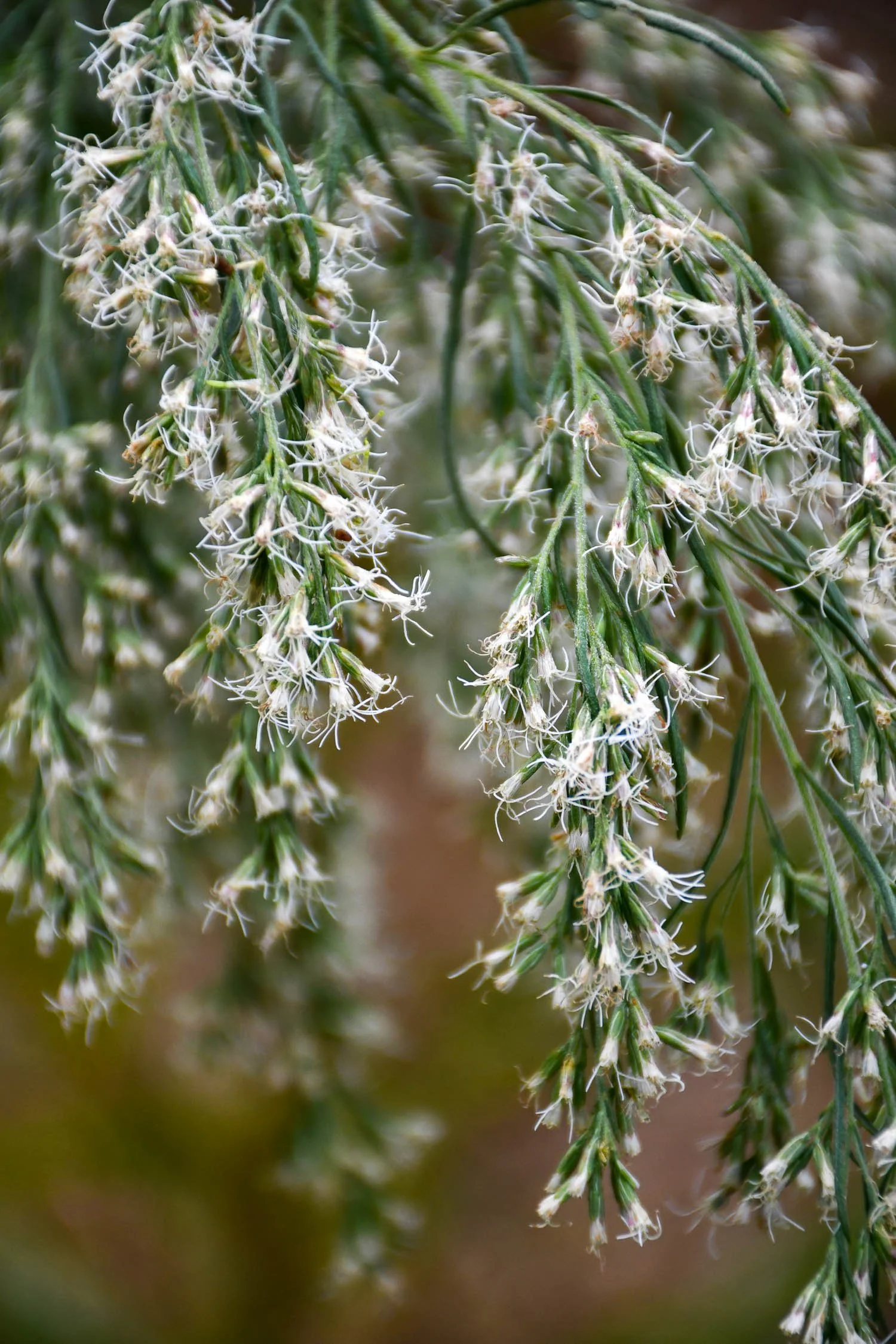
Don’t you love the darling eyelash rays of Eupatorium compositifolium?
To me that’s the joy of these ruderal species. They offer unexpected opportunities in the garden—it’s unexpected where they will appear and sometimes it’s unexpected how they will integrate and feed the local ecology that we celebrate in our gardens.
Now, before you go sowing this species in your beds, I need to offer the disclaimer that yankeeweed is closely related to Eupatorium capillifolium (dog fennel), which may make some of you shake in your boots over how seedy it is. But, I’m not alone in recognizing yankeeweed’s value. Even Plant Delights had a selection of yankeeweed with redder stems.
So, would I have this front and center in a garden? Likely not. Soon after the flowers fade, I will cut the plants down. Around where they currently are is ample bare and fertile soil for ruderals to thrive, and the last thing I want is 1,000 of these growing in our garden. But along the back fencerow and in the wilder parts of our property they are a welcome addition. So, I’ll take the stems and shake the seeds where I want plants to appear next year because with ruderals a few thoughtful decisions now determine where they make a future appearance.
I’ll be working through this kind of decision-making, from when to let plants seed to where to send them next, in Designing with Short-lived Plants on November 16. The link is up top if you want to learn more.
Keep Growing