Visiting Chiwaukee Prairie
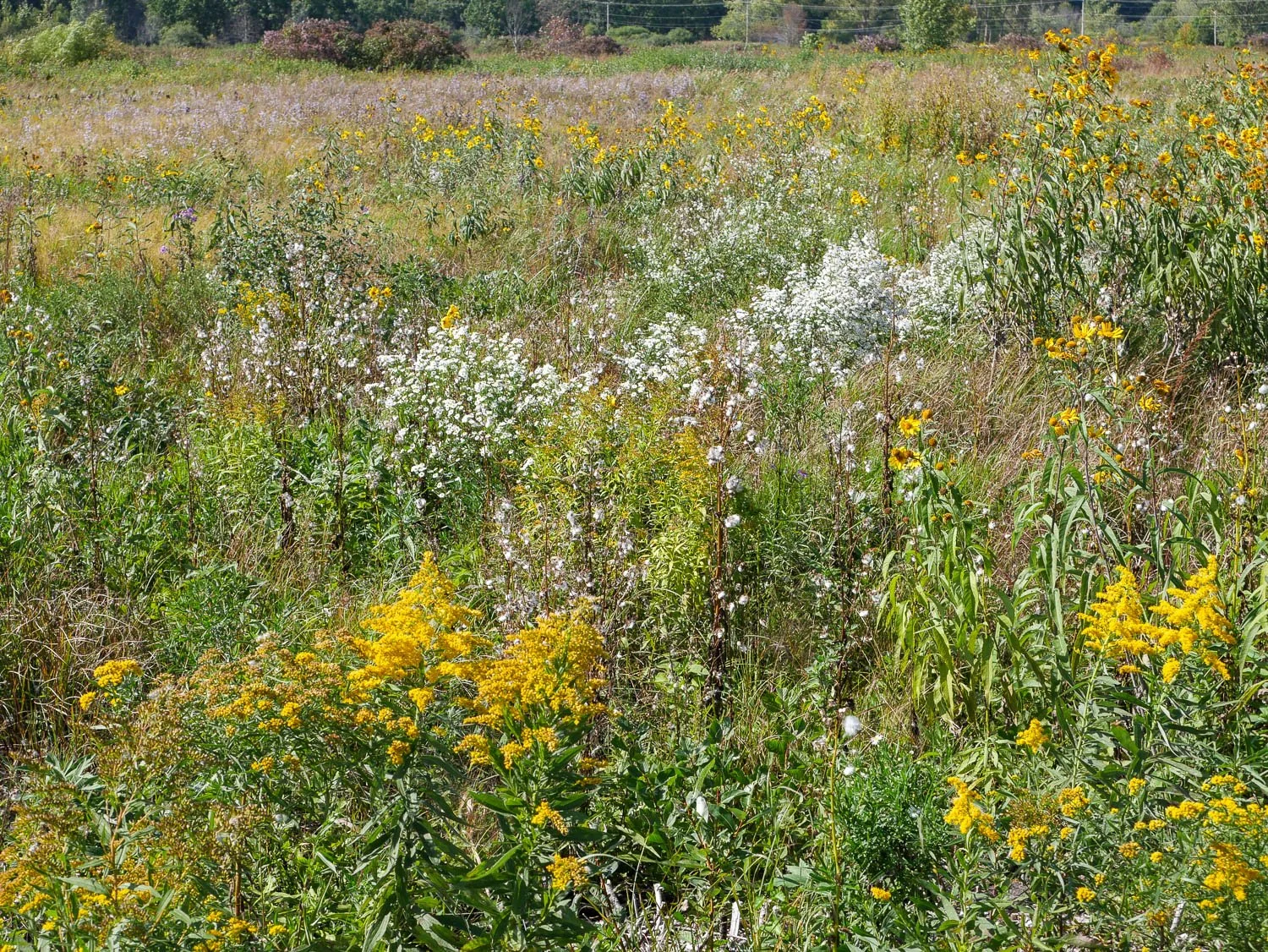
Last fall, I travelled to Wisconsin to speak at Intrinsic Perennials Grass Day, and one of the highlights was visiting Chiwaukee Prairie State Natural Area with Brent Horvath and Lisa Hilgenberg of Intrinsic Perennials and Shannon Currey of Izel Native Plants. I’m already a sucker for grasslands, and Chiwaukee Prairie was certainly something special to experience.
I would learn from signage that Chiwaukee Prairie is the most species-rich prairie in the state with more than 400 plant species present in an area over 400 acres. The topography was formed from glaciers which made dry knolls and wetter depressions. And, it was almost lost. In the 1920s there was a plan to turn it into a golf course, hotel, and bougie homes. However, the Great Depression forced the land to be divided up and sold to many individuals. In the 1960s enthusiasts came together to try to save this unplowed prairie, and they were ultimately successful to the joy of future generations.
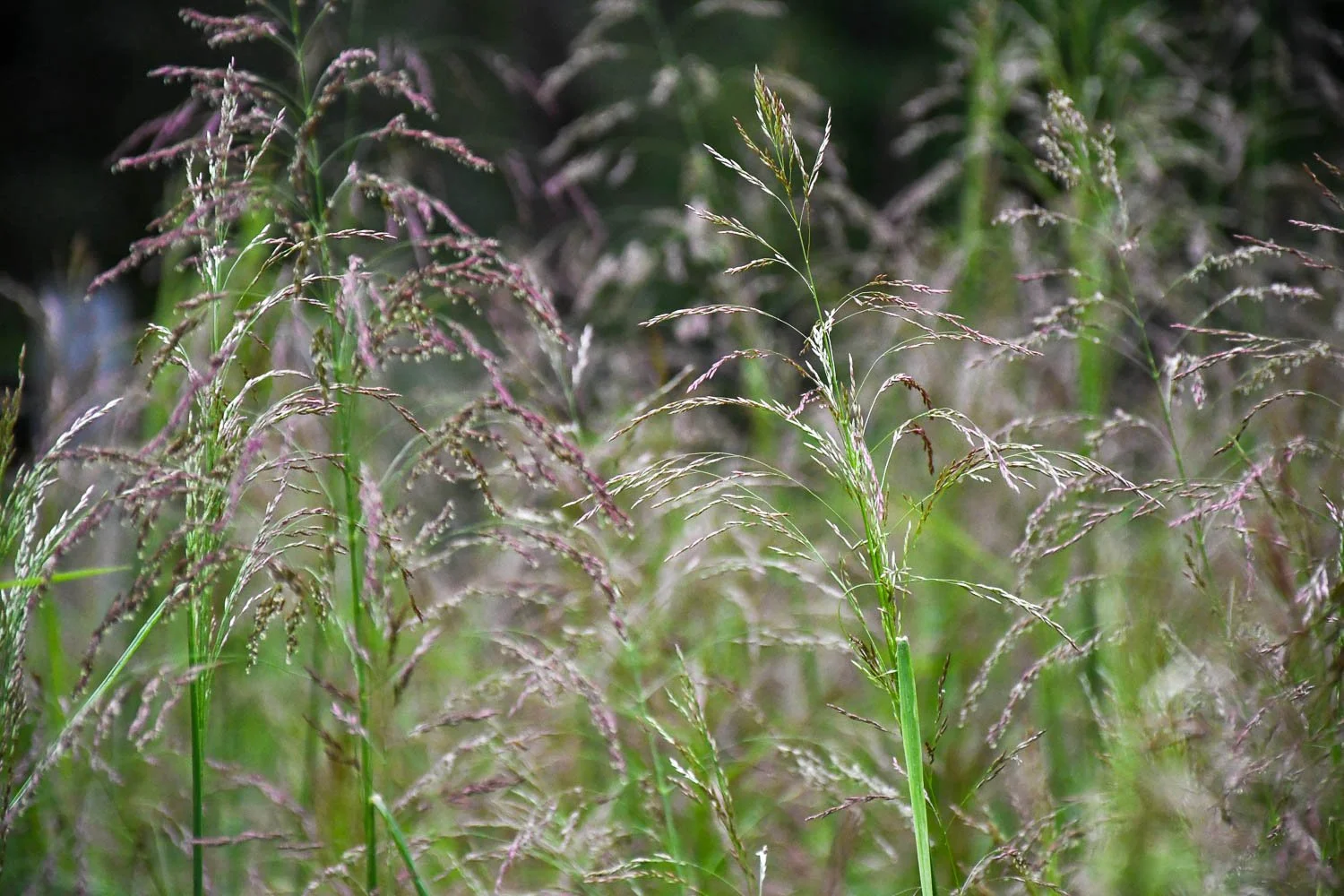
If you’ve never had a chance to visit such a floristically rich site, there are lessons that we can take away from a visit. It’s a reminder of how important the grass layer is in these types of communities. Many naturalistic plantings I've seen are heavy on forbs and could use more grasses. And, you begin to see patterns of where plants are growing based on the site conditions. Even a small shift of a couple of feet can change what species grow.
Below are some photos to share insight and inspiration from Chiwaukee Prairie.
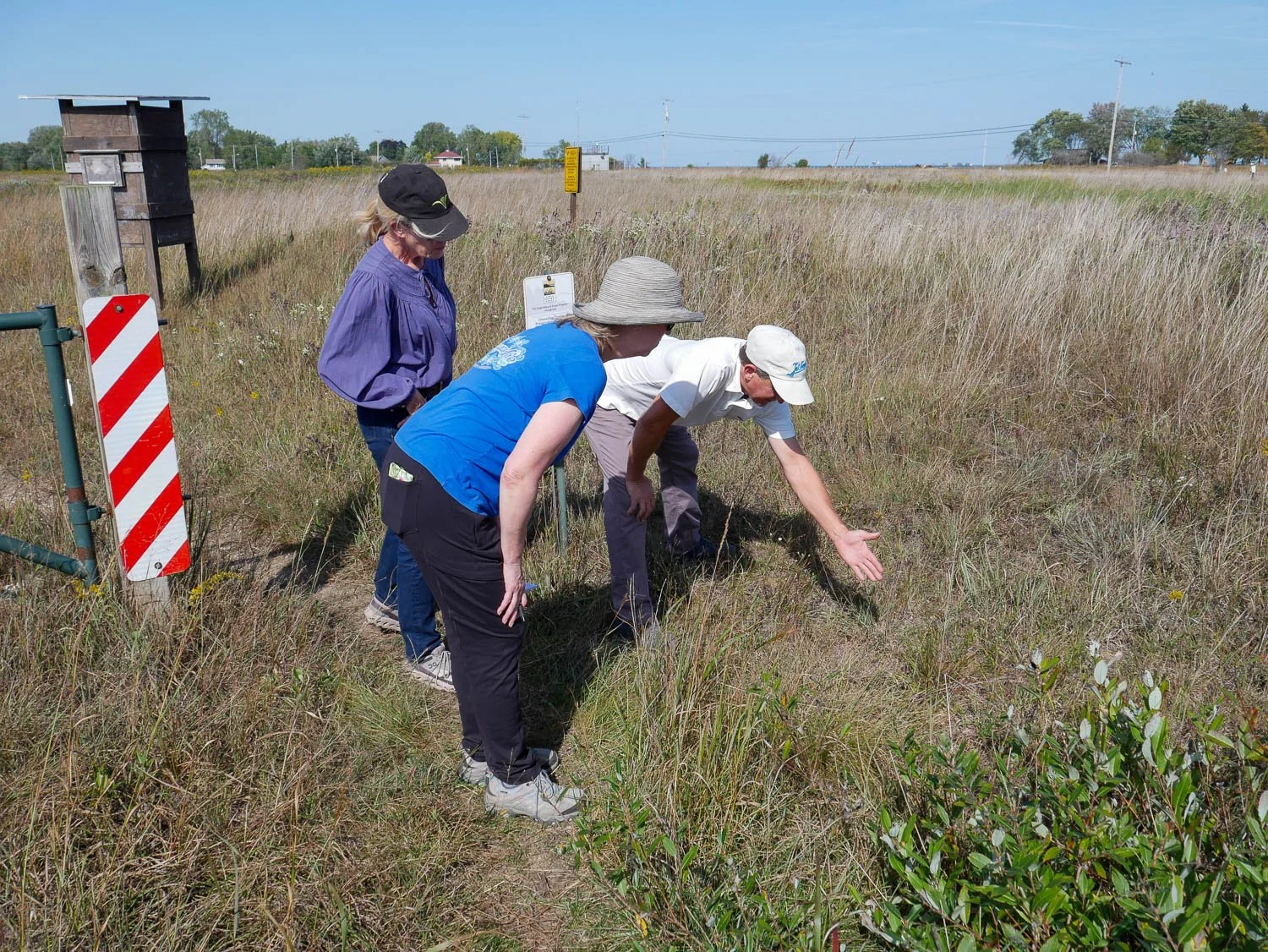
It’s always more fun to explore these areas with people. Brent Horvath pauses to show Lisa Hilgenberg and Shannon Currey a seedhead.
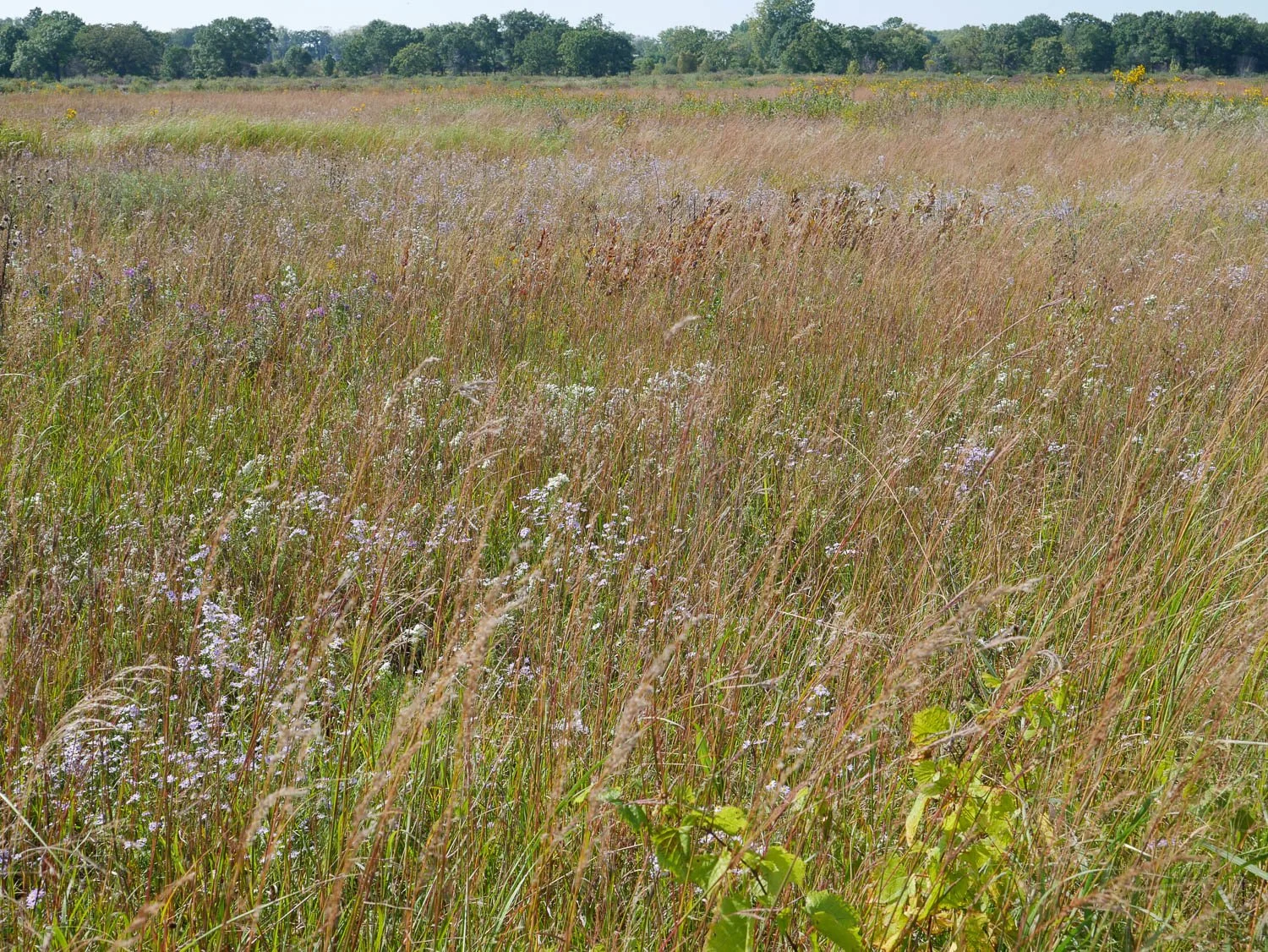
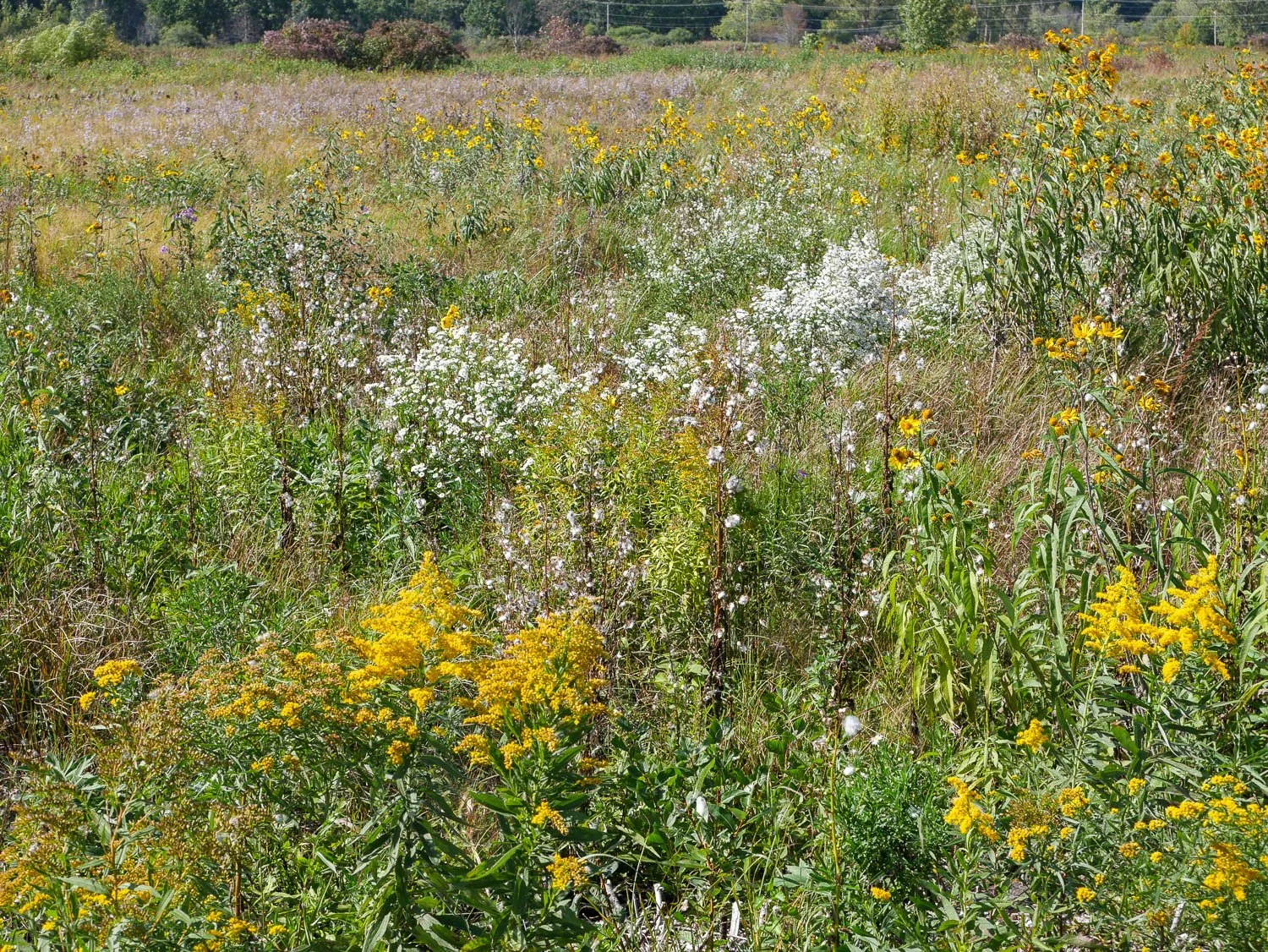
Chiwaukee Prairie stretched far into the distance. Notice how the asters occur in little groups amongst the sea of grass.
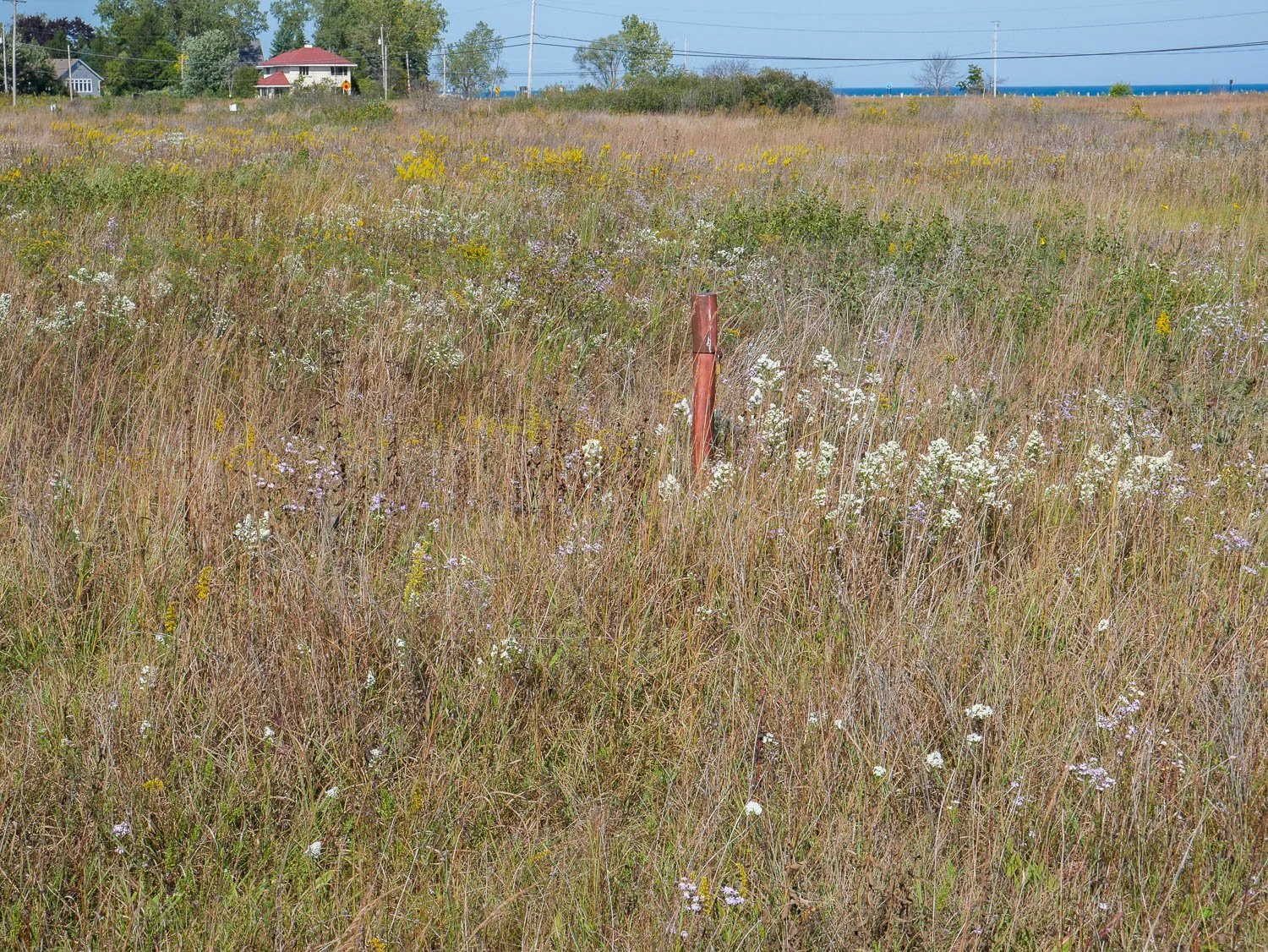
I also love seeing how plants arrange themselves across the landscape. These wild areas can be great lessons in plant sociability.
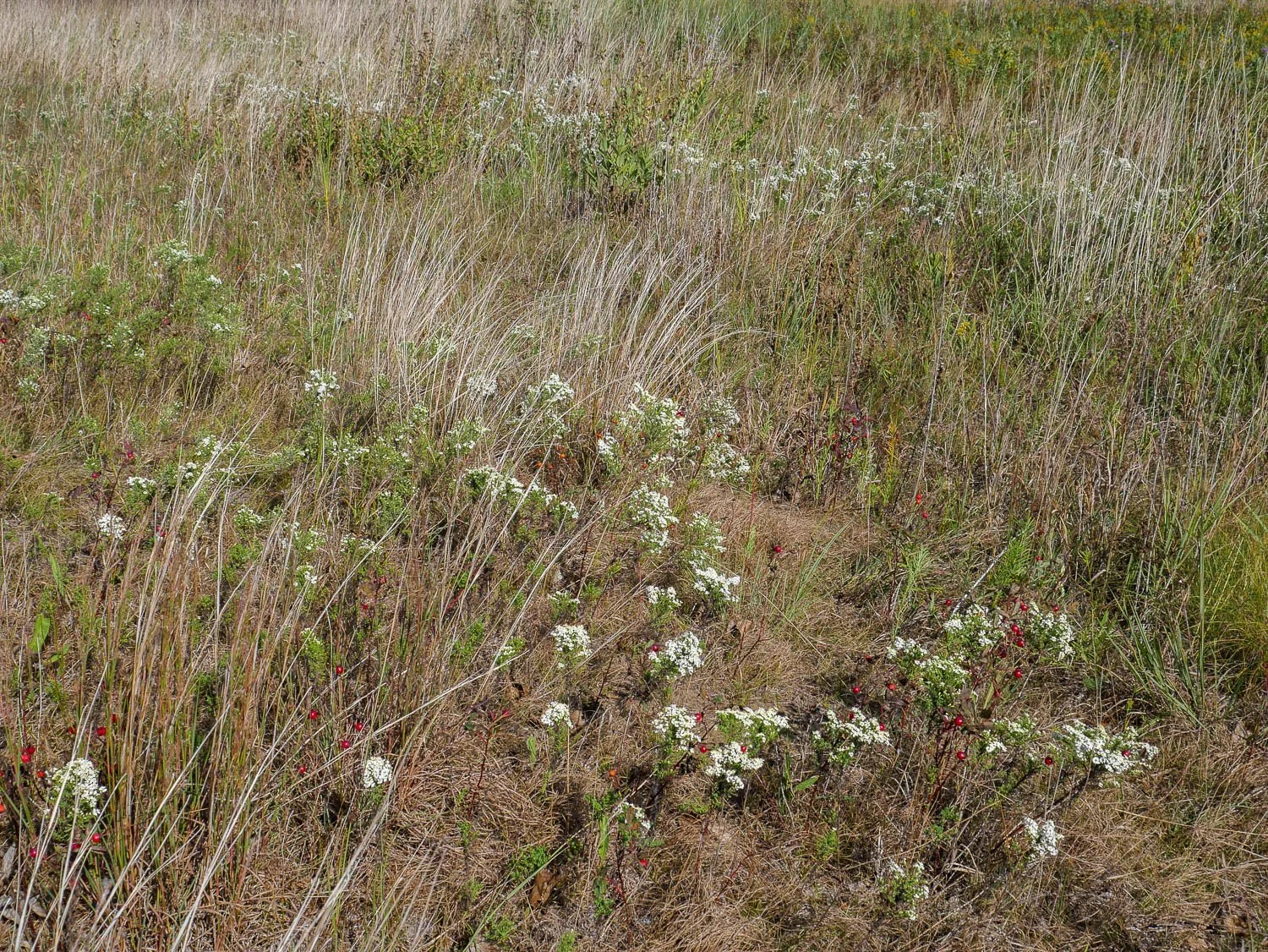
On these higher knolls we found populations of the pearly white-flowering Solidago ptarmicoides (upland white goldenrod). The red dots are the hips of Rosa blanda (smooth rose). Seeing them together offered a great example of how two species with different bloom times can coexist.
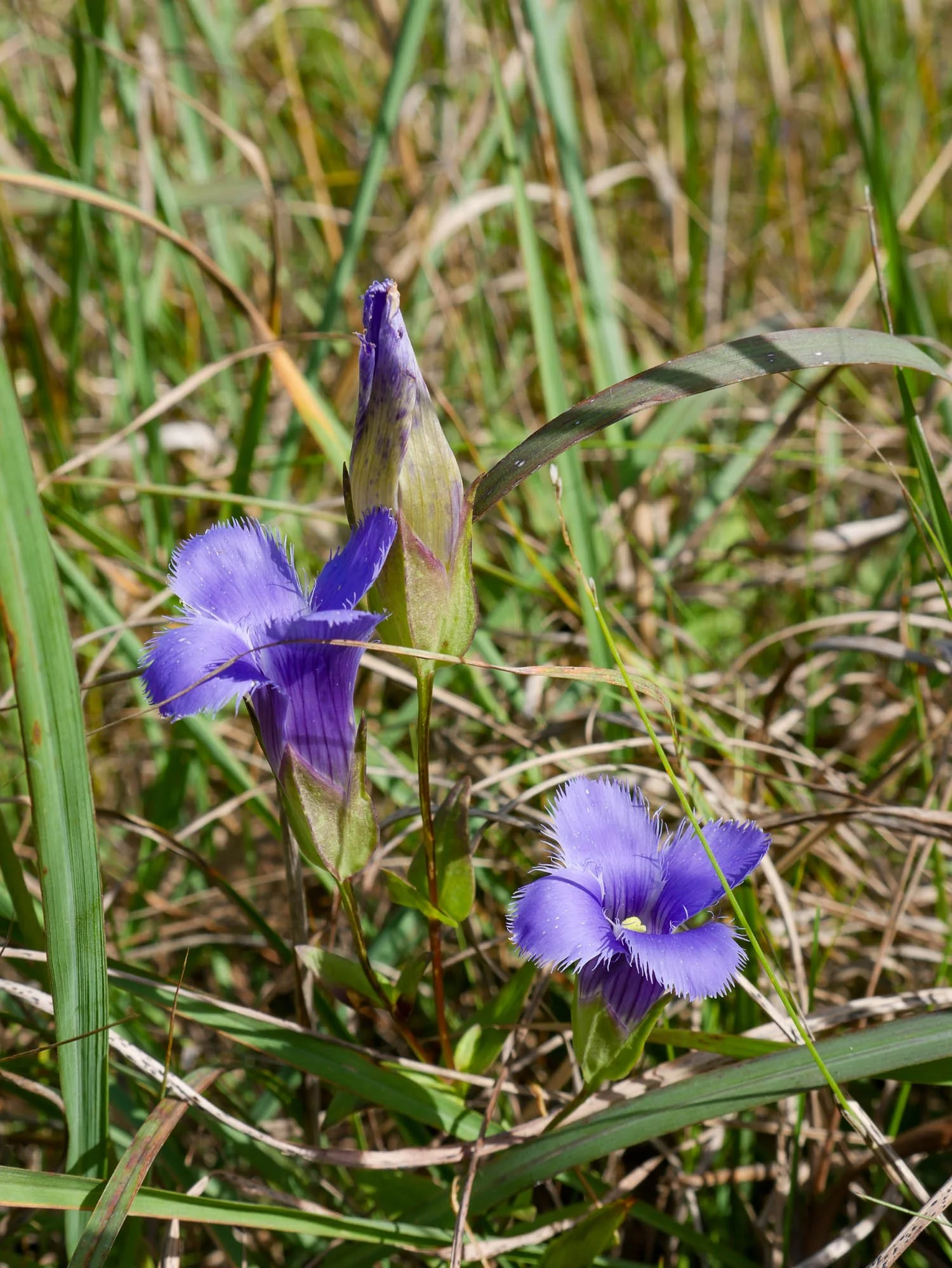
And in wetter spots, I had my first encounter with Gentianopsis virgata (lesser fringed gentian). Aren’t those fringed petals gorgeous?
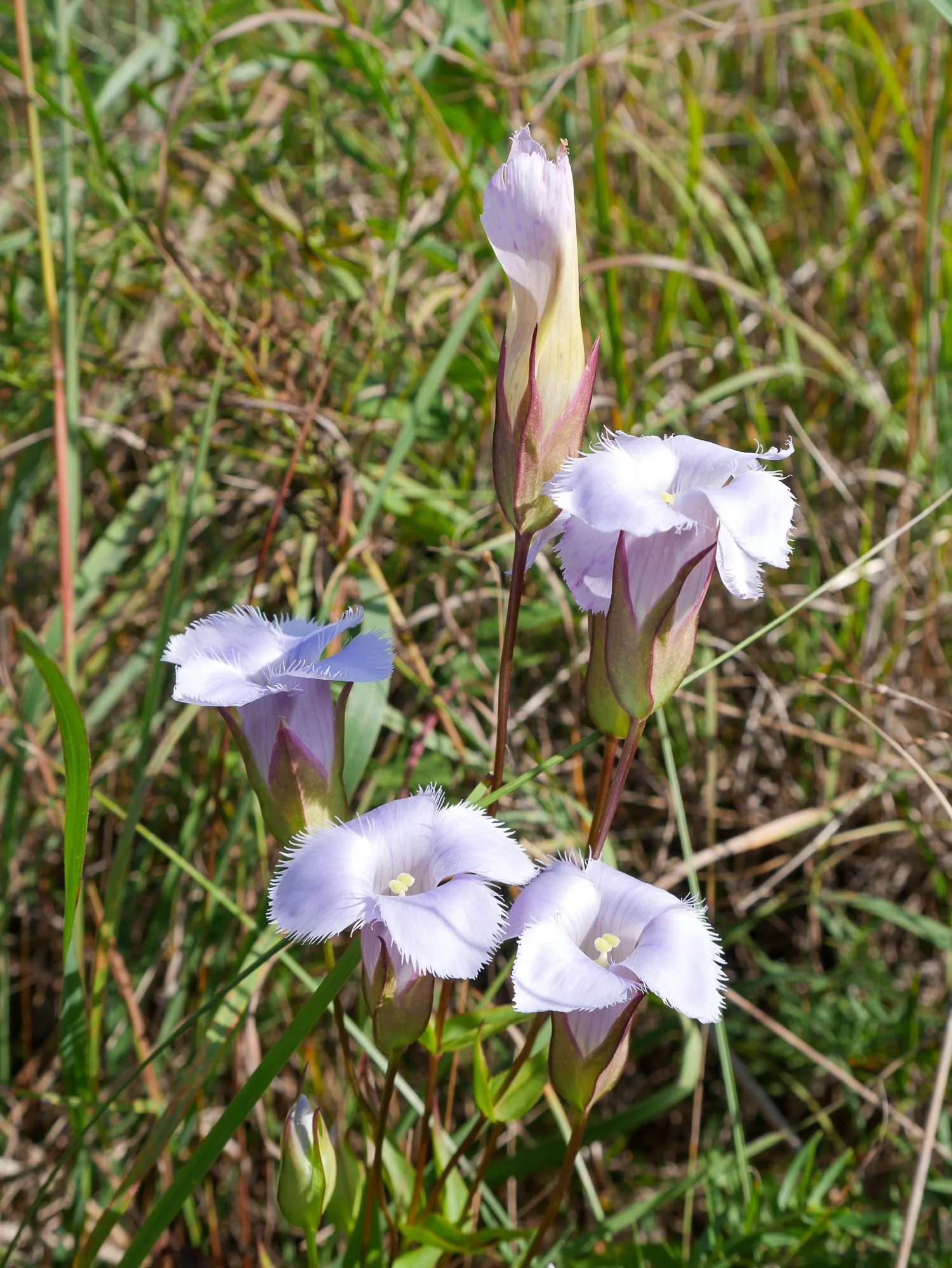
Another joy of seeing plants in the wild is discovering what color variants exist. This pink Gentianopsis virgata caught my eye.
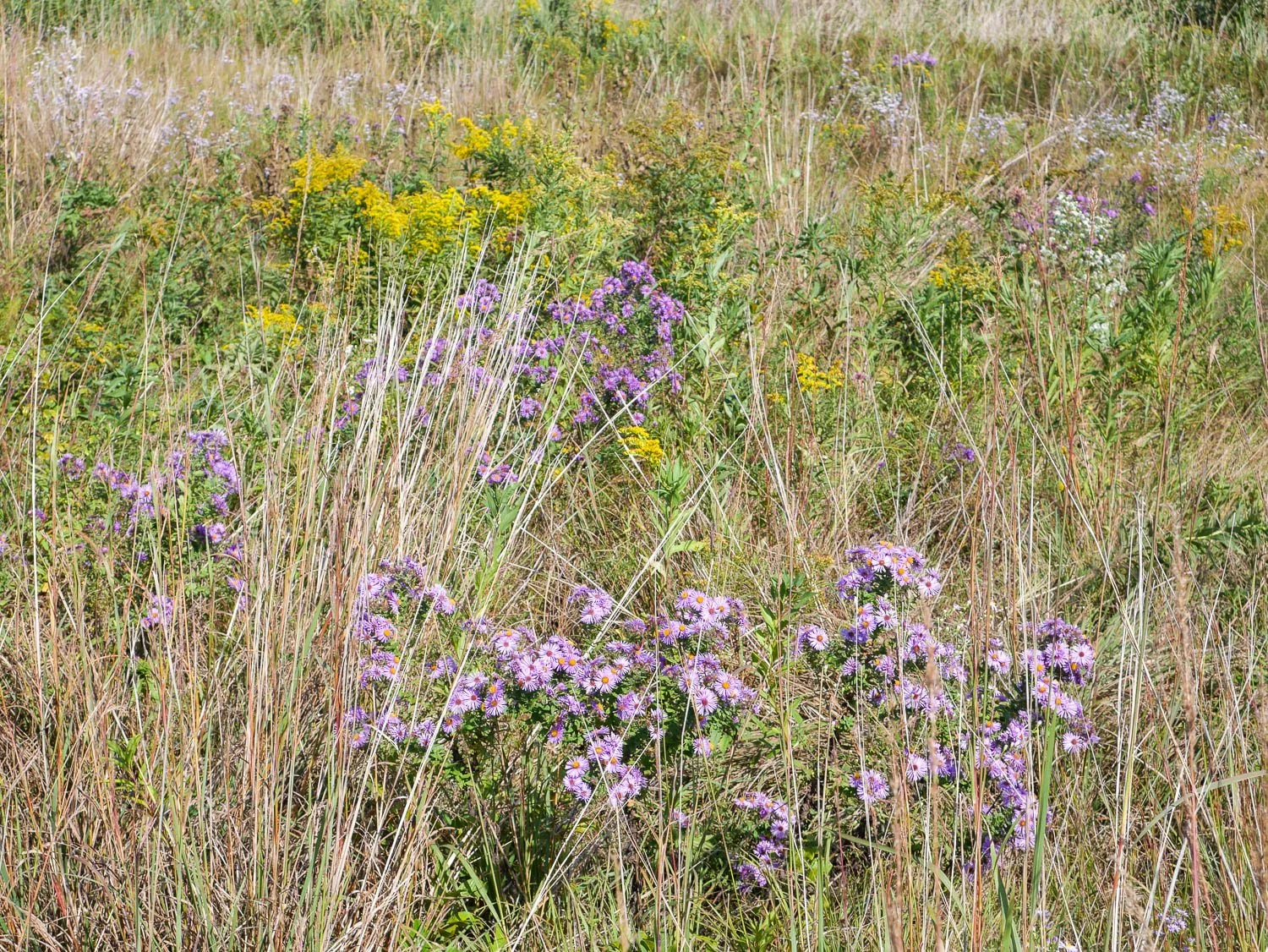
Various asters and goldenrods were in full bloom in Chiwaukee Prairie. Again, notice how they are dotted in the grasses.
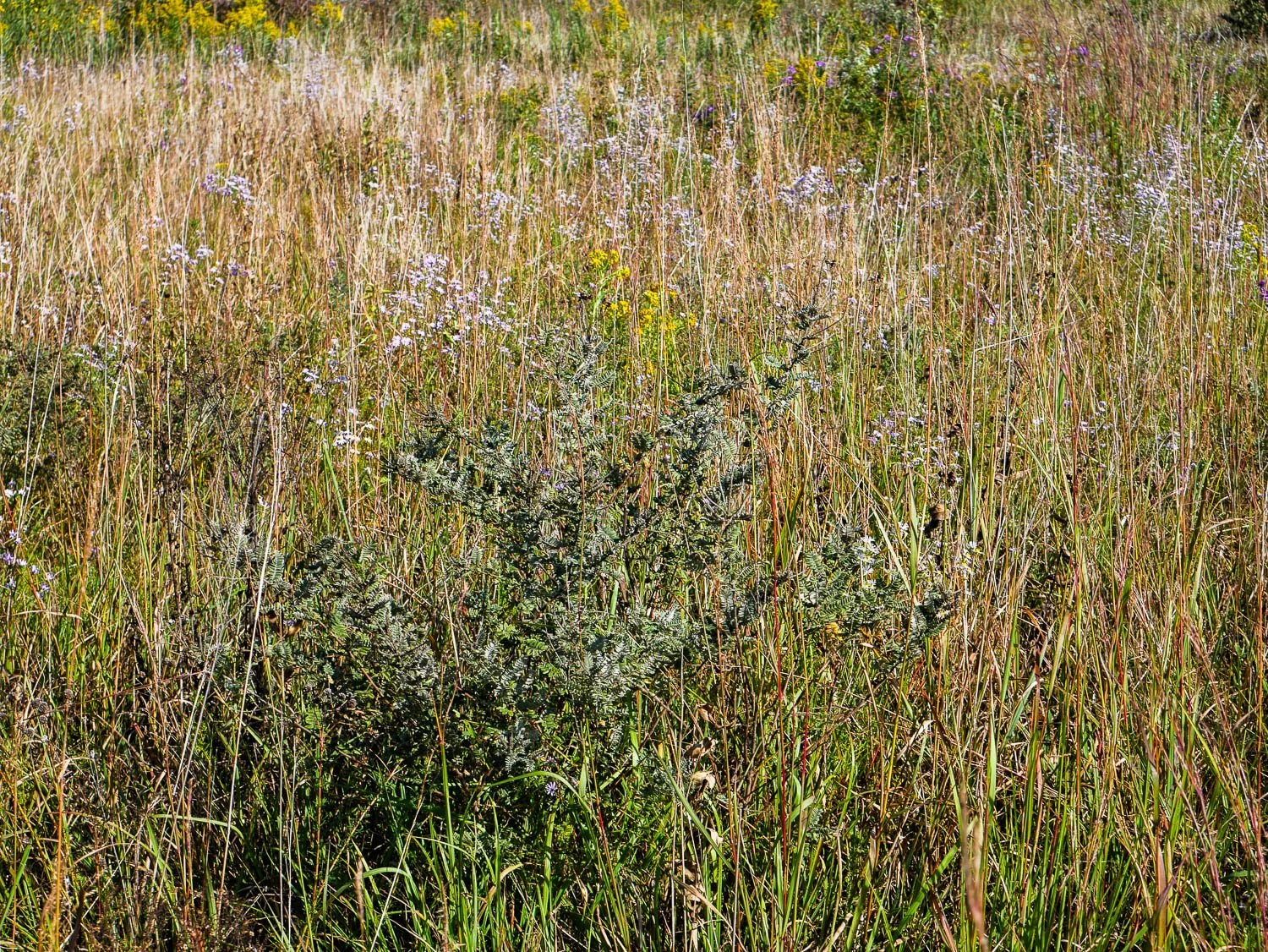
I was delighted to see Amorpha canescens (lead plant) in the wild. Mine in Texas shows wear and tear at the end of the growing season, and these had a similar appearance.
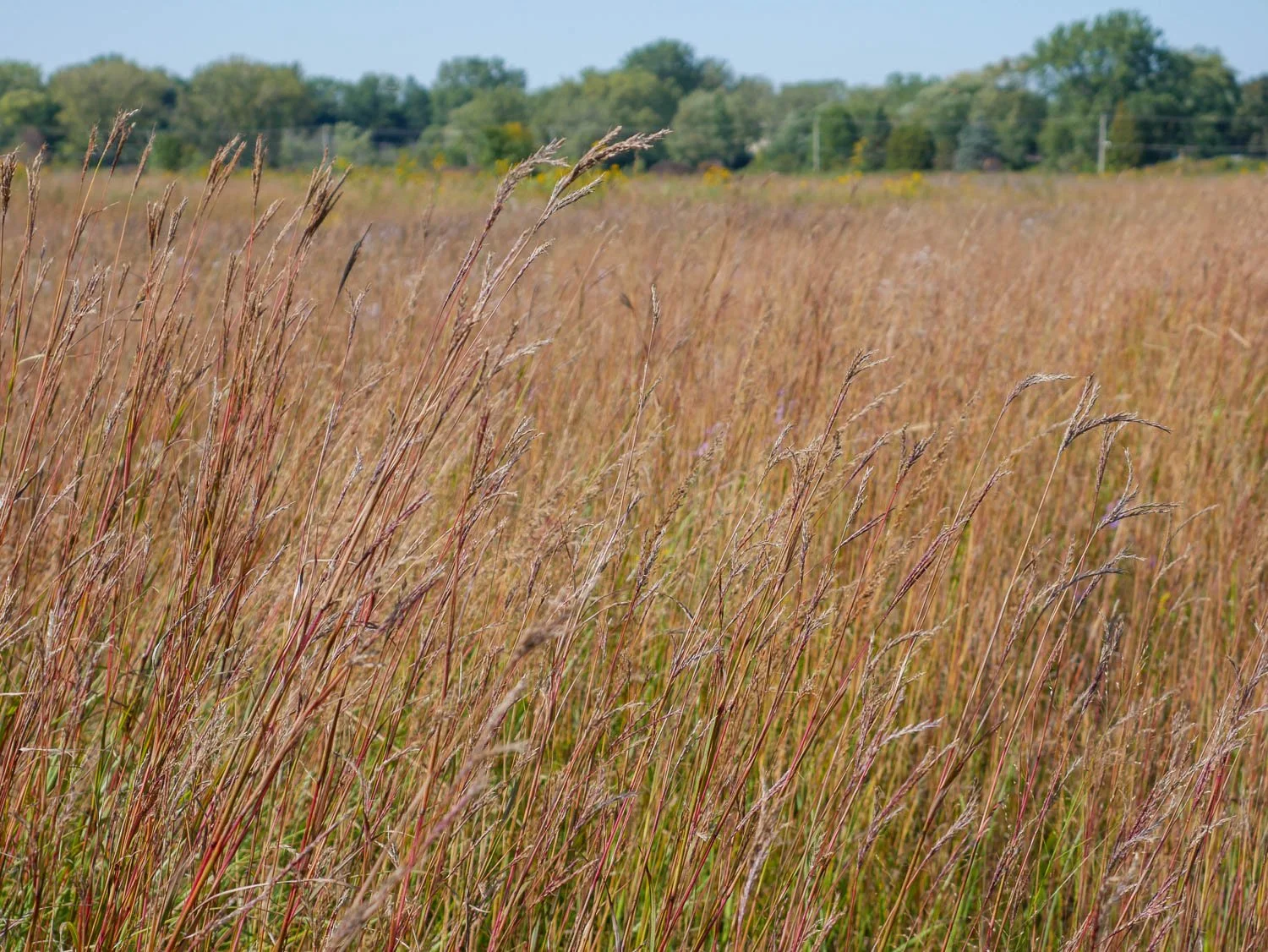
Not all plants in the prairie were short. Here Andropogon gerardii (big bluestem) swayed in the breeze with the flowers and seedheads at eye level.
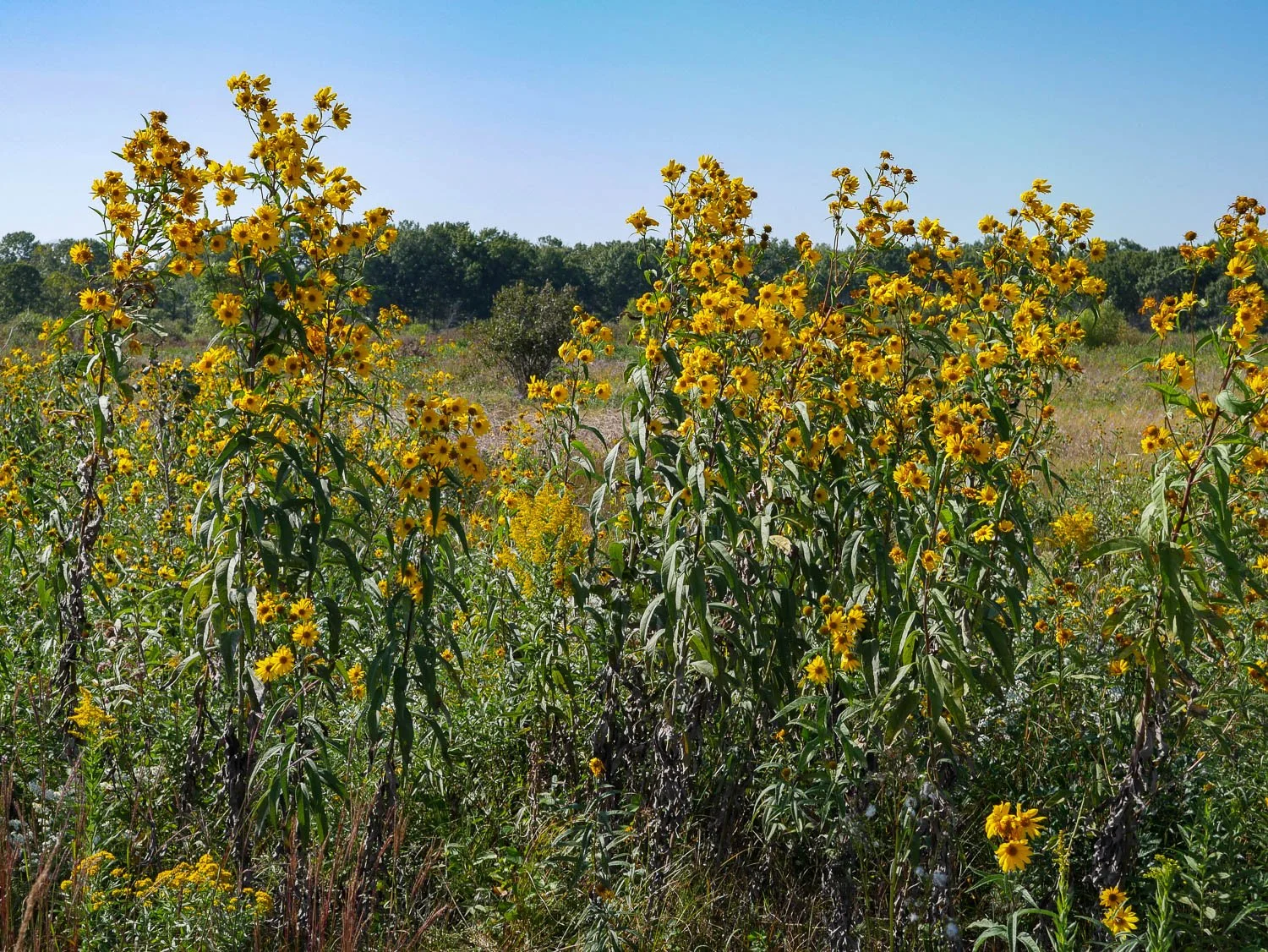
Helianthus grosseserratus (sawtooth sunflower) was a new-to-me species. We didn’t see many of them, and they provided good height for the prairie.
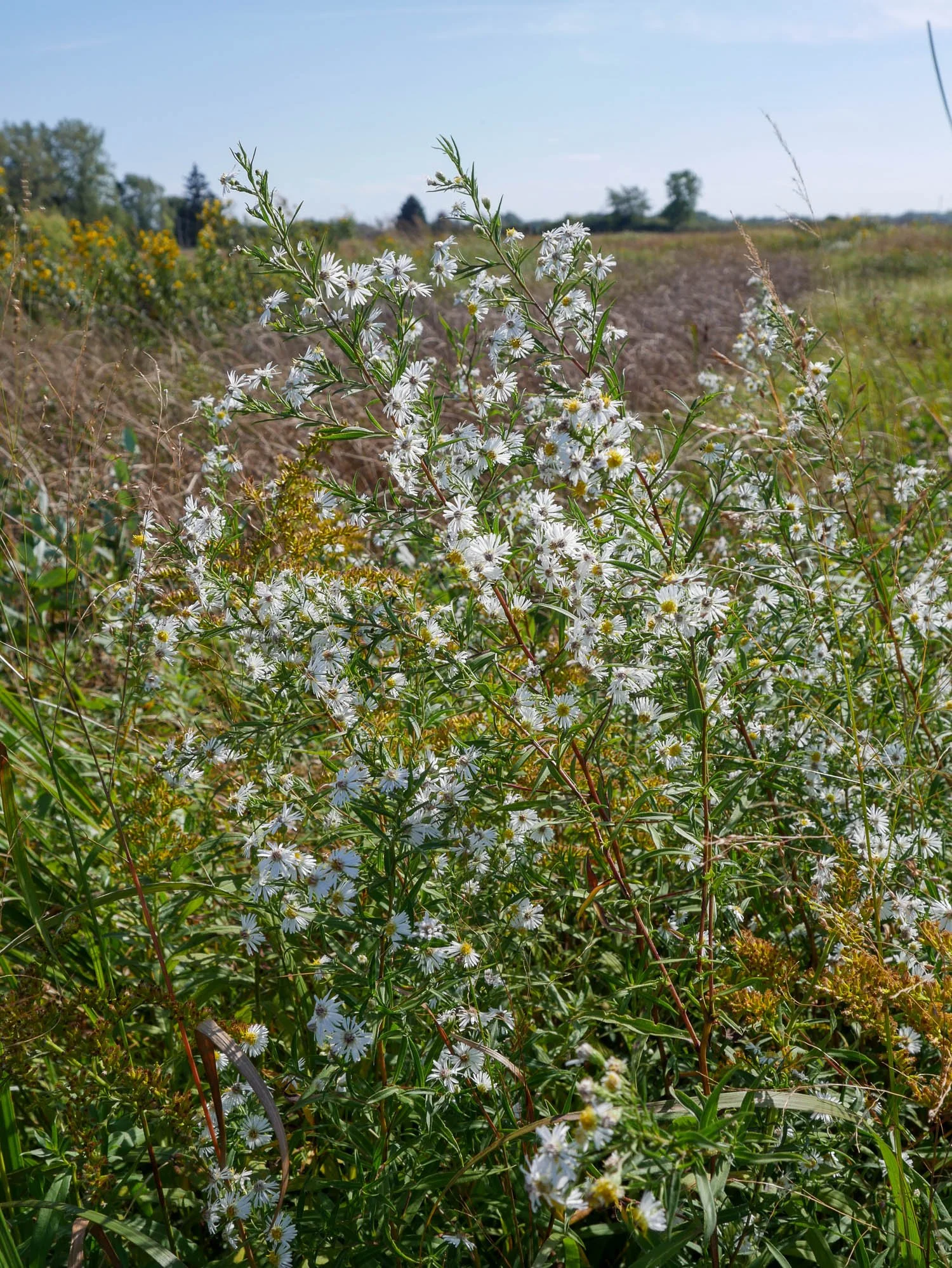
Of course I would love a genus that’s so difficult to ID. This one looks a bit like Symphyotrichum ericoides (heath aster), but the leaves aren’t quite right. Maybe it’s a hybrid with Symphyotrichum firmum (shining aster)?
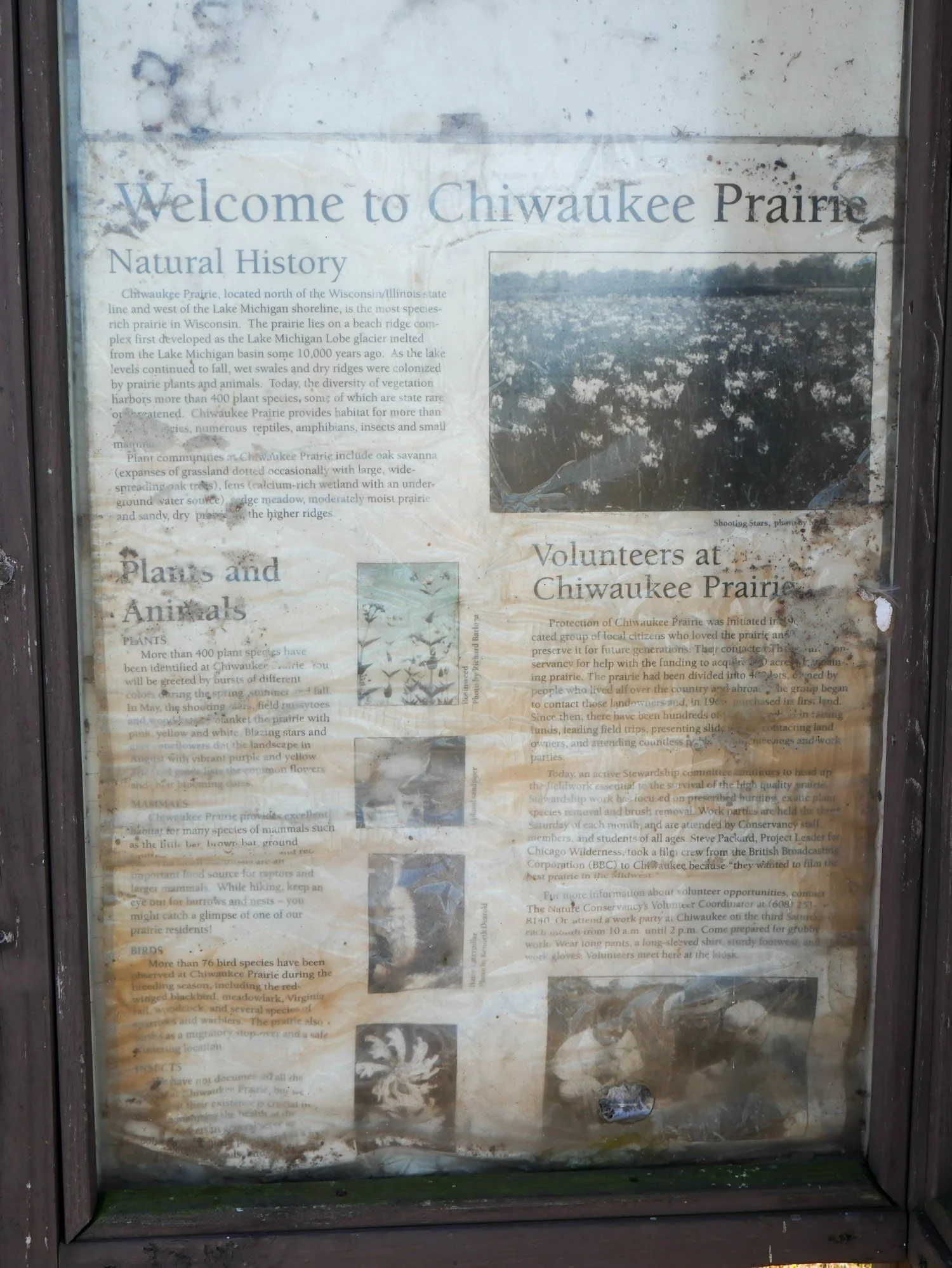
A fade sign still reveals some important aspects of Chiwaukee Prairie.
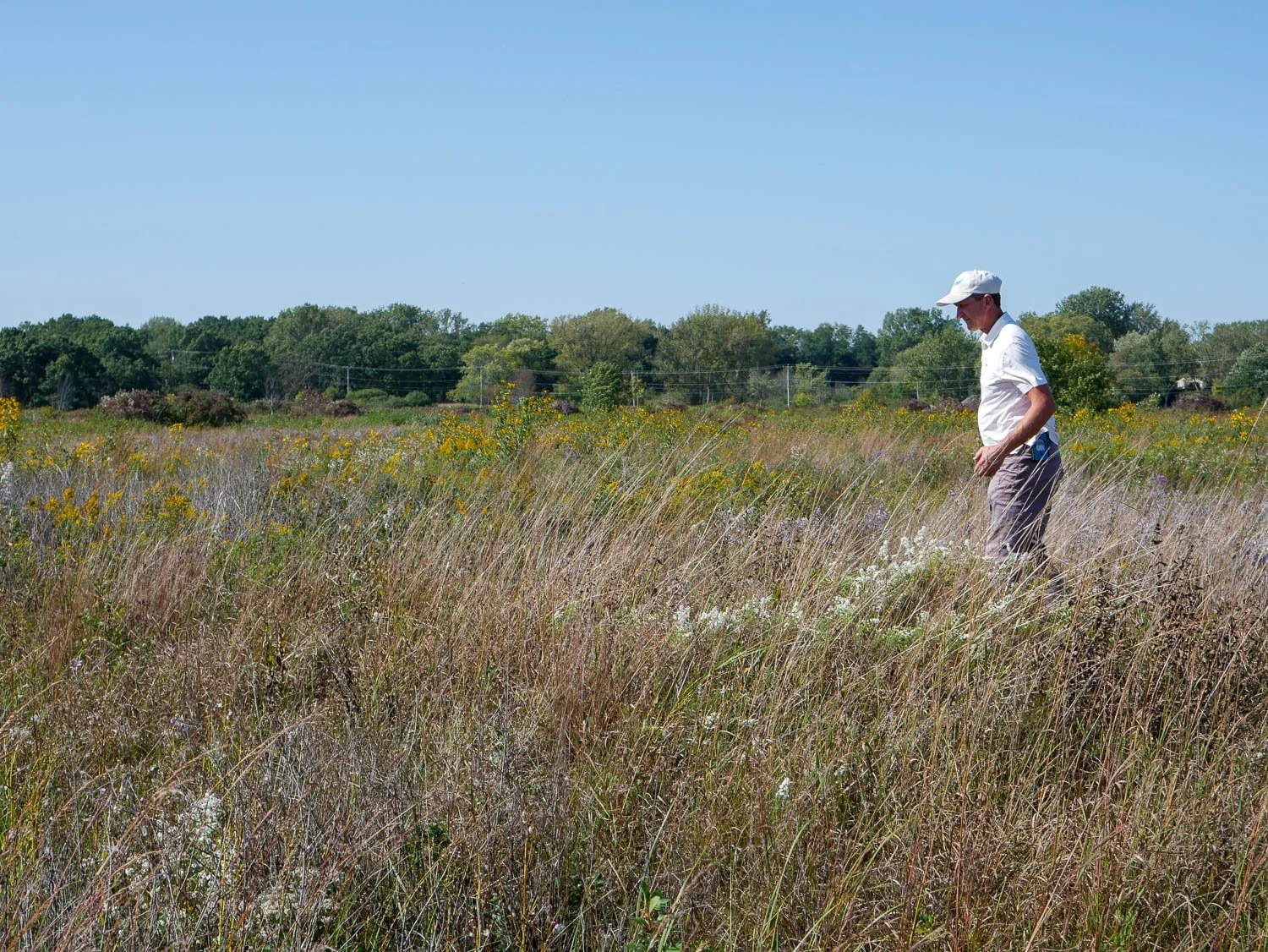
Brent Horvath, a man outstanding in his field.
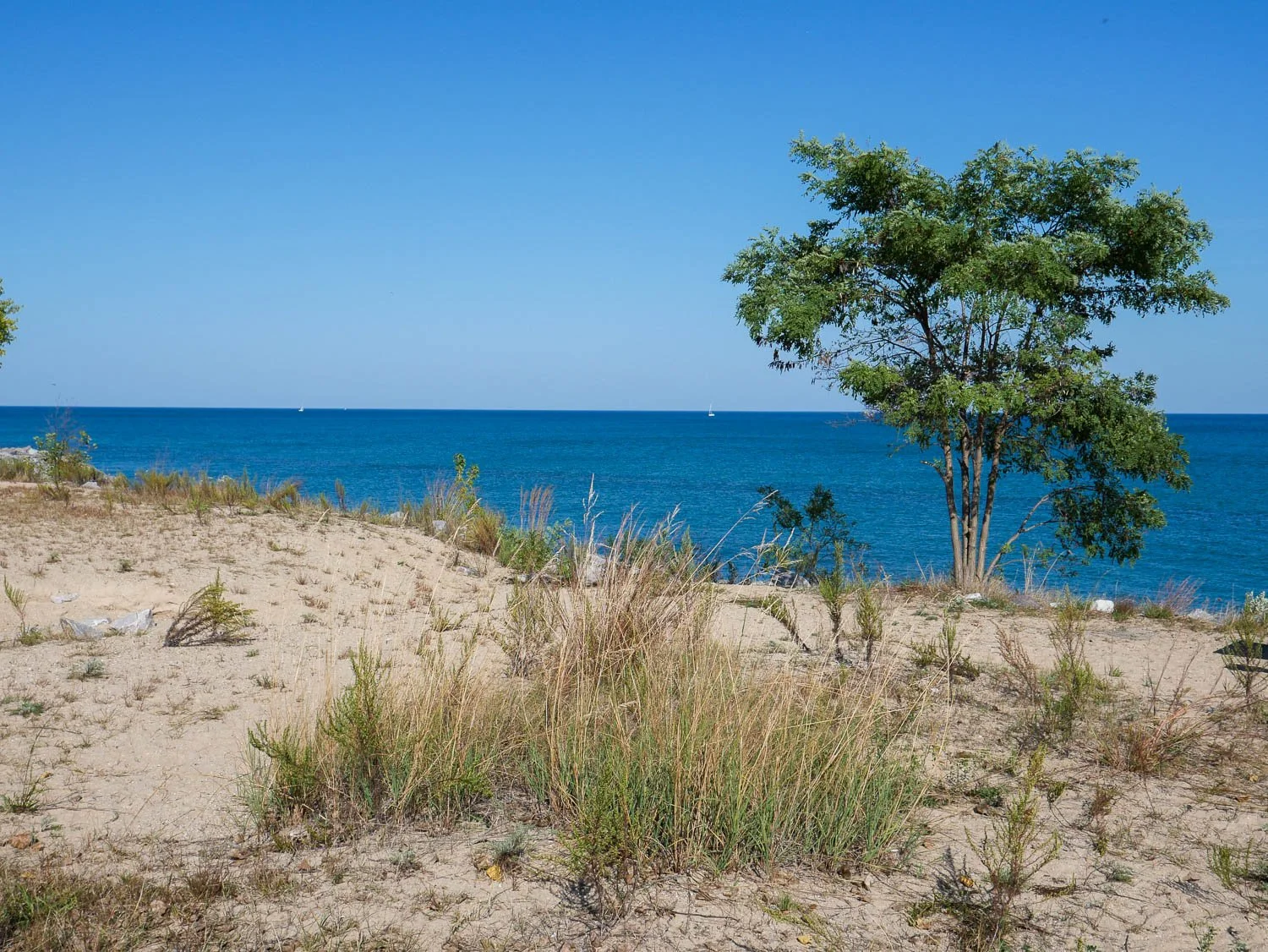
After we left the prairie, I stopped by Lake Michigan. The water was just visible from the prairie in certain spots. I am thankful for the people whose efforts let us enjoy Chiwaukee Prairie and see what so much of our landscape used to be.
Keep Growing