Ruderals won’t stay put, and that’s exactly what makes them fun to design with. Learn how to put them to work in Designing with Short-lived Plants, 20% off through November 16!
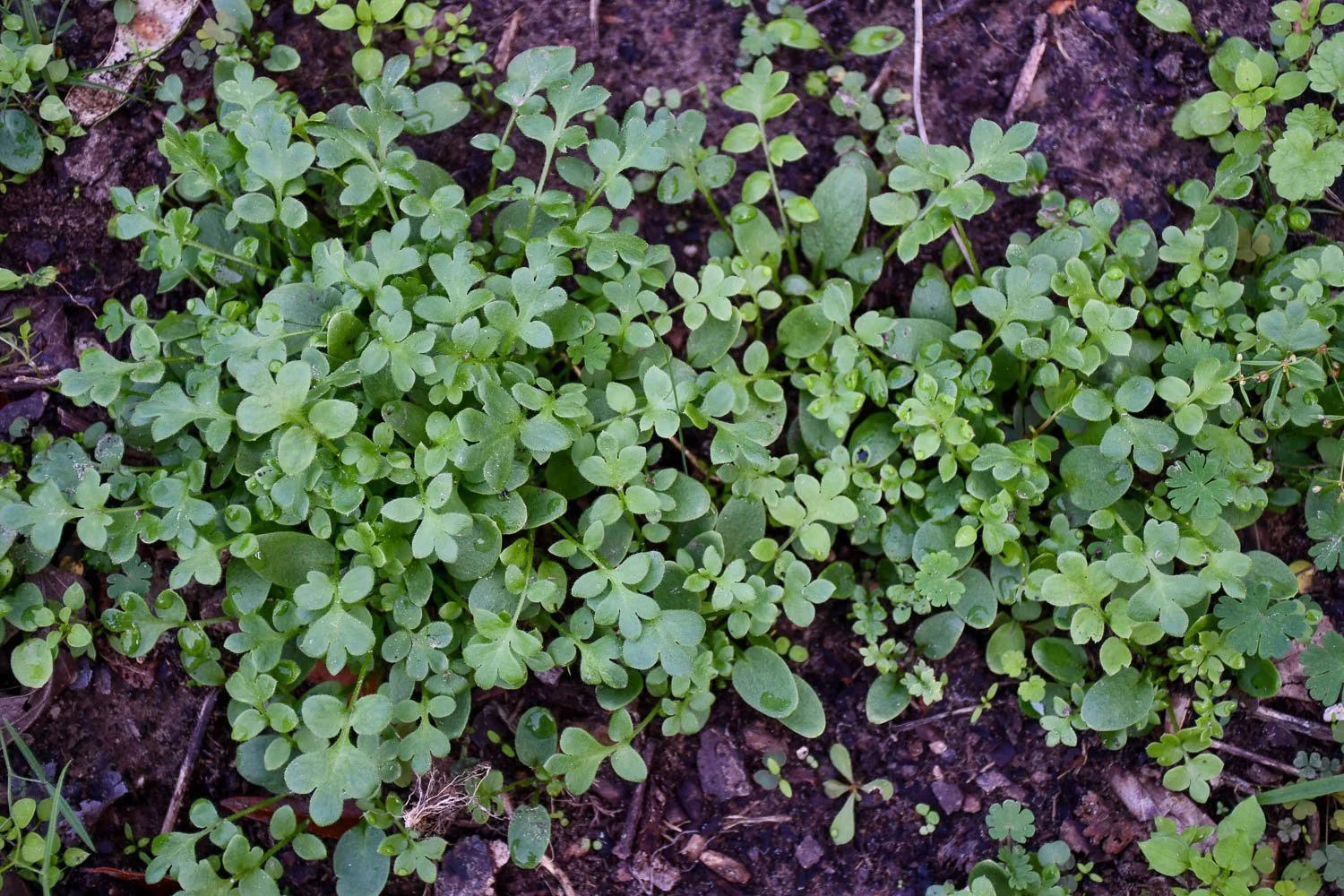
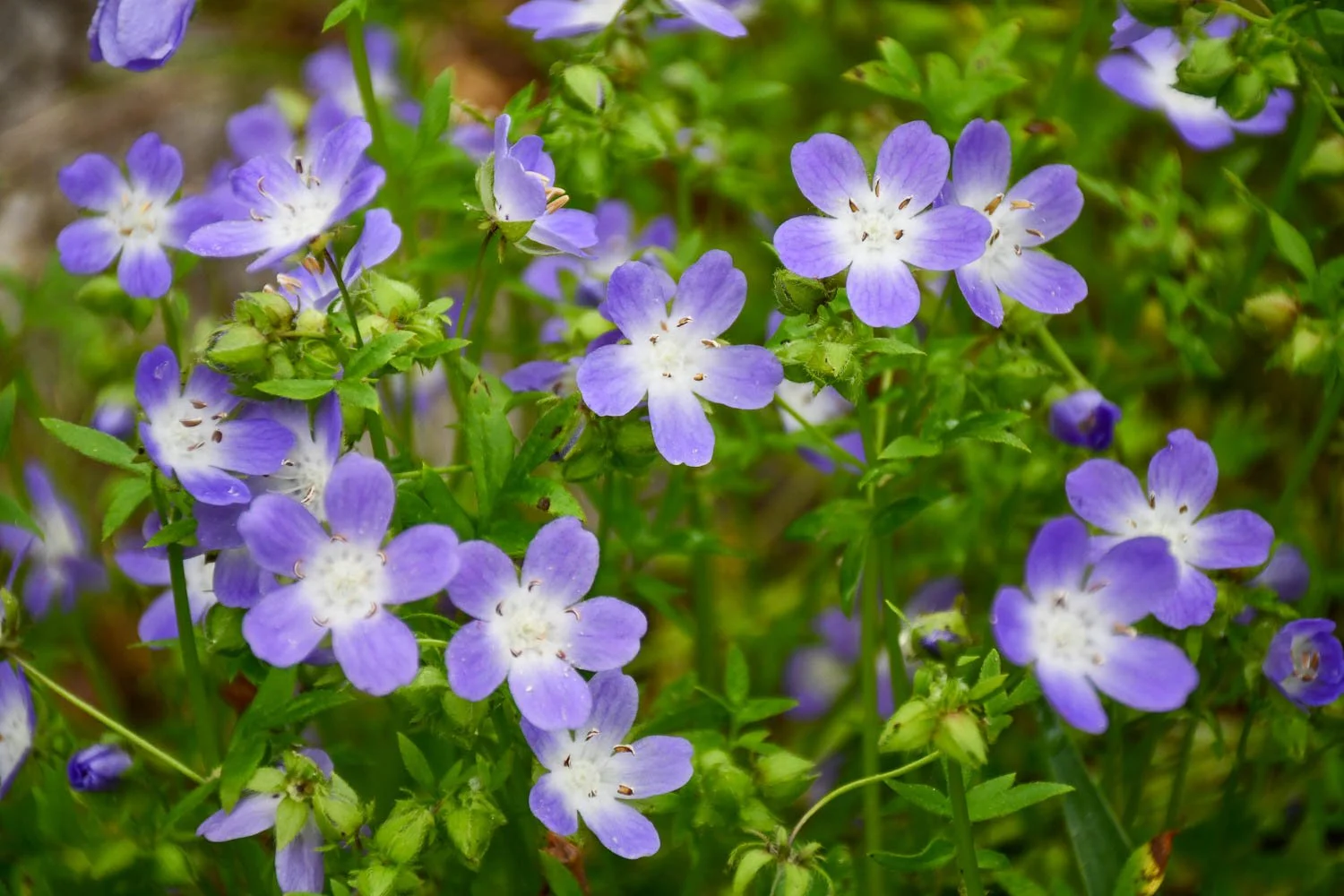
As one growing season comes to an end, another one is already showing signs of beginning. The rains and the cooler temperatures of late have nudged the cool-season seeds out of their summer dormancy. Having grown them for a few seasons, I’ve gotten good at recognizing their youthful stage. There are the long paddles of Nemophila phacelioides (Texas baby blue eyes, header image), the slightly offset bulgy cotyledons of Lupinus subcarnosus (sandyland bluebonnet), and the ferny foliage of Streptanthus maculatus (clasping jewelflower) since I usually miss the seed leaves that don’t resemble their Brassica brethren.
Their numbers have really grown over the past few years to the point I need to start relocating or thinning. And in classic ruderal fashion, they are appearing in bare spots in the garden, gaps between plants, and overrunning the pathways.
Defining Ruderals
The term ruderal may be new to you, but I find it a very helpful concept in the world of ecological horticulture. A ruderal is a short-lived plant that thrives where disturbance occurs (e.g. the open spots in a garden). Ruderal comes from the Latin ruderalis which means rubble, a nod to the places they are frequently found. This word entered our gardening lexicon thanks to the work of J. Philip Grime. He classified plants into three survival strategies—competitors, stress-tolerators, and ruderals.
Competitors grow big and wide to try to outcompete other plants, and stress-tolerators find their niche by growing slowly to endure high stress. Neither can tolerate disturbance like fire, flood, frost, feeding, or insert your favorite approach to killing plant tissue.
But, our beloved ruderals can since they evolved under high-disturbance conditions. They dealt with shoot and/or root destruction by really embracing a YOLO lifestyle. They bloom like crazy to make sure they set plenty of seed for the future. Sure, this strategy may give them a bit of a weedy tendency, but that is how they survive destructive changes to the world around them by returning as seed next season.
What are the characteristics we look for in ruderals? They produce copious biomass quickly. They are often very floriferous and set abundant seed. One other aspect that many ruderals share the single stem-to-root connection that we call a rhizophyte. As Noel Kingsbury has addressed, most ruderal species tend to have one central root system along with one central stem arising from that root. If you have only that one connection, that’s all you have to live on. So if that fails, the plant’s essentially gone.
We also must remember that plants don’t perfectly show one tendency. Short-lived perennials like Aquilegia canadensis (columbine) and Lobelia cardinalis (cardinal flower) still have a similar approach to survival as a true annual like a sunflower even though they return for a few years before perishing.
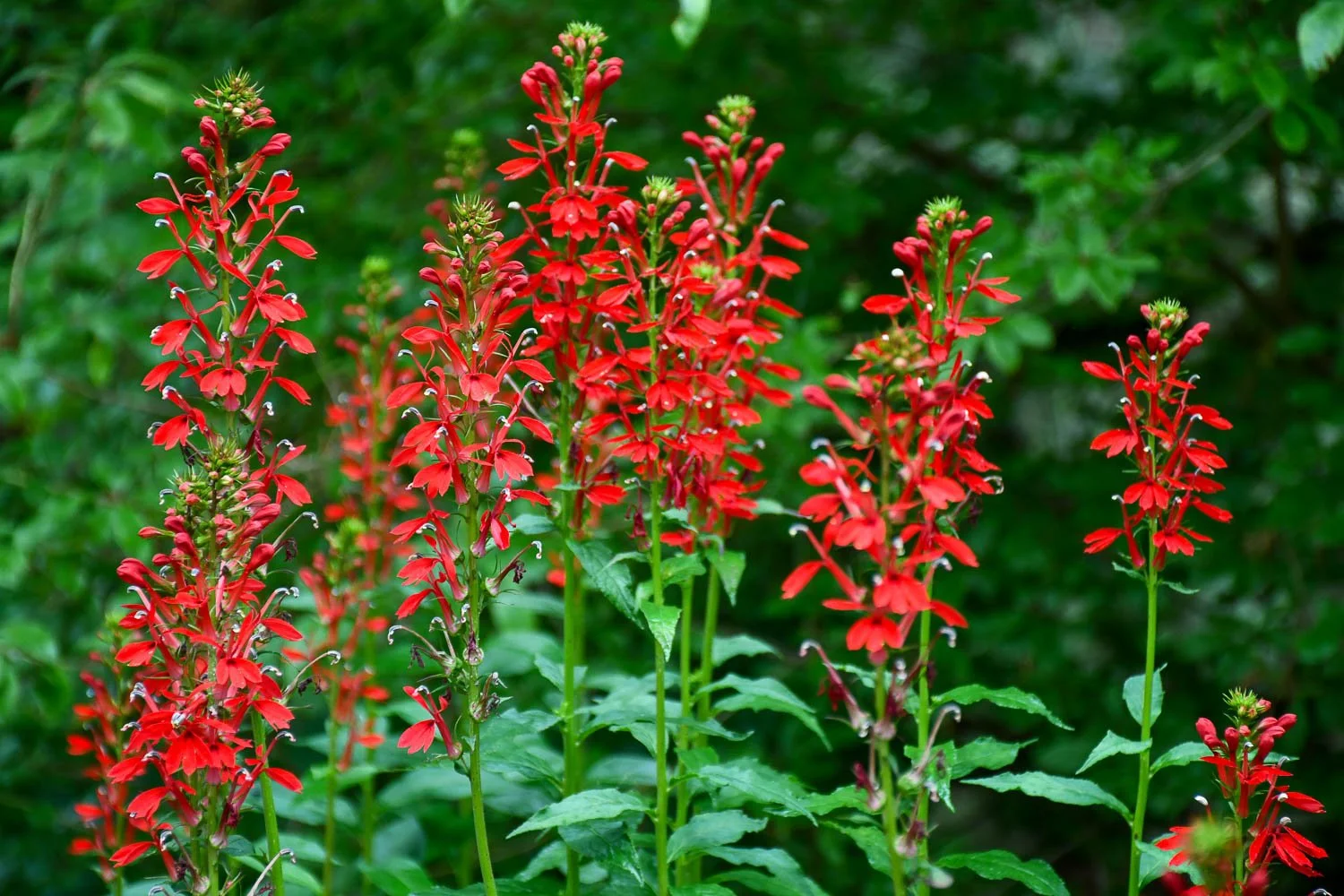
Some perennials are ruderals because they only last a few years and they thrive on disturbance opening new spots for seeds to germinate.
Examples of Ruderals
Many of you will recognize the descriptions I’ve been sharing of ruderals as annuals, biennials, and perannuals, that group of perennials that often have a short life span. And, you may wonder why we need another term when we have these three. These categories help us think about life span, but coming at it from the perspective of the ruderal survival strategy helps us think about using these plants in design and how to manage them.
Horticulture 101 is knowing the difference between an annual and a perennial. The elevated level is to think about how ruderals function in plant communities. We can ask, what has this species evolved to do? With ruderals we’re dealing with species found in the early stages of succession, and so that means our design and management styles must fit.
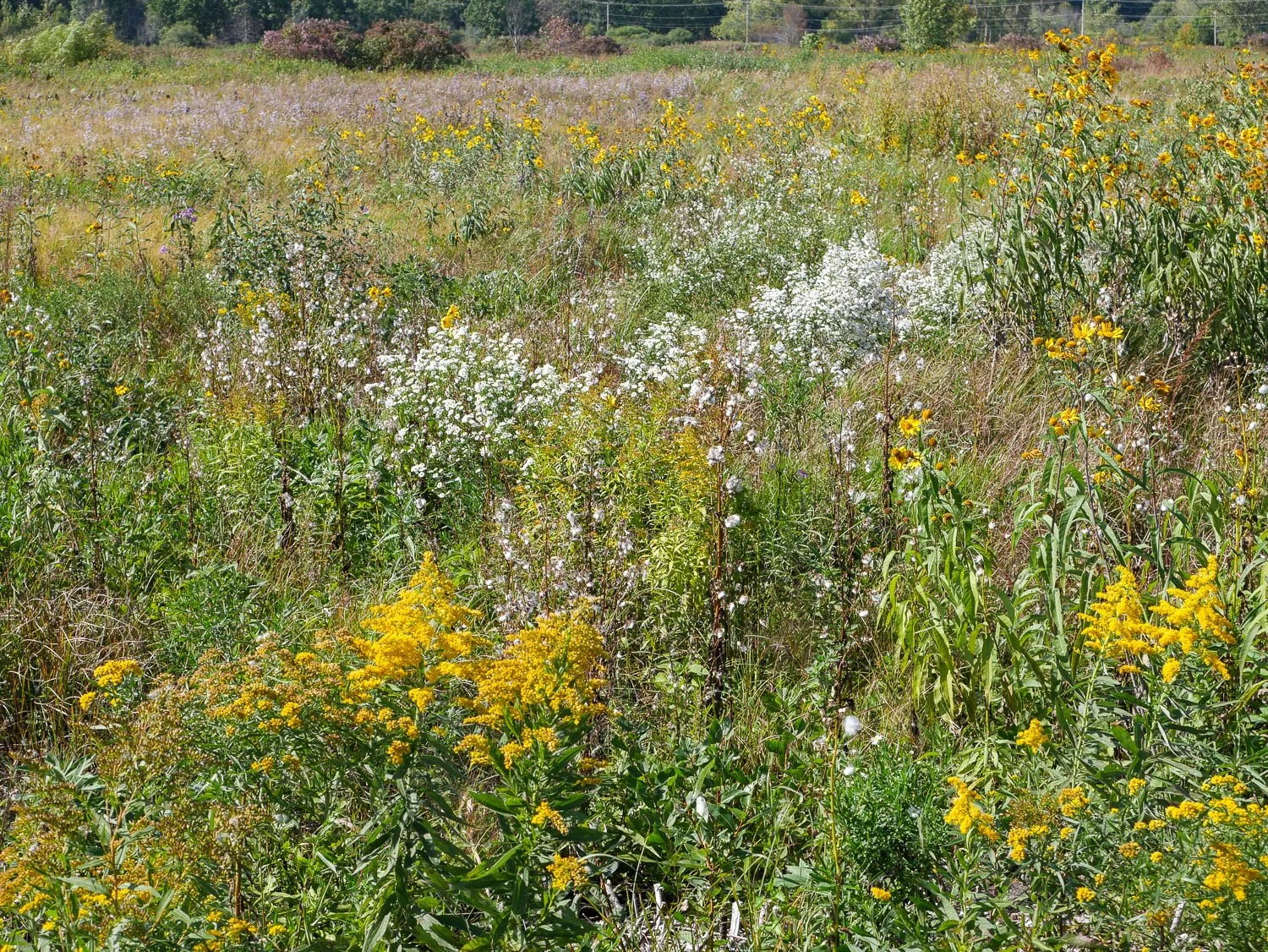
Most of the plants that we grow in our vegetable gardens and cut flower gardens are ruderals, too, and we have, of course, selected them and bred them for that need. And, in our naturalistic gardens we also use them. The short-lived Gaillardia pulchella (blanket flower) and Rudbeckia hirta (black-eyed Susan) lean ruderal also.
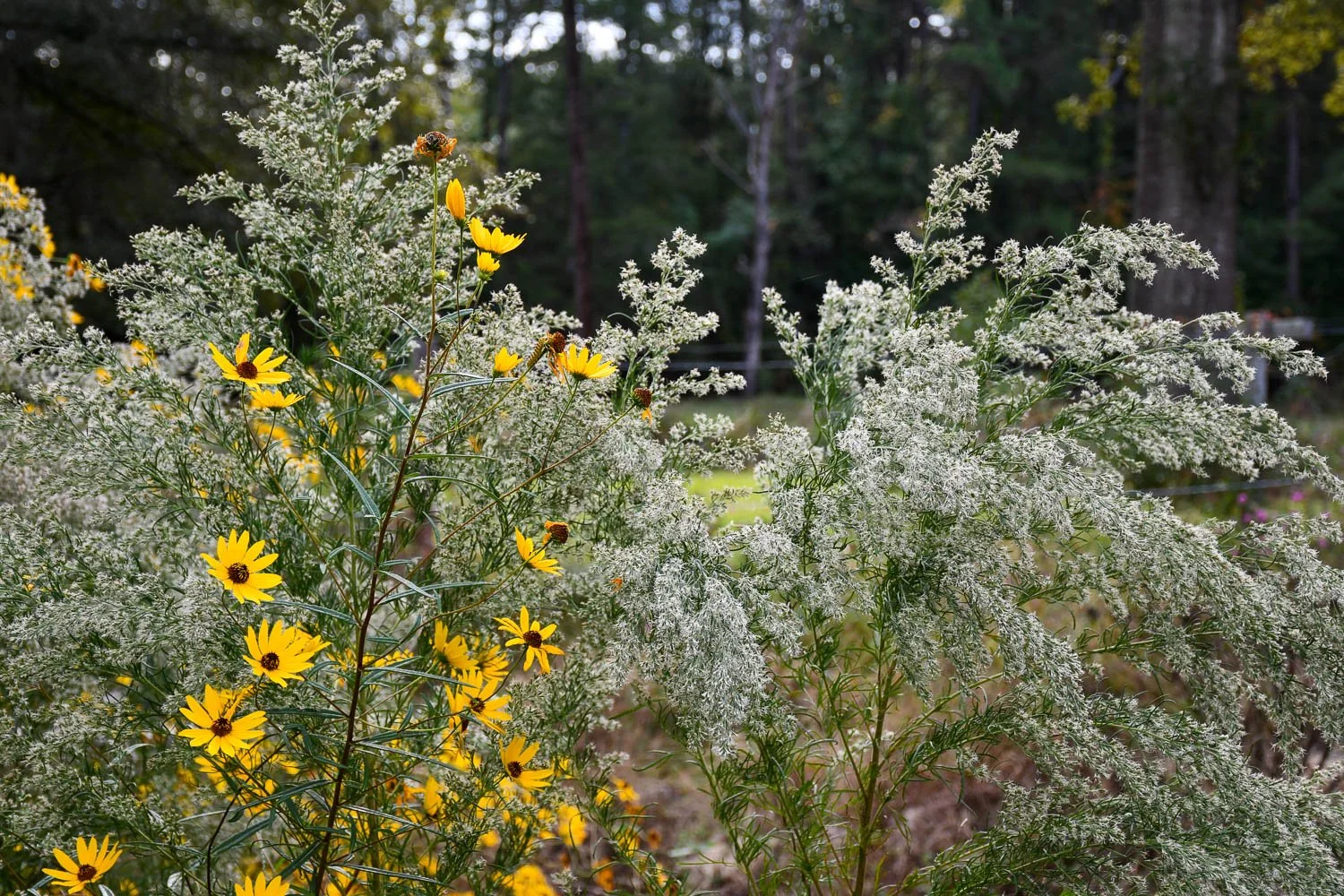
Sure, I started this post with cool-season plants, but I should stress there are also summer ruderals, some of which are just going to seed in the garden. Helianthus argophyllus (silver-leaf sunflower), Bidens aristosa (tickseed sunflower), and Oenothera heterophylla (sandhill evening primrose) are now self sowing regularly for us.
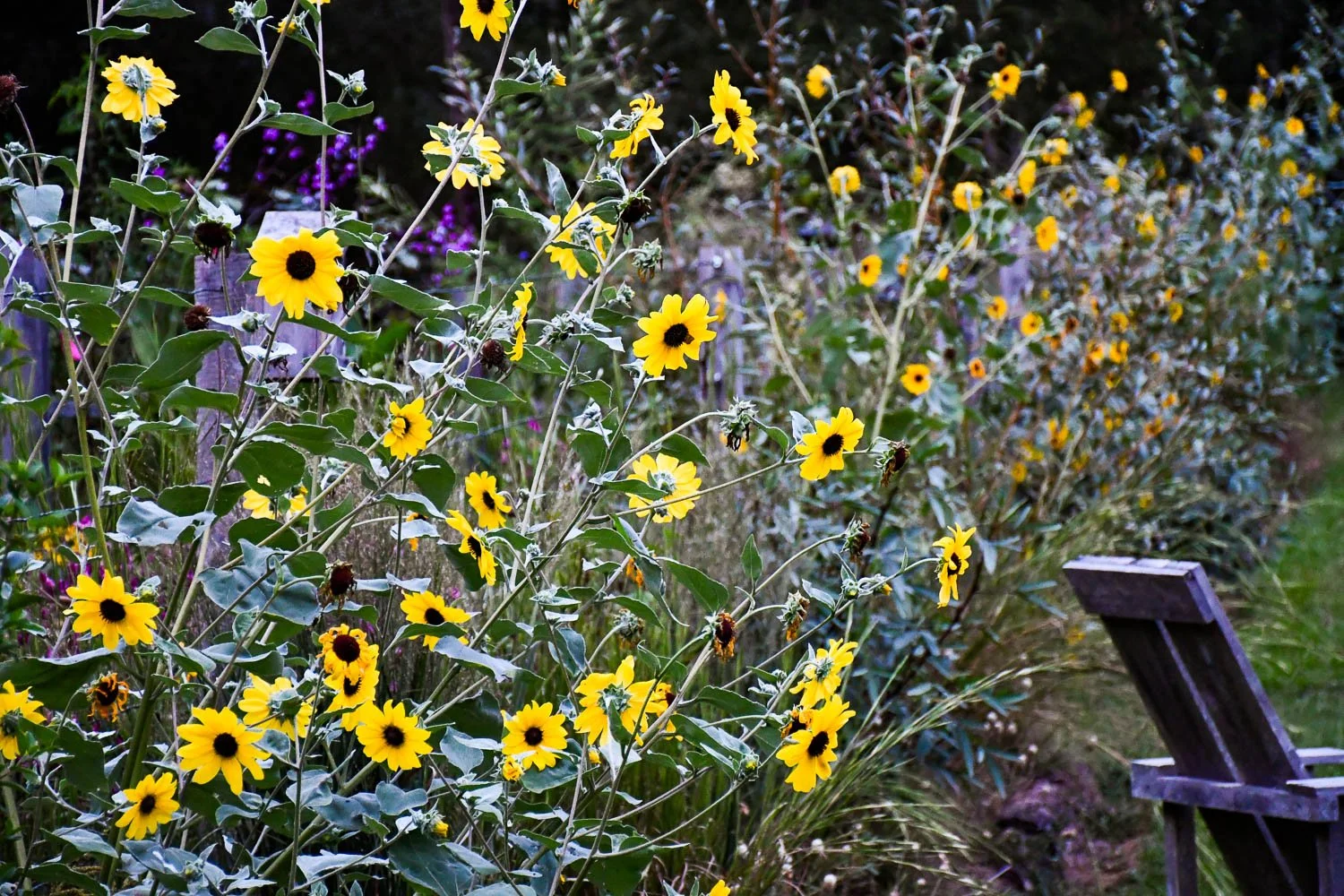
Helianthus argophyllus (silver-leaf sunflower) is one of my (and the Carolina Chickadees’) favorite ruderals for the silvery leaves and brilliant flowers.
Be the Bison
Thomas Rainer was one of the first people I heard say, “Be the bison” and encourage us to introduce disturbance into our gardens. And, ruderals need us to create those open gaps. Or, maybe they need us to be like squirrels, digging small holes and throwing ruderal plugs randomly in the beds.
Often, gardeners try to control their gardens, and ruderals are a reminder that you can’t. That’s been one of the great joys, like with the sandyland bluebonnets. I started with just a handful of seed, and I’m now up to hundreds of plants that appear in the fall and bloom come spring. I’m spreading them to other places around our property, or they’re just randomly appearing too. And, I believe that in a changing world where weather is unpredictable, having plants with a tinge of unpredictability can be great allies in garden design.
While having a bunch of ruderals randomly appear in the beds requires some thoughtful weeding, there is a joy to seeing them appear wherever their seeds fell.
Now you may be wondering, what other ways can you use these plants in design? Well, join me on Monday, November 16, and I’ll share plenty of ideas you can use in your garden.
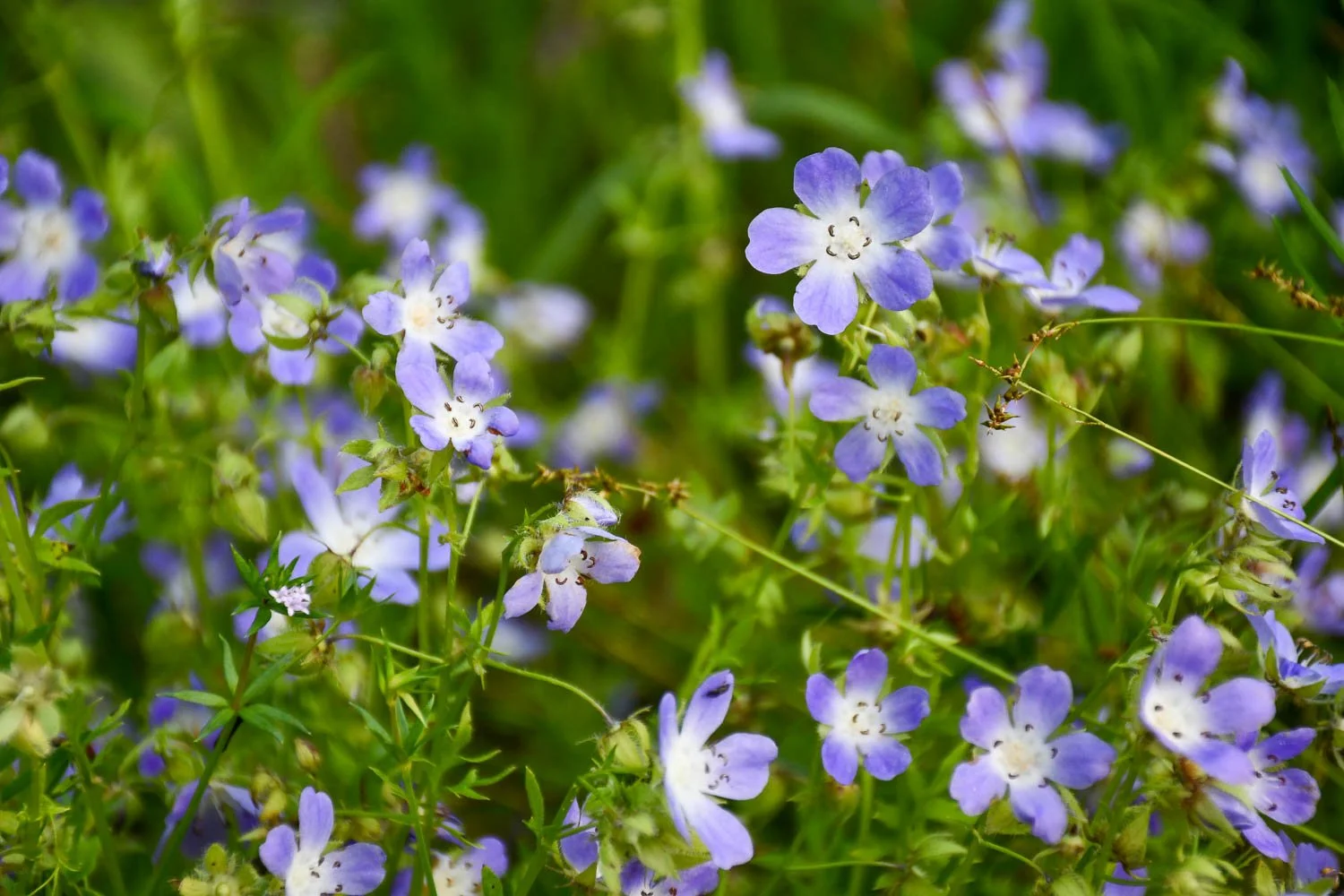
The seedlings of Nemophila phacelioides in the image above will be blooming in just a few months. They will set seed and return for years to come.
Keep Growing