54. Heather Holm on Pollinators and Native Plants
HEATHER HOLM BIO
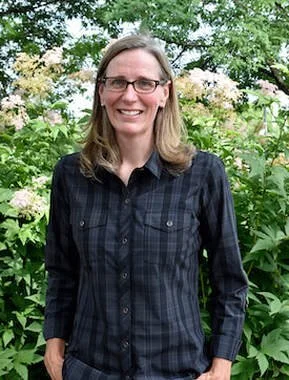
Heather Holm is a pollinator conservationist and award-winning author of four books: Pollinators of Native Plants, Bees, Wasps, and Common Native Bees of the Eastern United States . Both Bees and Wasps have won multiple book awards including the American Horticultural Society Book Award. She is the founder and chair of Minnesota Native Bees, an online field guide illustrating the native bees of Minnesota and beyond. Heather’s expertise includes the interactions between native pollinators and native plants, and the natural history and biology of native bees and predatory wasps. Her work has been featured in The New York Times, Minneapolis Star Tribune, and many local publications. Heather is also an accomplished photographer and her pollinator photos are frequently featured in print and electronic publications.
In her spare time, she is an active community supporter, writing grants, and coordinating and participating in volunteer ecological landscape restoration projects of fire-dependent ecosystems. The latest project is a 13-acre oak savanna restoration that will provide thriving habitat for pollinators, birds, mammals, and passive, nature-based opportunities for people.
You can learn more about Heather at her website pollinatorsnativeplants.com, and check out her Minnesota bee field guide nonprofit at beesmn.org
SHOW NOTES
Fifth grade coleus cuttings rooting in a glass jar as an early plant memory
Learning tree identification from her father
Horticulture degree followed by biological sciences, with early entomology too focused on pest control to be inspiring
Moving to Minnesota and discovering the insect diversity of native landscapes
Joining a university pollination study group to get up to speed on bees
Web development, graphic design, and darkroom photography as transferable skills that now bring insects to life visually
Noticing highly specific patterns of insect visitation to certain plants year after year as her turning point
A beetle on mountain mint that hitchhikes its larvae onto bees and wasps back to the nest
Berry crop research showing farms near diverse habitat can achieve 100% pollination from native bees alone
Farms surrounded by conventional corn and soy struggling with inadequate native bee pollination
Deep involvement in ecological restoration, fire ecology, rare bee documentation, and a new Minnesota bee field guide nonprofit
Hemiparasitic plants like Pedicularis canadensis (wood betony), Comandra umbellata (bastard toad flax), and Aureolaria sp. (false foxgloves) as missing pieces in garden design and restoration
Prescribed fire increasing floral diversity and being extremely beneficial for bees despite public perception
Neighboring landscape context as a major factor that home gardens cannot fully replicate
Flower shape, complexity, and nectar guides determining which insects can access a given flower
Not every insect visit to a flower results in pollination
Monarchs commonly called pollinators despite lack of published research confirming they pollinate plants
Buzz pollination (sonication) and its importance for plants like blueberries
The southeastern blueberry bee as an eclectic pollen specialist also collecting redbud and lupine pollen
Southeastern Blueberry Bee: Georgia Native Blueberry Pollinator
Pollen specialists making up 30–40% of bee species depending on location
About 90% of native bees are solitary with a roughly 12-month egg-to-adult life cycle
Offspring spending up to 10 months in a prepupal stage underground before emerging
Sandy, well-drained soil can support higher bee diversity
Bees that prefer bare soil often nesting gregariously in clusters
Bee diversity highest in arid regions like the Southwest and Texas
Leafcutter bee cuts on rose leaves as visible evidence of nearby nesting activity
A small mason bee chewing wild strawberry leaves into a leaf pesto to line her nest
Logs, stem stubble, and leaf litter as overlooked nesting habitat
University of Maryland study finding raked yards had fewer arthropods and fewer butterflies and moths
Using small plugs and adding organic matter slowly when establishing soft landings under trees
Social wasps representing less than 5% of all wasp species, with the vast majority solitary and non-aggressive
Residential mosquito spraying, including products marketed as organic, being highly toxic to all pollinators
High insect visitation to non-native plants not telling the full story; most may be nectar-feeding rather than collecting pollen for nests
Influence of Plant Taxa on Pollinator, Butterfly, and Beneficial Insect Visitation
Nectar as carbohydrate fuel; pollen as the fat- and protein-rich food female bees provision nests with
Leaving 8 to 20 inches of stem stubble on pithy-stemmed perennials as nesting habitat for small carpenter and mason bees
Offspring from stem nesters not emerging until a full year after the nest is provisioned
Female eggs laid at the back of the stem, male eggs near the front, with females receiving more food and emerging later
Focusing stem stubble efforts on Aster family plants — black-eyed Susan, goldenrod, and coneflowers
Native willows, dogwoods, ericaceous shrubs, leadplant, and red maple as top woody plants for supporting specialist bees
Looking up into flowering trees in spring, not just down, to find bee activity
Oil bees combing oil from native loosestrife (Lysimachia) trichomes to waterproof their ground nests
The cellophane bee Colletes ciliatus specializing on Cuscuta glomerata (rope dodder), a parasitic annual vine that shifts location each year
Planting natives from neighboring regions in gardens to extend bloom periods and support pollen specialists
Being a lifelong learner and staying open to tangential subjects as her core professional practice
The dandelion-as-first-bee-food myth as something that irks her — diversity is always the answer
The Eternal Frontier by Tim Flannery as a recommended read on North American ecology across deep time
Slowing down to document pollinators using iNaturalist or the Seek app as her single ask for listeners
You can learn more about Heather and her books at pollinatorsnativeplants.com, and check out her Minnesota bee field guide nonprofit at beesmn.org.
KEEP GROWING