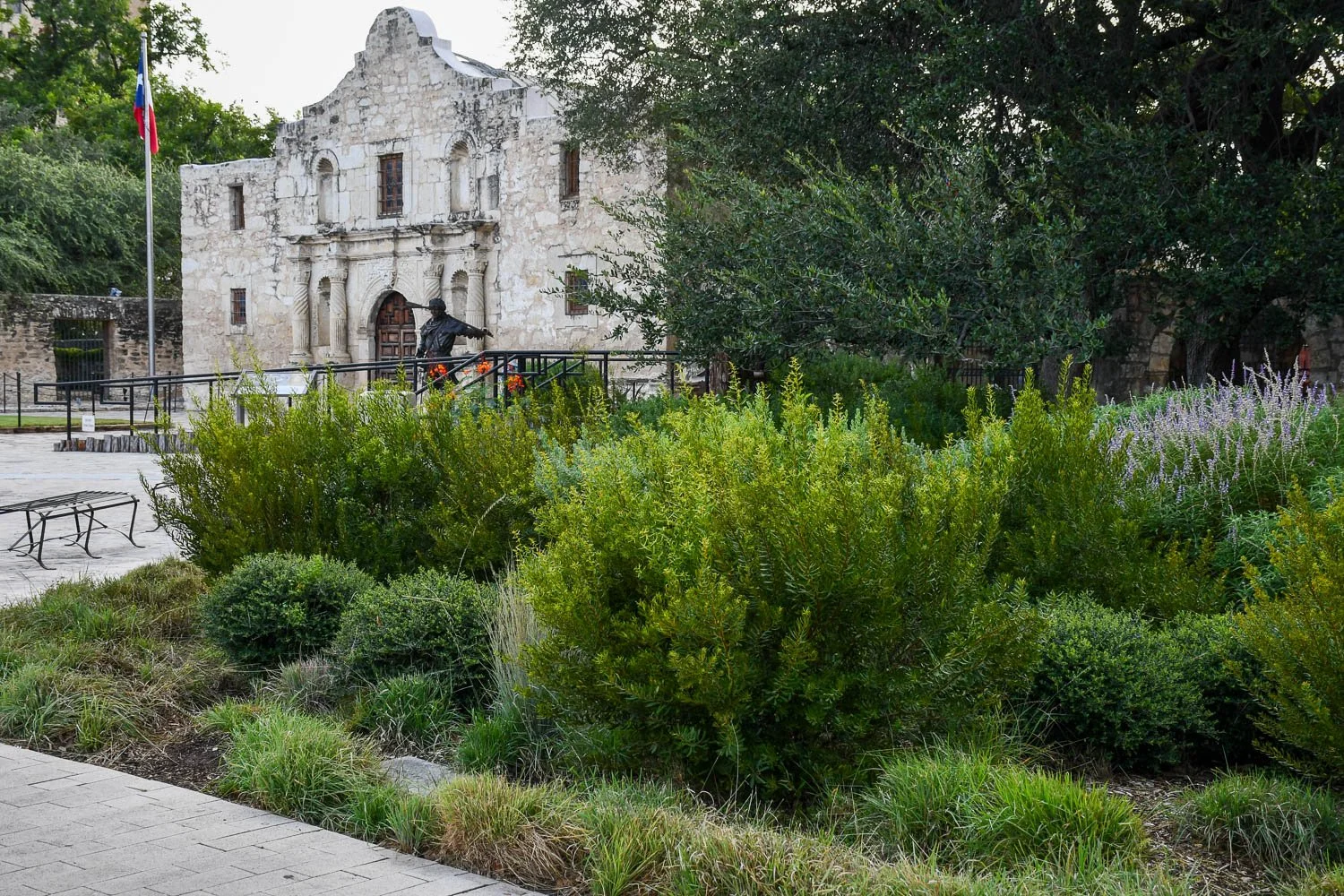
Last year when we visited the Alamo, I was very impressed with the landscape, and I figured this year, I'd actually bring my camera to take some decent photographs of the space.
I visited early in the morning when the temperature was cool and the light soft. The only people around were those cleaning the space and freshening up the landscape.
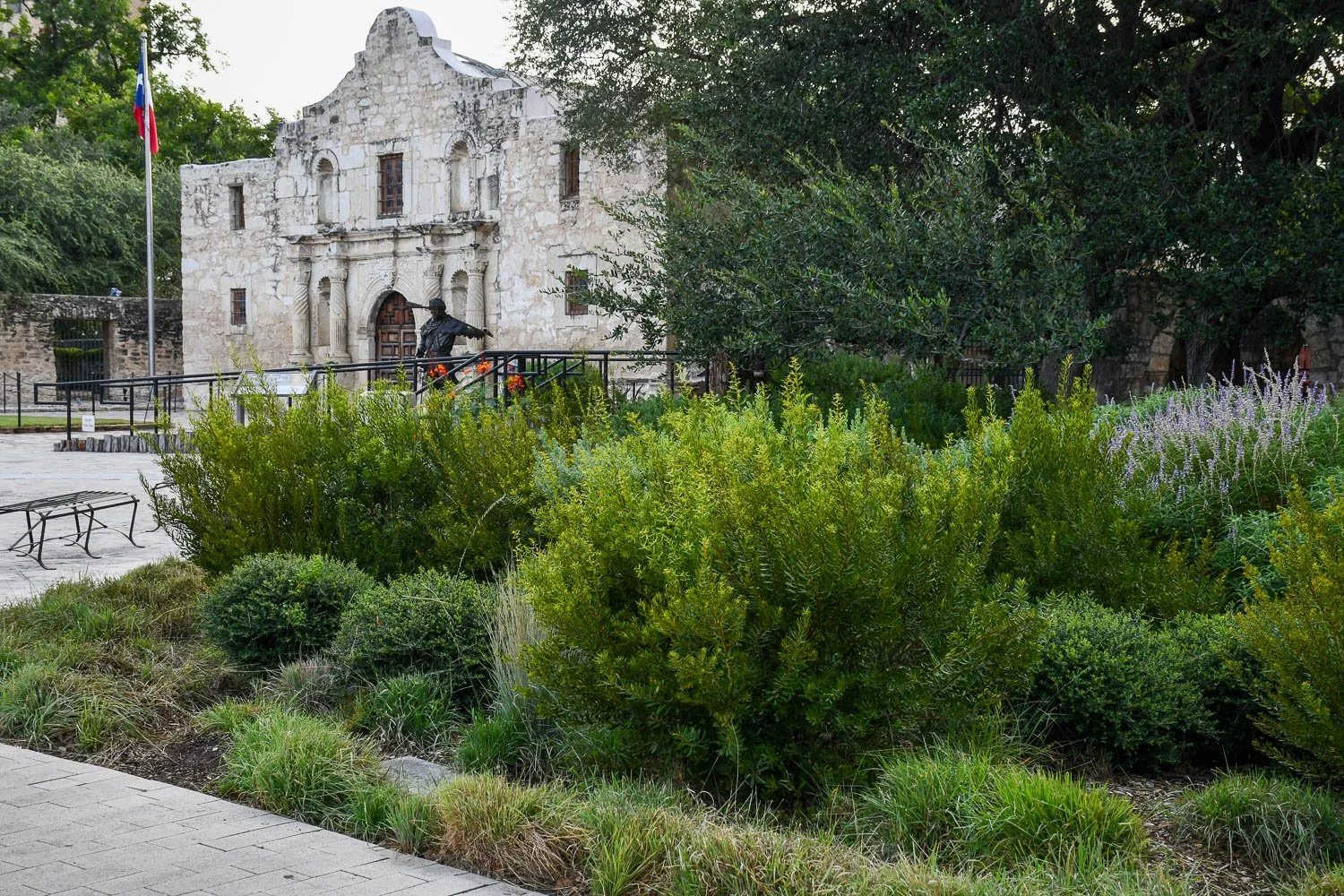
This naturalistic planting created an evocative image of a verdant west Texas landscape, and with a bit of research I found out that the design was from OJB Studios. There was a hint of minimalism to it. I loved how they employed a variety of textures and how they arranged fairly common plants creatively.
I counted around a dozen species in the space. There was a matrix of sedges planted with shrubs [Ilex vomitoria ‘Nana’ (yaupon holly) and Morella cerifera (wax myrtle)], shrubby perennials [Salvia leucantha (Mexican bush sage)], grasses [Schizachyrium scoparium (little bluestem) and Bouteloua curtipendula (side-oats grama)], and xeric species (Opuntia, Yucca, and Agave sp.). A solitary Caesalpinia pulcherrima (pride of Barbados) provided a nice pop of color. The height of everything seemed to be managed so that one could see the Quercus virginiana (live oaks) and alleyway behind.
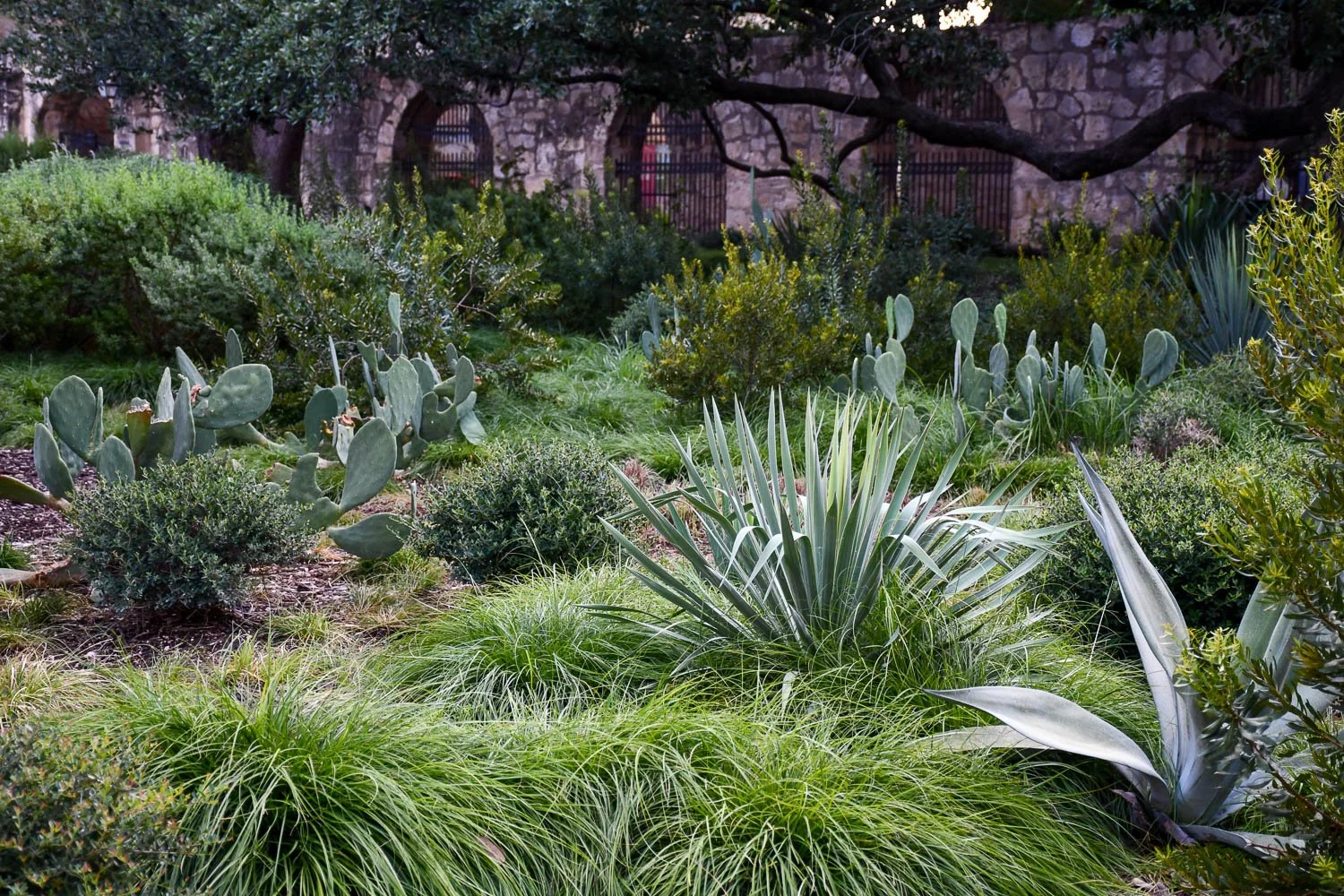
I love the simplicity of this planting. There’s maybe half a dozen species in this shot. It’s a great example of balancing coherence with complexity.
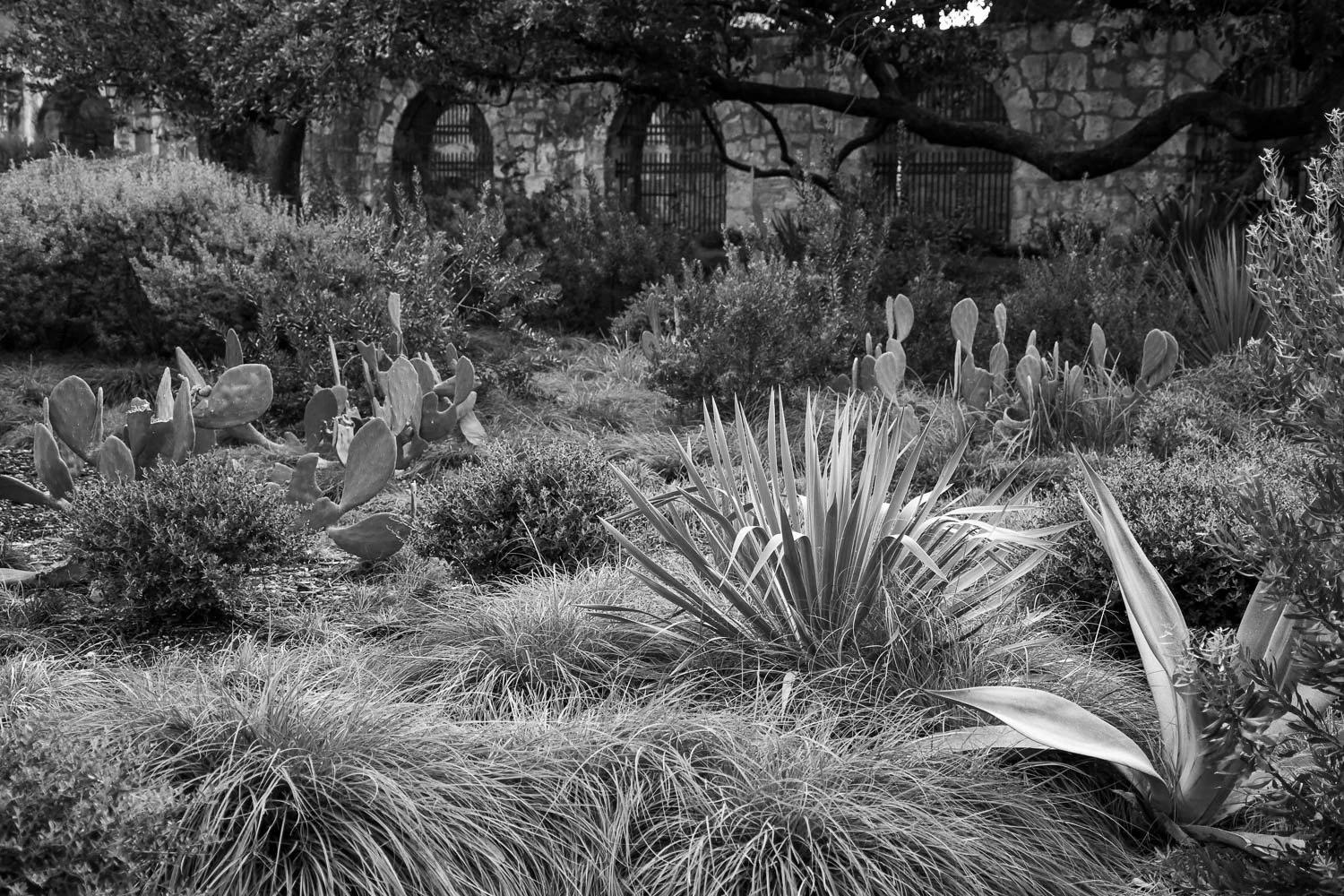
Same photograph as above but black and white. This landscape clearly passed the black and white test that Noel Kingsbury and I recently discussed on The Plantastic Podcast.
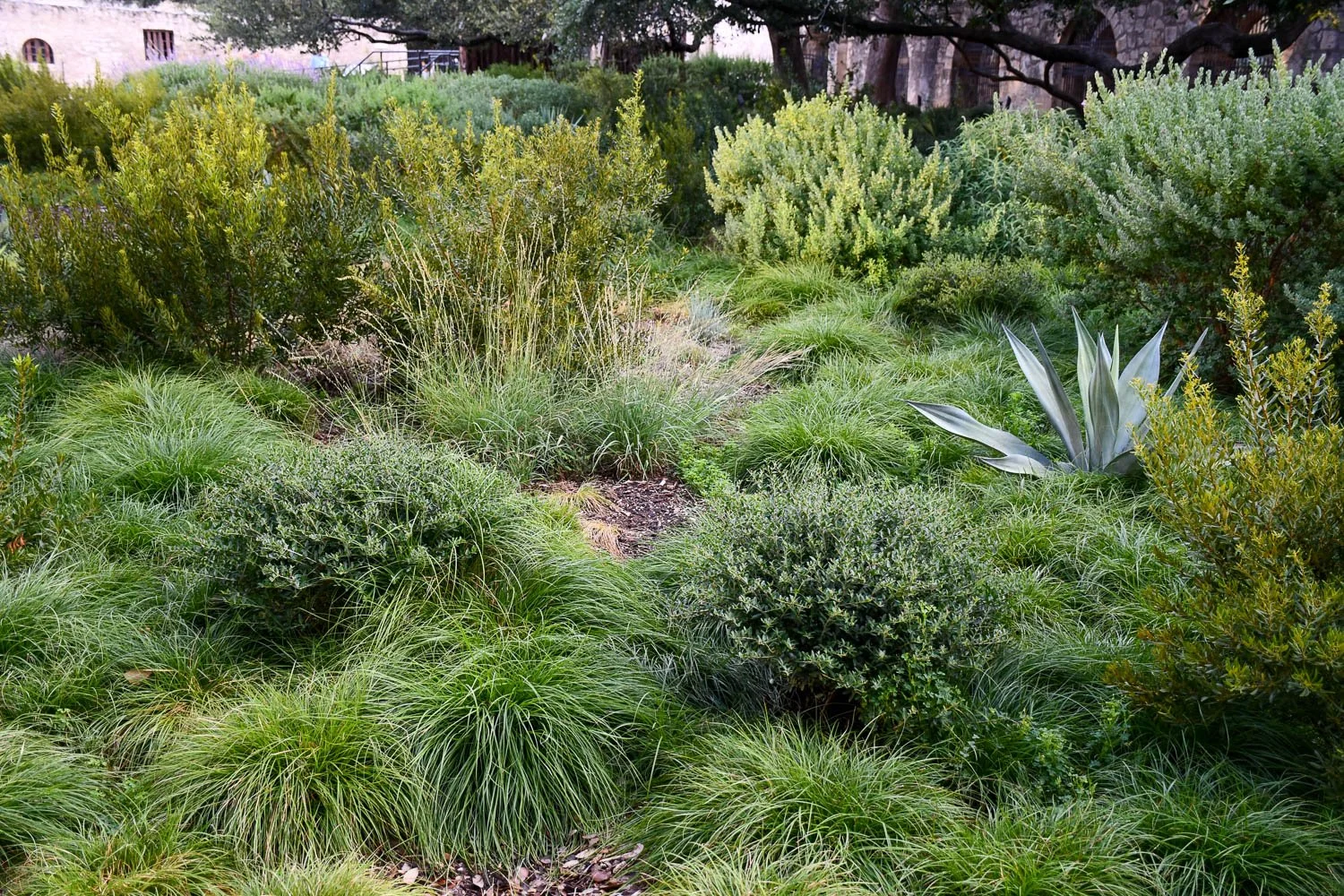
Sedges form a dominant matrix from which shrubs and xeric species emerge. Notice how you can see through and into the planting.
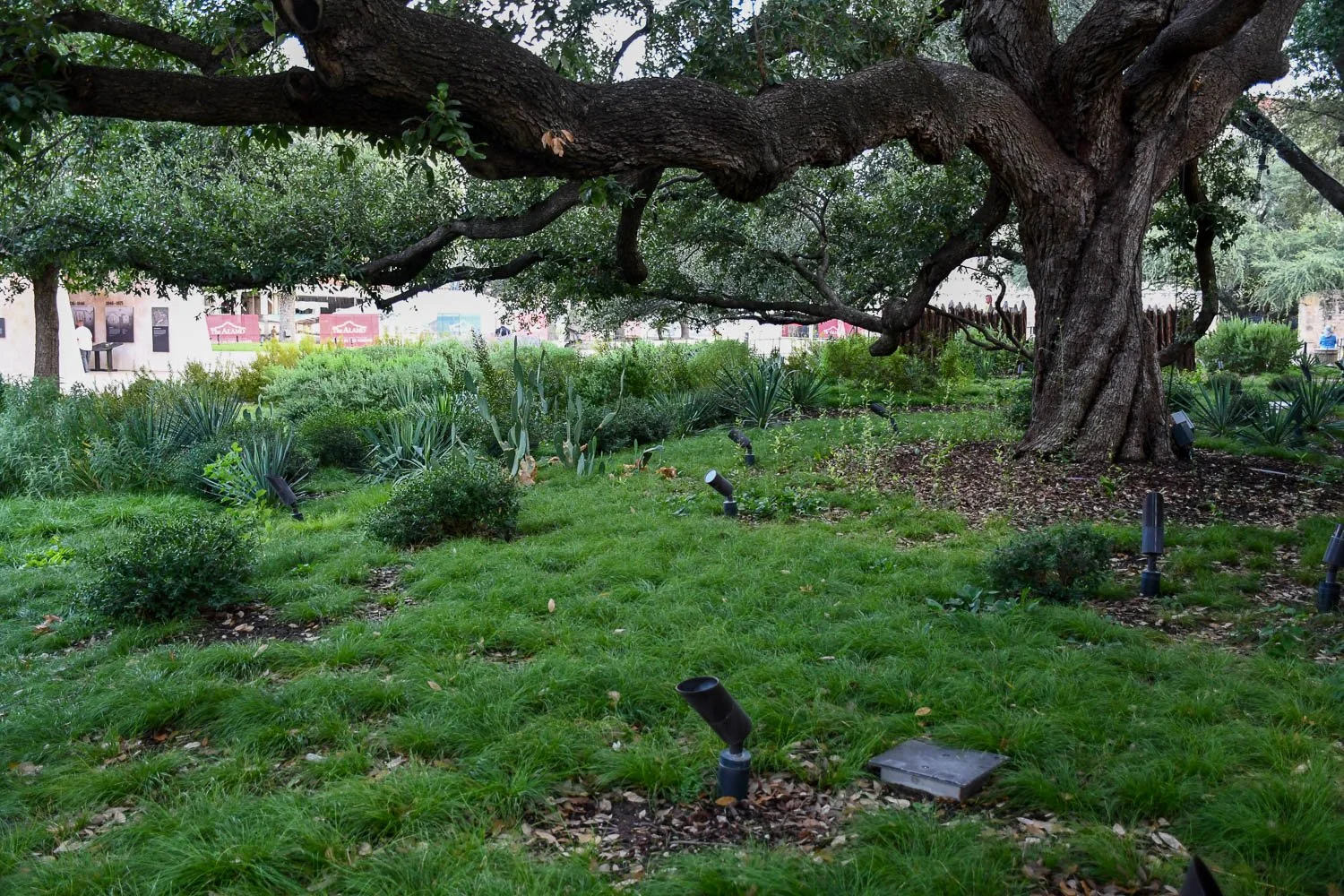
A groundcover of Carex seems quite happy under this live oak.
I saw two gentlemen cutting back the Bouteloua curtipendula. They said it was getting too tall and starting to grow over other plants (my guess is it was actually Schizachyrium starting to flop based on other plants I saw). They mentioned that the grass made it hard to see into the plantings, and that cutting it back would let you see in a little better. They also noted that it rebounds pretty quickly after a haircut.
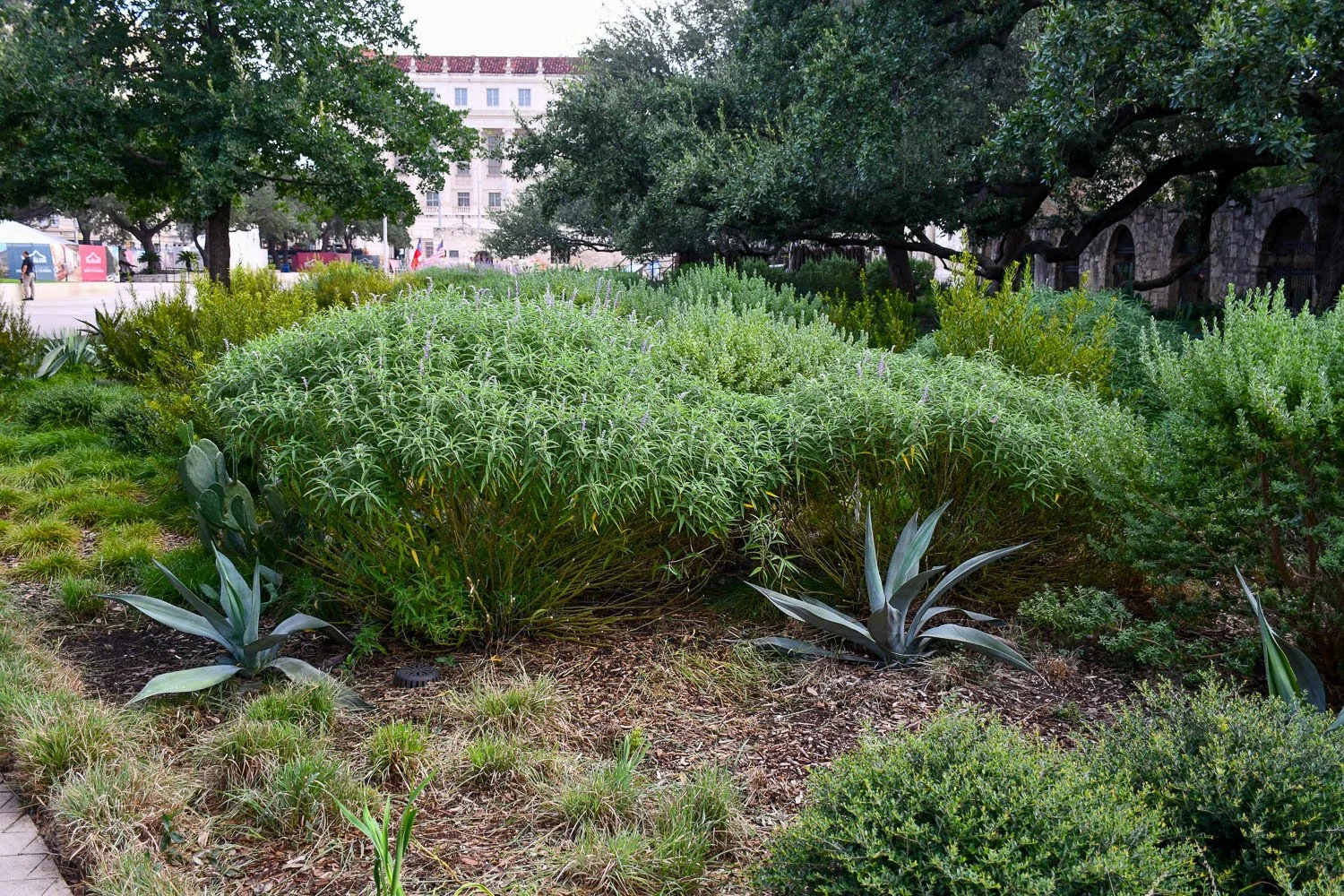
In the front left of the above image, you can see where Bouteloua curtipendula was cut back. And, it appears that earlier they had cut back Salvia leucantha to keep it off the agaves.
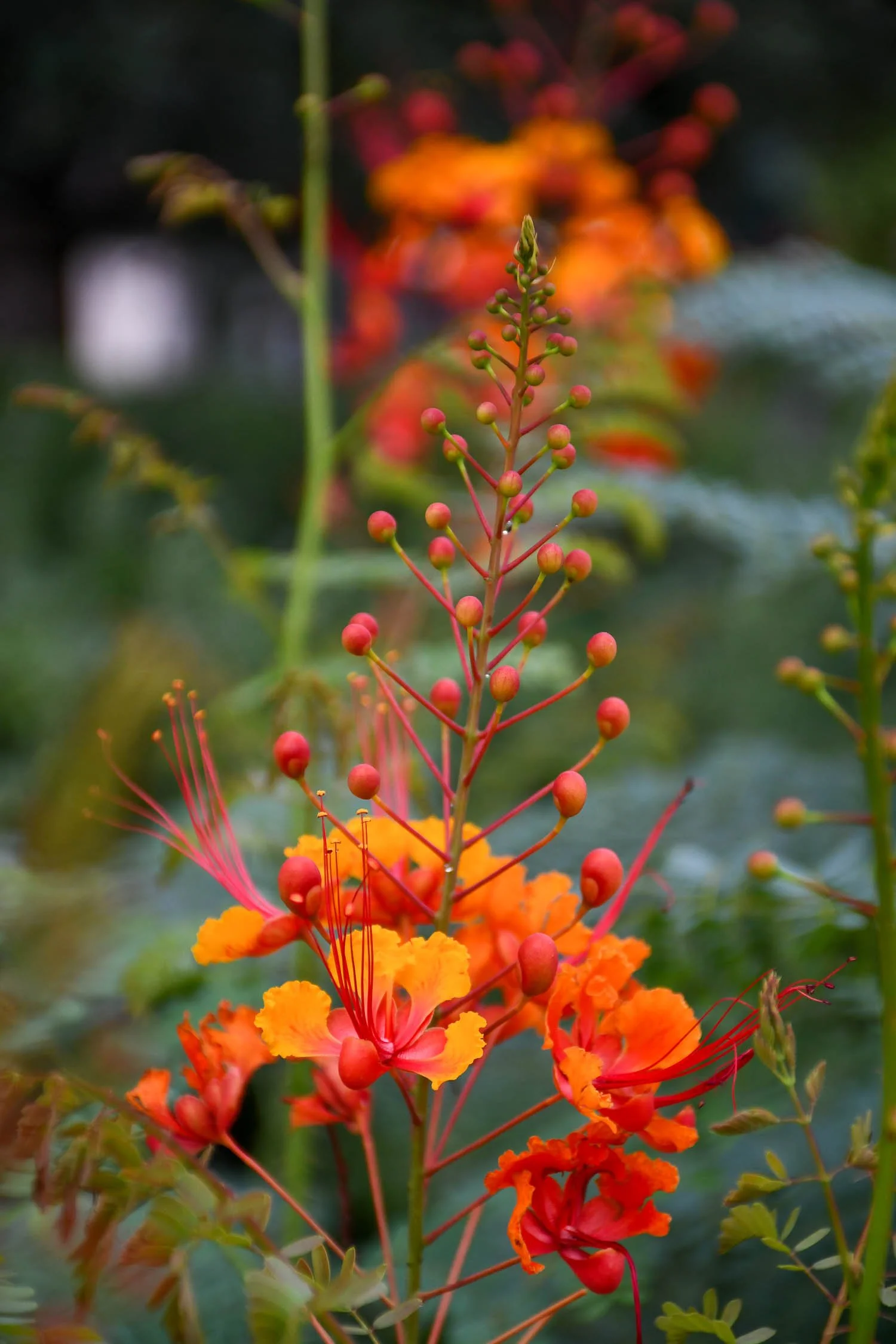
A lone Caesalpinia pulcherrima (pride of Barbados) provided a nice pop of color with all the green foliage. I thought they could have used a bit more.
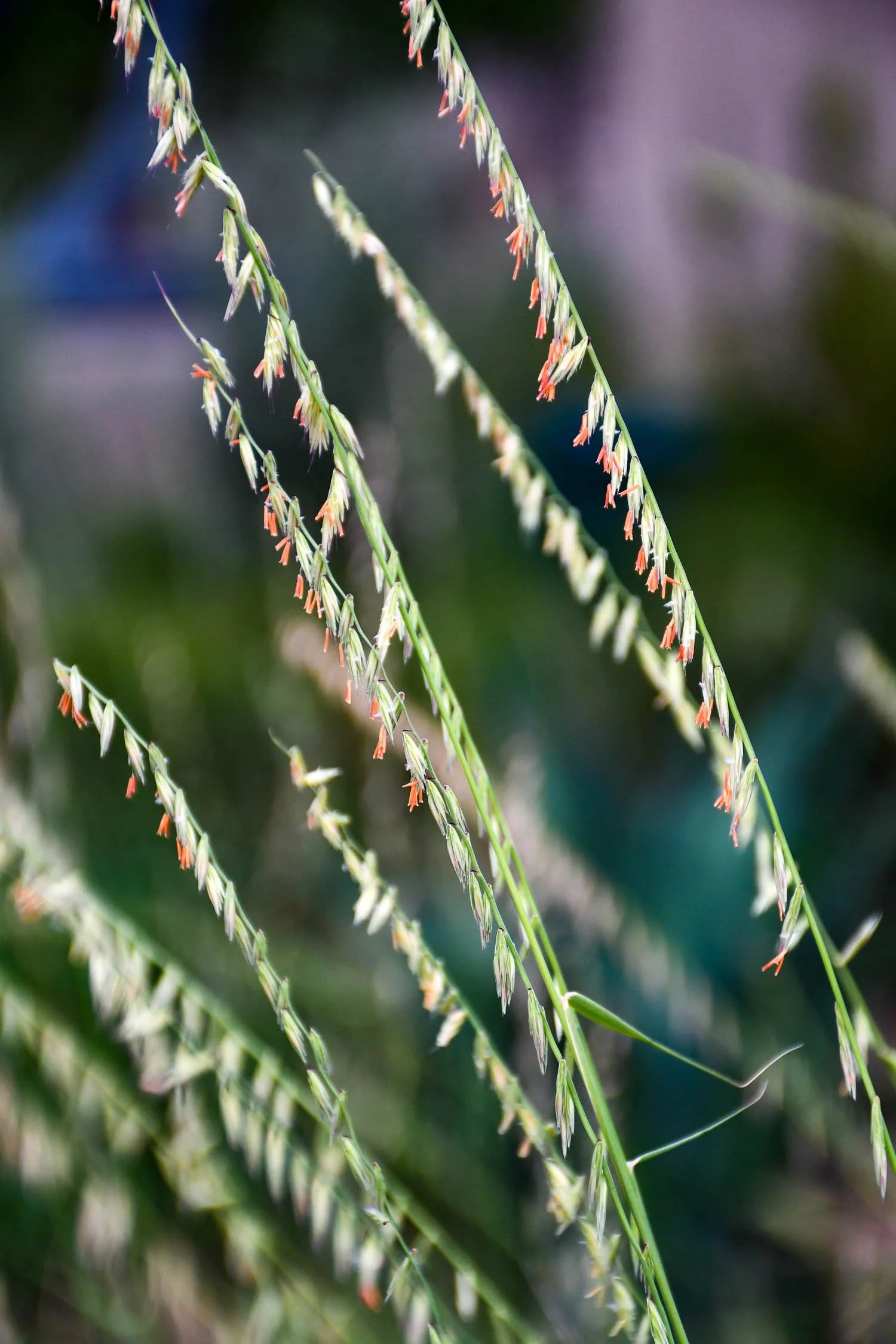
They didn’t cut back all the Bouteloua curtipendula. That way I got to enjoy these dangling orange stamens.
The far south side of the planting at the Alamo felt more Western-themed thanks in part to a dominant Bouteloua curtipendula matrix mixed with Opuntia, Agave, and Leucophyllum frutescens (Texas sage). The nearby live oaks gave it a kind of Southern Gothic meets Wild West feel.
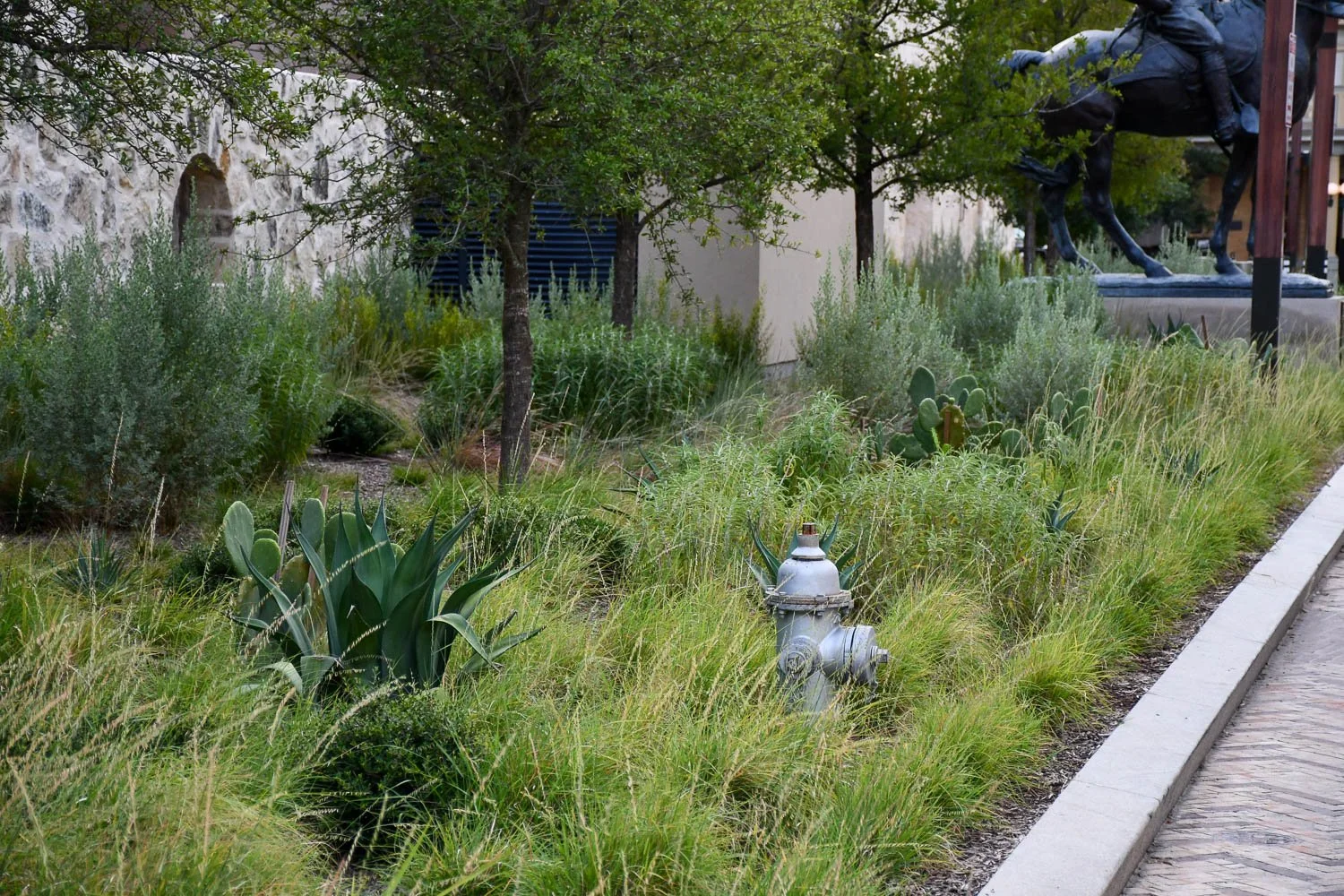
Another simple planting made of only a few species. The Bouteloua curtipendula matrix was evocative of drier climes.
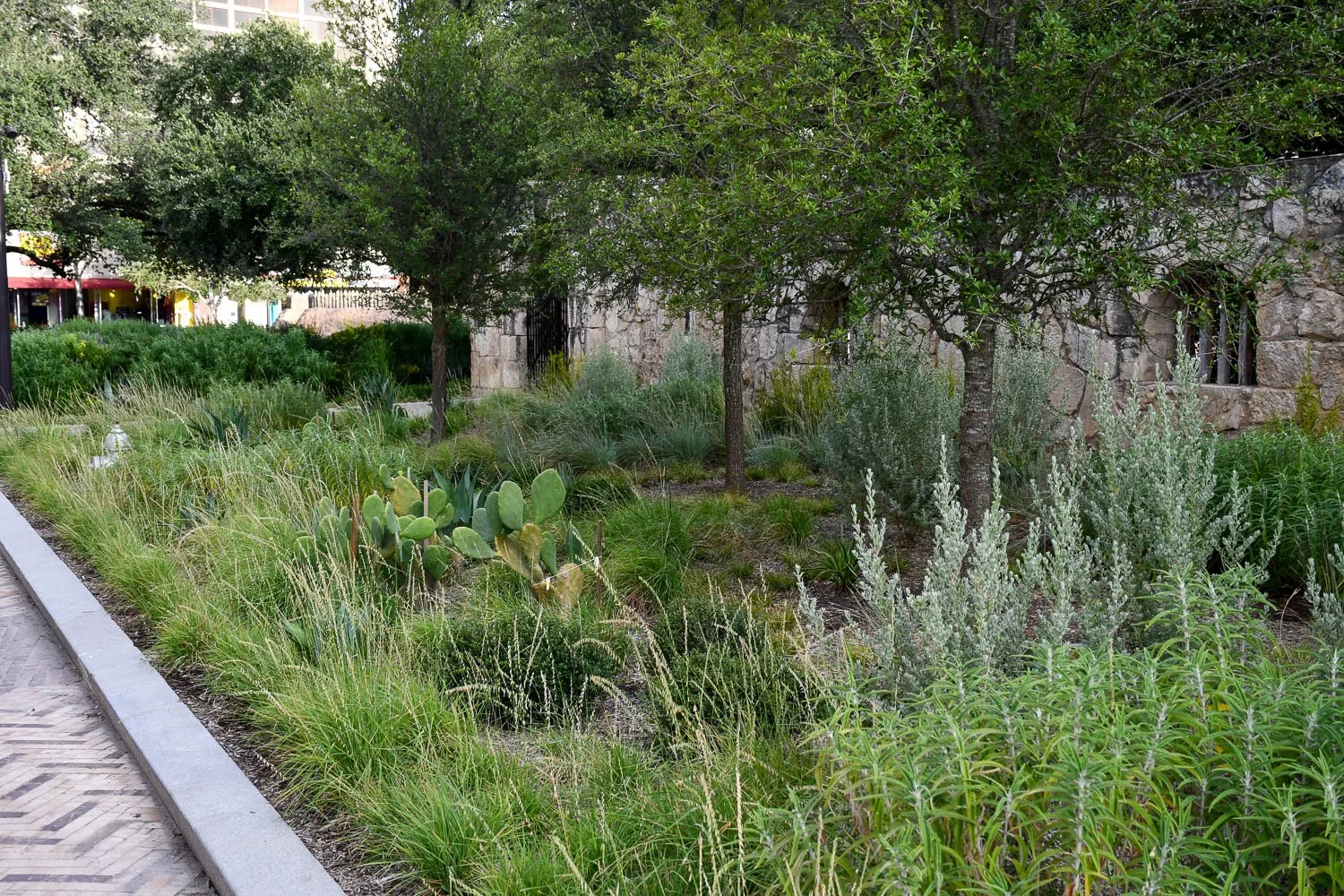
Another photo of the same area from a slightly different vantage point.
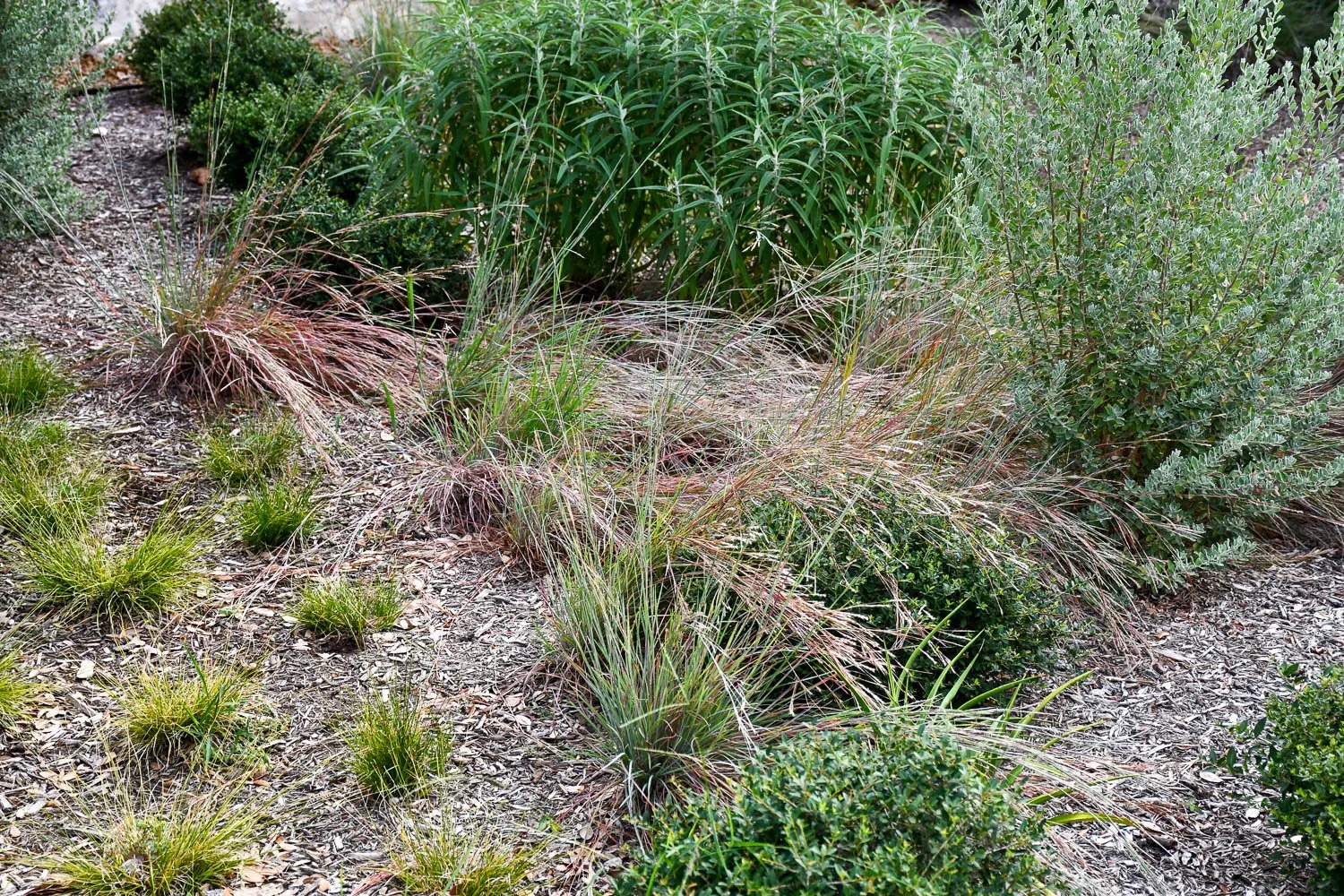
My eye is watchful not only for beautiful shots but also management challenges. Here you can see the Schizachyrium scoparium flopping over.
I know managing plantings under trees can be a challenge due to seeds dropped from birds. I saw one strategy to minimize that in these spaces. They kept an area around the base of the tree mulched and devoid of plants. My guess is it also helps minimize competition issues.
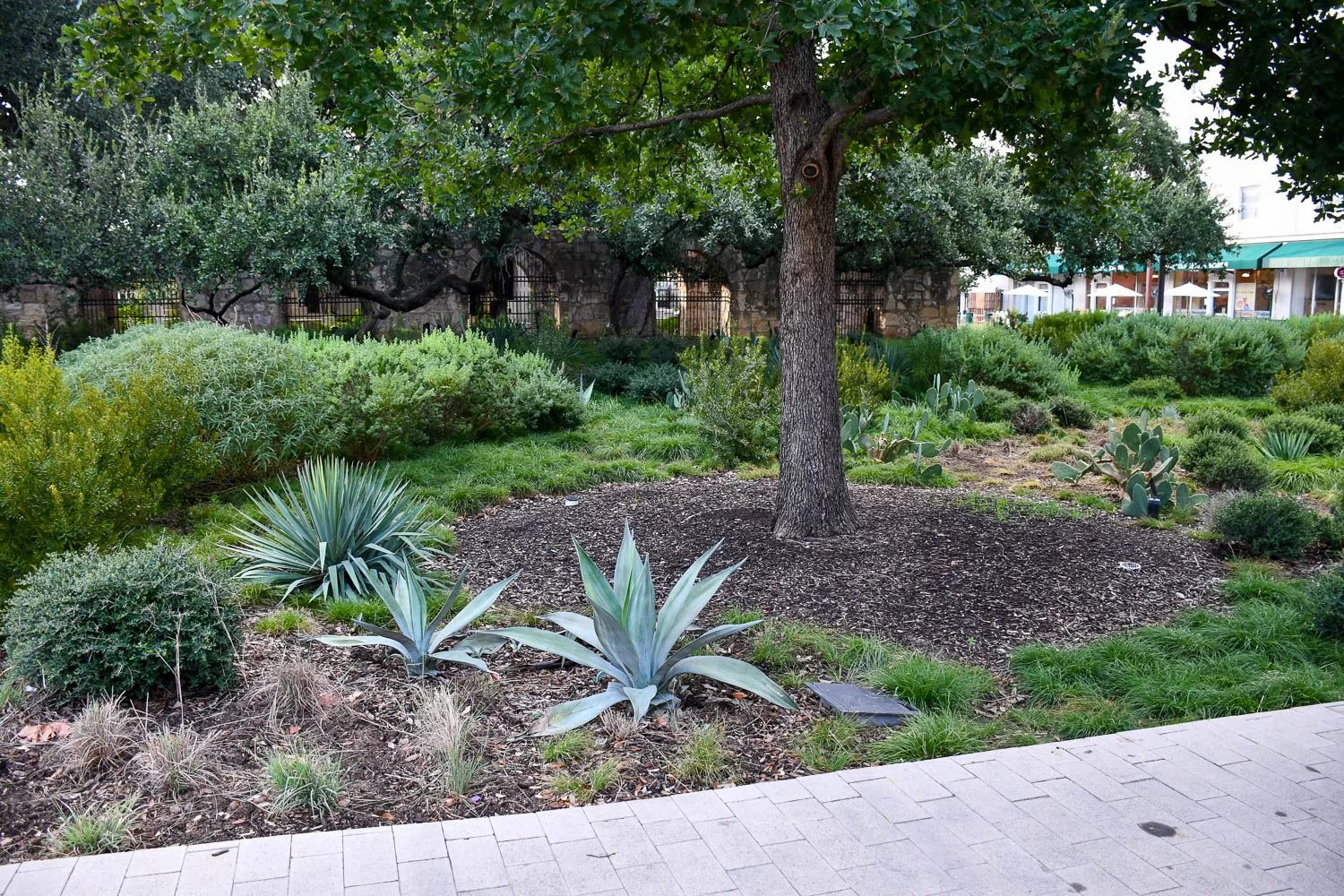
Notice the absence of plants under the tree. Perhaps a bit stark, but it makes management of this area likely easier.
Further out in the square were elevated boxes with Quercus virginiana surrounded by a matrix of likely Carex perdentata (sand sedge), but I’d be happy to be corrected. I asked a gentleman watering one area how often they watered these to keep them green and lush, and he said this time of the year 2–3 times a week.
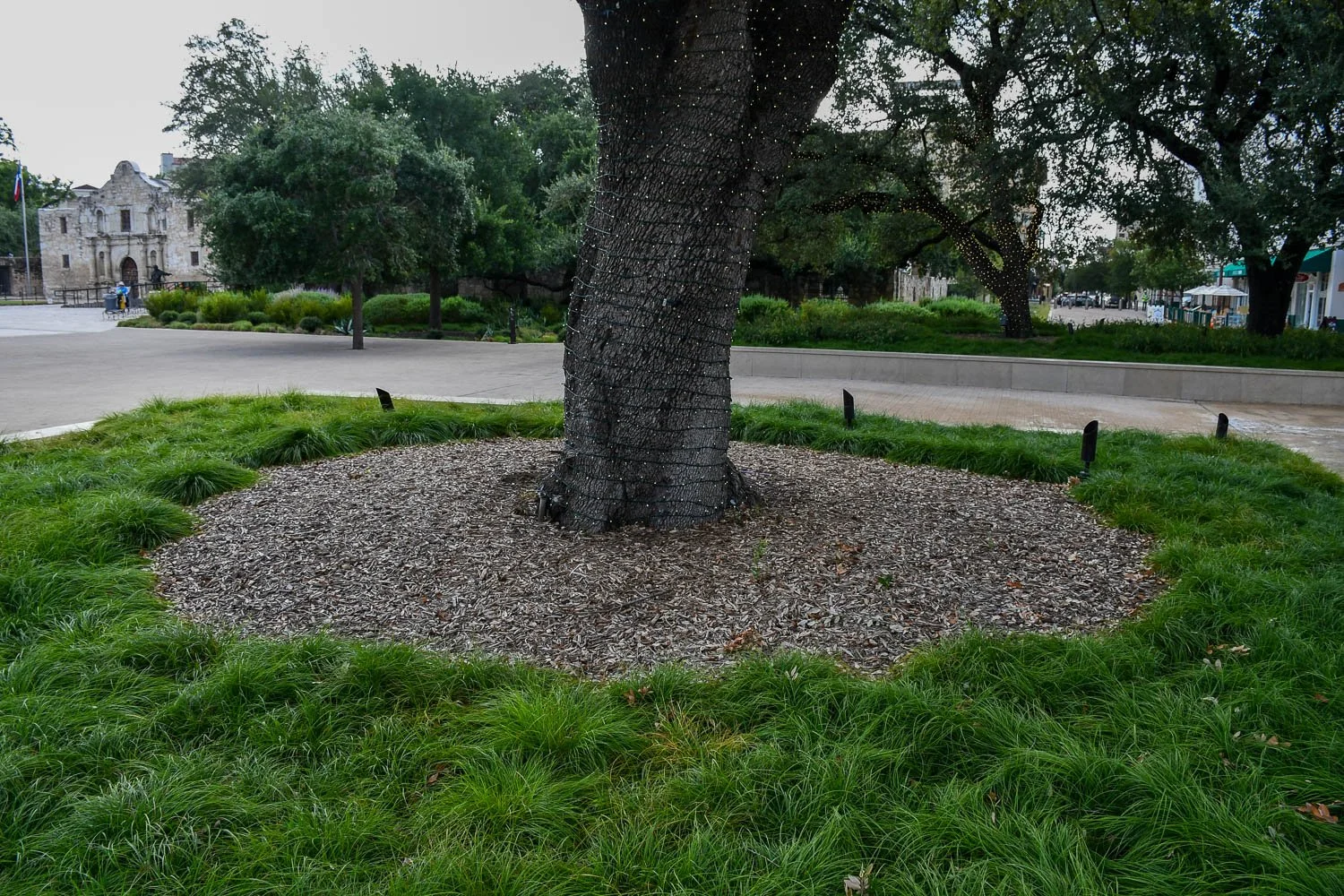
Sometimes naturalistic plantings can be this easy. A groundcover of likely Carex perdentata (sand sedge) softens the hardscape of the site. Note they repeated the strategy of mulch near the base of the tree to minimize competition and help make weed management easier.
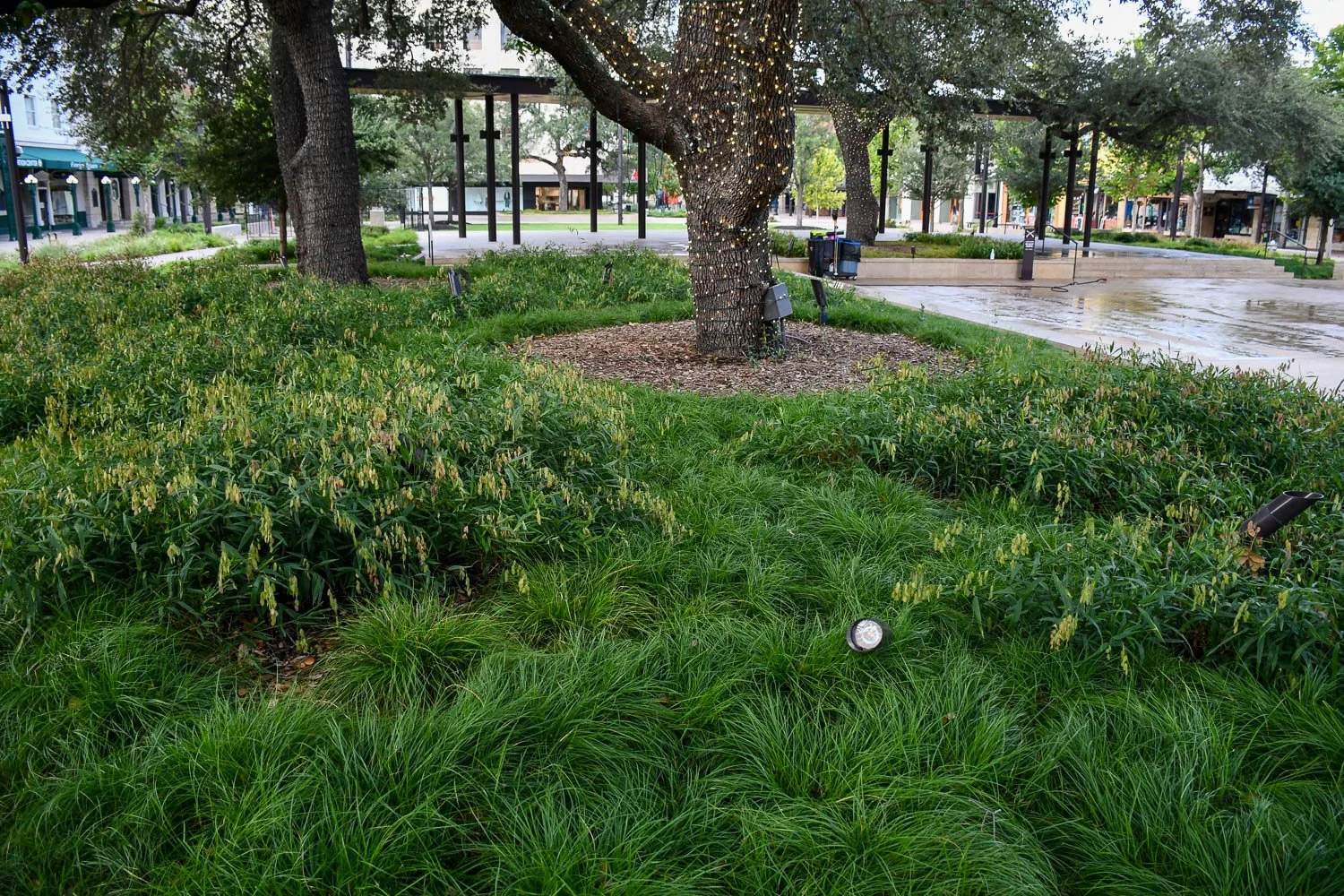
For a pop of something different, they added some Chasmanthium latifolium (river oats) in one area again showing how easy it can be to create an interesting space.
These plantings are a reminder that whereever you are, you can figure out a combination of plants to create a naturalistic planting. So the next time you’re in San Antonio, swing by the Alamo. Their plantings are to be remembered.
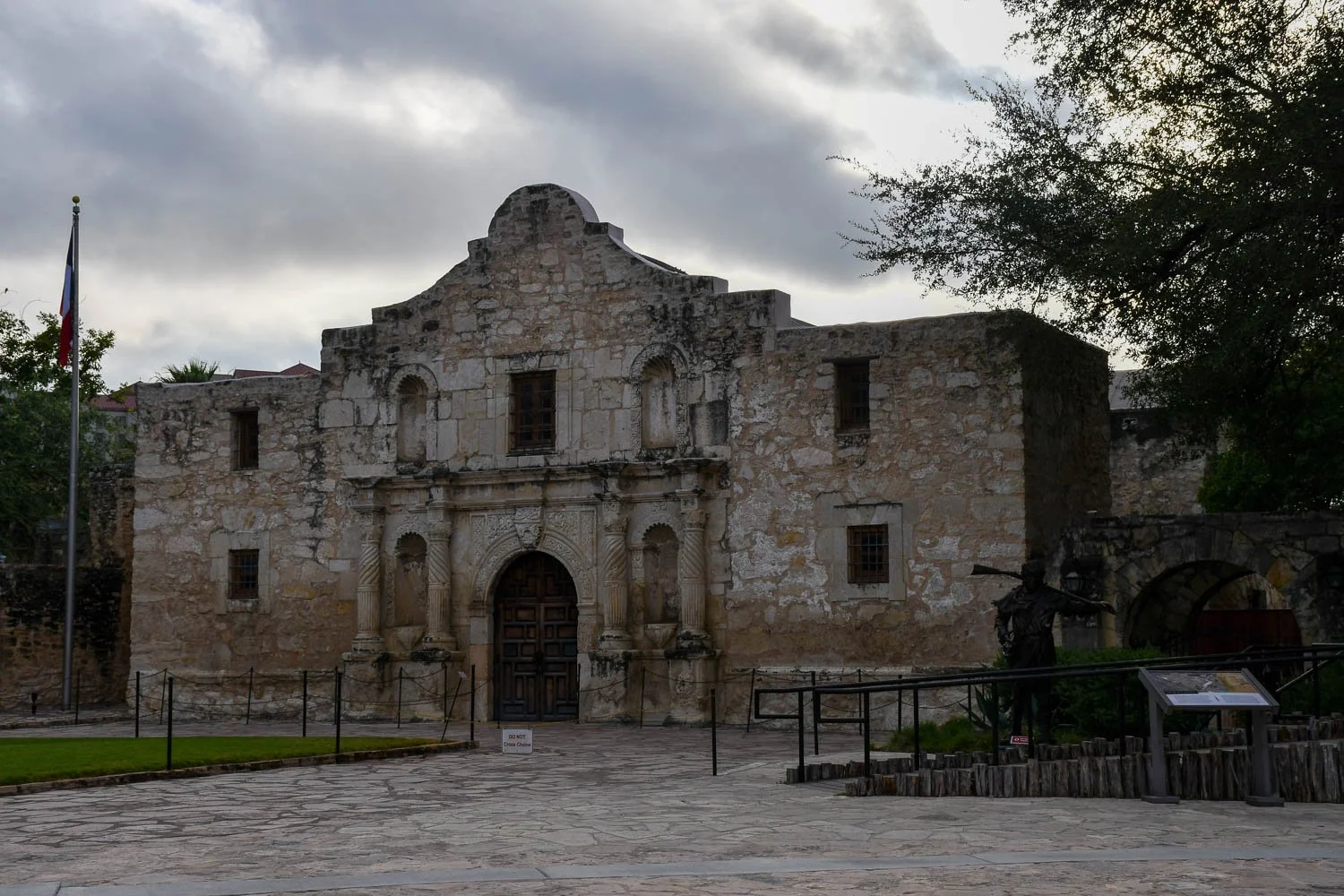
A final shot of the Alamo for those who haven’t seen it
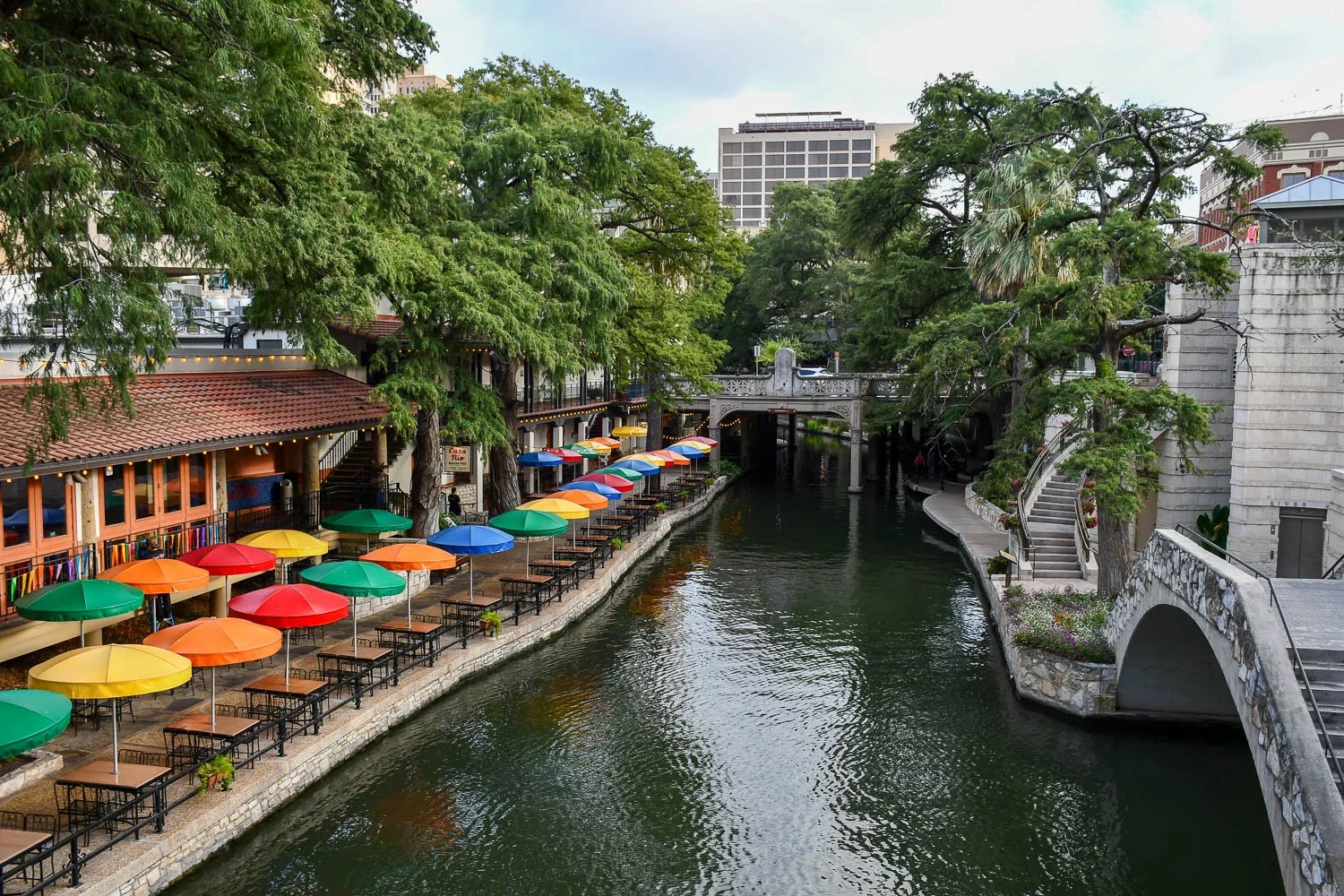
And, of course a famed shot of the riverwalk. It’s wonderful for a morning stroll.
Keep Growing